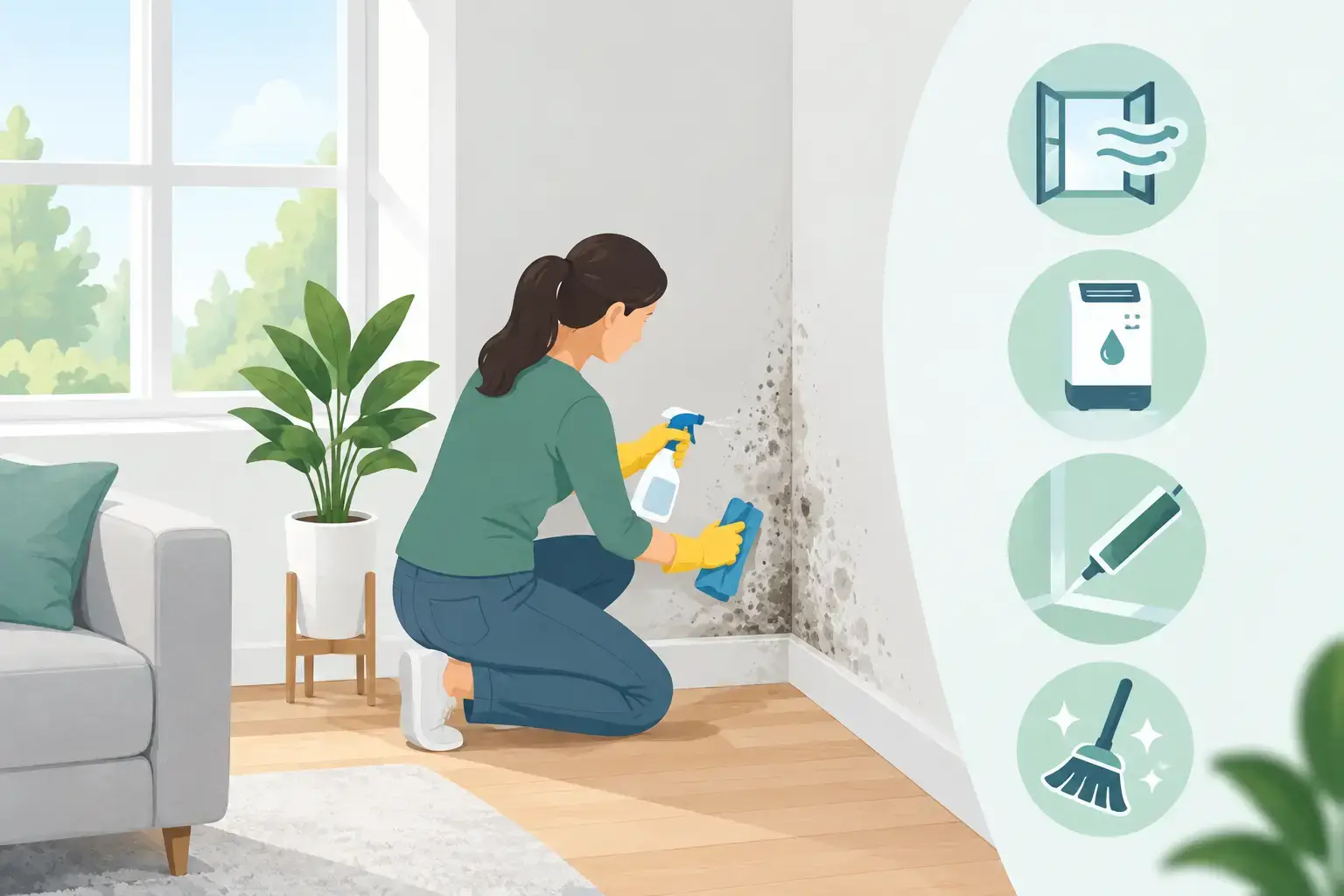
A bathroom wall can look clean on Monday and show dark spots again by the weekend. That is frustrating, but it usually points to one clear issue: moisture is still feeding the problem. Knowing how to prevent mould regrowth means doing more than removing visible marks. You need to dry the area, reduce humidity, improve airflow, and deal with the reason water is collecting there in the first place.
Mould spores are naturally present in indoor and outdoor air. You cannot create a completely spore-free home or workplace, and you do not need to. The goal is to stop spores from finding the damp surfaces and organic material they need to grow. A clean, dry room is much less welcoming to mould than a room with steamy air, wet grout, condensation, or a hidden leak.
How to Prevent Mould Regrowth After Cleaning
Cleaning is the first step, not the finish line. If mould was removed from tile grout, painted walls, window frames, silicone sealant, or a ceiling, make sure the surface is fully dry afterward. Leaving moisture behind can allow new growth to appear quickly, especially in bathrooms, laundry rooms, kitchens, and poorly ventilated bedrooms.
Use the right method for the surface. Non-porous materials such as tile, glass, metal, and sealed countertops can usually be cleaned and dried effectively. Porous materials are different. Mould can grow into unsealed wood, drywall, carpets, fabric furniture, insulation, and ceiling tiles. If these materials have been heavily affected or stayed wet for a long time, surface cleaning may not solve the full problem. They may need professional treatment, repair, or replacement.
Do not simply paint over a stained wall. Paint can hide the mark for a short time, but it will not fix moisture inside the wall or behind the surface. Let the area dry completely, identify the moisture source, and use a suitable mould-resistant coating only after the underlying issue is resolved.
Dry wet areas straight away
Small habits make a real difference. After showering, use a squeegee or dry cloth on shower walls and glass. Hang towels open rather than leaving them bunched on the floor or over a closed radiator. Wipe water from window sills when condensation appears, and do not leave wet bath mats, cleaning cloths, or clothes in a pile.
In a busy household, these tasks can feel minor. Over weeks, however, they remove the constant dampness that allows mould to return. In offices and shared buildings, assign responsibility for checking restrooms, break rooms, and entry areas where wet coats, umbrellas, or floor mats can keep moisture trapped.
Control Indoor Humidity Before It Becomes a Problem
High indoor humidity is one of the most common reasons mould returns. Condensation on windows, damp-feeling air, peeling paint, a musty smell, or moisture behind furniture are all warning signs. A humidity monitor is a simple way to check conditions rather than guessing.
Aim to keep indoor humidity generally between 30% and 50%. The right level depends on outdoor weather, how well the building is insulated, and how the space is used. During cold weather, even normal household activities can create condensation on cold surfaces. Cooking, showering, drying laundry indoors, and running an unvented appliance all add water vapor to the air.
A dehumidifier can help in a basement, laundry room, older bedroom, storage area, or any room where humidity stays high. Empty and clean it regularly so it continues to work properly. It is useful support, but it should not be used to ignore a leak, damaged roof, or ventilation failure. If the machine fills unusually fast every day, look for the cause.
Ventilate where moisture is made
Turn on the bathroom fan before a shower and leave it running for at least 20 to 30 minutes afterward. If there is no fan, open a window when weather allows and keep the bathroom door partly open once the room is no longer in use. A fan that is noisy, weak, or clogged with dust may not be moving enough air, so it is worth having it checked.
Use the kitchen exhaust fan while cooking, particularly when boiling water or using the stove for long periods. Put lids on pots where practical. If a kitchen hood only recirculates air through a filter rather than venting outside, it can still reduce grease but may do less to remove moisture. Opening a nearby window for a short time may help, depending on the weather.
Drying clothes outdoors is ideal when possible. If you need to dry laundry indoors, use a ventilated room, keep windows from fogging up, and avoid placing a drying rack directly against a wall. A vented dryer should discharge outdoors, not into a garage, attic, or interior space.
Improve Airflow Around Cold, Hidden Surfaces
Mould often regrows in places people rarely see until it is established: behind wardrobes, beneath sinks, inside closets, around window frames, under carpeting, and in basement corners. These areas stay cooler and receive less air movement, which makes condensation more likely.
Leave a small gap between large furniture and exterior walls, especially during colder months. Avoid tightly packing closets and storage cabinets. If you store seasonal items in a basement or garage, use shelves to keep boxes off the floor and avoid sealing damp belongings into plastic containers.
Check rooms that are closed for long periods. Guest bedrooms, vacant rental units, storage rooms, and offices that are shut over weekends can develop stale, humid air. Brief, regular ventilation and a consistent indoor temperature can reduce the risk. Turning heat off completely in winter may save energy in the short term but can make cold surfaces and condensation worse.
Find and Fix the Water Source
Repeated mould in the same location is a maintenance issue until proven otherwise. Look for drips under sinks, loose toilet seals, cracked shower grout, worn silicone around tubs, damaged caulk around windows, leaking appliances, roof problems, and plumbing inside walls. A slow leak may not create a puddle, but it can keep a wall cavity or cabinet damp enough for mould growth.
Pay attention after heavy rain. Water marks near ceilings, upper walls, skylights, or windows can signal an exterior problem. In ground-level rooms and basements, damp patches, a musty odor, or white mineral deposits on masonry may indicate water entering through the foundation or poor drainage outside.
Renters should document the issue with clear photos and report leaks or recurring mould promptly to the landlord or property manager. Property owners should treat reports quickly. Waiting can turn a small repair into damaged drywall, flooring, furniture, and a more involved restoration job.
Clean Smart, Not Just Hard
For a small patch on a hard surface, wear gloves, ventilate the room, clean the area with an appropriate cleaner, and dry it thoroughly. Never mix cleaning products. Combining bleach with ammonia, acids, or other cleaners can create dangerous fumes. Strong chemicals are not always the answer, particularly on delicate surfaces or in homes with children, pets, allergies, or respiratory sensitivities.
Vacuuming or scrubbing dry mould can spread spores into the air. Dampen the area as appropriate before cleaning, use disposable cloths or wash reusable ones promptly, and avoid brushing contamination into carpets or fabrics. For carpets, upholstery, large affected areas, recurring growth, or mould caused by water damage, professional assessment is the safer choice.
A trained cleaning crew can remove visible mould carefully and help restore affected surfaces, but lasting results still depend on moisture control. That is why the best mould removal work includes practical advice about ventilation, drying, and the maintenance issue that needs attention.
When Recurring Mould Needs Professional Help
Call for help when mould covers a large area, returns despite your efforts, appears after flooding or a major leak, or is growing on drywall, carpeting, insulation, or furniture. You should also act quickly if there is a strong musty smell without visible growth. The source may be behind a wall, under flooring, or inside a ventilation system.
Extra care is sensible in homes and workplaces used by people with asthma, severe allergies, weakened immune systems, or other respiratory concerns. Do not rely on fragrance sprays or air fresheners to cover the odor. A fresh smell is not proof that the moisture problem is gone.
Mould prevention is rarely about one expensive product or one intense cleaning day. It comes down to noticing dampness early, keeping high-moisture rooms aired out, and fixing small water problems before they become bigger ones. Give your home or workplace that steady attention, and clean, dry surfaces can stay fresh for much longer.