
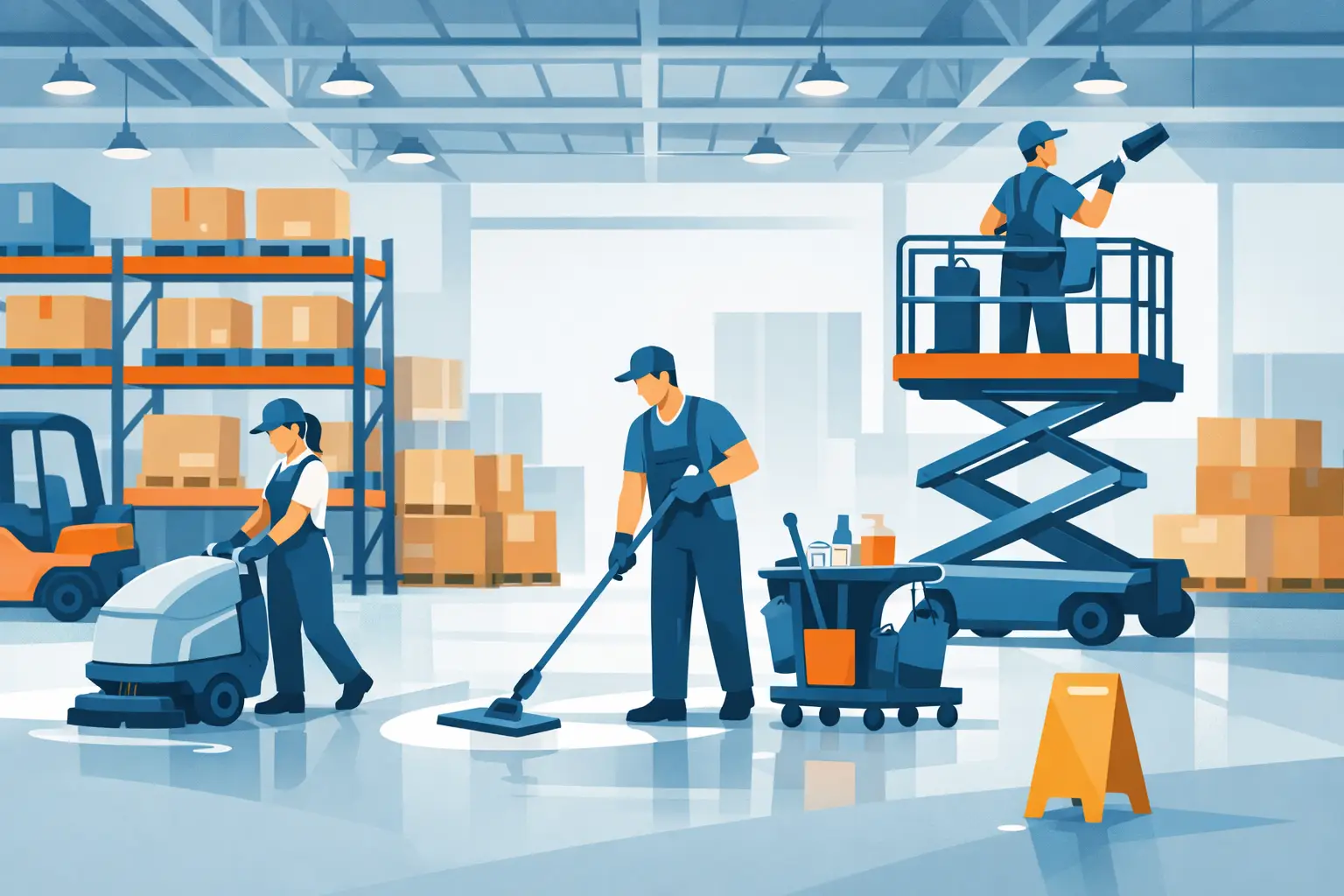
A warehouse can look busy and productive while dirt is quietly creating bigger problems. Dust settles on racking and inventory, pallet debris collects in aisles, spills leave slick patches on concrete, and loading areas take a constant beating. Commercial cleaning for warehouses is not just about making a large space look better. It helps protect people, products, equipment, and the pace of daily operations.
For warehouse managers and facilities teams, the challenge is clear: cleaning has to be thorough without blocking shipments, disrupting staff, or adding another task to an already full schedule. The right plan focuses on the areas that matter most, works around your operating hours, and delivers visible results that last.
Why warehouse cleaning needs a different approach
Warehouses collect a different kind of dirt than offices or retail spaces. Forklifts track in moisture and grime from loading bays. Cardboard, shrink wrap, and wood fragments build up around packing stations. Fine dust can travel far beyond the area where it starts, settling on products, shelving, vents, and safety signs.
A quick sweep may remove obvious debris, but it rarely addresses the buildup that affects safety and cleanliness over time. Concrete floors need the right equipment and cleaning method to remove dirt without leaving slippery residue. High shelving, corners, and overhead areas need planned attention rather than an occasional rushed cleanup.
The size of the building matters too, but it is not the only factor. A smaller warehouse with frequent deliveries, food-related inventory, or heavy foot traffic may need more regular care than a larger site with controlled access and lighter activity. A useful cleaning plan is based on how the facility actually operates.
The areas that deserve regular attention
A clean warehouse starts with the routes people use every day. Main aisles, pedestrian walkways, staging zones, and loading docks should be kept clear of loose materials and visible dirt. These are the areas where a small spill or scattered packaging can quickly become a trip, slip, or vehicle hazard.
Floor care is usually the foundation of the service. Professional sweeping removes dust and debris before it is pushed into corners or carried through the building. Machine scrubbing can then lift embedded grime from concrete and other hard surfaces, leaving floors cleaner and easier to inspect. The right frequency depends on traffic, weather, and the type of work taking place.
Packing and dispatch areas also need close attention. Dust, tape, labels, and wrapping materials can pile up quickly around worktables and scales. Keeping these spaces clean helps staff work more comfortably and makes it easier to spot damaged goods, loose stock, or spills before they slow down the line.
Break rooms, restrooms, and office areas inside a warehouse should not be an afterthought. These spaces affect employee comfort every day. Regular disinfection of touchpoints, clean floors, stocked washrooms, and fresh-smelling common areas show staff that their workplace is being properly cared for.
Don’t overlook high-level dust
Dust on racking, beams, pipes, vents, and light fixtures may not be visible from the entrance, but it can affect the whole environment. Movement from forklifts, fans, and doors can send that dust back into the air and onto inventory below.
High-level cleaning should be scheduled carefully and completed by trained crews using suitable equipment and safety procedures. It is not a task to fit in between shipments. For many facilities, periodic deep cleaning of overhead areas is the practical way to control buildup while keeping regular cleaning focused on daily priorities.
Building a cleaning schedule around operations
The best cleaning schedule is one that your team can rely on. For some warehouses, daily floor maintenance and restroom cleaning are essential. Others may need several visits a week, with monthly or quarterly deep-cleaning work for racking, dock areas, windows, or hard-to-reach surfaces.
Timing matters as much as frequency. Cleaning during a quiet shift, after dispatch, or before the first delivery can reduce disruption. A professional crew should understand which areas must remain accessible, where equipment can be stored safely, and how to work around active warehouse operations.
It also helps to separate routine work from detailed cleaning. Routine visits can cover floors, common areas, restrooms, waste points, and visible touchpoints. Scheduled deep cleaning can handle stubborn floor buildup, neglected corners, high dusting, interior windows, and other tasks that need more time and specialized equipment.
This approach gives you predictable standards without paying for the same intensive service every visit. It also makes it easier to adjust when business picks up, weather brings in more dirt, or an inspection is approaching.
What professional warehouse cleaning should include
A reliable commercial cleaning team does more than arrive with mops and basic supplies. Warehouses need commercial-grade equipment, trained staff, clear supervision, and a method that matches the site.
Before work begins, the cleaning provider should understand your layout, traffic flow, floor surfaces, restricted zones, waste procedures, and operating hours. They should also know whether your warehouse stores sensitive products, handles food-related goods, or has areas that require extra hygiene controls.
A strong service plan often includes:
- Sweeping and machine cleaning for aisles, loading zones, and work areas
- Cleaning of restrooms, break rooms, offices, and staff facilities
- Removal of dust and debris from accessible shelving, ledges, and corners
- Waste-point cleaning and support for orderly disposal areas
- Spot cleaning for spills, marks, and high-touch surfaces
- Periodic deep cleaning for floors, windows, high areas, and difficult buildup
Not every warehouse needs every service at the same frequency. The value comes from choosing the work that prevents the most common problems at your site rather than following a generic checklist.
Safety, hygiene, and productivity are connected
Cleaning cannot replace good warehouse safety procedures, but it supports them every day. Clear aisles make routes easier to see. Cleaner floors help identify leaks, damaged packaging, and dropped materials. Well-maintained restrooms and break areas give employees a cleaner, more comfortable place to recharge.
There is also a practical productivity benefit. When dust, clutter, and grime are under control, staff spend less time working around avoidable mess. Supervisors are not pulled away to find a cleanup solution after every spill or busy delivery period. The workplace feels more organized because it is more organized.
For customer-facing warehouses, distribution centers, or facilities that receive vendors and auditors, cleanliness also shapes first impressions. A clean dock area and orderly work floor communicate care, discipline, and readiness. That matters when visitors are deciding whether they can trust your operation with their products.
Choosing a cleaning partner for your warehouse
Price matters, but the cheapest quote can become expensive if visits are missed, work is rushed, or the crew is not equipped for industrial-scale cleaning. Ask practical questions before choosing a provider. Can they work around your shifts? Do they have experience with large floor areas? How is quality checked? What happens if your needs change?
Look for a company that provides clear communication and a flexible scope of work. You should know what will be cleaned, when the crew will arrive, and who to contact if an urgent issue comes up. Regular supervision is especially valuable in large facilities, where missed areas can be hard to notice until they become a problem.
Sustainable cleaning methods can also be a sensible choice when they are paired with effective equipment and proper products. The goal is not a strong chemical smell. The goal is a clean, fresh workplace with floors and surfaces that are properly maintained.
Deepclean Services supports commercial sites with trained crews, flexible scheduling, and practical cleaning plans designed around the work that needs to keep moving. Whether you need ongoing maintenance or a one-time deep clean after a demanding period, the service should make your facility easier to manage, not harder.
A warehouse will never stay spotless for long, and it does not need to. What it needs is a dependable standard: clear routes, clean working areas, cared-for staff spaces, and a cleaning schedule that keeps small problems from becoming operational delays.



Pingback: Commercial Cleaning That Keeps Work Moving – Deepclean Services