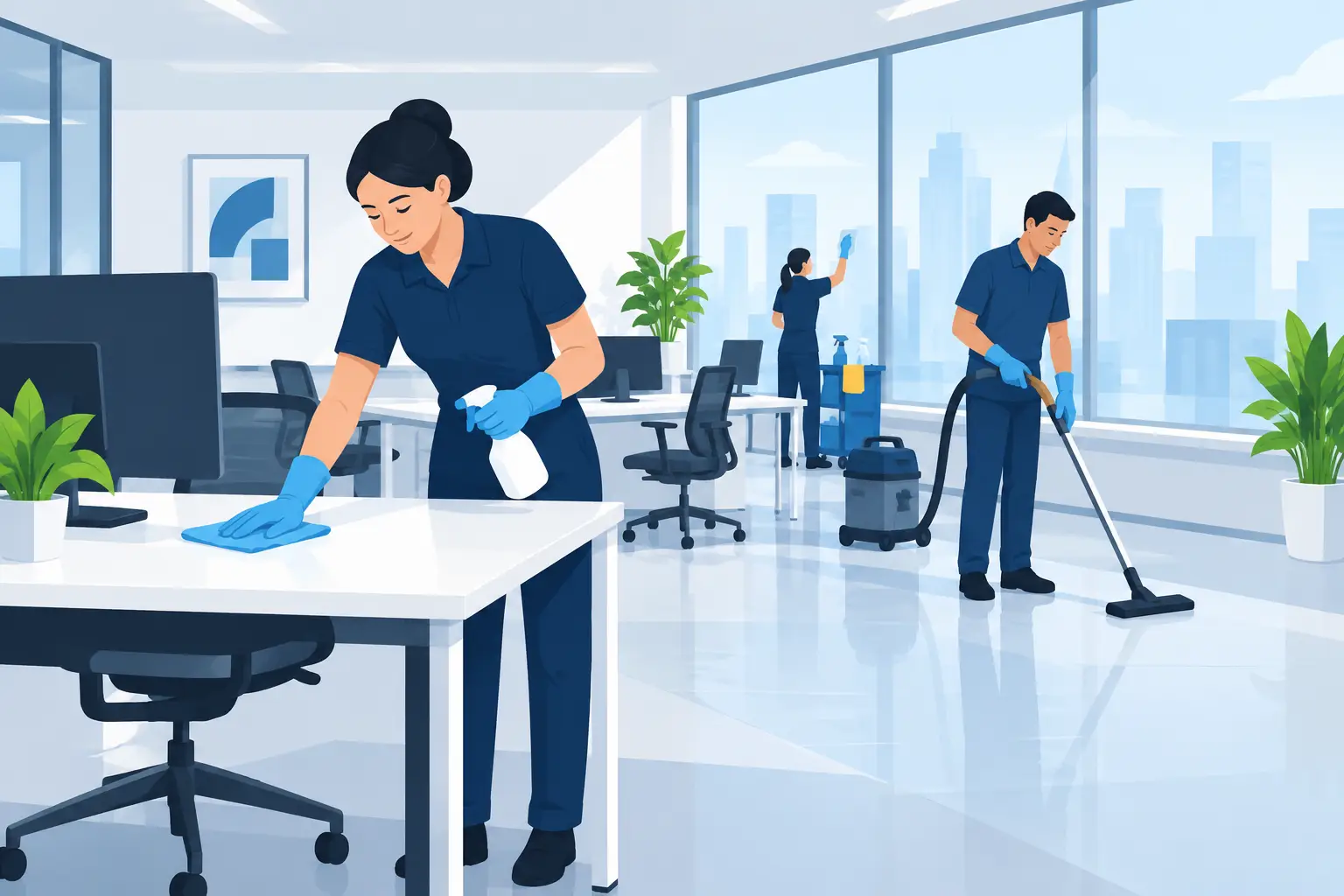
A clean workplace is noticed before the first meeting begins. Employees see the break room counter, customers notice the entrance glass, and visitors form an opinion from the restroom before they hear a word about your business. Commercial cleaning is not just about making a space look presentable. It helps create a healthier, more organized place where people can work, shop, learn, and visit with confidence.
For offices, retail stores, schools, medical settings, warehouses, and shared buildings, cleaning needs can change quickly. A busy week, bad weather, a move, construction dust, or a spill can turn routine upkeep into a bigger job. The right cleaning plan keeps small problems from becoming visible disruptions.
What Commercial Cleaning Covers
Commercial cleaning means professional cleaning for workplaces and public or shared spaces. The work can be scheduled daily, weekly, or at another frequency that fits how the site is used. It can also be a one-time service when a property needs extra attention.
At its core, regular cleaning usually focuses on the areas people touch and see most often: floors, desks, restrooms, kitchens, entryways, bins, and common areas. A trained crew works through these spaces with the right supplies and equipment, leaving the building clean and fresh without asking your employees to manage the task.
The scope depends on the property. An office may need desk-area dusting, restroom cleaning, vacuuming, and kitchen maintenance. A retail location may need polished entrance areas, clean fitting rooms, streak-free glass, and floors that can handle steady foot traffic. Warehouses often need attention to dust, high-traffic floors, staff areas, and sanitation points. Schools and healthcare settings require careful, consistent cleaning in rooms used by many people throughout the day.
Some jobs need more than routine maintenance. Carpet and furniture cleaning can remove embedded dirt and stale odors. Window cleaning can make an entrance look brighter and more professional. Mould removal, intensive kitchen cleaning, and deep restroom cleaning are specialized tasks that call for the right process and commercial-grade equipment.
Why Commercial Cleaning Matters Beyond Appearance
A clean workplace supports daily operations in practical ways. It reduces clutter, removes visible dirt, and helps keep high-touch surfaces under control. That matters when multiple people use the same doors, restrooms, break areas, counters, and shared equipment every day.
It also helps protect the impression your business makes. Customers may not comment on a spotless floor or a fresh restroom, but they notice when those areas are neglected. Stained carpets, overflowing trash, dusty corners, and dirty windows can make even a well-run business feel less reliable.
For employees, cleanliness affects comfort and focus. People work better when kitchens are usable, restrooms are properly maintained, and common areas do not feel forgotten. A professional cleaning service gives staff one less responsibility to carry, especially in workplaces where the day is already full.
There is a financial side as well. Regular floor care, carpet cleaning, and upholstery cleaning can help surfaces stay in better condition. Waiting until dirt is deeply set, spills have stained, or grime has built up may require more intensive work later. Routine care is often easier to schedule and easier to budget for.
Choosing the Right Commercial Cleaning Schedule
There is no single schedule that suits every business. The right frequency depends on foot traffic, building size, the type of work performed, and which areas are open to customers or visitors.
A small office with a limited team may be well served by weekly cleaning, with a more detailed service each month or quarter. A larger office, customer-facing business, school, clinic, or shared building may need cleaning several times a week or every day. Restrooms, kitchens, reception areas, and entrances usually need the most frequent attention because they collect the most traffic.
The best approach is to match the service to the way your space actually operates. If employees are on site early in the morning, evening cleaning may be the best fit. If a retail business needs its floor and entrance ready before opening, an early service may make more sense. Flexible scheduling is not a small detail. It is what allows cleaning to support the business instead of interrupting it.
When a One-Time Deep Clean Makes Sense
A one-time cleaning is useful when routine upkeep is not enough. It can be the right choice before reopening a space, after a busy event, following renovation work, or when a new tenant or team is moving in. It is also a practical reset for businesses that have fallen behind on cleaning but want to establish a regular schedule afterward.
Deep cleaning reaches areas that standard visits may not cover every time. This can include detailed work in restrooms and kitchens, baseboards, interior glass, hard-to-reach corners, heavily soiled floors, carpets, and upholstery. The goal is visible improvement, not a quick surface-level result.
What to Expect From a Professional Cleaning Crew
A dependable commercial cleaning provider should make the process simple. You should know what is included, when the crew will arrive, and who is responsible for quality checks. Clear communication matters as much as cleaning skill, particularly when the service takes place outside regular business hours.
Trained crews bring consistency. They know how to work through different surfaces, use cleaning products safely, and pay attention to details that are easy to miss during a rushed in-house cleanup. Commercial-grade equipment also makes a difference, especially for floors, carpets, furniture, windows, and intensive cleaning work.
Supervision is another part of a reliable service. A cleaning plan should not be set once and forgotten. Your needs can change with staff levels, seasons, events, or building use. A good provider listens to feedback, adjusts the service where needed, and takes responsibility if something needs to be corrected.
Sustainable cleaning methods can also be part of the plan. This does not mean compromising on hygiene or visible results. It means using thoughtful products and processes that support a clean environment while reducing unnecessary waste or harsh chemical use where appropriate.
Areas That Deserve Extra Attention
Certain parts of a commercial property create the strongest impression and often need the most regular care. Entryways collect dirt, moisture, and debris from outside. In wet weather, clean and dry floors are especially important for both appearance and safety.
Restrooms need consistent sanitation, stocked supplies, clean fixtures, and floors that do not show buildup. A restroom that is cleaned properly tells employees and visitors that the business pays attention to details.
Break rooms and kitchens should not be treated as an afterthought. Food crumbs, spills, grease, and full trash bins can quickly create odors and attract unwanted problems. Regular cleaning keeps these shared areas pleasant and ready for the next person.
Carpets, upholstered seating, and fabric partitions often hold dirt that is not obvious at first glance. Vacuuming handles everyday debris, but periodic professional cleaning helps restore the look and freshness of these materials. This is especially valuable in reception areas, meeting rooms, hotels, waiting rooms, and offices with heavy daily use.
A Cleaning Plan Should Fit Your Business
The lowest quote is not always the best value if it leaves out the tasks your building genuinely needs. Before choosing a service, consider the cleaning frequency, the spaces included, access times, special requirements, and whether the provider can handle deeper work when needed. Transparent pricing and a clear scope prevent surprises later.
For businesses in Luxembourg, Deepclean Services can provide recurring and one-time cleaning support for offices, buildings, schools, retail spaces, and warehouses. The focus is straightforward: trained crews, flexible scheduling, proper equipment, and a clean result your staff and visitors can see.
Your workplace does not need to look perfect every minute of the day. It does need a cleaning plan that keeps the essential areas ready for the people who rely on them. Start with the spaces that affect comfort, safety, and first impressions most, then build a schedule that keeps them clean without adding work to your team.