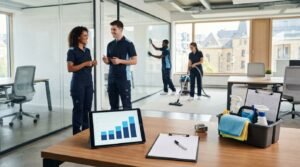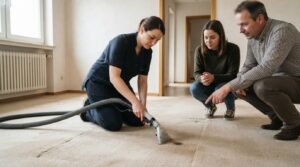
A clean fitness facility needs attention throughout the day, not just at closing. Effective gym and fitness center cleaning includes daily equipment care, with high-touch surfaces disinfected regularly and busy exercise areas, locker rooms and restrooms cleaned according to use. A consistent schedule should also include periodic deep cleaning.
Members share machines, mats, changing areas and other surfaces during workouts. A consistent cleaning plan helps keep these spaces fresh and orderly, supporting a more comfortable experience for members and staff.
This guide explains what to clean and when, including equipment-safe products, floors and carpets, and air ducts. You’ll also learn how cleaning needs change across a facility, so you can understand what a thorough professional cleaning plan should cover.
Key Takeaways
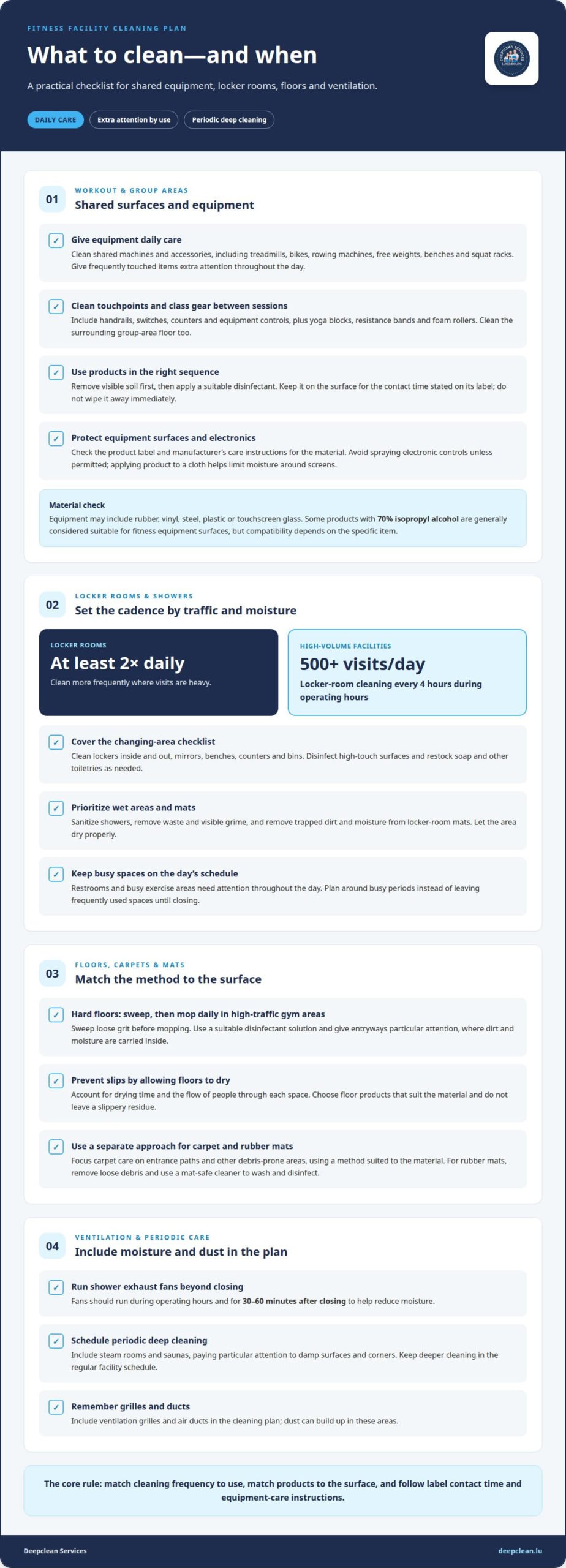
- Match disinfectants to equipment materials and follow the product’s stated contact time to clean surfaces effectively without damaging them.
- Set cleaning frequency by use: locker rooms, showers and other high-traffic areas need repeated attention, while deeper cleaning belongs in the regular schedule too.
- Choose floor and carpet care suited to the surface, and keep walkways dry. Vent grilles and ducts also need attention to limit dust build-up.
- A consistent cleaning plan supports a fresher, more comfortable fitness environment for members and staff.
How professionals choose equipment-safe disinfectants and flooring products
In Luxembourg, cleaning products should be used according to their labels and equipment manufacturers’ care instructions. The right product depends on the surface, the task and the required contact time.
Explain how professionals disinfect workout and group fitness areas.
In workout spaces, professionals disinfect shared touchpoints such as handrails, switches, counters and equipment controls. They also clean mirrors, storage areas and group-class equipment between sessions, including yoga blocks, resistance bands and foam rollers. The cleaning sequence matters: remove visible soil first, then apply a suitable disinfectant across the intended surface.
For group fitness areas, include both equipment and the surrounding floor in the cleaning plan. Leave disinfectant on surfaces for the contact time stated on its label, rather than wiping it away immediately. This ensures products are used as directed before members return.
Professional Cleaning of Cardio and Gym Equipment
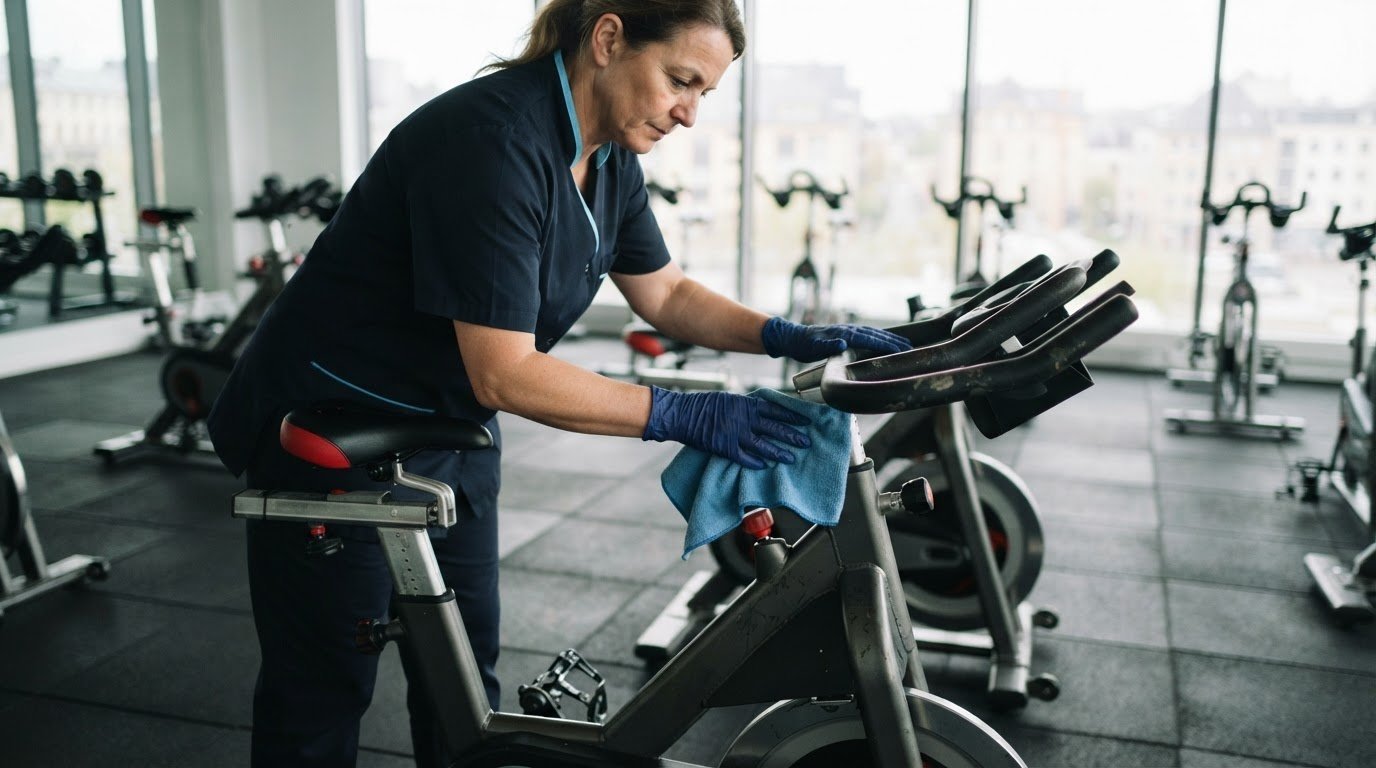
Cardio machines need attention at handlebars, touchscreens, buttons and adjustment points. Clean treadmills, ellipticals, bikes and rowing machines with products compatible with their surfaces. Do not spray directly onto electronic controls unless the manufacturer permits it. Applying product to a cloth helps limit moisture around screens.
Other equipment also needs systematic care. Clean free weights, squat racks, benches and shared accessories, even when members wipe them after use. Include daily equipment care and give frequently touched items extra attention throughout the day. Member wipe-downs do not replace thorough facility cleaning.
Equipment-Safe Products and Gym Standards for Professional Cleaning
Product selection starts with the equipment material: rubber, vinyl, steel, plastic or touchscreen glass. Professionals check the label and manufacturer guidance before applying a disinfectant, since an unsuitable product can damage a finish or leave residue. Some products with 70% isopropyl alcohol are generally considered suitable for fitness equipment surfaces, but compatibility still depends on the specific item.
Floor products require the same material-based approach. Rubber mats need a mat-safe cleaner, while other floors may need a compatible solution and suitable machine. Professionals follow label directions, including contact time, and ensure floors dry before members use them. For a Luxembourg fitness facility, this practical process focuses on product instructions and surface care, not an unsupported claim about a separate numeric cleaning standard.
How often should a fitness facility be cleaned?
Cleaning frequency depends on foot traffic and moisture, especially in locker rooms and showers. High-volume facilities with 500+ daily visits need locker-room cleaning every 4 hours during operating hours.
Professional Locker, Mirror, Toiletry, and Bin Maintenance
A scheduled cleaning pass can cover lockers inside and out, mirrors, benches, counters and bins. Cleaning removes visible soil and addresses touchpoints members handle while changing or preparing to exercise. Restocking soap and other toiletries can also help keep showers and locker rooms ready for use.
Clean and disinfect benches, lockers and other high-touch surfaces regularly. Restrooms and busy exercise areas need attention throughout the day. Build busy periods into the cleaning plan so frequently used spaces are not left until the end of the day.
Mats need attention too. Remove trapped dirt and moisture from locker-room mats, then ensure the area dries properly. This helps manage dampness-related odours and keeps mats from being overlooked in the cleaning routine.
Professional Locker Room and Shower Hygiene
Locker rooms should be cleaned at least twice daily, with more frequent service where visits are heavy. A thorough pass includes sanitizing showers, disinfecting locker-room benches, removing waste and addressing visible grime around wet areas. Regular care helps control the moisture and soil that can contribute to odours, mould and bacteria buildup.
Shower cleaning also depends on ventilation. Exhaust fans should run during operating hours and for 30-60 minutes after closing to help reduce moisture. Steam rooms and saunas need periodic deep cleaning and sanitation, with particular attention to damp surfaces and corners.
Restroom touch surfaces, shower floors and locker-room matting all belong in the facility’s schedule. A planned cleaning schedule for shared spaces can account for daily upkeep and periodic deep cleaning.
Professional cleaning of gym floors, carpets, and air ducts
Floor care should suit the surface and activity in each part of the facility. A professional cleaning plan can also include carpets, entryways and ventilation grilles, where dust and tracked-in soil collect.
Professional Floor Care and Slip Prevention
Professionals sweep floors before mopping, so loose grit doesn’t spread across the surface. High-traffic gym areas should be mopped daily with a suitable disinfectant solution. Entryways need particular attention because foot traffic carries dirt and moisture inside.
After washing, ensure floors dry properly before members return. Wet surfaces can cause slips and falls, so account for drying time and the flow of people through each space. Choose supplies that match the floor material and do not leave a slippery residue.
Carpets need a different process from hard floors. Focus on entrance paths and other areas where shoes bring in debris, using a method suited to the carpet material. Interior windows can also be included in a facility’s broader cleaning plan, with care appropriate to their surfaces.
Professional Gym Flooring and Mat Cleaning
Rubber mats collect sweat, dust and odour-causing residue from workouts. Professionals sweep or remove loose debris, then use mat-safe cleaners to wash and disinfect the surface. A mat-compatible product helps avoid residue that could affect grip during stretching or floor exercises.
Hard gym flooring also needs regular sweeping and mopping, particularly around equipment and in busy exercise zones. Where suitable, an auto scrubber can cover larger areas. Check that mats and floors are dry before reopening the space.
Carpeted areas near reception or seating need scheduled care of their own, rather than the same treatment as rubber flooring. A commercial cleaning plan should distinguish between carpets, mats and hard floors, then assign a suitable method to each.
Importance of a clean fitness center
Insufficient cleaning can leave soil on shared surfaces and create opportunities for germs to spread between members. Damp showers and locker rooms can also support mould growth. Mould may worsen respiratory symptoms or allergen exposure.
Infection Risks from Poor Gym Cleaning
Members move between machines, benches, touchscreens and shared accessories during a workout. Without regular cleaning, sweat and soil can remain on these surfaces, creating opportunities for germs to pass between users. Cardio controls and free weights deserve particular attention because many members handle them throughout the day.
Member wipe-downs help, but they do not replace facility-wide cleaning. A professional schedule includes routine care for machines and other shared touchpoints, with additional attention during busy periods. Consistent cleaning helps reduce opportunities for germs to spread across high-traffic spaces.
Mold Risks in Fitness Centers
Showers, steam rooms and locker-room corners can remain damp after use. Lingering moisture can contribute to mould and mildew, especially where ventilation is poor or cleaning misses grout, edges and other hard-to-reach areas. Visible growth and persistent musty odours are practical signs that these spaces need closer attention.
Cleanliness also shapes how members experience a fitness facility. A fresh changing area, clear mirrors and clean machines make the space feel cared for, while neglected touchpoints can undermine confidence. Visible cleaning routines show members that shared spaces receive consistent attention.
A well-structured plan assigns tasks by use and surface: high-contact machines receive frequent care, while deeper cleaning addresses overlooked areas. Displayed schedules can make the routine visible. Staff reminders about wiping equipment and washing hands reinforce good habits without replacing professional cleaning.
For a more consistent approach to shared spaces, arrange professional cleaning for your fitness facility.
Deepclean Services
Deepclean Services helps fitness facility managers maintain cleaner shared spaces with Regular Cleaning, One-Time Basic Cleaning and Deep Cleaning. Regular Cleaning supports ongoing upkeep, while a one-time or deep clean can suit a facility needing a focused reset or more detailed attention. The scope can be tailored to areas such as floors, workout spaces, locker rooms and restrooms.
A clear schedule aligns routine cleaning with the facility’s busiest areas and recurring needs. It also gives managers a practical way to address general cleanliness while keeping detailed tasks in view.
Contact Deepclean Services to discuss cleaning support for your fitness facility.
Make cleaning part of your facility’s routine
Treat cleaning as part of the member experience, not simply a task for after closing. A clear plan assigns responsibility for shared spaces, coordinates routine and detailed work, and helps staff respond when busy periods leave particular areas needing attention. This gives your team a consistent framework as the facility’s needs change.
Professional gym and fitness center cleaning can support that framework while allowing managers to focus on running the facility. Deepclean Services offers Regular Cleaning, One-Time Basic Cleaning and Deep Cleaning for ongoing upkeep or a more focused visit.
Discuss your facility’s cleaning needs with Contact Deepclean Services. A considered plan is a practical step toward a cleaner, more welcoming place to work out.
Frequently Asked Questions
What are the common tasks involved in gym cleaning?
Common tasks include wiping shared touchpoints, removing waste, cleaning mirrors and counters, and caring for workout surfaces. A cleaning plan can include door handles, light switches, reception counters and storage areas alongside exercise spaces. The task list depends on the facility’s rooms and how members use them throughout the day.
What does gym and fitness center cleaning include?
A plan can cover workout areas, cardio and strength equipment, group-class spaces, locker rooms, showers, restrooms and floors. It may also include carpets, entry areas, bins and visible dust around vents and grilles. For facilities with several zones, a written scope clarifies which areas receive routine attention and which need periodic detailed cleaning.
How often should gyms clean workout equipment, locker rooms, showers, and floors?
Workout equipment needs daily cleaning, with frequently touched machines disinfected several times a day. Locker rooms should be cleaned at least twice daily, and high-volume sites may need service every four hours during operating hours. Floors in busy exercise areas need daily mopping. Shower frequency should account for use and moisture, with more attention during busy periods.
How do professionals choose safe and effective cleaning products for gym equipment and high-touch surfaces?
Match each product to the surface and task. Check manufacturer care instructions for materials such as rubber, vinyl, steel and touchscreen glass, then follow the disinfectant label for application and contact time. A cleaner suitable for a rubber mat may not suit a screen. Choosing products by material helps avoid residue or damage while treating shared surfaces as directed.
What steps do professionals follow to clean and disinfect gym equipment between users?
Between users, remove visible sweat or soil, apply a compatible disinfectant to the intended touchpoints, and allow the label’s contact time. Focus on handlebars, controls, benches and adjustment grips. Avoid pooling liquid around electronic controls, and let treated surfaces dry as directed before the next workout.
How do professionals clean locker rooms, showers, toilets, and swimming pool areas?
Clean and disinfect locker-room benches, lockers, shower surfaces, restroom touchpoints and floors. Remove waste and replenish toiletries when included in the plan. For pool areas, cleaning can cover surrounding floors, changing spaces and handrails. Pool water treatment is separate from cleaning surrounding surfaces and requires its own operating procedures.