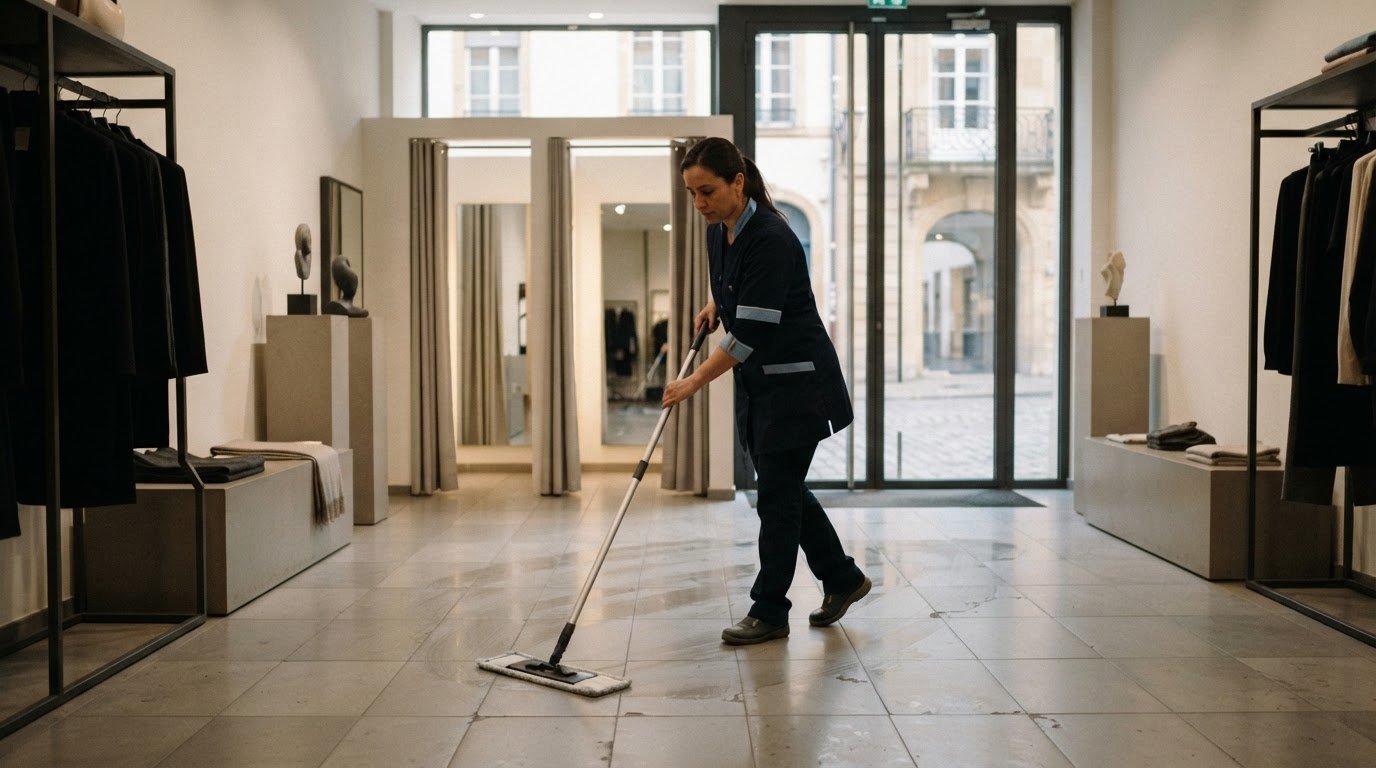
A clean shop is part of the retail experience, not just a finishing touch. Retail store cleaning services can cover customer-facing areas such as sales floors, entrances, fitting rooms and checkout zones, along with staff areas and washrooms. Tailor the task list and visit frequency to the premises, foot traffic and the areas that need regular attention.
It’s understandable to want a tidy, welcoming store without disrupting daily operations. A structured cleaning plan keeps floors, surfaces and shared spaces consistently cared for, with visits matched to the store’s needs. This guide explains which areas are commonly included, how to plan a suitable cleaning frequency and how professional cleaning can support a more comfortable retail environment for customers and staff.
Key Takeaways
- Build a cleaning checklist around high-use sales areas, including counters, tills and display units, so key touchpoints are not overlooked.
- Set visit frequency by matching the task list to store activity, and make sure service agreements clearly describe each visit.
- Use store size and customer foot traffic to shape a practical schedule, giving busier areas the attention they need.
- See how consistent cleaning can support a more welcoming shopping environment and help maintain the appearance of your premises.
What areas are included in retail store cleaning services?
A store cleaning plan can cover customer-facing areas, staff spaces and different floor finishes. The task list should reflect how each area is used, from the entrance to the fitting rooms.
Sales Floors, Counters, and Tills
On the sales floor, cleaners remove loose debris and marks from accessible surfaces, then clean counters, till areas and display units. Fitting-room mirrors, benches and floors also need attention because customers use them throughout the day. A clear checklist separates routine tasks from occasional detail work. Include entrance windows when they are part of the premises’ regular cleaning needs.
Floor, Carpet, and Grout Care
Floor care depends on the material and the type of soil. A commercial floor scrubber can clean suitable hard floors by applying cleaning solution and collecting dirty water in one pass. The cleaning method should suit the surface and store layout. Carpeted areas need suitable vacuuming and periodic deeper care, while tiled floors need attention to grout lines. Include entry paths and sales aisles in the maintenance plan.
For a reliable cleaning company in Luxembourg, request references for two or three comparable sites. Building cleaning is a craft activity requiring an autorisation d’établissement. Before hiring, get written confirmation of civil liability insurance and agree how keys, badges and alarm codes will be handled.
In-house cleaning gives a store direct control over task assignments, while outsourced commercial cleaning can provide scheduled visits and defined tasks through an agreed service plan. Compare the coverage required, staff coordination and continuity arrangements, including how replacement staff can follow the site checklist and access instructions.
For floors, displays and fitting rooms, cleaning methods should suit the surface. Depending on the task, cleaning may involve water and soap or detergent before disinfection. The World Health Organization says environmental surfaces should be cleaned and disinfected whenever visibly soiled or contaminated by a body fluid. The plan can set out separate tasks for hard floors, carpet and touchpoints.
Cleaning prices are calculated from the premises, visit schedule, task list and time on site. In Luxembourg, the standard VAT rate for cleaning shops and other non-residential business premises is 17%. The price depends on the case and is given after a quote request, with the work scope and contract terms set out in the quote.
Cleaning frequency and maintenance contracts
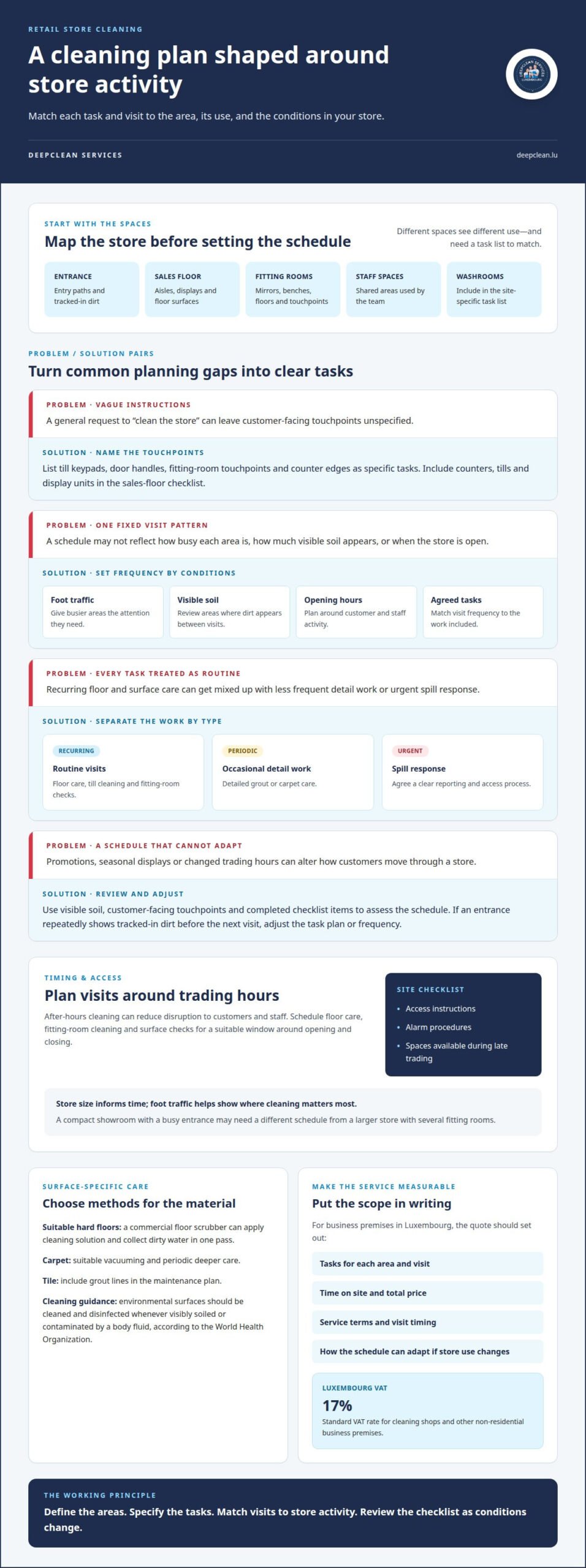
A practical schedule starts with the store’s task list, not a fixed visit pattern. Map the entrance, sales floor, fitting rooms, staff spaces and washrooms, then identify the tasks each area needs. Floor care and counter cleaning, for example, may require different attention because customers use those spaces differently. The right frequency depends on foot traffic, visible soil, opening hours and the work agreed for each visit.
Give frequently touched surfaces clear attention in the plan. List till keypads, door handles, fitting-room touchpoints and counter edges as specific tasks, rather than relying on a general instruction to clean the store. The World Health Organization says environmental surfaces should be cleaned and disinfected whenever visibly soiled or contaminated by a body fluid. This guidance helps define how to respond in those conditions.
A cleaning plan should make the service measurable. For business premises in Luxembourg, a quote should specify the tasks for each area and visit, the time on site, the total price and the service terms. It should also explain how the schedule can adapt if store use changes, such as when a sales floor becomes busier during a promotion.
- Define routine tasks for each space, such as floor care, till cleaning and fitting-room checks.
- Separate recurring work from periodic tasks, such as detailed grout or carpet care.
- Record visit timing, access arrangements and the process for reporting missed tasks.
Trained cleaning staff can follow a site-specific checklist, while a clear handover helps replacement staff understand the tasks and access instructions. Store managers can assess whether the frequency is working by reviewing visible soil, customer-facing touchpoints and completed checklist items. If entrances repeatedly show tracked-in dirt before the next visit, adjust the task plan or frequency.
For a structured routine, a regular cleaning schedule can match recurring tasks to the store’s spaces and operating pattern. A written plan keeps responsibilities, visit scope and contract terms clear, while leaving room to revise the schedule as store activity changes.
Cleaning schedules based on store size and foot traffic
Store size helps determine the time needed, while foot traffic shows where cleaning matters most. A compact showroom with a busy entrance may need a different schedule from a larger store with several fitting rooms.
After-Hours Cleaning
Cleaning outside trading hours can reduce disruption to customers and staff. Schedule floor care, fitting-room cleaning and surface checks for a suitable window around opening and closing. For a store with late trading, identify which spaces remain accessible and which tasks must wait. Include access instructions and alarm procedures in the site checklist.
Separate scheduled work from occasional and urgent tasks. Scheduled visits cover recurring duties, such as cleaning floors and customer-facing surfaces. Occasional tasks address needs that arise less often, while urgent spill response should have a clear reporting and access process. Agreeing on these categories helps staff know what to expect and keeps extra work distinct from the regular schedule.
Flexible Schedules and Checklists
A useful checklist ties each task to a specific area and visit. It can distinguish entrance floors from fitting-room surfaces and list the spaces that need attention before opening. The schedule can then be tailored when a promotion, seasonal display or change in trading hours affects customer movement. Clear task records help maintain consistency as priorities shift.
Review the plan against visible conditions and store activity. If the entrance collects dirt during busy periods, increase attention to that zone rather than changing every task across the premises. If a quiet showroom has limited carpeted areas, its schedule can allocate more time to displays or shared spaces. These adjustments help keep cleaning focused on the surfaces that see the most use and support a pleasant customer experience.
Benefits of a clean retail store
A clean retail space supports a more inviting setting for browsing and shopping. Over 90% of customers say store cleanliness influences their decision to shop. Clear floors, presentable counters and tidy fitting rooms help customers focus on products instead of visible dirt or clutter. Consistent care also helps maintain the appearance of displays and shared areas throughout the trading day.
Cleanliness shapes the customer experience through practical details. A marked mirror in a fitting room, dusty display shelves or debris near the entrance can distract from merchandise. In high-end apparel retail, keeping both the store environment spotless and merchandise pristine is essential, with fashion boutiques often learning from the standards set by couture dry cleaners Melbourne when caring for delicate fabrics on display. Clean, unobstructed aisles make products easier to view and move around. Attention to counters and touchpoints also keeps the checkout area orderly, where customers complete purchases and ask staff for assistance.
Poor cleaning can leave spills, tracked-in dirt and clutter on floors, increasing slip or trip risks and making the store look neglected. A preventive plan assigns cleaners to inspect busy routes, respond to visible spills and include fitting rooms and counters in the task checklist. Clear reporting procedures help staff alert the cleaning team when an unexpected issue arises between visits.
Regular maintenance can also help preserve the condition of finishes. Grit at an entrance may be carried across hard floors, while overlooked carpeted areas can retain visible soil. A cleaning plan should match the method to the surface, helping maintain floors, grout and display areas without treating every material alike. Managers can review completed tasks and note recurring trouble spots, such as a muddy entrance after wet weather.
The key takeaway is simple: cleaning supports both presentation and day-to-day use. Prioritise the entrance, customer routes, fitting rooms, counters and checkout area, then tailor attention to the store’s actual conditions. For a more consistent retail environment, arrange professional cleaning for your store.
Deepclean Services
Deepclean Services can turn your store’s cleaning priorities into a structured service plan. Regular Cleaning supports recurring care across customer and staff spaces. One-Time Basic Cleaning or Deep Cleaning can suit premises that need focused attention, while Moving In / Out Cleaning can help prepare a shop during a transition. For major store clear-outs or fit-outs that generate heavy bulk debris, coordinating commercial dumpster rentals through rapidroll-off.com ensures large waste is handled efficiently before fine cleaning begins.
Share the areas that need attention, the surfaces involved and how the store is used. This helps shape a cleaning approach around your premises, whether you need regular maintenance or a focused clean.
Contact Deepclean Services to discuss cleaning for your retail premises.
Turn your cleaning priorities into a workable plan
Connect your store’s cleaning priorities with a service plan that fits its day-to-day operation. Consider which areas need regular attention, which tasks can be scheduled less often and how the plan should adapt when layouts or trading patterns change. A clear scope gives retail store cleaning services a practical starting point and keeps expectations aligned.
Deepclean Services offers Regular Cleaning, One-Time Basic Cleaning and Deep Cleaning to meet different cleaning needs. Regular Cleaning supports ongoing upkeep, while a one-time or deeper clean can suit a store that needs focused attention. The right service depends on the premises’ condition and whether you need recurring care or a specific visit.
Share your priorities and discuss a suitable approach with Contact Deepclean Services. A considered plan can help keep your retail environment ready for customers and staff.
Frequently Asked Questions
Can retail cleaning services be scheduled outside business hours?
Yes. Cleaning visits can be arranged around a store’s operating pattern, including quieter periods outside customer hours. Set the arrival window, access route, alarm procedure and any areas that must remain untouched in the site instructions. For example, a showroom may schedule floor work before displays are rearranged, while keeping till equipment and locked stock areas out of scope.
Do you clean shop windows inside and outside?
A retail cleaning checklist can include accessible interior glass. Specify exterior windows separately because access, location and timing may differ from interior work. Clarify which panes need attention and how the work fits the store’s operating schedule. This keeps window cleaning distinct from routine care of sales areas, counters and other surfaces.
How are frequently touched surfaces in retail stores cleaned?
Frequently touched areas include door handles, till keypads, fitting-room handles and shared counter edges. The World Health Organization advises cleaning environmental surfaces with water and soap or detergent before disinfection. It also recommends cleaning and disinfecting surfaces whenever visibly soiled or contaminated by a body fluid. A site plan can identify these touchpoints so they’re not overlooked during routine visits.
How do you decide the scope and frequency?
The scope and frequency depend on the store’s layout, surface types, customer movement and visible soiling. A compact boutique with one fitting room has different priorities from a showroom with several display zones. The plan can also change for a promotion, a rearranged sales floor or a seasonal rise in visits. Record those changes in the task list and schedule.
What are the benefits of hiring professional retail cleaning services?
Professional cleaning gives store teams a defined plan instead of relying on staff to fit every task around customer service. Cleaners can follow a consistent checklist, use methods suited to different surfaces and record which areas received attention. For example, this structure can help a manager identify recurring marks near an entrance and adjust the cleaning plan without disrupting product displays.
What retail store cleaning services are typically included?
A typical retail cleaning scope can include floor and carpet care, dusting accessible display surfaces, wiping counters and till surrounds, and cleaning fitting-room areas. It may also cover staff spaces and washrooms, depending on the premises and agreed task list. Set out the specific areas and tasks in advance so the cleaning plan reflects how customers and employees use the store.