The cleaner’s fee is only one part of the comparison. To understand the full hiring a cleaner vs DIY cost, include the products and equipment you buy, the time you spend cleaning and what you would rather do with that time.
Comparing a service fee with the price of a bottle of cleaner can make DIY seem cheaper, but the answer depends on your routine, supplies, home and priorities. In Luxembourg, professional cleaning fees also vary according to the selected service and the size of the premises, so a broad estimate may not match your situation.
This guide shows you how to compare the full costs, decide which tasks make sense to handle yourself and identify work you may want help with, such as a deep clean or cleaning when moving in or out. A mixed plan can keep routine upkeep manageable while bringing in professional support when your schedule or cleaning needs change.
Key Takeaways
- Compare hiring a cleaner with DIY using your household’s cleaning routine, supply spending and available time.
- Separate occasional equipment purchases from recurring products so your DIY estimate reflects actual costs.
- Compare the tasks covered, consistency and scheduling control, then decide what you want to manage yourself.
- Before considering a professional service, list the tasks, frequency and scope you need. Deepclean Services offers regular, one-time, deep and moving-related cleaning in Luxembourg.
Hiring a Cleaner vs DIY Cost: What Belongs in a Fair Comparison?
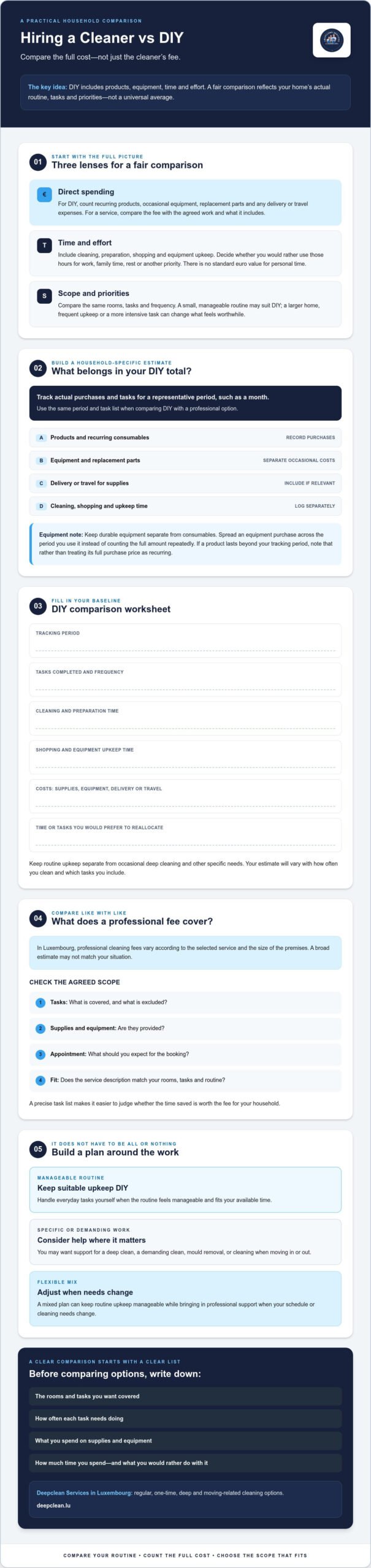
A useful hiring a cleaner vs DIY cost comparison includes more than a service fee or the price of supplies. Count direct spending, time and effort, then weigh the trade-offs. A small, manageable routine may suit DIY, while a larger home, frequent upkeep or a more intensive task can shift the balance. The right comparison reflects the work your home actually needs, not a universal average.
Separate routine upkeep from occasional deep cleaning and other specific needs. You might handle everyday tasks yourself but consider professional help for a demanding clean or mould removal. This lets you compare the same tasks and expected scope, rather than treating a cleaner as an all-or-nothing replacement for your own effort.
A service fee is the direct cost of agreed work. DIY also takes supplies, equipment, time and effort. Keep those categories separate so a lower cash outlay does not automatically look like better value.
Which costs count when you clean your own home?
Start with what you actually spend: recurring cleaning products, equipment, replacement parts and any delivery or travel expenses for supplies. Separate durable items bought occasionally from consumables you replenish. Track the time spent cleaning, shopping and maintaining equipment, too. There is no standard euro value for your personal time. Decide whether those hours would be better spent on rest, work or another priority.
What does a professional cleaning fee cover?
Fees can depend on the selected package and the size of the premises, so compare the work included rather than a headline figure alone. Ask which tasks are covered, what is excluded, whether supplies or equipment are provided and what to expect for the appointment. A cleaner is a type of domestic worker, but the specific work agreed for a booking still matters. For a clearer picture of routine arrangements, see this regular cleaning service guide.
Write down the rooms and tasks you want covered, then compare that list with your own routine and any service description. If only certain jobs are hard to fit in, consider getting help with those while keeping manageable upkeep for yourself. A precise scope makes it easier to judge whether the time saved is worth the fee for your household.
How to Calculate the Real DIY Cost of Cleaning
Use your routine and receipts to build an estimate instead of relying on a generic household budget. Choose a representative period, such as a month, and record the tasks you complete, what you buy and the time each step takes. Use the same period and task list when comparing DIY with a professional option.
Your DIY total depends on how often you clean and which tasks you include, so calculate it for your actual routine. A short list of regular upkeep tasks will produce a different estimate from a routine that also includes occasional intensive cleaning.
Build a household-specific DIY cleaning worksheet
List routine and occasional tasks separately, then note how often you do each. Record purchases during the period, including supplies, delivery or travel costs and equipment replacements. Keep durable equipment separate from recurring consumables. To account for equipment fairly, spread its purchase cost across the period you use it rather than counting the full amount repeatedly.
- Task and frequency: ______________________________
- Products and consumables bought: €____________
- Equipment purchase or replacement: €____________
- Delivery or travel expenses: €____________
Include only costs relevant to cleaning your home. If a product lasts beyond the period you are tracking, make a note of that rather than treating the full purchase as a recurring expense. This keeps your estimate tied to your records.
How should you account for the time spent cleaning?
Log the time involved in separate categories, including preparation, cleaning, shopping for supplies and equipment upkeep. Then consider what those hours displace, such as work, family time or rest. There is no universal euro value for personal time. Assign one only if it helps you compare cleaning with other priorities you could give those hours to.
DIY comparison worksheet
Tracking period: ____________________
Cleaning and preparation time: ____________________
Shopping and equipment upkeep time: ____________________
Tasks completed and frequency: ____________________
Costs for supplies, equipment and travel: €____________________
Time or tasks you would prefer to reallocate: ____________________
Once you have filled in the worksheet, you have a household-specific baseline for comparing hiring a cleaner vs DIY cost. To see which cleaning options may match your task list, review Deepclean Services’ cleaning options and compare their scope with your records.
Cleaner vs DIY: Compare Scope, Consistency and Value
Make the comparison fair by using the same task list for both options. Estimate the supplies, time and effort DIY requires, then compare them with the professional service fee and agreed scope. There is no universal winner in the hiring a cleaner vs DIY cost comparison. Your routine, available time and cleaning needs determine which offers better value.
| Factor | DIY cleaning | Hiring a cleaner |
|---|---|---|
| Direct spending | Products, equipment, replacements, and any delivery or travel costs. | The fee for the agreed service; check what the package includes and excludes. |
| Time | Your time for preparation, cleaning, shopping and equipment upkeep. | Less time doing the included tasks yourself, though you may need to arrange access and communicate priorities. |
| Task coverage | Set by your skills, supplies, equipment and the time available. | Set by the service selected and the scope agreed for the premises. |
| Scheduling control | You choose when to clean and can adjust the routine yourself. | You coordinate appointments with the provider’s available schedule. |
When does DIY cleaning make practical sense?
DIY can work well if you have time for the routine, prefer to manage your own schedule and feel comfortable with the tasks involved. Supplies and equipment you already own may cover your needs without extra purchases. Regular upkeep can be easier to fit into your routine than a larger job that requires more time, preparation or sustained attention. Check whether your current approach is keeping the task list manageable.
When can hiring a cleaner offer better value?
Professional help may be worth considering if cleaning repeatedly competes with work, family time or rest, or if certain tasks keep being postponed. Start with the outcome you want, then check whether the service’s agreed scope covers it. An ongoing need may suit regular cleaning, while a more intensive job may require a different service. This deep cleaning and regular cleaning comparison can help you match the task list to the right scope.
You can combine approaches by keeping manageable routine tasks for yourself and seeking help with selected needs, such as intensive floor and fabric care. For example, when weighing DIY machine rental against hiring a specialist service, insights from Commercial Carpet Cleaners Stockport illustrate how equipment hire fees, cleaning solutions, and personal labor stack up against professional results. Compare like-for-like work, using your household’s own costs and time rather than assuming either DIY or a service is automatically cheaper.
How to Choose Between Hiring a Cleaner and DIY
DIY is not cost-free just because there is no service fee. Supplies, equipment and the time you spend cleaning all count. Use your household-specific estimate to identify your main priority: keeping direct spending lower, reclaiming time or getting particular tasks completed consistently. That priority may matter more than choosing one approach for every room and every week.
Which household factors should guide your decision?
Consider your home’s size, the number of occupants, how often it needs cleaning and which tasks require attention. Then look at your schedule, the effort involved and the jobs that routinely remain unfinished. A plan that works during a quieter period may become difficult if your household or available time changes. Revisit the comparison when your circumstances shift.
Use this quick decision check:
- Lower direct spending: DIY may suit you if the task list is manageable and you already have suitable supplies and equipment.
- More free time: Consider help with tasks that regularly take time away from work, family or rest.
- Consistent completion: Identify tasks that keep being postponed and decide whether a recurring or one-time service could help address them.
Your priorities can overlap. You may prefer to handle routine upkeep yourself but get help with a task that is demanding or difficult to fit into your schedule. Neither option is automatically better value. Compare the work you need done with the time and spending each approach requires.
Can you combine DIY cleaning with professional appointments?
Yes. Decide which routine tasks you are comfortable managing and which you would like handled occasionally or on a regular schedule. Before comparing service fees, write down the tasks and preferred frequency, then confirm that the proposed scope matches your needs. To see how experienced domestic cleaning providers outline their options, you can learn more about Pink Lady Cleaning Services. This helps you avoid paying for work you do not need or assuming a task is included when it has not been agreed.
For a move, separate everyday upkeep from the cleaning needed for the property handover. Use this move-out cleaning checklist to organise what needs attention. You can also adjust a hybrid plan over time: keep manageable jobs in your routine and reassess when your schedule, household or priorities change.
Once you have identified the tasks and frequency you need, explore Deepclean Services’ cleaning options to see whether regular, one-time, deep or moving-related cleaning matches your requirements.
Hiring a Cleaner in Luxembourg: Compare Your Needs and Take the Next Step
Turn your comparison into a brief based on your home, not a generic estimate. List the tasks you want completed, how often you need them done and any priorities that affect the scope. This gives you a practical basis for deciding whether DIY, professional help or a combination suits your household. Since service fees depend on the selected cleaning package and premises size, a clear task list also makes it easier to compare options meaningfully.
What should you confirm before booking a cleaning service?
Before confirming a booking, check which tasks are included and excluded, what preparation is expected from you and what the appointment covers. Ask how the package fits your premises and priorities, and clarify scheduling arrangements and relevant terms. These details help prevent mismatched expectations. Keep your questions focused on the work you need, whether that is regular upkeep, a one-time clean, deep cleaning or help around a move.
How to turn your comparison into a workable cleaning plan
Choose the approach that best supports your priorities. You could handle routine tasks yourself, arrange professional help for selected work or schedule regular cleaning if ongoing upkeep is difficult to maintain. Deepclean Services offers regular, one-time, deep, and moving-in or moving-out cleaning. Online booking and flexible scheduling are available. Confirm the appointment arrangements that suit your needs.
For ongoing upkeep, the regular cleaning service guide can help you consider what routine support involves. Revisit your plan if your household, schedule or priorities change. That keeps your decision about hiring a cleaner vs DIY cost grounded in what you actually need, rather than a one-time estimate.
When you are ready, explore Deepclean Services to review suitable options and compare them with your task list. You do not need to outsource everything. Start with the work that matters most to you.
Choose a Cleaning Plan That Fits Your Home
A fair hiring a cleaner vs DIY cost comparison includes more than spending on supplies or a service. Track your household’s actual expenses, the time your routine takes and the tasks you need completed. Then choose according to your priorities, whether that means lower direct spending, more time for other things or help with work that keeps getting postponed.
You do not have to choose one approach for every task. Keep manageable upkeep on your own schedule and consider professional support for selected needs. Deepclean Services offers regular, one-time and deep cleaning in Luxembourg, with online booking available. The business describes its staff as trained and its scheduling as flexible. Confirm the service scope and appointment arrangements that suit your home.
Ready to compare options? Compare cleaning services and choose the right support for your home. Start with a clear task list and choose a plan that makes keeping your home clean more manageable.
Frequently Asked Questions
Is it cheaper to hire a cleaner or clean your home yourself?
DIY often involves less direct spending, but it is not automatically cheaper overall. Include the products and equipment you buy, plus the time spent cleaning, shopping and maintaining supplies. A professional service has a fee, but may free up time or help complete tasks that keep being postponed. Compare the same tasks and frequency for both options, then decide which costs and benefits matter most in your household.
What costs should I include when comparing DIY cleaning with hiring a cleaner?
For DIY, record cleaning products, equipment purchases and replacements, and any delivery or travel expenses related to supplies. Track time spent cleaning, preparing, shopping and maintaining equipment separately. For a professional service, compare the fee with the agreed task list and appointment scope. Check what is included or excluded and whether the service fits your home and priorities before comparing options.
How do I calculate the value of my time spent cleaning?
First, track how much time cleaning takes, including preparation, supply shopping and equipment upkeep. Then consider what else you could do with those hours, such as rest, work or spending time with family. There is no single value that applies to everyone, so you do not need to use a standard hourly amount. Decide whether the time saved would be worth the service fee for your circumstances.
Can I save money by doing some cleaning myself and hiring a cleaner for other tasks?
Yes. A hybrid plan lets you focus professional support on tasks that are difficult to fit into your routine. Keep manageable upkeep for yourself, then identify specific work you would like help completing, such as a one-time or deep clean. Before comparing fees, confirm the included tasks and preferred frequency. That way, you can compare the service with the work you actually want to hand over.
What affects the cost of hiring a professional cleaner in Luxembourg?
The selected cleaning package and the size of your premises affect the service fee. The exact tasks and agreed scope matter, too, so ask what is covered, what is excluded and what preparation is expected. Deepclean Services offers regular, one-time basic, deep and moving-in or moving-out cleaning, as well as mould removal. Compare the service details with your household’s needs instead of relying on a broad estimate.
When is hiring a cleaner worth the cost?
Hiring a cleaner may be worth considering when cleaning regularly takes time away from your priorities, demanding tasks are difficult to manage or important jobs keep being left unfinished. Compare the service fee with the agreed work and the value you place on time saved and consistent completion. You can also seek help with selected tasks without giving up DIY cleaning across the rest of your home.
How often should I hire a cleaner instead of cleaning myself?
There is no single schedule that suits every household. Consider your home’s size, number of occupants, cleaning priorities and how much time you can regularly set aside. You might choose occasional help for specific tasks or consider regular cleaning if ongoing upkeep is difficult to maintain. Review your plan when your schedule or household needs change, and confirm the service scope and appointment arrangements before booking.