A clean clinic depends on a planned routine, not a quick tidy. Medical clinic cleaning services can cover floors, restrooms, waiting areas, and frequently touched surfaces, with tasks scheduled to suit how each space is used. Treatment rooms and other sensitive areas may require procedures coordinated with the clinic’s infection-prevention practices.
Keeping a healthcare environment clean supports patients, visitors, and staff. What matters is how the work is organised: clear task boundaries, suitable products, trained staff, and a schedule that fits the facility’s operations.
This guide explains what medical cleaning can include, how protocols and staff training support consistent environmental cleaning, and what to consider when choosing a cleaning service in Luxembourg. It also covers how to plan for rooms with different uses and levels of activity, and how professional cleaning fits alongside a clinic’s clinical procedures.
Key Takeaways
- Cleaning plans should reflect each clinic’s rooms, use patterns, and sensitive areas rather than rely on a one-size-fits-all routine.
- Environmental cleaning can cover waiting rooms, examination areas, restrooms, and high-touch surfaces, coordinated with patient care and clinic operations.
- Clear procedures, suitable products, staff training, and completion records help make cleaning work consistent and accountable.
- When choosing a cleaning company, look for a structured approach that fits the facility’s needs; regular or one-time cleaning can support different requirements.
What Do Medical Facility Cleaning Services Do?
Effective medical clinic cleaning services should reflect a facility’s rooms, patient flow, and division of responsibilities. The plan should distinguish clinical zones from shared spaces such as reception areas, corridors, and staff offices.
Site-Specific Healthcare Cleaning
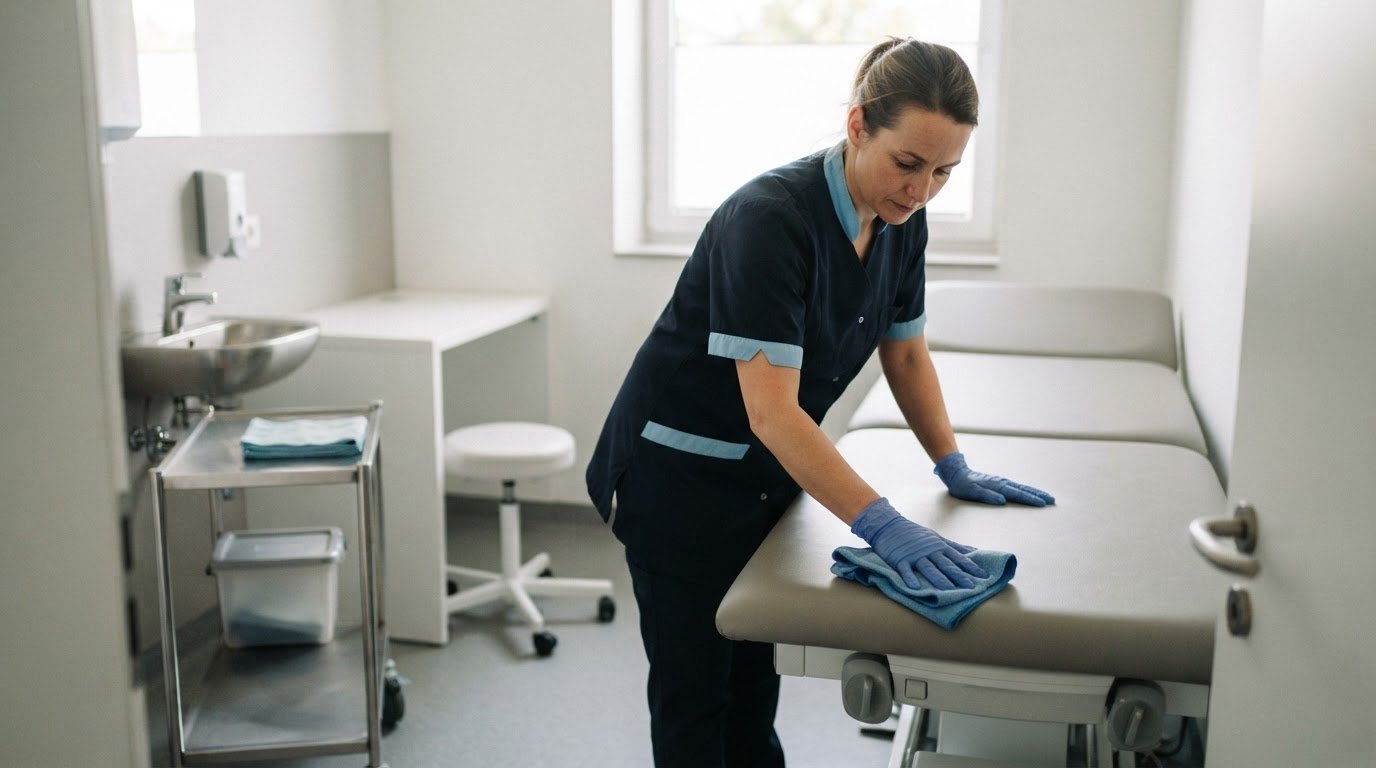
Cleaning priorities depend on room use and exposure. In an examination room, staff may focus on frequently touched surfaces between scheduled cleans; in a corridor, priorities may include floors and shared touchpoints. The plan should also specify which tasks belong to cleaning staff and which remain part of clinical procedures.
Training helps staff follow room-specific procedures, use personal protective equipment (PPE), and respect circulation routes. Cleaning non-medical areas can include reception floors, staff offices, and restrooms. Products should suit the surface and purpose, and be applied according to label directions.
Patient Safety and Staff Health Benefits
Consistent healthcare cleaning helps limit contamination on shared surfaces and supports a cleaner setting for patients and staff. The Centers for Disease Control and Prevention (CDC) notes that germs that cause healthcare-associated infections can spread through unclean hands or improper use or reuse of equipment. Clear task boundaries keep environmental cleaning distinct from clinical equipment decontamination.
For example, a written schedule can assign corridor floor care separately from examination-room touchpoints. This makes responsibilities easier to follow and helps maintain orderly patient movement.
Products, Costs, and Cleaning Risks
A cleaning plan should specify disinfectants suited to the intended surface and purpose, with use guided by label directions and the clinic’s infection-prevention procedures. The clinic’s protocols should direct product use in sensitive areas; no single product should be assumed suitable for every room or surface.
Costs depend on facility size, room types, cleaning frequency, and the agreed task scope; pricing is provided after a quote request. Inadequate cleaning can leave contamination on shared surfaces and increase opportunities for infection to spread. Defined schedules, trained staff, appropriate products, and assigned responsibilities help reduce these risks.
Environmental cleaning for medical centres, clinics and outpatient facilities
A practical cleaning plan maps each area to its use, shared surfaces, and patient-care schedule. This helps teams cover clinical rooms and the communal facilities that support daily operations.
Clinic and Medical Facility Cleaning Tasks
In a clinic, task lists can include waiting areas, patient rooms, examination rooms, bathrooms, and operating rooms. A checklist should identify high-risk areas, patient equipment, restrooms, and communal spaces, then assign tasks and their frequency. This clarifies coverage for cleaning teams and helps staff coordinate cleaning with patient-care schedules.
Consistent medical facility cleaning also depends on access and room use. A busy waiting area, for example, may need attention at different times from an examination room. Plans should fit the facility’s daily flow without disrupting appointments or clinical work.
Facilities Requiring Medical Cleaning
Healthcare cleaning is relevant to primary care facilities, urgent care centres, dental offices, rehabilitation clinics, assisted living centres, outpatient facilities, and surgical facilities. Each setting has different room functions and movement patterns, so its cleaning plan should identify the spaces used by patients, staff, and visitors.
A dental office, such as Hour Dental, includes treatment spaces as well as reception and shared corridors. A rehabilitation clinic may have patient rooms and communal areas. Mapping these spaces helps define the work without treating every room as if it serves the same purpose.
Washrooms and Staff Facilities
Washrooms need a defined routine covering touchpoints, fixtures, floors, and visible soil. Staff facilities matter too: break rooms and changing areas are shared spaces, so the schedule should make responsibilities clear and consistent. Cleaning these areas supports orderly use throughout the working day.
Environmental cleaning should coordinate with facility operations, including patient-care schedules and room access. Some healthcare settings use electrostatic disinfecting systems as an advanced cleaning technology. For ongoing support in shared facilities, regular cleaning routines can help structure recurring tasks.

Medical office cleaning protocols and staff training
A written programme should define tasks, products, frequencies, clinical exclusions, and who records completion. Trained staff then follow those procedures consistently across patient areas and offices.
Patient, Staff, and Data Safety
Cleaning procedures should protect patients and staff while respecting privacy in occupied healthcare spaces. Staff training can cover PPE, infection-control procedures, and careful access to rooms containing patient information. Cleaners should follow the clinic’s access and privacy instructions, for example, rather than handle records or equipment outside their assigned tasks.
The CDC notes that germs that cause healthcare-associated infections can spread through unclean hands or improper use or reuse of equipment. Clear task boundaries support prevention and help maintain an orderly environment for patients.
Infection-Control and Hygiene Standards
In Luxembourg, clinic cleaning procedures should follow the facility’s infection-prevention requirements and applicable guidance. A cleaning programme should name the products and equipment used, identify clinical exclusions, and assign responsibility for documenting completed work. High-touch surfaces should be prioritised, with personal protective equipment used according to the task and facility procedures.
Training should include bloodborne pathogen standards and medical-grade procedures. Documented instruction helps staff understand the steps for their assigned work without taking over clinical duties such as reusable instrument sterilisation or between-patient equipment decontamination.
Cleaning and Disinfection Frequency
No single cleaning frequency suits every clinic area. Schedules should reflect each room’s use, risk, and applicable guidance, so waiting areas, restrooms, and examination spaces may need different routines. Review the schedule when services or building use change, and record who completed each task.
Sharps and Contaminated Waste Handling
Sharps, clinical waste, and contaminated materials need clearly assigned responsibilities under the healthcare organisation’s procedures. The cleaning programme should state which materials fall within environmental cleaning duties and which remain part of clinical or waste-management processes.
Staff training should explain how to respond to spills or contaminated materials within their assigned role, including the relevant protective equipment and escalation process. Written boundaries help prevent unsafe handling and keep routine cleaning separate from specialised waste tasks.
Choosing a medical cleaning company
Choosing a provider means assessing how its methods fit your facility, not simply comparing task lists. For a clinic in Luxembourg, focus on healthcare-setting experience, staff preparation, written procedures, and how cleaning work is documented. These details show whether the service can fit into daily operations while supporting the clinic’s own infection-prevention procedures.
Use these criteria to assess the proposed approach:
- Healthcare experience: Look for experience with settings such as clinics, dental offices, or hospitals, where patient movement and room use shape the work.
- Staff training: Ask how staff learn assigned procedures, including PPE use and safe work around patient areas. Training should match the tasks they perform.
- Defined scope: The cleaning programme should list included surfaces, cleaning frequency, products, equipment, clinical exclusions, and who records completion.
- Suitable methods: Microfiber cloths and appropriate disinfectants can support surface cleaning. Some providers use electrostatic sprayers, but equipment alone doesn’t replace a clear process.
- Quality checks: Regular inspections and records help identify missed tasks and show whether agreed procedures are being followed.
These criteria matter because germs can spread through unclean hands or improper use or reuse of equipment, according to the CDC. Cleaning staff should understand the distinction between environmental cleaning and clinical responsibilities. They should not be assigned reusable-instrument sterilisation or between-patient equipment decontamination unless those duties fall within the healthcare organisation’s procedures.
Also clarify how the plan adapts when room use or services change. Cleaning frequencies should reflect room use, risks, and applicable guidance, and be reviewed when operations shift. Requirements and responsibilities depend on the setting, so a method designed for a hospital may not suit every outpatient clinic.
For recurring premises-cleaning needs, discuss a cleaning plan suited to the facility’s routine.
Deepclean Services
Deepclean Services supports clean commercial premises with Regular Cleaning, One-Time Basic Cleaning, and Deep Cleaning. For a clinic, these services can support routine or more focused cleaning, depending on the agreed scope and areas involved. First distinguish shared, non-clinical spaces from rooms governed by clinical cleaning procedures, then coordinate responsibilities with the facility’s operations. Environmental cleaning supports the clinic’s work but does not replace its infection-prevention procedures or clinical equipment decontamination. Moving In / Out Cleaning can also help when changing premises. Discuss your facility’s cleaning needs with Deepclean Services.
Plan a Clear Next Step for Your Clinic
Use the cleaning plan as a working framework and align it with the clinic’s changing needs. A new service, room, or patient flow can affect which areas need attention and how cleaning fits into daily operations. Keep environmental cleaning separate from clinical infection-prevention duties so every team understands its responsibilities.
For medical clinic cleaning services, start by defining the premises, priorities, and routine support required. Deepclean Services provides cleaning for commercial spaces and can help set a practical scope around the areas involved. A clear discussion makes it easier to plan ongoing or focused cleaning without confusing it with clinical procedures.
Contact Deepclean Services to discuss cleaning for your facility. A well-defined plan gives your team a steady starting point for maintaining its working environment.
Frequently Asked Questions
What Do Healthcare Janitorial Services Do?
Healthcare janitorial services clean and maintain a facility’s shared and work areas. Typical tasks include cleaning reception chairs, door handles, floors, staff kitchens, and washrooms. In clinical rooms, cleaning duties should follow the facility’s assigned procedures and remain separate from clinical tasks such as instrument sterilisation. A defined scope helps staff understand which spaces they service and when those spaces are ready for routine cleaning.
What is terminal cleaning, and when is it needed in a healthcare facility?
Terminal cleaning is a thorough clean and disinfection of a patient-care room after its use ends and before it is used again. Facility procedures define when it is required and which surfaces and equipment are in scope. For example, the room handover process can identify who releases the space for cleaning and who confirms it is ready for the next use.
What cleaning services do medical clinics need?
Clinics need premises cleaning that matches their rooms and operations, such as routine care for shared spaces or focused cleaning when an area needs extra attention. Regular Cleaning, One-Time Basic Cleaning, and Deep Cleaning address different general cleaning needs. Clinical decontamination, reusable instrument sterilisation, and patient-equipment cleaning must remain governed by the clinic’s procedures and assigned responsibilities.
How can clinics compare and choose a medical cleaning company in Luxembourg?
Compare proposals against the same scope to make differences clear. Check whether each plan identifies reception, staff areas, patient rooms, task frequencies, and completion records. Consider experience in healthcare settings and staff training relevant to the assigned duties. Also assess how the plan can be revised if room use or services change, rather than relying on a fixed task list.
What training, certifications, and insurance should medical clinic cleaners have?
Cleaners should have documented, task-specific training covering their work, including PPE use, infection control, bloodborne pathogen standards, and patient privacy. A certificate can support evidence of training, but it should not replace clear instructions for the actual tasks. Contract documents should also explain responsibility for assigned cleaning and the insurance arrangements applicable to the service.
What should a medical clinic cleaning checklist include when comparing providers?
A useful comparison checklist records the rooms and surfaces covered, task frequency, products and equipment, clinical exclusions, and who records completion. Include practical details such as how room access is coordinated, how missed tasks are reported, and how the plan changes when clinic operations shift. Applying the same checklist to each proposal makes scope gaps easier to identify before work begins.