
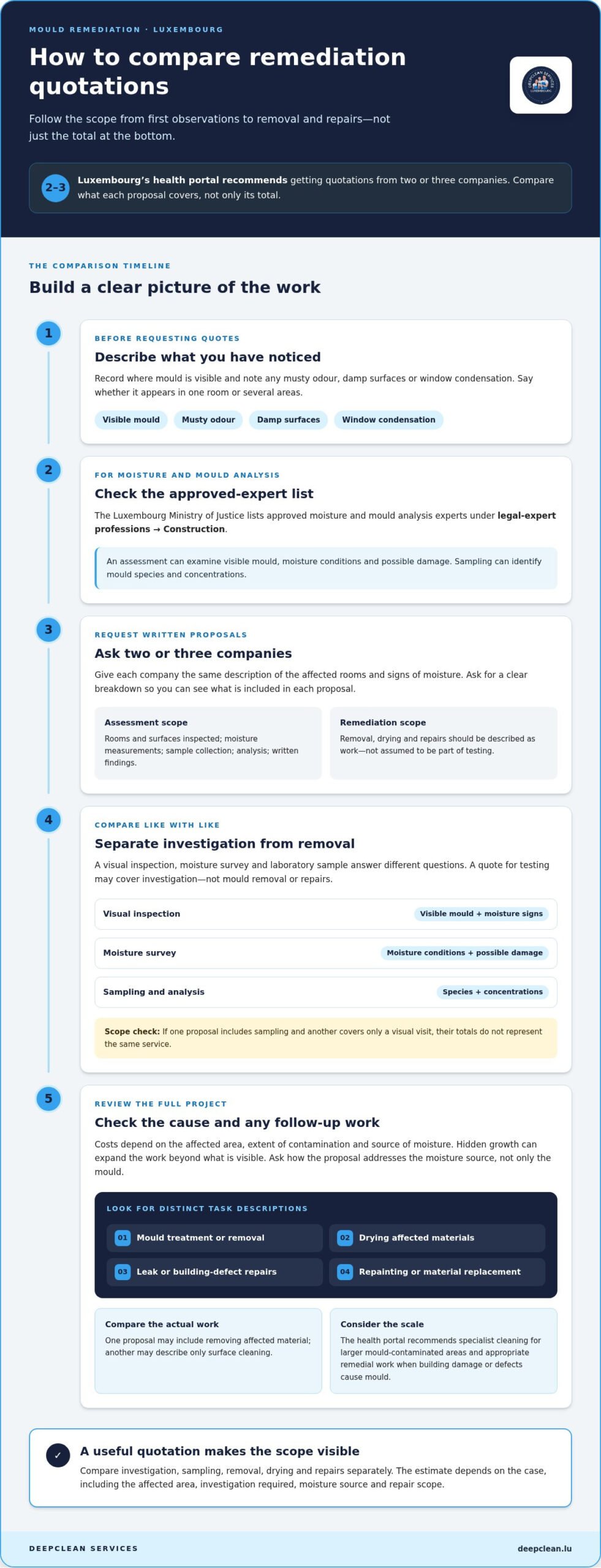
A single quote rarely tells the whole story: the mould remediation cost in Luxembourg depends on the affected area, the extent of damage and the source of moisture. Luxembourg’s health portal generally recommends obtaining quotations from two or three companies for remediation work. Compare the proposed scope, not just the total, to see exactly what each quote covers.
Musty odours, dark spots and window condensation can point to a moisture problem, but visible mould may not reveal its full extent or cause. For an assessment, Luxembourg’s Ministry of Justice lists approved moisture and mould analysis experts under legal-expert professions in the Construction branch.
This guide explains how to find an appropriate expert, what can affect a remediation quote and how to compare proposed work. It also covers why identifying the moisture source matters, which additional repairs may be relevant, and how Deepclean Services’ mould removal service fits into the process.
Key Takeaways
- Compare quotations from two or three companies, focusing on the proposed work and what each quote covers, not only the total.
- Use Luxembourg’s Ministry of Justice list to find approved experts for moisture and mould analysis in the Construction branch.
- Understand how the affected area, the extent of damage and the moisture source shape the work required and its cost.
- Separate mould cleaning from follow-up work such as drying, repairing leaks, repainting or replacing damaged materials.
- When mould appears in a rental home, identify whether negligence or a structural issue is involved, and review the relevant insurance policy terms.
Getting remediation quotations
In Luxembourg, compare written quotations from two or three companies before deciding on remediation work. A useful comparison separates investigation, mould removal and repairs, so you can see what each proposal includes.
Inspection, Testing, and Survey Quotations
An inspection or moisture survey assesses visible mould, moisture conditions and possible damage; sampling can identify mould species and concentrations. This distinction matters because a testing quote may cover investigation, not removal or repairs.
Indoor air quality assessment firms can visit a home and take samples. Their findings can clarify the issue and the work proposed. Costs depend on the visit’s scope, sampling and analysis, and whether the assessment covers one room or broader indoor conditions. Request a clear breakdown of these elements when comparing quotations.
Cost Factors in Mould Remediation
Remediation costs reflect the affected area, the extent of contamination and the source of moisture damage. A confined patch may require different work from mould across several surfaces, while hidden growth can expand the scope beyond what is visible.
Ask each company to describe the proposed work and explain how it addresses the moisture source. Investigating the cause matters in Luxembourg because untreated moisture can allow mould to return. A quotation should distinguish removal from work addressing the underlying problem, such as repairs related to a leak or building defect.
Additional Drying and Repair Costs
Drying and repairs are separate parts of the project when moisture has affected building materials. Mould can damage walls, ceilings and floors, so a quotation may need to list treatment, drying, repainting or material replacement as distinct tasks.
Compare the stated repair scope, not just the total. For example, one proposal might include removing affected material, while another describes only surface cleaning. Clear itemisation shows whether the work addresses both visible contamination and resulting damage.
To find a suitable moisture and mould analysis expert, consult the Luxembourg Ministry of Justice list of approved experts under legal-expert professions in the Construction branch. Luxembourg’s health portal recommends obtaining quotations from two or three companies. It also recommends specialist cleaning for larger mould-contaminated areas and appropriate remedial work when building damage or defects cause mould.
When requesting quotations, describe where mould is visible, and note any musty odour, damp surfaces or window condensation. Say whether the problem appears in one room or several areas. These details help companies understand the situation and define the scope of their proposed assessment.
- Compare whether each quotation covers inspection, sampling, removal, drying and repairs.
- Check that the proposed scope identifies the moisture cause, not only visible mould.
- Look for separate descriptions of testing, material removal and surface restoration.
The cost depends on the case and is provided after a quote request. The affected area, investigation required, moisture source and repair scope shape the estimate. Comparing these details makes differences between quotations easier to understand.
What are typical prices for mould inspection, testing, and moisture surveys in Luxembourg?
Inspection and testing costs in Luxembourg depend on what the assessment needs to establish. A visual inspection, moisture survey and laboratory sample answer different questions, so their quotations may cover different tasks. Compare each proposal’s scope before judging its total: a sample-based assessment, for example, involves more than viewing a visible patch.
What an inspection or test covers
An inspection looks for visible mould and signs of moisture; testing can identify mould species and concentrations. Indoor air quality assessment firms can visit a home and take samples for analysis. The findings help clarify whether a quotation covers observation, sampling, analysis or a combination.
For example, a musty odour without a visible patch may call for a different assessment scope from a clearly affected wall. Ask the assessor to specify which rooms and surfaces the inspection covers, whether samples are included, and what findings the report will provide. These details make quotations easier to compare.
What changes the quoted amount
The work involved is a key price factor. A survey covering one room differs from an assessment that examines several areas or investigates moisture beyond visible mould. Sampling and analysis add distinct tasks to a visual inspection, while the number and location of samples shape the assessment’s scope.
The suspected cause matters, too. A damp patch near a pipe, for example, raises a different question from condensation on a window. Describe the location and signs you have observed, then compare how each quotation proposes to assess them. A clear scope shows what the price covers without assuming that differently defined assessments are equivalent.
How to compare inspection quotations
Review each quotation for the same practical details: rooms inspected, moisture measurements, sample collection, analysis and written findings. If one proposal includes sampling and another covers only a visual visit, their totals don’t represent the same service. Identify these differences before comparing costs.
Also distinguish an assessment from remediation. A report identifying mould species or moisture conditions does not itself describe cleaning, drying or repairs. Separating investigation from remedial work helps you understand which stage a quotation covers and what decision follows from the findings.
For a useful comparison, write down the visible signs, affected rooms and questions you want the assessment to answer. Then match each quotation against that same brief. If the assessment points to contaminated surfaces requiring cleaning, mould removal support can form the next part of addressing the problem.
How do costs vary by mould area, severity, and cause of moisture damage?
The mould remediation cost in Luxembourg reflects the work needed across the affected space, not just the visible patch. Area, contamination, access and moisture damage all shape the scope. A mark beside a window, for example, may involve different tasks from mould affecting a wall and flooring.
Area and the extent of contamination
A larger affected area generally requires more cleaning and a broader work plan. Luxembourg’s health portal recommends specialist cleaning for larger mould-contaminated areas. Its guidance also stresses that visible growth in one room does not rule out hidden mould or spores elsewhere in the dwelling.
This distinction matters in a home with a dark patch in one corner. If a musty odour or dampness also appears in another room, the visible patch alone may not show the full scope. The proposal should explain which surfaces and areas are included, and whether suspected spread affects the planned work.
Severity and damage to materials
Severity depends on how far mould and moisture have affected the building, as well as the condition of its surfaces. Cleaning a washable surface differs from work involving damaged wall, ceiling or floor materials. Where materials cannot be cleaned effectively, removal and replacement may add separate tasks to the remediation scope.
For example, mould limited to a surface may need different treatment from growth accompanied by crumbling plaster or damp flooring. Luxembourg’s health portal strongly recommends expert assessment of contamination extent in homes with children or vulnerable people. This assessment helps define the affected area and the work required.
Why the moisture source changes the scope
The moisture source can determine whether cleaning alone addresses the problem. A leaking pipe, rainwater seepage or construction defect can continue to dampen materials unless the source is addressed. Luxembourg’s health portal recommends expert analysis of building damage or construction defects causing mould, so the cause can be identified.
If mould appears despite sufficient ventilation, Luxembourg’s health portal says building damage or construction defects are highly likely causes. A quotation may therefore need to distinguish mould removal from work addressing the underlying damage. The price depends on the case and is given after a quote request; the affected area, contamination, moisture source and repair scope shape it.
When comparing proposals, check whether each describes the same area and type of work. A quote limited to visible surface cleaning is not directly comparable with one that includes damaged-material removal or work addressing a moisture source. Ask for a scope that identifies included surfaces, materials and tasks. This makes it easier to understand why totals differ and whether the proposed work matches the situation at home.
What additional costs can arise for drying, repairs, repainting, or replacing damaged materials?
Mould removal may be only one part of a Luxembourg remediation project. Moisture can damage walls, ceilings and floors, adding drying, repairs or replacement work. A damp wall beside a leaking pipe, for example, may need attention beyond cleaning its visible surface.
Drying and addressing the moisture source
Drying may be needed when moisture remains in building materials after a leak or seepage. The work required depends on which materials are wet and how far moisture has spread. A surface that feels dry may not reveal whether deeper layers are affected, so the proposed scope should identify the areas being treated.
Repairing the moisture source is a separate consideration. A leaking pipe can keep a wall damp after mould has been cleaned, while rainwater seepage can affect ceilings or floors. Luxembourg’s health portal recommends that a specialist firm propose appropriate remedial measures and work when mould results from building damage or defects.
Repairs to walls, ceilings and floors
Once damaged areas are identified, the repair plan may include removing affected materials or restoring the surface. For example, cleaning mould from a wall does not replace damaged plaster. A quotation should distinguish cleaning from material removal and repairs, so you can see which tasks address contamination and which restore the building.
The appropriate work also depends on the affected material. A damaged floor may require different repairs from a stained ceiling. In rental homes, examples of work a tenant may have to pay for when responsible include deep cleaning, painting walls, removing affected materials and repairing water pipes causing mould. Responsibility depends on the cause.
Repainting and replacing materials
Repainting may follow cleaning or repairs when walls are stained or damaged material has been removed. It is a finishing task, not a substitute for removing mould or correcting moisture. For instance, painting over a damp, contaminated surface leaves the underlying issue unaddressed.
Replacement work may be needed if mould has damaged materials that cannot be retained. A quotation should state which areas require removal, what materials need replacement and whether repainting follows. These details distinguish a surface-cleaning proposal from a broader restoration plan for damaged walls, ceilings or floors.
To compare proposals, separate the work into mould cleaning, drying, source repairs, material replacement and repainting. Check that each quotation describes the same rooms and affected surfaces. A proposal including pipe repairs and wall restoration covers different tasks from one limited to cleaning. This makes differences in scope, and their effect on the total, easier to understand.
The price depends on the case and is given after a quote request; affected materials, moisture spread, source repairs and finishing work shape the estimate. Luxembourg’s health portal recommends expert analysis of building damage or construction defects causing mould, helping identify the cause before remedial work is planned.
Do Luxembourg home insurance policies cover mould remediation, and what exclusions apply
Whether a Luxembourg home insurance policy covers mould remediation depends on the policy wording and the cause of the damage. The key distinction is between mould itself and the event or building issue that allowed moisture to develop. A leak-related claim, for example, raises different questions from mould associated with ongoing condensation.
Start with the cause of the damage
Read the policy schedule and wording alongside any report describing the moisture source. Identify whether the damage followed a specific event, such as a pipe leak, or developed over time. The cause matters because the policy may address the source of water damage separately from mould cleaning, drying, repairs or repainting.
Keep the written assessment and photographs together. If a report identifies rainwater seepage or a building defect, that information may help explain how the mould formed. If it describes condensation, record the affected rooms and visible signs. These details make it easier to compare the reported cause with the policy wording.
Read exclusions as specific contract wording
Look for clauses addressing gradual damage, condensation, maintenance, leaks, mould or damage caused by building defects. These are areas to examine, not universal exclusions that apply to every Luxembourg policy. The exact wording and how it relates to the reported cause matter more than assuming mould is always included or always excluded.
For example, a policy may describe water damage while addressing resulting mould separately. Check how it defines the insured event, what resulting damage it covers and whether an exclusion applies to the circumstances. Read the schedule, definitions, exclusions and claim conditions together, rather than relying on one phrase in isolation.
Separate tenant and landlord responsibilities
Insurance and responsibility for repairs are related, but not identical. In Luxembourg, tenants should inform their landlord immediately after discovering mould and allow access for necessary repairs. A landlord is responsible for repairing mould damage caused by structural defects, such as leaks, rainwater seepage or inadequate ventilation.
Where mould results from tenant negligence, the tenant is generally responsible for remediation costs. For instance, a pipe leak caused by a structural defect differs from a preventable moisture problem linked to a tenant’s actions. Establishing the cause helps clarify responsibility, while the policy wording determines what the relevant insurance covers.
Before making a claim, assemble the policy documents, photographs, dates of discovery and any moisture or mould assessment. Note the affected rooms and proposed work, including cleaning, drying and repairs. Keep copies of messages reporting mould to a landlord, where applicable. This gives the insurer a clear account without treating an estimate as proof of coverage.
For help addressing mould-affected surfaces, get support with mould removal as part of the practical response to a confirmed contamination issue.
Deepclean Services: Regular Cleaning
Deepclean Services can support routine cleaning once mould remediation and any necessary repairs are complete. Regular Cleaning suits ongoing care, while One-Time Basic Cleaning or Deep Cleaning can address a specific household cleaning need. These services complement remediation, but don’t replace investigation of moisture or repairs to its source.
For example, after affected materials have been addressed, regular cleaning can help keep shared surfaces and rooms in order. Deep Cleaning may suit a more thorough clean, while Moving In / Out Cleaning is designed for a change of occupancy. Choose the service that matches your cleaning task, separate from specialist mould assessment or structural work.
Contact Deepclean Services or visit deepclean.lu to discuss your cleaning needs.
Keep the next stage of care clear
A clear view of the mould remediation cost in Luxembourg begins with matching the written scope to the work still needed. Once remediation and any moisture-source repairs are complete, note which rooms and surfaces were treated. That record can guide a practical cleaning routine without confusing ongoing upkeep with specialist remediation.
Deepclean Services offers Regular Cleaning for recurring household care, One-Time Basic Cleaning for a specific cleaning need, and Deep Cleaning for a more thorough clean. These options can support the home after remediation; choose according to the task and condition of the space.
If you’re ready to plan the cleaning that follows, contact Deepclean Services. Take the next step at a pace that suits your home, with a clear distinction between cleaning and any repair work still required.
Frequently Asked Questions
What is the average cost of professional mould remediation in Luxembourg?
The total mould remediation cost in Luxembourg depends on the affected area, damage severity and moisture source. A small, accessible patch and contamination involving damaged wall materials require different work. Drying, repairs and replacement materials can also affect the overall scope. Compare written proposals based on the same description of the property and requested tasks, rather than treating one figure as suitable for every home.
How much does mould remediation cost per square metre in Luxembourg?
There isn’t one per-square-metre figure that describes every remediation job. Visible mould is only one part of the scope: affected materials, hidden moisture and the work needed to address the cause also matter. A measured surface area helps describe the job, but won’t show whether plaster, flooring or another material needs repair or replacement. Compare proposals that specify both area and tasks.
How much does mould removal cost for common jobs such as a bathroom, basement, or bedroom?
A bathroom, basement or bedroom doesn’t have a fixed mould-removal cost based on its name alone. In a bathroom, affected grout or wall surfaces may define the work; a basement may involve moisture affecting several materials. In a bedroom, the location and extent of mould matter. Describe the actual surfaces and damage, rather than relying on a room label, when seeking a useful estimate.
How can I compare quotes from mould remediation companies in Luxembourg, and what should a quote include?
Compare quotes by matching their assumptions and listed tasks. Luxembourg’s health portal generally recommends requesting quotations from two or three companies. Check whether each document identifies the inspected rooms, proposed remediation, and related repairs or drying. Note what is excluded, too. A quote limited to cleaning, for example, isn’t directly comparable with one that also includes damaged-material replacement.
What steps should homeowners take before hiring a mould remediation contractor in Luxembourg?
Record where mould appears, when you first noticed it and any accompanying signs, such as a musty smell or damp surface. Take clear photographs and gather details about leaks or previous repairs. For moisture and mould analysis, Luxembourg’s Ministry of Justice lists approved experts under legal-expert professions in the Construction branch. If you rent, inform your landlord promptly and keep a copy of the message.