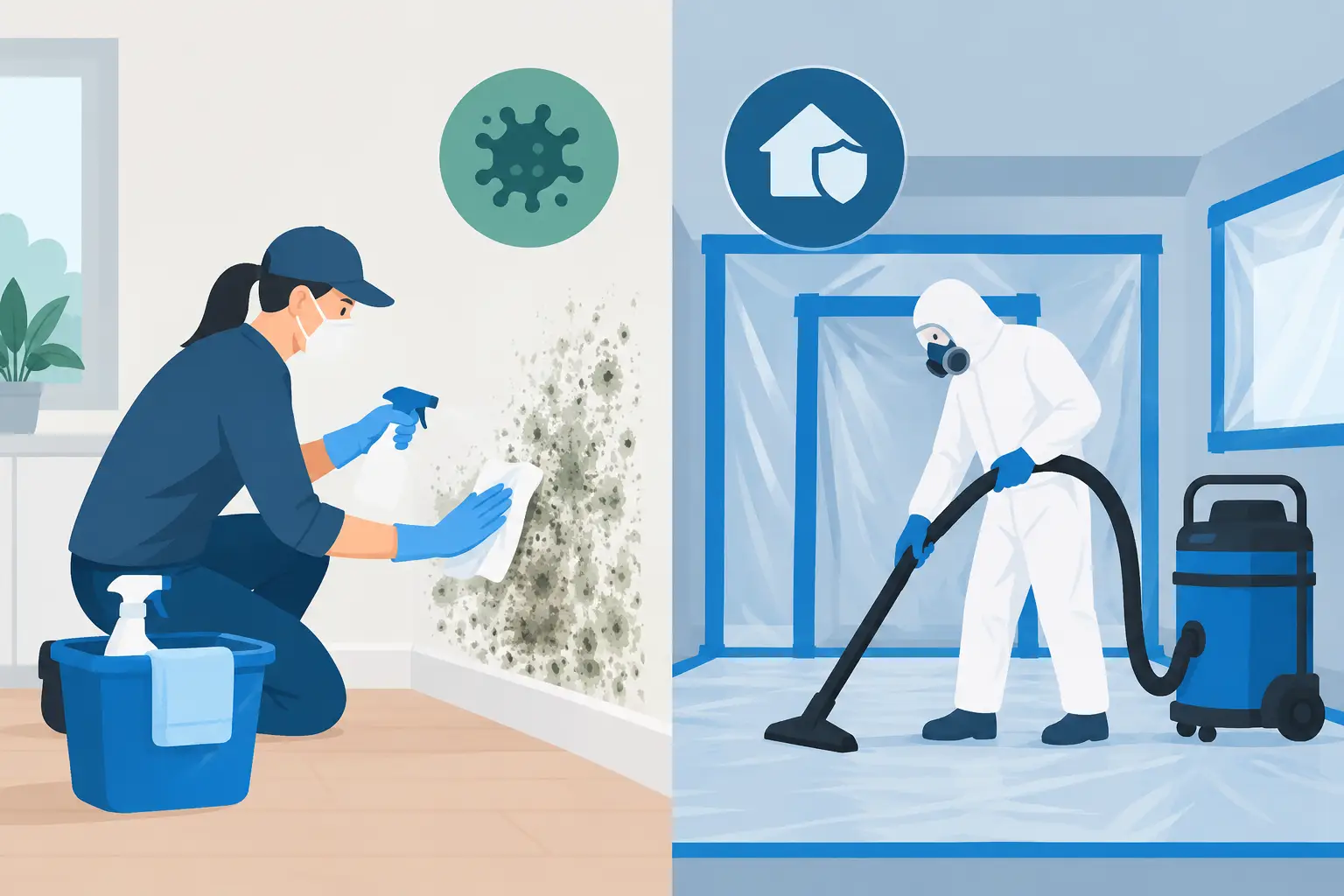
A few dark spots around a shower seal may need careful cleaning. A musty odor returning after every cleaning is a different problem. Understanding mould cleaning versus remediation helps homeowners, renters, landlords, and workplace managers choose the right response before a small issue spreads into damaged walls, stained ceilings, or an uncomfortable space.
The difference comes down to cause and extent. Cleaning deals with visible surface growth. Remediation is a wider process that identifies moisture, removes affected material when necessary, controls spores during the work, and helps prevent the mould from coming back. Both have a place. The right choice depends on what is growing, where it is growing, and why it appeared.
What Mould Cleaning Is Designed to Do
Mould cleaning is appropriate for small, contained areas of growth on hard, non-porous surfaces. Think bathroom tile, shower glass, painted trim in a well-ventilated room, or a window frame with light condensation-related spotting. The goal is to remove visible mould residue and leave the surface clean and fresh.
A professional cleaning crew starts by assessing the surface and choosing a suitable cleaning method. The work may involve targeted cleaning products, controlled scrubbing, detail work around seals and corners, and drying the area thoroughly. Commercial-grade equipment can make a clear difference in bathrooms, kitchens, and other high-moisture spaces where ordinary wiping does not reach into joints and edges.
Cleaning is often the practical answer when the moisture source is obvious and manageable. For example, a bathroom with occasional surface mould may improve once the room is cleaned, ventilated after showers, and kept dry. If condensation forms around a window, cleaning the frame and improving airflow can be enough when there is no water damage behind it.
What cleaning cannot do is fix a hidden leak, repair damaged drywall, or remove mould that has grown inside porous building materials. Repeatedly cleaning the same patch without addressing the moisture behind it is usually a temporary fix.
Mould Cleaning Versus Remediation: The Key Difference
The simplest way to compare mould cleaning versus remediation is this: cleaning treats what you can see, while remediation addresses the full condition that allowed mould to grow.
Remediation is generally needed when mould covers a larger area, keeps returning, appears after a flood or plumbing leak, or affects materials such as drywall, insulation, carpet padding, ceiling tiles, or untreated wood. These materials can hold moisture and allow mould to grow beneath the surface. A clean-looking finish does not always mean the problem is gone.
A remediation process may include locating the moisture source, isolating the work area, removing affected porous materials, cleaning remaining structural surfaces, drying the space with professional equipment, and checking that conditions are suitable for rebuilding or repainting. The exact scope depends on the property and the cause of the damage.
This is why the cheaper-looking option is not always the better value. Surface cleaning may be the correct, affordable service for a small bathroom issue. But using cleaning alone on water-damaged drywall can lead to repeat visits, more damage, and disruption later. The goal is not to make the problem look better for a week. It is to choose work that matches the condition of the space.
Signs That Cleaning May Be Enough
Small mould issues can often be managed with a focused professional cleaning service when the growth is limited, the surface is hard and intact, and there is no sign of an active leak. A few spots around silicone, light marks on tile grout, or minor growth on a regularly damp windowsill are common examples.
Cleaning may also be suitable after a one-time moisture event that has been fully resolved and has not soaked materials behind the visible surface. The area still needs to be dried properly. Mould needs moisture to continue growing, so a cleaned surface that remains damp is likely to become a problem again.
After cleaning, simple habits matter. Run bathroom ventilation during and after bathing. Wipe standing water from shower edges. Avoid drying laundry in poorly ventilated rooms when possible. Keep furniture slightly away from cold exterior walls if condensation is common. These are not complicated changes, but they can protect the result of a professional clean.
When Remediation Is the Safer Choice
A musty smell is often the first warning that the issue is more than surface-level. Other warning signs include bubbling paint, soft or stained drywall, warped flooring, water marks on a ceiling, recurring mould in the same exact spot, or mould that appeared after a leak, overflow, or flood.
In rental properties and shared buildings, the source may be outside the room where mould is visible. Water can travel from a leaking pipe, a damaged roof area, a neighboring unit, or poor drainage around the building. For offices, storage areas, schools, and commercial spaces, hidden moisture can also affect larger sections of wall, ceiling, carpet, or ventilation-related areas. These situations need a clear assessment, not guesswork.
Remediation is particularly worth considering if occupants have ongoing irritation or feel unwell in a damp, musty space. Mould affects people differently, and cleaning companies should not make medical diagnoses. Still, it is sensible to treat persistent indoor dampness seriously, especially in homes with children, older adults, or people with respiratory sensitivities.
If the affected area is extensive or contamination may have reached inside building materials, a qualified remediation provider should manage the project. They can coordinate the necessary containment, removal, drying, and repair steps. This protects the rest of the property from unnecessary dust and disturbance during the work.
Why Moisture Control Decides the Result
Mould is not only a cleaning issue. It is a moisture issue first. Bathrooms, kitchens, basements, laundry rooms, and poorly ventilated corners are common trouble spots because they can stay damp longer than expected.
The source can be obvious, such as a shower with weak ventilation, or difficult to spot, such as a slow pipe leak behind a cabinet. Condensation can also cause trouble when warm indoor air meets a cold wall or window. In commercial properties, blocked drainage, roof leaks, or equipment-related water can create similar conditions on a larger scale.
Before booking cleaning, take a close look at the area. Is it wet to the touch? Has it returned after previous cleaning? Are nearby materials swollen, peeling, or stained? Does the odor remain when the room is dry? Clear answers help determine whether the job is a specialist cleaning task or a remediation and repair issue.
A Practical Approach for Homes and Workplaces
Start with the condition, not the appearance. A small area of surface mould on tile may need a professional mould removal clean and better daily moisture control. A growing patch on drywall needs investigation before anyone simply paints or sprays over it.
For move-in and move-out cleaning, this distinction is especially useful. Surface mould around bathrooms, windows, or appliances can often be handled as part of a detailed cleaning service when the underlying surfaces are sound. If there is water damage, strong odor, or recurring growth, document the condition and arrange the right repair or remediation process before the property changes hands.
For offices and managed properties, act early. A reported damp smell, stained ceiling tile, or repeated mould around one window is easier to address before it affects staff comfort, tenant confidence, or a larger section of the building. Schedule cleaning when cleaning is appropriate, but do not expect it to solve a building moisture problem.
Deepclean Services can help with professional mould-focused cleaning for suitable surface-level conditions, using trained crews and equipment designed for detailed results. When an inspection points to hidden moisture or damaged materials, the responsible next step is remediation by the right specialist before routine cleaning resumes.
A clean, dry space is the best target. Deal with the visible marks, fix the moisture that caused them, and your home or workplace has a much better chance of staying fresh.