
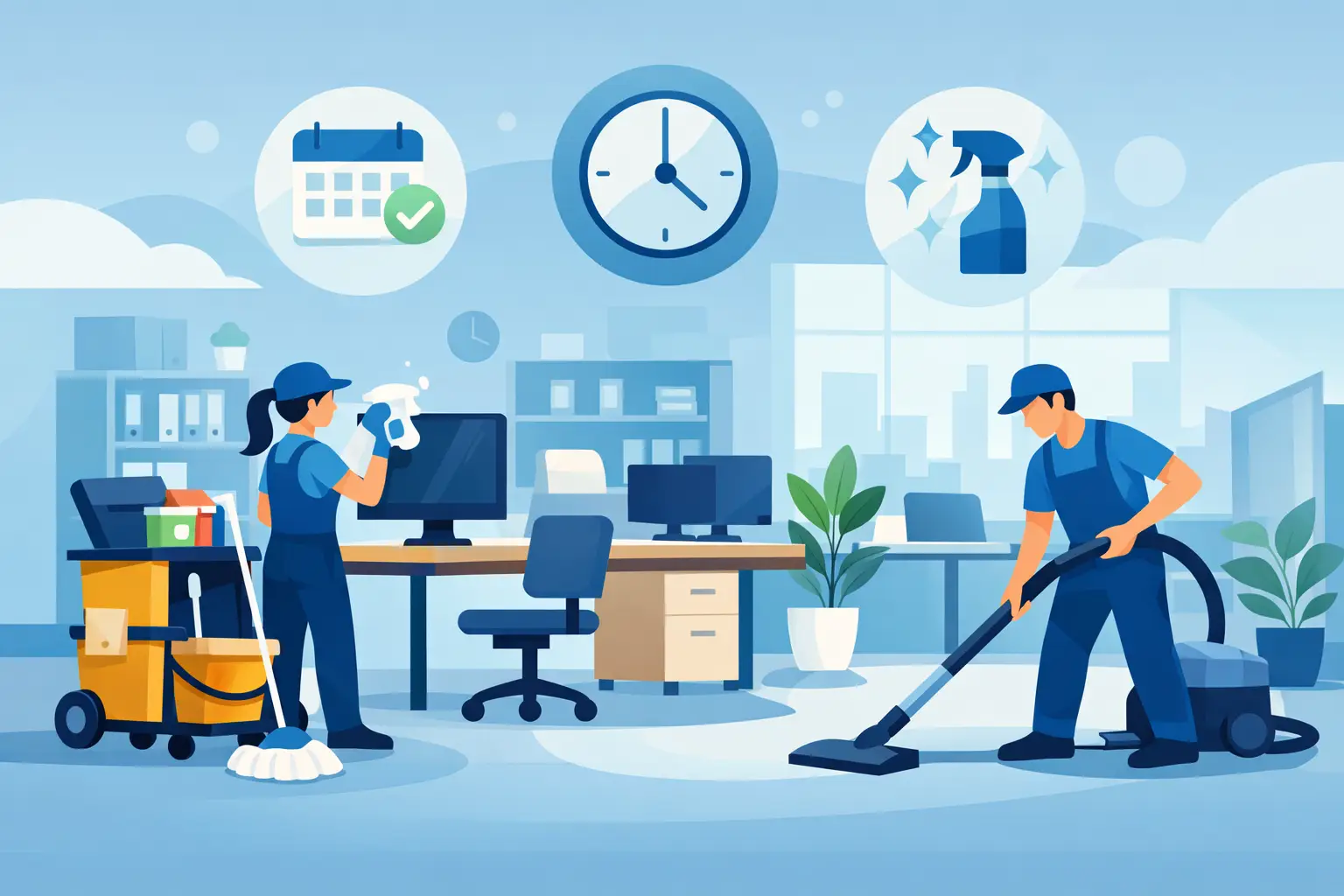
A restroom that looks fine at 8:00 a.m. can need attention by lunchtime. A kitchen counter can collect coffee spills, crumbs, and dishes in a single busy morning. That is why the answer to how often should an office be cleaned is not simply “once a week.” A good schedule follows how people actually use the space.
For most offices, cleaning should happen on several levels: quick daily upkeep for high-touch and shared areas, regular weekly work for the wider workspace, and periodic deep cleaning for the dirt that builds up slowly. The right plan keeps your office clean and fresh without paying for services the space does not need.
How Often Should an Office Be Cleaned?
A typical small or medium office with regular weekday traffic usually benefits from professional cleaning two to five times per week. Offices with a busy reception area, shared restrooms, client meetings, or a communal kitchen often need daily service. A low-traffic office where employees work mostly remotely may be fine with one thorough cleaning each week, supported by simple daily tidying from the team.
The deciding factor is not just square footage. It is foot traffic, the number of shared spaces, the type of work being done, and the standard visitors expect when they walk through the door.
An accounting office with six employees and limited visitors has very different needs from a medical practice, retail office, school administration area, or customer service center. In a quiet office, dust and bin waste may be the main concerns. In a busy workplace, restrooms, floors, door handles, meeting rooms, and kitchen surfaces can become visibly dirty fast.
A cleaning schedule should feel reliable, not excessive. If bins overflow before the next visit, restrooms lose their fresh appearance, or floors look marked by midweek, the schedule is too light. If cleaners repeatedly find untouched areas, it may be possible to reduce visits or focus the service where it is needed most.
A Practical Office Cleaning Frequency Guide
Every workday: shared and high-contact areas
Daily cleaning is the standard for places that everyone uses. This includes restrooms, kitchens or break rooms, reception areas, entrances, elevator buttons, and frequently touched door handles. Waste should be removed, surfaces wiped, floors spot-cleaned, and supplies such as soap, paper towels, and toilet paper checked.
Reception deserves special attention because it sets the tone for clients, candidates, delivery drivers, and business partners. Smudged glass, dusty furniture, stained entry mats, or a full trash bin can make an otherwise professional office feel neglected.
In high-traffic workplaces, vacuuming or mopping entrance and common-area floors every day prevents dirt from being tracked through the building. During wet weather, this is also a safety issue. Clean, dry floors reduce slipping risks and protect the finish of hard flooring over time.
Two to five times per week: routine workplace cleaning
Most active offices need routine cleaning at least twice a week. This visit should cover work areas, floors, restrooms, shared desks, meeting rooms, and kitchen surfaces. Vacuuming, mopping, dusting reachable surfaces, emptying bins, and wiping high-touch points help maintain a consistently presentable environment.
Three to five visits per week are often the better fit for offices with 20 or more people, frequent visitors, open-plan layouts, or staff who eat at their desks. The more people share a space, the faster small messes become a visible workplace problem.
Desk cleaning needs a sensible boundary. Employees may prefer to keep personal papers, devices, and work materials untouched. A professional crew can clean the accessible surfaces around those items while the office sets a clear-desk policy for anything that needs a more thorough wipe-down. This protects privacy and makes cleaning more effective.
Weekly: low-traffic spaces and detailed surface care
Weekly cleaning is usually enough for private offices, storage rooms, lightly used meeting rooms, and other areas with limited daily use. It is also a good frequency for dusting ledges, cleaning interior glass, wiping doors, and treating fingerprints on partitions.
Even in a low-traffic office, weekly cleaning should not mean only taking out the trash. Floors need attention, restrooms need a complete clean, and shared kitchen appliances should be checked for spills and old food. A single neglected refrigerator or microwave can affect the whole workplace.
Monthly or quarterly: deep cleaning tasks
Routine cleaning keeps an office looking good. Deep cleaning protects the parts people stop noticing until they become a problem. Depending on the office and its use, plan these services monthly, quarterly, or twice a year.
Carpets should be professionally cleaned every six to 12 months in a standard office, and more often in entryways, meeting rooms, and heavily used corridors. Carpet fibers hold dust, grit, and stains that routine vacuuming cannot fully remove. Regular extraction helps carpets look better and last longer.
Upholstered chairs, fabric partitions, and office sofas also need periodic care. In reception areas, these surfaces can collect body oils, dust, food particles, and marks from daily use. A scheduled upholstery clean is far easier than trying to restore furniture after stains have set.
Windows, blinds, vents, baseboards, light fixtures, and hard-to-reach corners are other common deep-cleaning priorities. If your office has balconies, exterior entry areas, or large glass fronts, these may need a separate plan based on weather and how visible they are to visitors.
What Changes the Cleaning Schedule?
The number of people in the office is the clearest starting point, but several practical details can move your schedule up or down.
An office with a customer-facing reception should generally be cleaned more often than an internal workspace. Visitors notice floors, glass, restrooms, and seating immediately. Businesses that host client meetings may want cleaning completed before the workday begins so the space is ready from the first appointment.
Food changes everything. A workplace where people only drink coffee needs less kitchen attention than one with daily lunches, shared snacks, and a full break room. Food waste attracts odors and can quickly make a clean office feel unpleasant.
Seasonality matters as well. Rain, snow, and mud increase the need for entrance cleaning and floor care. Allergy season can justify more frequent dust removal and carpet vacuuming. During periods of higher illness, businesses may also increase cleaning of shared touchpoints and restrooms to support a healthier environment.
Finally, consider the building itself. Older properties may collect more dust around vents, radiators, and window frames. Offices with carpeted floors, multiple restrooms, glass partitions, or a large kitchen require more detailed work than a simple open room with hard floors.
Build a Schedule Your Team Can Maintain
The best office cleaning plan starts with a walk-through. Identify the areas that become dirty first, the rooms clients see, the spaces employees share, and the tasks that are currently being missed. Then set a clear routine around those priorities instead of using a one-size-fits-all checklist.
For example, a 10-person office with one restroom and a small kitchenette may choose two professional visits each week, plus daily employee habits for dishes and personal desk tidiness. A 40-person office with multiple restrooms, daily visitors, and a busy lunch area may need cleaning every weekday, with periodic carpet and upholstery service added to the calendar.
Timing is just as useful as frequency. Many offices prefer cleaning after hours to avoid disruption. Others need an early-morning refresh before staff and visitors arrive. Flexible scheduling allows the cleaning work to fit your operation rather than interrupt it.
A trained cleaning crew can also spot issues before they become costly, such as stained carpet traffic lanes, persistent restroom odors, mold around wet areas, or dirt buildup in overlooked corners. Deepclean Services helps offices create practical recurring schedules and provides one-time intensive cleaning when a workplace needs a stronger reset.
A clean office should not depend on whoever has a few spare minutes at the end of the day. Choose a frequency that keeps restrooms fresh, shared spaces comfortable, and your workplace ready for the people who use it every day.



Pingback: Office Cleaning Checklist for a Fresh Workplace – Deepclean Services
Pingback: How to Maintain Office Hygiene Every Day – Deepclean Services
Pingback: Office Cleaners: What a Reliable Team Delivers – Deepclean Services