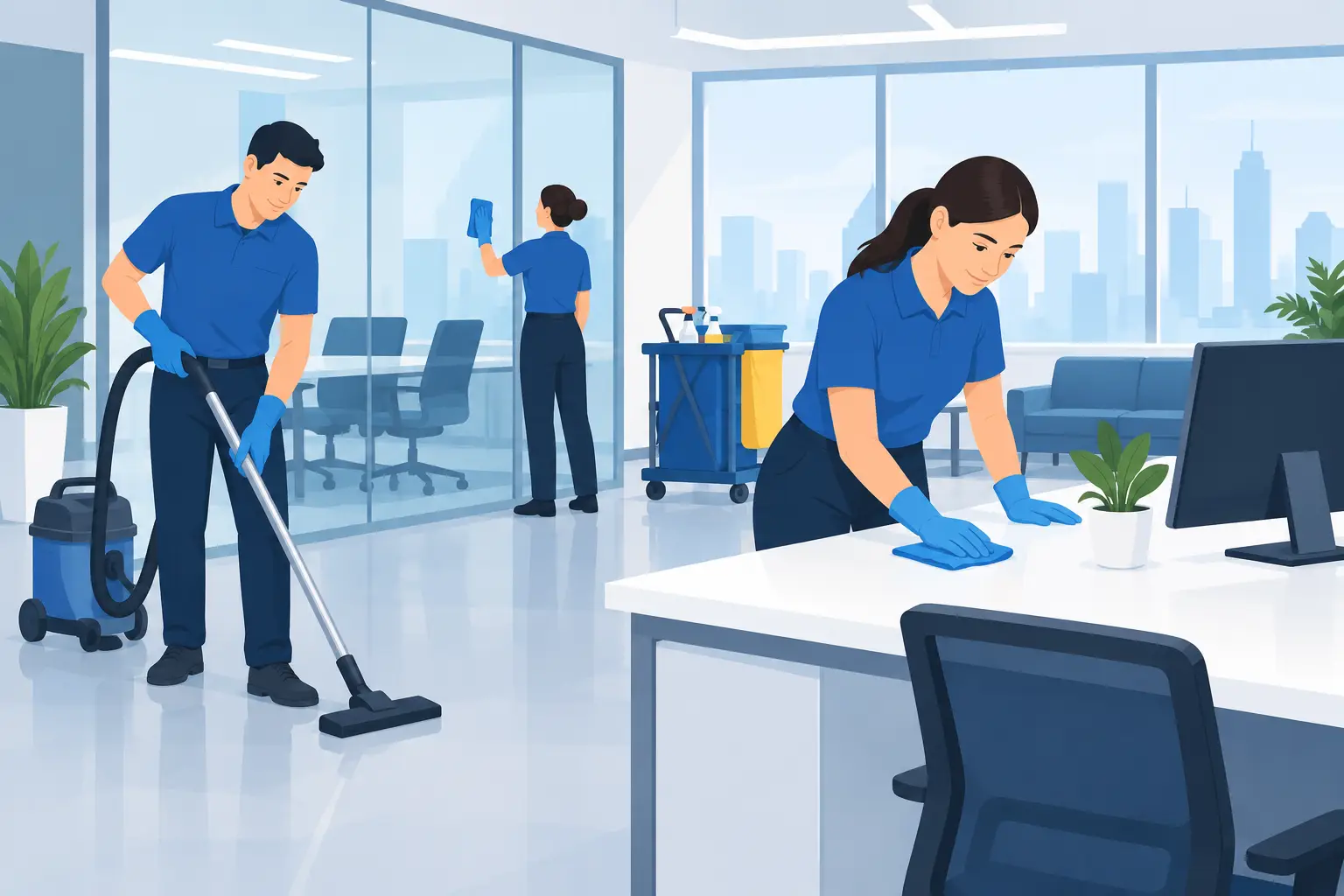
The first thing clients, visitors, and employees notice is rarely your cleaning schedule. They notice the fingerprints on the glass door, the crumbs in the break room, the restroom that does not feel fresh, and the carpet that has lost its color. Professional office cleaners take those small, visible details off your team’s plate so your workplace stays clean, comfortable, and ready for business.
A good cleaning service is not simply about emptying trash cans after hours. It is about creating a space where people can focus, meet, work, and welcome customers without being distracted by dirt, odors, or unfinished cleaning jobs. The right team works consistently, respects your workplace, and adjusts the service to how your office actually operates.
What Office Cleaners Should Cover
Every office has different traffic levels, layouts, and hygiene needs. A small professional office with a few employees will not need the same schedule as a busy shared workspace, medical practice, retail back office, or warehouse administration area. Still, the foundation of regular office cleaning should be clear.
Daily or recurring service usually focuses on the areas that become untidy fastest: entryways, desks and shared surfaces, break rooms, restrooms, floors, and trash areas. A trained crew should dust accessible surfaces, vacuum or mop floors, clean and sanitize restroom fixtures, wipe touchpoints, remove waste, and leave kitchens or staff areas clean and fresh.
The best result comes from a service plan that matches the building rather than a generic checklist. For example, a reception area may need attention every day because it represents your business. A meeting room may need cleaning after frequent client appointments. A low-traffic storage room may only need periodic service. This approach keeps standards high without paying for work that does not add value.
Shared spaces need extra attention
Break rooms and restrooms are where routine cleaning makes the biggest difference. Coffee spills, food residue, full bins, faucet marks, and neglected appliances can quickly make an otherwise tidy office feel poorly maintained.
A dependable cleaning crew handles visible mess and the details behind it. That can include cleaning sinks, counters, tables, microwave exteriors, refrigerator handles, cabinet fronts, restroom floors, toilet bases, mirrors, dispensers, and high-touch surfaces such as door handles and light switches. When these spaces are consistently cared for, employees are more likely to keep them orderly between visits.
Floors, carpets, and upholstery are not all the same job
Vacuuming is essential, but it does not remove embedded dirt, stains, or the dull appearance that builds up over time. Carpeted offices benefit from periodic deep cleaning, especially around entrances, desk chairs, hallways, and meeting spaces. Upholstered reception seating can also hold dust, odors, and everyday marks that routine wiping will not fix.
Hard floors need the right cleaning method for the material. Too much water, harsh products, or poor equipment can leave streaks, damage finishes, or create slippery areas. A professional team should use appropriate products and commercial-grade equipment, then allow enough drying time for the space to be used safely.
How Often Should an Office Be Cleaned?
There is no single schedule that works for every workplace. The right frequency depends on foot traffic, staff numbers, visitors, food preparation, restroom use, flooring, and the type of work performed.
An office with regular customer traffic may need cleaning five days a week. A small office with a limited team may be well served by two or three visits per week. Some businesses choose a lighter recurring schedule and add deep cleaning for carpets, upholstery, windows, or kitchens when needed.
Think about the moments when cleanliness matters most. If clients arrive every morning, reception and restrooms need to be ready before the day starts. If employees eat lunch on-site, the break room will require consistent care. If your team works late, an evening cleaning schedule may be the least disruptive option.
A practical provider will discuss these conditions before recommending a plan. More visits are not always better if the work is poorly organized. Reliable service at the right frequency is what keeps the office looking maintained week after week.
What Makes a Cleaning Team Reliable?
Price matters, but the lowest quote can become expensive when the crew arrives late, misses areas, changes staff without notice, or leaves employees to report the same problems again. Reliability is built into the way a cleaning company manages people, equipment, communication, and quality checks.
Look for a team that gives clear information about what is included, when service will happen, and how special requests are handled. You should know whether cleaning supplies and equipment are provided, whether the crew is trained for your surfaces, and who to contact if something needs attention.
Consistency also matters. It helps when cleaners understand the layout of your office, know which rooms are sensitive or off-limits, and follow the same standards each visit. Supervision and regular quality checks are especially valuable in larger buildings, schools, healthcare settings, retail spaces, and busy offices where missed tasks can quickly become noticeable.
Sustainable methods are worth considering as well. The goal is not a strong chemical smell that lingers the next morning. It is a genuinely clean space achieved with suitable products, proper dilution, effective equipment, and care for the people using the building.
Prepare Your Office for Better Results
A professional crew should do the cleaning work, not require your employees to clean before they arrive. Still, a few simple arrangements make the service more efficient and help protect confidential materials.
Keep personal documents, cash, sensitive files, and valuable equipment in designated secure areas. Let the cleaning provider know which desks, cabinets, rooms, or workstations should not be touched. If your office has alarm procedures, building access rules, elevators, loading areas, or parking instructions, share them before the first visit.
It also helps to name one point of contact. This person can confirm priorities, report changes in office use, and request occasional extras such as interior window cleaning, carpet treatment, post-event cleaning, or a deeper kitchen clean. Clear communication prevents small issues from becoming recurring frustrations.
When Routine Cleaning Is Not Enough
Regular cleaning maintains a good standard, but it cannot always reverse months of buildup. An intensive service is often the right choice after an office move, renovation, staff event, water leak, long vacancy, or a period when normal cleaning was interrupted.
Deep cleaning can focus on neglected edges, baseboards, interior glass, hard-to-reach surfaces, carpets, furniture, appliances, and areas behind or under accessible fixtures. It is also useful before a lease handover or when you need to reset the workplace to a higher standard before starting recurring service.
Mold, persistent odors, stained upholstery, and heavily soiled carpets need a more targeted response. These are not problems to cover up with fragrance or a quick wipe-down. They require the correct process, suitable equipment, and enough time to produce a visible result. If there is active moisture or a building issue causing mold, that source must be addressed as well or the problem can return.
A Clean Office Supports Better Workdays
Professional cleaning is one of the quiet services that keeps a business running well. It helps employees start the day in a space that feels cared for, gives visitors a better first impression, and reduces the time managers spend chasing basic housekeeping issues.
Deepclean Services approaches office cleaning with trained crews, flexible scheduling, close supervision, and practical attention to the spaces people use every day. Whether you need recurring maintenance or a one-time reset, the goal is simple: a workplace that looks clean, feels fresh, and is ready for the work ahead.
Choose office cleaners who ask the right questions, show up when promised, and take responsibility for the details. When cleaning is handled properly, your office becomes one less thing your team has to manage.