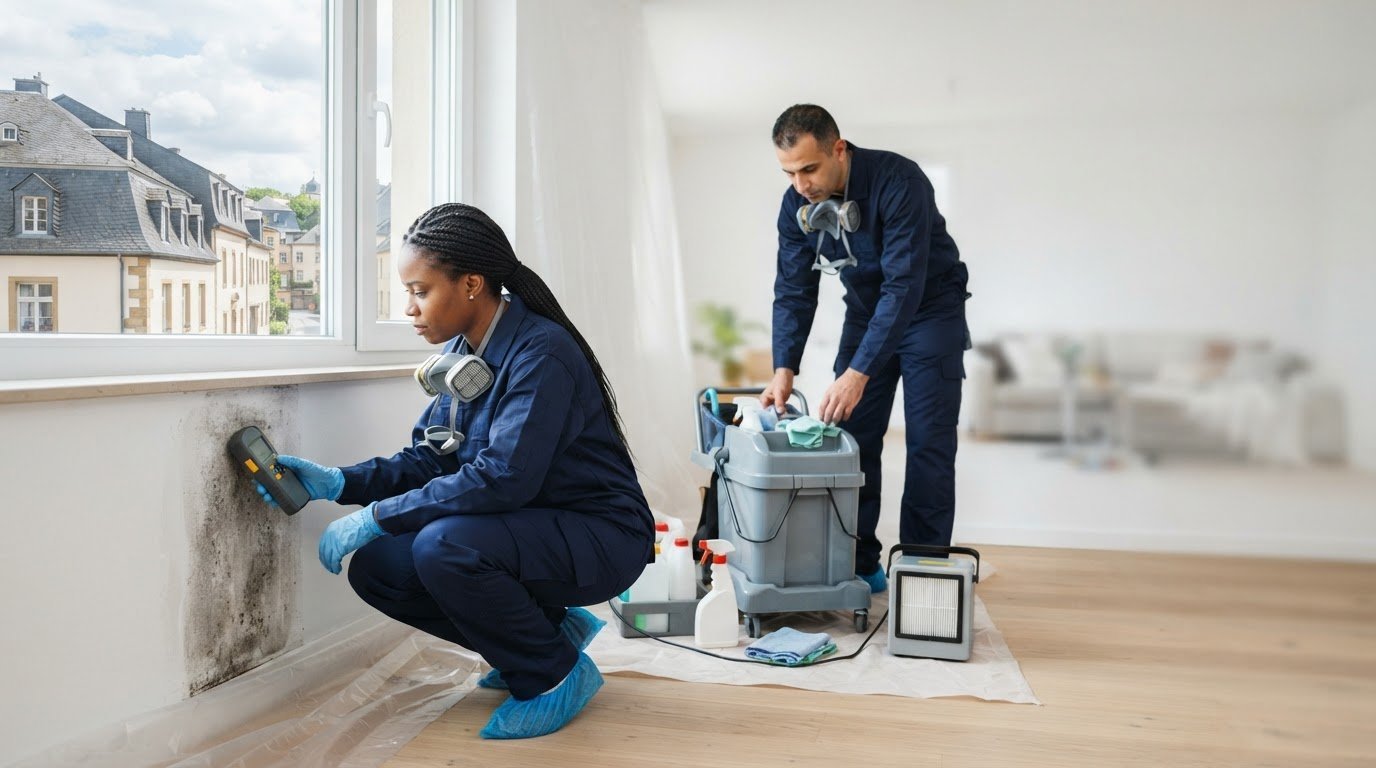
Removing visible mould is only part of the solution. A mould removal specialist can treat affected areas, but lasting control depends on addressing the moisture that allowed the mould to grow. Home insurance may help when mould follows a sudden event, such as a burst pipe; long-term damp or poor ventilation is usually not covered.
It’s understandable to want a clear explanation of the treatment and its cost. The work depends on the affected rooms, extent of growth, materials and moisture source. A small patch on a surface and mould spread across a property call for different approaches.
This guide explains how professional mould removal works, what black mould treatment involves and what affects the cost in Luxembourg. You’ll also learn when insurance may apply, how specialists investigate moisture and prevent regrowth, and what to consider when deciding on your next step.
Key Takeaways
- Effective remediation starts by finding the moisture source, then controlling the work area and cleaning affected surfaces to limit spread.
- For recurring or extensive black mould, address the dampness behind it rather than relying on surface cleaning alone.
- Insurance may help when mould follows a sudden event such as a burst pipe; long-term damp and poor ventilation are usually treated differently.
- Watch for musty odours, visible growth, persistent leaks, or allergy-like symptoms indoors, as these can point to a mould problem.
- Removal costs depend on the affected rooms, the spread of growth, materials involved, and the work needed to resolve the underlying moisture issue.
What Does a Professional Mould Removal Service Include?
A professional assessment traces visible mould to its moisture source, then guides removal and cleaning. The approach depends on the affected materials, the building and how far the growth has spread.
Survey and Remediation Process
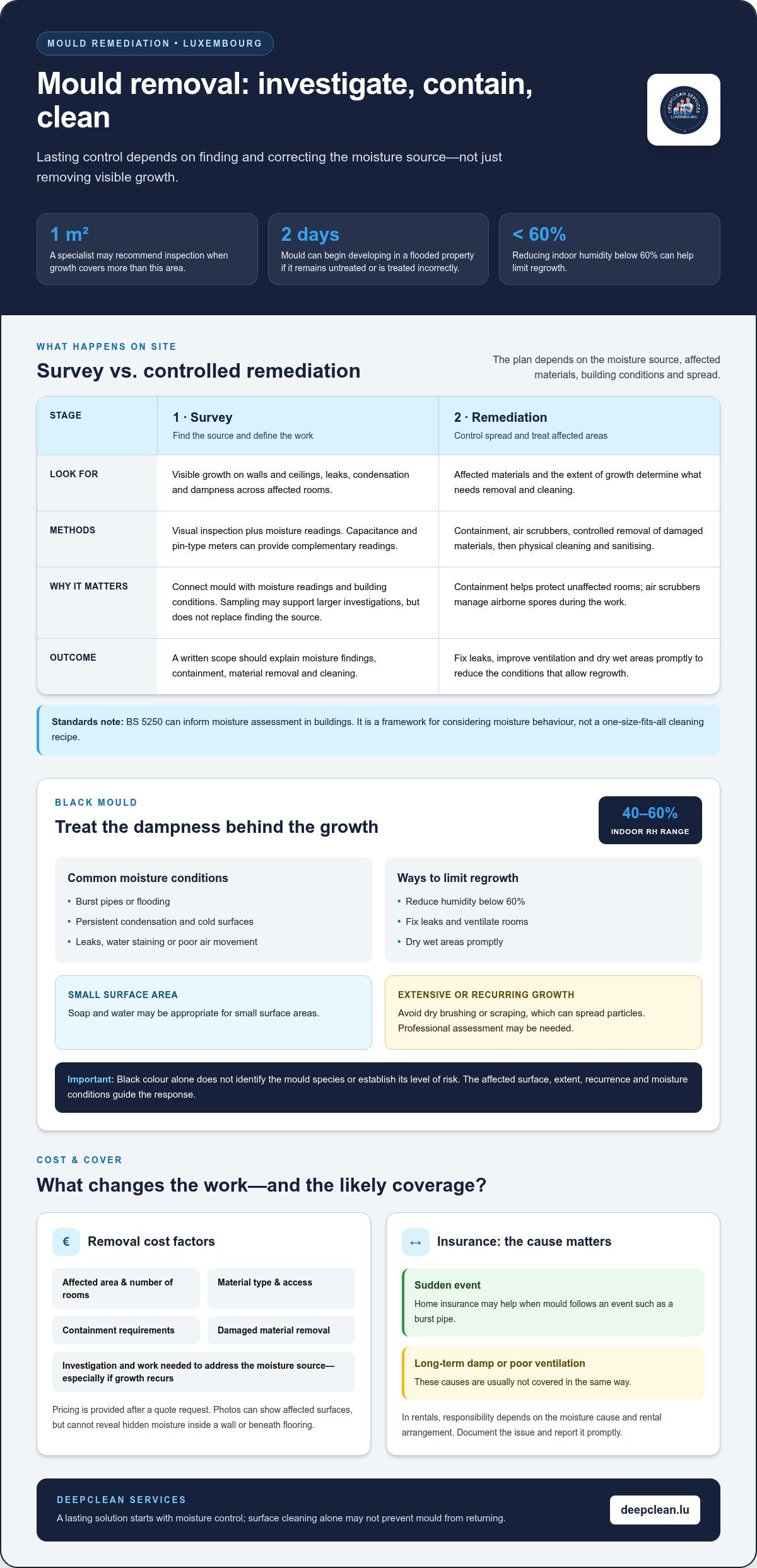
A survey begins with visual inspection of affected rooms, including walls, ceilings and areas around leaks or condensation. Moisture readings help map dampness across surfaces and substrates. Capacitance and pin-type meters can provide complementary readings, while the findings guide the remediation plan. A mould removal specialist may recommend an inspection when growth covers more than 1 m², keeps returning or affects several areas.
During remediation, containment can help limit dust and debris spreading to unaffected rooms. Air scrubbers can remove spores from the air while affected materials are removed under controlled conditions. Remaining surfaces are physically cleaned and sanitised. For larger projects, hygienists may use mould sampling to support the investigation. Sampling complements moisture assessment; it does not replace identifying the source.
In Luxembourg, responsibility between tenant and landlord depends on the cause of the moisture and the rental arrangement. A leak or building defect is different from moisture associated with how a room is used. Document the problem and report it promptly to clarify the cause.
When choosing a trained mould specialist in Luxembourg, look for named remediation training, such as IICRC training, and a written survey scope. It should explain the moisture findings, containment, material removal and cleaning, rather than relying on a label alone.
Remediation Standards and Methods
BS 5250 can inform assessment and remediation of moisture in buildings. It provides a framework for considering how moisture behaves, rather than a one-size-fits-all cleaning recipe. The survey should connect observed mould with moisture readings and building conditions, then explain why the selected method suits the affected surface.
Professional mould remediation follows a sequence: assess, contain, remove affected materials, clean remaining surfaces and address the moisture source. A mould-marked ceiling, for example, may need a different treatment from a non-porous surface. Black mould does not require a separate removal process; the work depends on the growth, surface material and moisture conditions.
Choose methods that control particles and protect unaffected areas. Containment separates the work zone, while air scrubbers manage airborne spores. Damaged material is removed before physical cleaning. Prevention also means fixing leaks, improving ventilation, drying wet areas promptly and keeping indoor humidity low. Without moisture control, surface treatment alone may not prevent mould from returning.
Black mould removal
Black mould treatment should address both visible growth and the moisture feeding it. The right approach depends on the affected surfaces, whether the mould has returned and the cause of the dampness.
Black Mould Growth Causes
Mould spores occur naturally indoors, but moisture allows colonies to develop on suitable surfaces. A burst pipe, flooding or persistent condensation can leave walls, ceilings and furnishings damp enough for growth. In flooded properties, mould can begin developing within 2 days if the area remains untreated or is treated incorrectly.
Check for condensation on cold surfaces, water staining, leaks and poor air movement. Indoor relative humidity sustained outside the 40-60% range can support spore germination and surface condensation. Reducing humidity below 60%, fixing leaks, ventilating rooms and drying wet areas promptly can help limit regrowth. Cleaning visible marks without correcting dampness leaves the underlying cause in place.
Potential Health Effects
Some moulds can cause health issues, particularly for people with allergies, asthma or weakened immune systems. Black colour alone does not identify the mould species or establish the level of risk. Consider where the growth appears, how extensive or recurrent it is, and whether anyone experiences worsening allergy-like symptoms indoors.
Avoid disturbing extensive or recurring growth by dry brushing or scraping, which can spread particles. Soap and water may be appropriate for small surface areas; larger or persistent problems call for professional assessment. A mould removal specialist can assess affected materials and determine whether controlled removal is needed. Keep the room ventilated and limit contact with affected surfaces while the moisture source is investigated.
Removal Pricing
Deepclean Services provides mould removal in Luxembourg, with pricing given after a quote request. Cost depends on the affected area, number of rooms, material type, access, containment needs and whether damaged materials need removal. Recurring growth may also require more investigation and work to address the moisture source.
For a useful quote, describe where the mould appears, whether it has returned and any known leak or flooding. Photos can show affected surfaces, but they cannot reveal hidden moisture inside a wall or beneath flooring. Inspection findings and the remediation plan define the work involved, rather than colour alone.
After the dampness source is addressed, cleaning can help maintain affected rooms and surfaces. For persistent growth requiring professional treatment, explore mould removal support.
Does house insurance cover mould removal?
Home insurance may cover mould when it follows a sudden event, such as a burst pipe. Mould linked to long-term damp or poor ventilation usually is not covered. The cause matters: an inspection can help distinguish a recent leak from persistent condensation or moisture entering through building materials.
Before arranging removal, record when the mould appeared and what happened beforehand. A burst pipe, roof leak or flooding provides useful context for an insurer. Keep photographs, note the affected rooms and materials, and retain records of repairs. These details help connect visible growth with a specific water event or an ongoing building condition.
An inspection can combine visual checks with thermal infrared imaging and moisture detection tools. The assessor looks for active leaks, damp building materials, condensation on cold surfaces and ventilation problems. Comparing surface temperature with the calculated dew point at the prevailing relative humidity can help identify condensation. These findings guide the next steps and clarify what may have caused the mould.
Air sampling can support inspection findings when there is a reason to investigate airborne spores. It is used selectively, not as a substitute for checking moisture or the building itself. For example, a sample may help assess a concern in a room with limited visible growth, while moisture readings can reveal dampness behind a surface. The inspection should explain how each test relates to the suspected source.
In Luxembourg, inspection and air-sampling pricing depends on the case and is given after a quote request. The scope, number of areas, access to building materials, testing required and complexity of the moisture investigation all affect the work involved. Sampling is not automatically needed for every visible patch; its value depends on the inspection question it is intended to answer.
To support an insurance claim, keep the inspection findings and remediation records together. Ask your insurer which evidence and claim steps apply to your policy, and describe the cause accurately. A clear account of the event, affected materials and repairs helps distinguish sudden water damage from mould associated with long-standing dampness.
Preventing regrowth means fixing leaks, controlling indoor humidity, improving ventilation and drying wet areas promptly. Keep an eye on previously affected materials, especially after condensation or water ingress, and address renewed moisture before mould becomes visible again. Removal treats the affected area; moisture control helps reduce the conditions that allow growth to return.
Potential mould damage and indoor air quality
Visible mould, musty odours and persistent moisture can indicate growth affecting materials and indoor air. An inspection helps identify where damage is developing and whether spores may be spreading beyond the visible area.
Potential Building Damage
Mould can damage wood, drywall and other building materials over time, potentially causing structural issues. A stained wall, for example, may conceal dampness. Check nearby skirting, window frames and ceilings for discolouration, softness or recurring damp patches. The condition and extent of affected materials help determine whether cleaning is suitable or removal is needed.
Moisture can remain concealed behind finishes, so a clean-looking surface does not always mean the area is dry. A building inspection can connect visible mould with damp materials and the likely moisture source. Record changes such as peeling paint or recurring stains, then compare them with moisture readings. This helps define the affected area before repairs begin.
Mould Testing and Air-Quality Assessment
An air-quality assessment starts with the building, not a sample alone. Visual inspection, thermal infrared imaging and moisture detection tools can help locate mould and the conditions supporting it. For example, condensation on a cold surface may indicate a different moisture pathway from a wall affected by a plumbing leak.
Testing is most useful when it answers a specific question raised by the inspection. It can support an assessment of suspected hidden growth or help evaluate concerns beyond a visible patch. Results should be considered alongside the room’s condition, ventilation and moisture evidence. A test alone cannot identify or correct the building problem causing the mould.
Air Sampling and Spore Analysis
Air sampling can measure airborne spores in a particular location and support a wider investigation. Hygienists may use mould sampling on larger remediation projects. The purpose is to add evidence to an inspection, not replace moisture assessment or investigation of the building. The sample’s location and conditions during collection affect how its results should be interpreted.
For instance, sampling near a musty cupboard may help investigate a concern when visible growth is limited. Comparing results from different areas can help assess whether spores are present beyond the obvious source. The findings should guide practical next steps, such as further inspection or targeted remediation. Sampling alone cannot show whether dampness remains inside a wall or ceiling.
Mould Odour
A musty smell can signal mould or trapped moisture, even when growth is not visible. Check enclosed spaces, behind furniture and around damp building materials. Note where the odour is strongest and whether it changes after ventilation. These observations help focus an inspection on possible hidden sources instead of masking the smell with fragrances.
Assess odour and indoor air quality alongside visible mould, moisture readings and ventilation. A persistent smell after cleaning may mean damp materials or an underlying moisture source remain. Finding and addressing that source is more useful than treating odour alone. Note the affected room and any recurring smell, then include those details in the building assessment.
Mould removal costs by hour, room and property size
In Luxembourg, mould removal pricing depends on the affected area, materials and work required. An hourly, room-based or property-wide estimate is useful only when its scope is clear.
Hourly Removal Costs
An hourly estimate ties the bill to the time needed for inspection, preparation, controlled removal and cleaning. The visible patch alone does not show how much work is involved. Mould on an accessible, washable surface, for example, differs from growth affecting porous material or a hard-to-reach ceiling.
Ask what tasks the quote covers, including containment, removal of damaged material and cleaning. Also clarify whether moisture investigation or follow-up work is included. Deepclean Services provides mould removal in Luxembourg, with pricing given after a quote request. Affected surfaces, access, contamination and the required work shape the estimate.
Room-Based Cost Estimates
A room estimate is easier to compare when it identifies the areas and materials included. A bathroom ceiling, for example, may need different preparation from a bedroom wall with mould behind furniture. The visible patch size matters, but so do the surface type, access and signs of dampness in nearby materials.
Check whether the estimate covers only visible cleaning or also containment and removal of affected materials. A single-room quote may exclude adjoining areas, hidden moisture or work needed to address the source. In Luxembourg, pricing depends on inspection findings and scope, so compare the tasks described rather than the room label alone.
Property-Size Cost Estimates
Property-wide estimates reflect the number of affected rooms, how far contamination has spread and the materials involved. A larger home with one isolated patch may require less work than a smaller property with recurring growth in several rooms. Access, ventilation and humidity conditions can also affect the remediation plan.
Ask for the affected areas and planned tasks to be listed separately. This makes it clearer whether the estimate covers inspection, containment, removal and cleaning throughout the property. Work limited to one damp room, for example, should not be mistaken for treatment of the whole property. The moisture source must also be considered to reduce the risk of repeat work.
To compare mould removal services in Luxembourg, request written quotes using the same description of affected rooms, materials and visible growth. Compare inspection scope, containment, removal, cleaning and how moisture sources will be addressed, not just the headline total.
Share whether mould is present in one room or several, whether it has returned, and any known leak or condensation. These details help establish the project scope. Request a mould removal quote for work tailored to the affected areas and required cleaning.
Deepclean Services: Regular Cleaning
After the moisture source and mould have been professionally addressed, Deepclean Services can help maintain clean rooms. Regular Cleaning suits ongoing upkeep, while One-Time Basic Cleaning or Deep Cleaning can provide a more focused refresh. Moving In / Out Cleaning is useful when preparing a property for a change of occupancy.
Cleaning helps keep treated spaces orderly, but it does not replace fixing leaks, managing humidity or improving ventilation. If visible mould or dampness returns, address the underlying moisture problem before relying on routine cleaning. For ordinary upkeep after remediation, choose the service that fits your property and cleaning needs.
Contact Deepclean Services or visit deepclean.lu to discuss your cleaning requirements.
Choose the Right Next Step for Your Property
Once mould and its moisture source have been addressed, plan for the property’s ongoing needs. Remediation tackles affected areas and conditions that support growth; routine cleaning helps care for the space afterwards. If mould returns, revisit the moisture issue rather than simply increasing the cleaning schedule.
A mould removal specialist can address the mould, while ongoing cleaning helps keep rooms orderly. Decide whether you need periodic upkeep or a focused clean after remediation, renovation or a change in occupancy. Matching the service to the task keeps expectations practical and the work focused.
Deepclean Services offers Regular Cleaning, One-Time Basic Cleaning and Deep Cleaning for different needs. Choose regular care for ongoing upkeep, a one-time clean for a specific refresh, or deep cleaning when the space needs more attention.
For a practical next step, contact Deepclean Services to discuss the cleaning that suits your property. A well-planned approach can help you move forward with confidence.
Frequently Asked Questions
How to Get Rid of Mould?
To deal with mould, clean small surface patches and address the dampness behind them. If bathroom mould returns after cleaning, for example, examine condensation, leaks and ventilation rather than repeatedly wiping the same area. A mould removal specialist can assess recurring or widespread growth and determine which materials need treatment. Dry wet areas promptly and leave some space between furniture and damp walls to help air circulate.
Can you carry out emergency work?
Deepclean Services provides mould removal, but an active leak needs to be stopped at its source first. If water is entering, arrange for the leak to be repaired and keep people away from wet areas. Once the leak is controlled, mould treatment can address affected surfaces and materials. Leak control and mould removal are separate steps, so dealing with the water source first helps define the remediation work.
Do I need to leave the property during the mould removal process?
Not everyone needs to leave during every mould removal job. The work area, containment and materials being removed determine which rooms remain accessible. Keep children and pets away from the work zone while treatment is underway. Work limited to a closed room, for example, may leave other areas usable, while treatment across connected spaces can restrict access. Follow the site instructions for the rooms being treated.
Is mould removal safe for children and pets?
Keep children and pets out of the work area during mould removal. Disturbing affected materials can release particles, so containment helps limit their spread. Do not let them back into the area until the work is complete and the space is ready for normal use. If someone in the household has asthma, allergies or a weakened immune system, consider their needs when planning access to rooms.
Can Mould Cause Structural Damage to Buildings?
Yes. Mould can damage wood, drywall and other building materials over time, potentially causing structural issues. A recurring stain, soft timber near a leak or peeling material around a damp window warrants inspection beyond surface cleaning. Check the affected material and nearby areas for ongoing moisture. Their condition and the moisture source help determine whether cleaning is suitable or removal is needed.
Can you work with my insurer?
Deepclean Services provides mould removal; your insurer decides coverage and claim requirements under your policy. Keep photographs, note when growth appeared and retain records of any leak repairs. These details can help explain the timeline and suspected cause. For example, records linking mould to a burst pipe may help distinguish sudden water damage from growth associated with long-standing dampness when the insurer reviews your claim.
What services does a mould removal specialist provide?
A mould removal specialist can assess affected areas, identify moisture, contain the work zone, remove impacted materials and clean remaining surfaces. Deepclean Services offers Mould Removal, and its treatment kills 99.9% of visible mould spores and bacteria. Advice is also provided to help prevent recurrence. If a leak, condensation or ventilation issue continues, that underlying moisture condition needs attention alongside treatment of the affected areas.
How much does professional mould removal cost in Luxembourg?
Professional mould removal in Luxembourg is priced according to the work required, with pricing provided after a quote request. A mould removal specialist considers the affected area, rooms, materials, access, containment and contamination when preparing the scope. Describe where mould is present, whether it has returned and any known leak. This helps shape a quote around the actual work, not just the visible patch.