
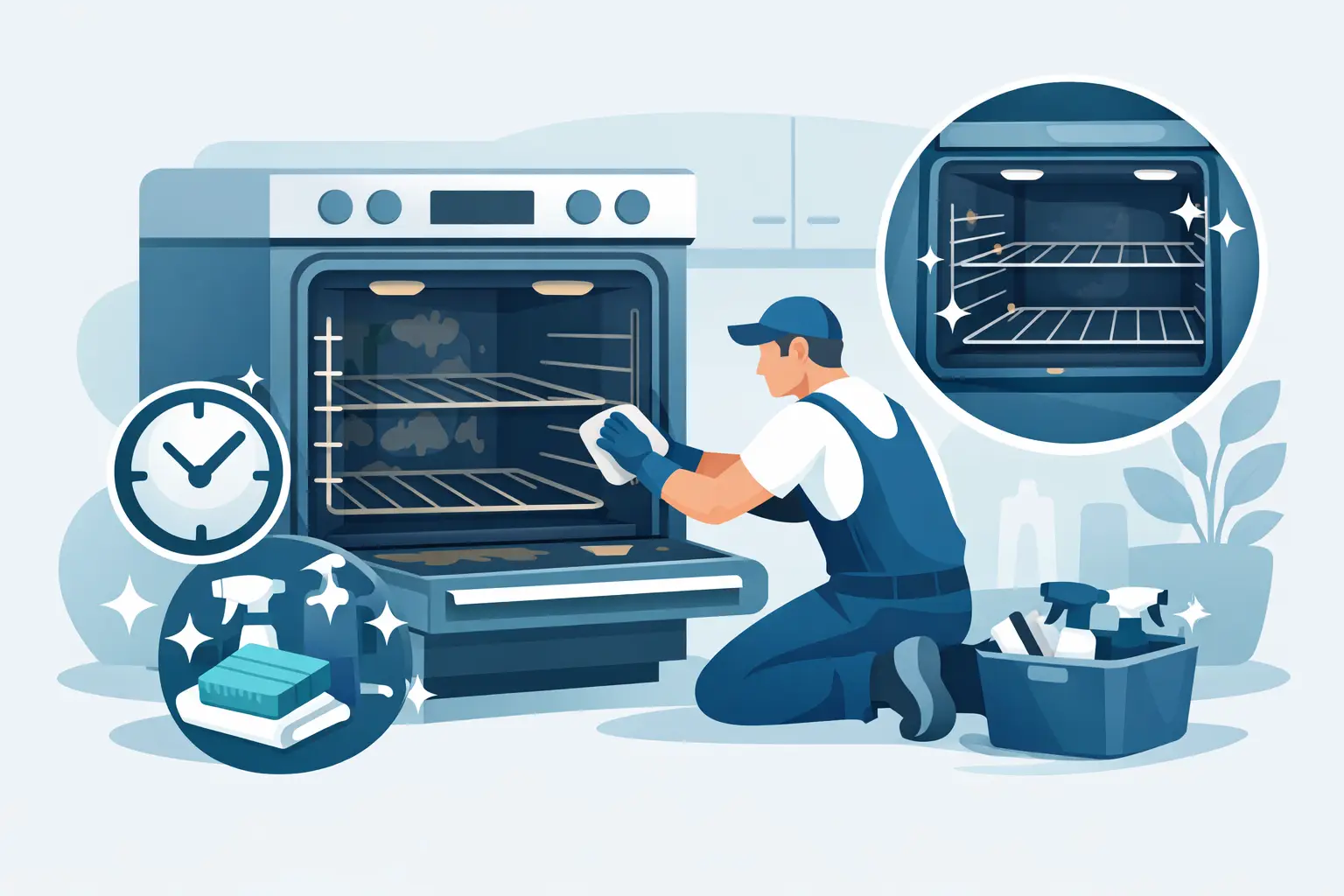
The moment smoke rises from an otherwise simple dinner, the oven has stopped being an easy-cleaning job. A professional oven cleaning service deals with the baked-on grease, carbon residue, spills, and odors that build up where a sponge cannot reach. It brings your kitchen back to a cleaner, fresher standard without giving up a weekend to scrubbing racks and scraping the oven floor.
For busy households, renters preparing to move, landlords between tenancies, and workplaces with staff kitchens, this is practical help with a job that is easy to postpone and difficult to finish properly. A clean oven looks better, but it can also reduce smoke, lingering food smells, and the risk of old grease burning during cooking.
What a Professional Oven Cleaning Service Covers
Oven cleaning is more than wiping the glass door. Grease can settle behind the racks, around the door seal, on the fan cover, under the oven base, and in the corners where food spills dry into a hard, dark layer. Over time, heat turns that residue into carbon deposits that ordinary kitchen sprays may barely touch.
A trained cleaning crew starts by assessing the oven type and condition. Built-in ovens, freestanding ranges, conventional ovens, and fan ovens all need care around their heating elements, seals, controls, and delicate surfaces. The goal is to remove buildup without damaging enamel, glass, or working parts.
The work normally includes the oven cavity, removable racks and trays, the inner door glass, side panels, and accessible areas around the door. Depending on the appliance and service arrangement, the cooktop, exterior panels, and extractor area may also be cleaned. Ask what is included before booking, especially if you need a full kitchen refresh rather than oven-only cleaning.
Why Oven Grease Is Hard to Handle at Home
Fresh spills are manageable. The challenge begins when cheese, oil, sauces, and roasting fat are repeatedly heated until they become a tough layer on the oven walls. Many household cleaners are designed for light daily use, not months of baked-on residue.
Strong store-bought oven products can help, but they require ventilation, gloves, careful timing, and thorough rinsing. Used incorrectly, they can irritate skin, leave harsh fumes, or affect surfaces such as aluminum trays and sensitive finishes. There is also the practical problem: a cleaner may soften the grime, but someone still has to bend, scrub, and reach into a hot-worked appliance.
A professional service uses suitable products, tools, and methods for the level of buildup. Commercial-grade equipment can make a visible difference, while trained staff know where to apply pressure and where to be gentle. Sustainable cleaning options can also reduce harsh chemical use when the oven condition allows it.
Signs It Is Time to Book Oven Cleaning
You do not need to wait until the oven is visibly black inside. If it smokes when heated, gives off a burnt smell, or leaves marks on cookware, it is worth arranging a proper clean. The same applies when the door glass is so cloudy that you can no longer see food cooking clearly.
A professional clean is especially useful before a move-out inspection, after a busy holiday cooking period, or when moving into a property where the oven has been left in poor condition. For landlords and property managers, it helps present the kitchen as cared for between tenants. In offices, staff rooms, schools, and shared facilities, regular attention keeps a heavily used appliance more pleasant for everyone.
How often you need the service depends on how you cook. A household that roasts, bakes, and uses the oven most days may benefit from a deep clean every six to twelve months. A lightly used oven may need it less often. Regularly wiping spills once the oven has cooled will extend the time between appointments.
What to Expect on Cleaning Day
A reliable cleaning service should make the process simple. Before the appointment, remove loose cookware, food, and personal items from the oven and surrounding area. Let the appliance cool fully. If there are known issues, such as a loose door handle, damaged seal, faulty light, or broken rack, mention them in advance.
The cleaners will protect nearby surfaces as needed, remove accessible parts, and treat grime in stages. Racks and trays may need soaking or separate cleaning treatment, while the cavity and glass receive focused attention. The pace depends on the oven’s condition. A lightly soiled appliance is not the same job as one that has years of grease buildup.
Once the residue has been lifted, surfaces are wiped and the removable parts are returned. The oven should look noticeably cleaner and smell fresher. It may still have wear, discoloration, scratches, or permanent marks from age and use. Good cleaning restores hygiene and appearance, but it cannot turn damaged enamel or corroded metal into a new appliance.
Choosing the Right Cleaning Team
Price matters, but the cheapest quote is not always the best value when the work involves your kitchen and an appliance you use every week. Look for a company that is clear about its pricing, scope of work, arrival time, and any limits on what can be cleaned safely.
A professional team should be trained, supervised, and equipped for detail work. They should also treat your home or workplace with care, arrive on time, and leave the area tidy. Flexible scheduling is valuable for families, tenants on a moving deadline, and businesses that need cleaning outside busy hours.
It also helps to choose a provider that can handle related tasks when needed. An oven rarely becomes dirty on its own. Grease may also be sitting on cabinet fronts, backsplashes, floor edges, appliances, and upholstery near an open-plan kitchen. Deepclean Services can combine specialized oven attention with broader deep cleaning, move-in or move-out cleaning, and regular home or workplace maintenance when you need more than one problem solved.
A Cleaner Oven Starts With Better Everyday Habits
Professional cleaning handles the heavy work, while a few simple habits help maintain the result. Wipe splatters after the oven cools, use trays that fit properly, and place a baking sheet under dishes likely to bubble over. Avoid lining the oven base with foil unless your appliance manufacturer specifically allows it, as foil can affect airflow or damage some finishes.
Do not rely on the self-cleaning cycle as a replacement for every deep clean. It can be useful on suitable appliances, but it runs at extremely high heat and may create smoke or strong odors when grease buildup is heavy. Check your oven manual and use that setting only as directed.
A clean oven makes everyday cooking feel easier. Whether you are getting ready for a move, preparing for guests, or simply tired of the smoke every time dinner goes in, booking skilled help gives you back a kitchen that feels clean, fresh, and ready to use.


Pingback: How to Clean Oven Grease Without Harsh Scrubbing – Deepclean Services
Pingback: Commercial Kitchen Cleaning Guide for Food Teams – Deepclean Services
Pingback: Move Out Cleaner Reviews: What to Look For – Deepclean Services