A clean-looking room can still hold dust and allergens in fabrics and other overlooked areas. Professional allergy and asthma deep cleaning focuses on accumulated dirt in upholstery, carpets and blinds, while a complete plan also considers pollen-season airflow, HEPA-filter vacuuming and allergen buildup in air ducts.
When dust, pollen or mould spores keep accumulating at home or work, routine surface cleaning may not be enough. This guide explains how allergy and asthma deep cleaning can address settled dirt and which areas to prioritise.
You’ll find practical detail on fabric care, window habits during pollen season, HEPA-filter vacuuming and air ducts. The aim is to help you understand where deep cleaning may fit, what it can address and when a broader cleaning plan is worth considering.
Key Takeaways
- Upholstery, carpets and blinds can hold dust and other allergens, so a thorough cleaning plan looks beyond visible surfaces.
- Learn how pollen-season window habits and indoor airflow can affect the amount of outdoor allergens entering a space.
- See how HEPA-filter vacuuming helps capture fine particles, and why vacuuming technique matters.
- Understand how dust and other debris can collect in air ducts, and when Deepclean Services’ Deep Cleaning can help address broader buildup.
1. Cleaning upholstery, carpets and blinds
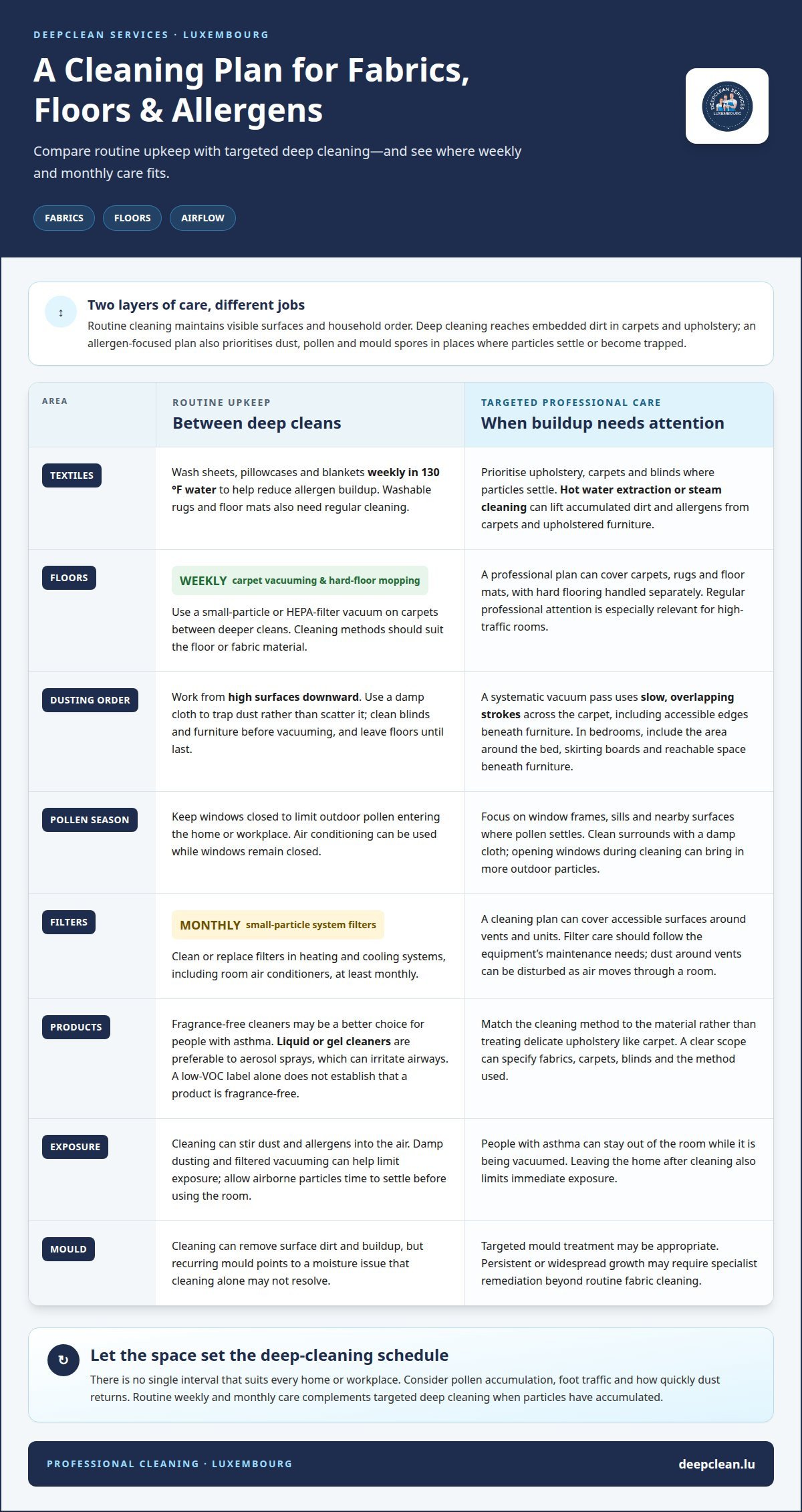
Regular cleaning maintains visible surfaces and routine household order. Deep cleaning reaches embedded dirt in carpets and upholstery, while allergen reduction focuses on dust, pollen and mould spores. A professional plan can combine these aims, prioritising fabrics and blinds where particles settle or become trapped. Professional services such as carpetcleanerinmanchester.co.uk illustrate how hot water extraction or steam cleaning can deep clean carpets and upholstered furniture, lifting accumulated dirt and allergens.
In a bedroom, professionals can work from high surfaces downward, using a damp cloth to trap dust rather than scatter it. They can clean blinds and furniture before vacuuming the carpet, leaving floors until last. Bedding also matters: washing sheets, pillowcases and blankets weekly in 130 °F water can help reduce allergen buildup. This sequence limits the transfer of dust between surfaces.
Carpets benefit from regular professional attention, especially in high-traffic rooms. Between deeper cleans, weekly vacuuming with a small-particle or HEPA filter helps trap fine particles. Washable rugs and floor mats also need regular cleaning, while hard floors should be mopped weekly. Cleaning methods should suit the material, rather than treating delicate upholstery like carpet.
Fragrance-free cleaners may be a better choice for people with asthma because fragrances can trigger symptoms. Unscented products are also preferable where practical. A low-VOC label alone doesn’t tell you whether a cleaner is fragrance-free, so the product’s scent and ingredients still matter. Liquid or gel cleaners are preferable to aerosol sprays, which can irritate airways.
Cleaning can briefly stir dust and other allergens into the air, potentially worsening symptoms. Damp dusting and filtered vacuuming can help limit exposure, and airborne particles need time to settle. People with asthma can stay out of the room while it is being vacuumed; leaving the home after cleaning also limits immediate exposure.
For a Luxembourg cleaning service, look for a clear scope covering fabrics, carpets, blinds and the cleaning method. Deep cleaning removes surface dirt and buildup, but recurring mould points to a moisture issue that cleaning alone may not resolve. Mould removal is appropriate when mould needs targeted treatment; persistent or widespread growth may require specialist remediation beyond routine fabric cleaning.
2. Pollen-season window and air-conditioning advice
During pollen season, keeping windows closed helps limit outdoor pollen entering a home or workplace. Professionals can focus cleaning on the places pollen settles after entering, including window frames, sills and nearby surfaces. A damp cloth captures dust instead of brushing it into the air. This careful sequence matters near windows, where opening them during cleaning can bring in more outdoor particles.
Air conditioning can be used while windows remain closed, but its filters need attention. Small-particle filters in heating and cooling systems, including room air conditioners, should be cleaned or replaced at least monthly. A cleaning plan can cover accessible surfaces around vents and units, while filter care follows the equipment’s maintenance needs. Dust around a vent can be disturbed as air moves through a room.
Window-cleaning habits should reflect the season and how each room is used. For example, a bedroom beside a pollen-exposed window may need more attention to its sill and nearby furniture than an interior room. Cleaning from higher surfaces down, then finishing with floors, helps capture settled particles instead of spreading them. Routine cleaning between deeper visits helps manage buildup.
There is no single deep-cleaning interval that suits every home or workplace. Set a schedule based on pollen accumulation, foot traffic and how quickly dust returns. In workplaces, regular cleaning helps prevent allergen buildup; carpets should be vacuumed weekly, and heating or cooling system filters need monthly attention. These routine tasks complement targeted deep cleaning when particles have accumulated.
During a scheduled clean, keeping windows shut and cleaning window surrounds with a damp cloth can reduce disturbance. People sensitive to airborne particles can stay away from the room while cleaning takes place, then allow time for particles to settle before returning. For help planning a thorough clean around seasonal buildup, explore professional deep cleaning.
3. Vacuuming with a HEPA filter
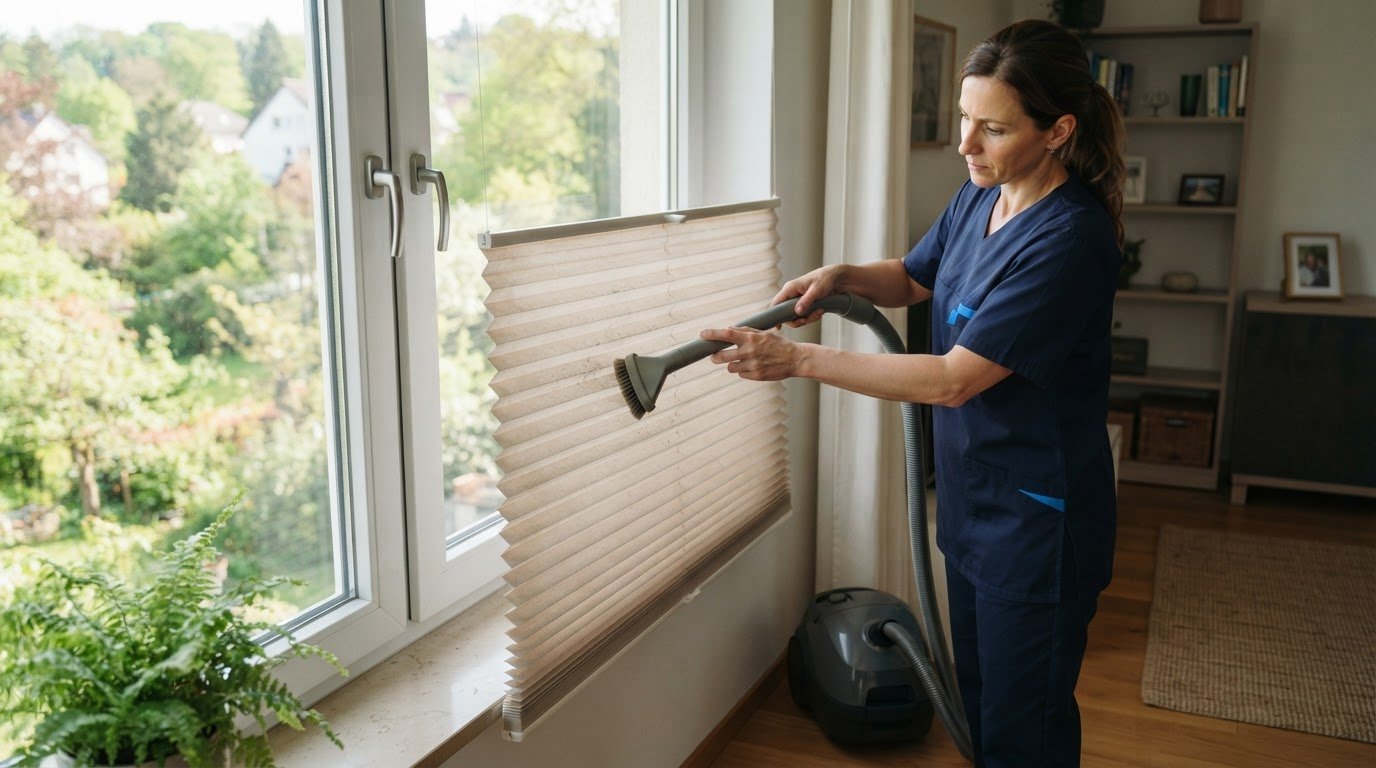
A vacuum with a HEPA filter can trap allergens that ordinary sweeping may spread. Professionals use it on carpets, rugs and floor edges where dust settles. Weekly carpet vacuuming helps manage buildup between deeper cleaning visits. In a professional allergy and asthma deep cleaning plan, filtration and careful coverage work together to capture particles stirred up during vacuuming.
A systematic pass covers the carpet, including accessible edges beneath furniture. Slow, overlapping strokes help avoid untreated strips. In a bedroom, cleaning can cover the area around the bed, skirting boards and reachable space beneath furniture. This targets dust, pollen, mould spores and animal dander that may collect in flooring.
People with asthma should stay out of the room while vacuuming takes place. If possible, someone without asthma can do the vacuuming. This reduces direct exposure while the vacuum disturbs settled particles. Afterward, allowing airborne dust time to settle before using the room supports a careful cleaning sequence.
A central vacuum system is another option for trapping allergens. A vacuum fitted with a high-efficiency particulate absorbing filter serves the same purpose. Filtration is one part of a consistent process, not a guarantee that one pass removes every particle. Carpet condition, room use and visible dust help determine where cleaning should focus.
Replacing a broom with a vacuum can limit dust kicked into the air. For example, sweeping a carpeted landing may lift particles without removing them; vacuuming captures them instead. Professionals can include rugs and floor mats in the cleaning plan, then address hard flooring separately. Deep cleaning tackles accumulated dirt embedded in carpet fibres.
For allergy and asthma deep cleaning, vacuum selection and room-by-room coverage matter. HEPA filtration supports allergen capture alongside careful technique and a consistent schedule. In workplaces, weekly carpet vacuuming helps maintain routine care between more thorough cleaning sessions, while high-standard environments—such as those requiring medical facility cleaning Alberta—apply strict filtration protocols to protect respiratory health.
Choosing between a central vacuum and a vacuum with a high-efficiency particulate absorbing (HEPA) filter gives households options for trapping allergens. When possible, someone without asthma should vacuum while people with asthma stay out of the room. Replacing brooms with a vacuum can help, because sweeping kicks up dust rather than capturing it.
4. Air ducts and allergen buildup
Deep cleaning reduces allergy and asthma triggers by removing settled dust, debris and other allergens from surfaces. Air ducts can also collect particles, then circulate them through a home when heating or cooling systems operate. A room-by-room approach addresses accessible buildup while routine filter care supports cleaner airflow.
Household allergens include dust mites, mould spores, pollen and animal dander. These particles can collect in carpets, upholstery, on blinds and around vents. Cleaning methods matter: dry brushing can lift dust into the air, while damp wiping captures it. A vacuum with a HEPA filter helps trap fine particles from carpets and rugs.
Air-system filters need regular attention. Small-particle filters in heating and cooling systems and room air conditioners should be cleaned or replaced at least monthly. A blocked or dusty filter can affect how the system handles airborne particles. Keeping windows closed during pollen season also helps limit outdoor pollen entering the home.
Air ducts may need attention when visible dust or debris gathers around vents, or when a system spreads particles through occupied rooms. Dust, dust mites, mould spores, pollen and animal dander can all contribute to allergen buildup. Cleaning schedules help manage sources throughout the home, while surface cleaning and filter maintenance address different parts of the problem.
A thorough cleaning plan connects these tasks instead of focusing on one vent alone. Clean accessible surfaces near vents, vacuum carpets and upholstery, and follow a consistent room-by-room sequence to reduce settled particles that may be stirred up during everyday activity. Persistent mould growth also calls for attention to the moisture behind it, not just visible residue.
For a more thorough clean of dust and buildup across your rooms, book professional deep cleaning.
Air ducts are common areas for allergen proliferation. Dust, debris and allergens can accumulate in air ducts and circulate through a workplace when the duct system operates. In other words, duct accumulation is relevant both as a place where allergens gather and as a route through which they circulate during system operation. This workplace context reinforces that duct-related allergen buildup is relevant when a workplace duct system operates.
Deepclean Services: Deep Cleaning
Deepclean Services offers Deep Cleaning for homes that need more than routine surface care. It suits situations where dust and dirt have built up across several rooms, including on commonly used surfaces and floors. The cleaning scope can focus on the property’s specific needs.
For ongoing upkeep, Regular Cleaning supports a consistent routine. One-Time Basic Cleaning suits a single visit, while Moving In / Out Cleaning helps prepare a property during a move. These services address different cleaning needs; they do not replace specialist assessment of persistent mould or technical air-duct work.
Share which rooms need attention and what you want cleaned, such as carpets, furnishings or accessible surfaces. This helps define a practical scope for the visit. To discuss a cleaning plan, contact Deepclean Services.
Set a clear plan for your next clean
Start by identifying which rooms and surfaces need the most attention. A focused scope directs professional cleaning toward the areas that matter in your home, rather than treating every space identically. Deepclean Services can tailor Deep Cleaning to those priorities and your preferred cleaning schedule.
Deepclean Services offers Deep Cleaning for detailed cleaning needs, alongside Regular Cleaning and One-Time Basic Cleaning. The right service depends on whether you need a thorough reset, ongoing upkeep or a single visit. Identify your priorities and book the service that fits your needs through the website.
With a defined scope, you can move from general concerns to a manageable cleaning plan. Contact Deepclean Services today to discuss the cleaning your space needs. A considered next step can make caring for your home feel more straightforward.