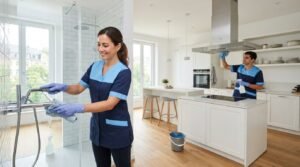
Plan a deep cleaning before your baby arrives for about 32 to 36 weeks of pregnancy, a few weeks before the due date. This gives you time to prepare the nursery and the rest of the home before the final stretch of pregnancy. If you’re moving, schedule the move-in clean while the rooms are still empty, before furniture and baby essentials are in place.
It’s natural to want floors, carpets and surfaces feeling fresh before your newborn comes home. A clear plan makes the work more manageable and helps you focus on priority areas, including dust above eye level and hard-to-reach spots.
This guide explains when to schedule a professional deep clean, what to prioritise in the nursery, and how to approach carpets, dust and cleaning around a move. You’ll also see how a systematic clean can cover the wider home, helping you choose practical preparation for your space.
Key Takeaways
- Prioritise a professional bathroom clean and mildew inspection so the space is ready for baby bath time.
- Learn how a top-to-bottom, damp-dusting approach helps professionals manage dust in hard-to-reach areas.
- See what to consider when professionals vacuum nursery carpets and clean hard floors.
- Use an empty-home move-in clean to address overlooked areas before furniture and baby essentials are in place.
When should you deep clean before the baby arrives?
Schedule a professional deep clean at about 32 to 36 weeks of pregnancy, a few weeks before the due date. This timing leaves room to prepare the nursery and address the kitchen and bathroom before the final stretch. From 36 weeks, keep to light upkeep, such as a short evening routine, rather than planning demanding cleaning work.
A professional can clean bathroom surfaces and address visible mildew around grout, seals, taps and the bath or shower. If it keeps returning, the underlying dampness needs attention; cleaning visible marks alone may not resolve the cause. Include the affected areas in the cleaning scope, especially before using the bathroom for baby bath time.
A systematic clean covers the toilet, sink, taps, bath or shower, tiles and floor. A professional can also clean kitchen worktops, cabinet fronts and other frequently touched surfaces used for food preparation and bottle handling. Clear access around furniture and stored items helps the cleaner reach more surfaces without moving belongings unnecessarily.
- Book within the 32-to-36-week window. A few weeks before the due date gives time to prepare without leaving the full clean until the final days.
- Include a visible-mildew check in the bathroom. Grout lines, sealant edges and shower corners can be easy-to-miss areas during routine cleaning.
- Agree which kitchen and bathroom surfaces need attention. A clear room-by-room scope helps the professional focus on practical preparation for bathing and bottle handling.
- Allow the professional to clean before baby bath time begins. The bathroom can be cleaned and checked before it becomes part of the baby’s daily routine.
Can deep cleaning reduce newborn exposure to dust, mold and allergens? Cleaning can remove settled dust and visible mildew from treated surfaces, reducing contact with them in those areas. It doesn’t remove every possible allergen or address hidden moisture sources, so distinguish surface cleaning from recurring mold concerns when defining the scope.
How professionals dust surfaces and hard-to-reach areas
Professional dusting follows a top-to-bottom sequence, removing settled particles from high surfaces before floors are cleaned. The cleaner works across ceiling corners, light fixtures, shelves, furniture and skirting boards, then finishes with carpets and other floors. This order helps prevent dust from settling on surfaces that have already been cleaned.
For blinds, vents and fixture edges, a professional uses suitable tools to reach each surface without climbing on chairs or household furniture. Dusting above head height can send particles down, so the cleaner works methodically and follows with floor cleaning. When preparing the nursery, include wardrobe tops, cot furniture and window coverings in the room’s scope. Planning deep cleaning before baby arrives also gives you time to identify delicate finishes.
On suitable surfaces, damp-dusting helps avoid dispersing dust into the air. The cleaner wipes one section at a time, rinsing or changing cloths as they collect soil, and checks ledges and handles for residue. Vacuum carpets and clean floors after overhead surfaces. A HEPA-equipped vacuum can help minimise airborne pollutants during floor cleaning.
- Start high. Address ceiling corners, fixtures and upper shelves before lower furniture and floors.
- Work around details. Clean blind slats, furniture edges and skirting boards where dust can settle.
- Damp-dust suitable surfaces. This method helps capture dust on the cloth rather than shifting it into the room.
- Finish with floors. Vacuum carpets after the higher surfaces, then clean hard flooring to collect fallen dust.
Expect the professional to adapt the sequence to the room’s materials and access. For example, delicate finishes need a suitable method, while crowded shelves may limit access until items are moved. A clear scope helps prioritise areas such as the nursery and sleeping spaces. Include dusting and floor care in the plan for deep cleaning before baby arrives. For a coordinated clean, explore professional deep cleaning support.
Can a professional clean nursery floors and carpet?
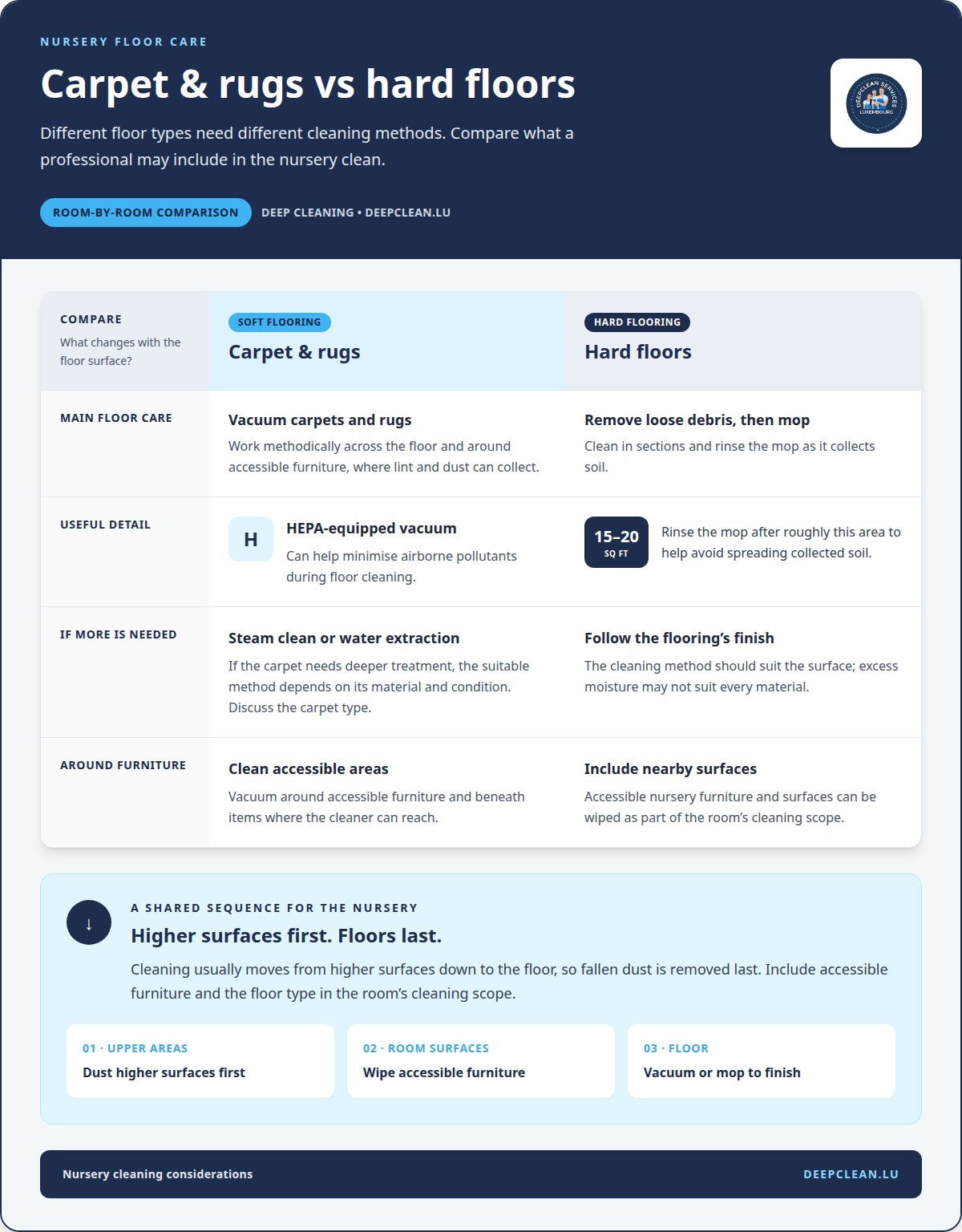
Yes. A professional can vacuum nursery carpets and rugs, clean hard floors, and wipe accessible surfaces around furniture. In a newborn’s room, cleaning usually moves from higher surfaces down to the floor, so fallen dust is removed last. A HEPA-equipped vacuum can help minimise airborne pollutants during floor cleaning.
For carpet, the cleaner works methodically across the floor and around accessible furniture, where lint and dust can collect. Rugs can be vacuumed as part of the same room clean. If carpet needs steam cleaning or water extraction, the method depends on the carpet material and its condition. Discussing the carpet type helps determine an appropriate approach—specialists such as Art of Cleaning recommend targeted extraction methods tailored to specific fiber types to safely remove deep-seated dirt.
Hard floors need a different process. A professional removes loose debris before mopping, then rinses the mop after roughly 15-20 square feet to avoid spreading collected soil. The cleaner follows the flooring’s surface and finish, since excess moisture may not suit every material. Nursery surfaces such as shelves and furniture can be wiped as part of the room’s cleaning scope.
- Vacuum carpets and rugs. A HEPA-equipped vacuum helps minimise airborne pollutants as the professional cleans the nursery floor.
- Clean beneath accessible furniture. Dust and debris can gather under a cot, chair or storage unit.
- Mop hard floors in sections. Rinsing the mop after roughly 15-20 square feet helps keep collected dirt from spreading.
- Include nearby surfaces. Wiping accessible nursery furniture helps complete the room clean.
Can a professional clean and disinfect baby bottles, toys, and nursery furniture? A professional can clean accessible nursery furniture, but bottles and toys need care suited to their use and materials. NHS guidance recommends sterilising a baby’s feeding equipment until the baby is at least 12 months old, so household surface cleaning should not replace that step. Keep feeding items separate from general floor and furniture cleaning; fridge and freezer surfaces are separate kitchen areas, not nursery equipment.
What professional move-in cleaning before the baby arrives includes
An empty home gives a professional clear access to spaces that become harder to reach after unpacking. Schedule a deep cleaning before baby arrives while rooms are still clear, and note priorities such as cupboard interiors, appliance surfaces or a particular bathroom. This helps define the work before boxes and nursery items take up space.
- Clean accessible storage. Empty drawers, shelves and cabinet interiors can be cleaned before baby clothes, bottles and supplies are stored.
- Include kitchen appliances. The professional can address accessible surfaces inside appliances as part of the agreed scope.
- Cover bathroom fixtures. Include the toilet, sink, taps, bath or shower, and floor in the room plan.
- Clean floors before furnishing. An empty room makes it easier to reach the full floor area and corners.
- Set priorities for windows and ledges. Include reachable surfaces that need attention before furniture is positioned.
Planning a deep cleaning before baby arrives around your move also helps separate cleaning from laundry and unpacking. Wash baby clothing and bedding before first use, and keep clean textiles away from surfaces still being cleaned. Once the professional clean is complete, you can place furniture and essentials in their intended rooms.
Agree on the rooms and tasks before the appointment, especially if the property has areas with different needs. A clear scope helps the professional focus on the empty spaces that will soon hold everyday belongings. For an organised move-in clean, book professional move-in cleaning.
Deepclean Services: Deep Cleaning
Deepclean Services offers Deep Cleaning for families preparing their home before a newborn arrives. It’s a practical option when dust, bathroom and kitchen surfaces, floors or other hard-to-reach areas need more attention than routine upkeep. Deep Cleaning includes the inside of cabinets, fridge and oven.
For a move, Moving In / Out Cleaning can prepare rooms before furniture and baby essentials are unpacked. If you need a focused clean rather than a full deep clean, One-Time Basic Cleaning may suit your needs. Regular Cleaning can support household upkeep after the initial preparation.
Before booking a clean, decide which rooms and surfaces matter most, such as the nursery, bathroom, kitchen or an empty property. A clear scope aligns the work with your move and preparation priorities.
Contact Deepclean Services to discuss the cleaning that fits your home and plans.
Make room for a calmer start at home
Preparing for a newborn is also a chance to decide what support will make the transition easier. A professional clean can take larger household tasks off your list while you focus on settling in and organising the spaces you’ll use most. Deepclean Services offers Deep Cleaning, One-Time Basic Cleaning and Regular Cleaning, whether you need a thorough reset or ongoing upkeep.
For deep cleaning before baby arrives, the next step is to identify the rooms and priorities that matter most to your household. A clear scope helps shape the work around your home, including a move or nursery preparation. You don’t need to plan every detail alone; start with the areas you want ready, then discuss the cleaning that fits.
When you’re ready to arrange support, contact Deepclean Services today. A considered plan can help you prepare your home with confidence and focus on welcoming your baby.
Frequently Asked Questions
Do you use low-odor or gentle products?
Deepclean Services uses low-odor products and ventilates rooms during cleaning. Low odor describes a product’s smell, not whether every formula suits every person or material. If the nursery has delicate painted wood, fabric furnishings or a known sensitivity, mention these before the clean so the cleaner can plan which surfaces need particular care.
What actually needs cleaning before bringing a newborn home?
Prioritise areas the baby and caregivers will use most, such as the sleep space, bathroom and kitchen food-preparation surfaces. Remove visible dust and soil from reachable surfaces, and address visible mildew in the bathroom. Wash new or hand-me-down baby clothes and bedding before first use. Focus on practical preparation rather than trying to make every household item sterile.
When should you deep clean your home before a baby arrives?
Plan the main clean at about 32 to 36 weeks of pregnancy, a few weeks before the due date. This leaves time to organise rooms without putting the work off until the final days. If the family is moving, arrange the clean while the property is empty. From 36 weeks, keep to light upkeep rather than strenuous cleaning tasks.
What rooms and surfaces should be included in a pre-baby deep clean?
Set the scope around the nursery, bathroom, kitchen and rooms caregivers will use frequently. Include reachable furniture surfaces, shelves, window ledges, floors, carpets and bathroom fixtures. In the kitchen, prioritise food-preparation surfaces and appliance interiors that need attention. A room-by-room plan separates essential areas from lower-priority spaces, especially when preparing for a move.
How do professionals deep clean a home safely during pregnancy?
Professionals can handle tasks involving repeated bending, reaching or lifting, reducing the amount of strenuous cleaning a pregnant person needs to do. Specialized residential cleaning and lifestyle support providers such as pcs-au.com.au help families take care of demanding household chores during this transition. For high surfaces, a cleaner can use an extension tool instead of climbing on a ladder or chair. An organised sequence and suitable protection help manage cleaning overhead areas.
Which cleaning products are safe to use around newborns?
No single product suits every surface or household. Choose products intended for the material being cleaned and follow their label directions; don’t mix cleaning products. Low-odor products and ventilation can be part of a professional clean, but low odor alone doesn’t mean a product suits every person. Keep baby items separate from surfaces being cleaned until the work is complete.