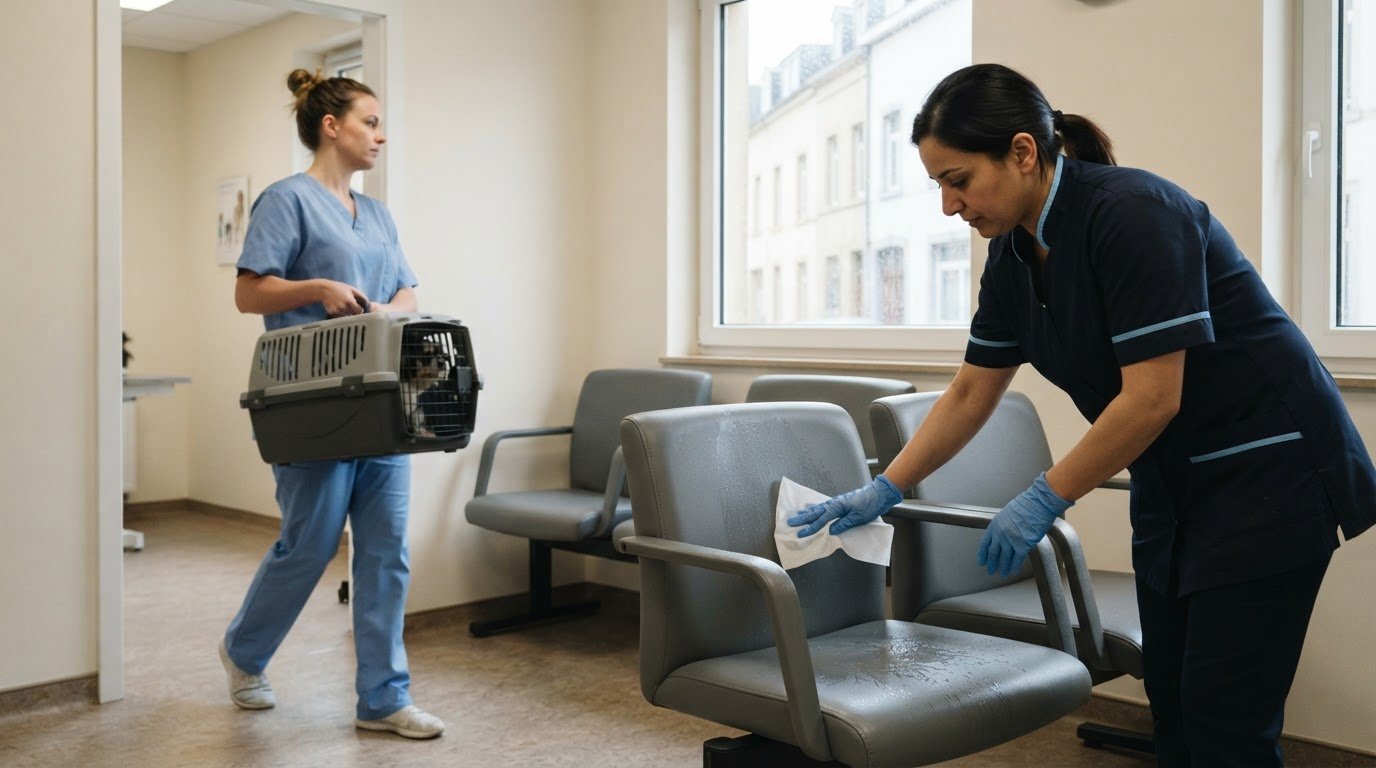
The waiting room is part of infection control, not just a first impression. Effective veterinary clinic cleaning depends on clear procedures: staff handle between-patient tasks and animal-related incidents, while professional cleaners follow the clinic’s instructions for routine cleaning. Waiting rooms need thorough daily cleaning and disinfection after a sick or potentially sick animal has visited.
Keeping a veterinary clinic clean takes coordination, especially when animals, staff and visitors share the same spaces. This guide explains how cleaning, disinfection, sanitation and sterilization differ, and how responsibilities can be divided between clinic staff and cleaners. It also covers safe approaches to occupied enclosures and the daily care of waiting rooms, so you can understand what a professional cleaning routine should address and where clinical staff need to remain involved.
Key Takeaways
- Understand which hygiene tasks remove visible soil, reduce pathogens, or require a higher level of processing.
- Set clear boundaries so cleaners handle routine spaces while trained clinic staff retain responsibility for clinical waste and restricted areas.
- Use a controlled spot-cleaning approach around occupied enclosures that protects animal safety and avoids unnecessary disturbance.
- Plan waiting-room care around floors, carpets, and frequently touched surfaces, with the cleaning scope suited to the clinic’s routine needs.
Cleaning, disinfection, sanitation and sterilization
Each process has a distinct purpose, from removing visible soil to treating instruments. Written procedures should specify the products, steps and frequency for each area.
Cleaning and Disinfection Differences
Cleaning physically removes dirt and organic material from exam-room surfaces, but it does not replace disinfection. Staff clean countertops and equipment, such as pet scales, between every patient, then apply disinfectant to the cleaned surfaces. The product must remain wet for the contact time stated on its label. Sanitation reduces contamination, while sterilization eliminates microorganisms on instruments through a separate clinical process.
Choosing Disinfectants for Pathogens
Choose a disinfectant for the pathogen being targeted, not just its general germ-killing claims. Canine parvovirus can persist in the environment for months, and quaternary ammonium products do not reliably kill it. Diluted bleach, accelerated hydrogen peroxide and potassium peroxymonosulfate can be effective against parvovirus when used at the label concentration and contact time. Tougher pathogens, including ringworm, may require a different formula.
Disinfectant Selection and Dilution
The clinic should select products suited to its pathogens, surfaces and animal-care setting. Cleaners should use the designated product and dilution for each area, following the label rather than estimating. Remove visible soil before disinfecting, keep the surface wet for the required contact time, and rinse or allow it to dry as directed. Keep isolation supplies separate to limit spread between areas.
Routine and Terminal Cleaning
Routine cleaning includes daily work and exam-room turnover between every patient. Terminal cleaning is a more thorough clean after clinical use ends; a clinic’s regular clean is usually scheduled after closing. Exam rooms need cleaning between patients. Written procedures should set kennel and operating-room schedules based on use. Kennel sanitation also follows animal turnover, while surgical suites require disinfection under clinic protocol.
In animal shelters, bleach diluted at 1:32 is effective against bacteria, parvoviruses and respiratory viruses; bleach at a 1:10 dilution is effective against ringworm spores.
Responsibilities of clinic staff and contract cleaners
Clear task boundaries protect animals, staff and visitors while keeping daily cleaning practical. Written procedures should identify who handles each space, incident and waste stream.
Infection and Cross-Contamination Control
Clinic staff usually clean between patients, including consult tables and waiting-room accidents. They also manage enhanced cleaning after a known infectious case and direct cleaners around restricted clinical areas. Clinics in Luxembourg should base cleaning standards on written procedures and applicable local requirements. Those procedures should define responsibilities, room-specific tasks and staff training, then be reviewed for effectiveness.
Odour, Allergen, Dust, and Aerosol Control
Odours and allergens can remain where animal hair, dander or spills collect. A professional routine removes visible debris from floors and touchpoints, then cleans affected surfaces using the clinic’s designated products. Dust control matters in treatment rooms, where surfaces and walls need wiping. Avoid high-pressure rinsing in animal-care settings because spray can disperse untreated contaminants into the air.
Laundry, Sharps, and Clinical Waste
Keep laundry separate from general cleaning and follow the clinic’s procedures for handling used textiles. Clinical staff, not contract cleaners, handle sharps containers and clinical waste bags. A cleaner must never open, empty or press down a sharps container. The clinic should define waste boundaries before work begins, so cleaners can remove routine rubbish without disturbing clinical materials or their containers.
Choosing Cleaning Services and Suppliers
For a cleaning service, look for staff training, clear room-by-room procedures and defined boundaries around clinical areas. Ask how the cleaning plan supports the clinic’s infection-control workflow and how tasks are reviewed. For disinfectant suppliers, the clinic should select products appropriate to its target pathogens and veterinary setting. Cleaners then follow the clinic’s chosen products and specified dilutions. Routine cleaning support can help maintain shared, non-clinical spaces.
Professional spot cleaning of occupied animal enclosures
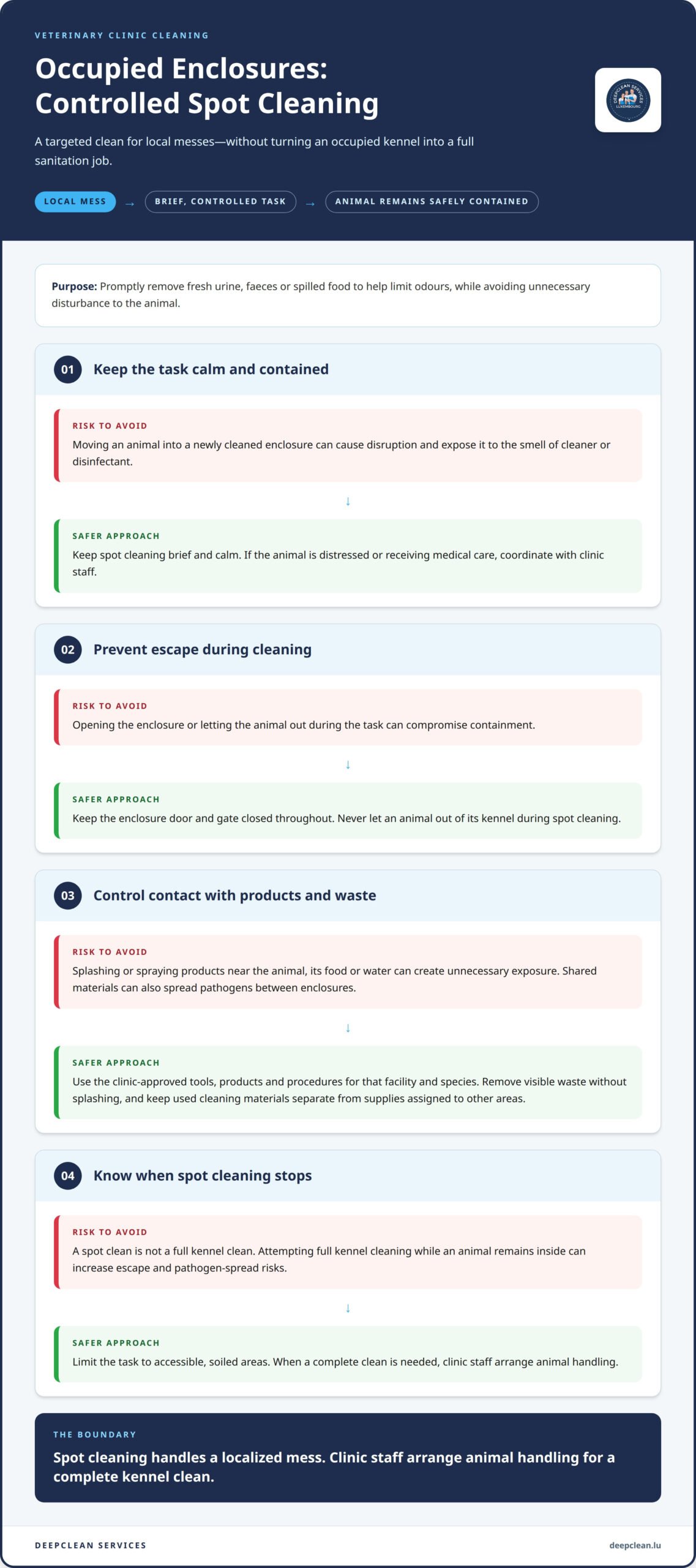
Spot cleaning addresses local messes without turning an occupied kennel into a full sanitation job. The clinic’s procedure should protect animal containment and control contact with cleaning products.
Odour Reduction and Animal Stress
Promptly removing fresh urine, faeces or spilled food helps limit odours in a hospital ward. Spot cleaning can also avoid the disruption of moving an animal into a newly cleaned enclosure that smells of cleaner or disinfectant. Keep the task brief and calm, and coordinate with clinic staff if an animal is distressed or receiving medical care.
Cleaning Safely Around Animals
Keep the enclosure door and gate closed throughout the task. Never let an animal out of its kennel during spot cleaning. Remove visible waste with the clinic’s approved tools, and avoid splashing or spraying products near the animal, food or water. Use only products and procedures designated by the clinic for that facility and species.
A cleaner should not carry out full kennel cleaning while an animal remains inside. Spot cleaning is limited to accessible, soiled areas; staff arrange animal handling when a complete clean is needed. This distinction helps prevent escapes and reduces the risk of spreading pathogens between enclosures. Keep used cleaning materials separate from supplies assigned to other areas.
After wiping a localized spill, let the treated surface dry before the animal can touch it. Follow the product label and clinic instructions for rinsing or drying, and keep bowls away from the work area until surfaces are ready. If the enclosure needs washing, disinfection or a more extensive clean, clinic staff should coordinate the animal’s removal and return. Spot cleaning supports daily care, but does not replace full sanitation after an occupant leaves.
Professional daily cleaning of veterinary waiting rooms
A waiting room needs thorough daily cleaning because animals, visitors and staff share its floors and furnishings. The routine should cover visible soil, frequent touchpoints and any incident requiring immediate attention, with clinic protocols defining who handles each task.
For the daily clean, a professional works systematically through the space:
- Vacuum carpets, and wash or shampoo them when heavily soiled.
- Sweep and mop hard floors, then allow them to dry before normal use.
- Wipe and disinfect frequently touched surfaces, including door handles, doorknobs and light switches.
- Clean reception surfaces and nearby shared touchpoints as part of the clinic’s daily plan.
Order matters. Remove visible organic material before disinfecting a surface, then follow the product’s contact time and drying directions. A visit by a sick or potentially sick animal may call for more than a quick tidy. The clinic’s product choice and protocols should guide the response, especially where different pathogens require different disinfectants.
Clinic staff usually clean accidents between patients, such as urine or vomit on the waiting-room floor. A contract cleaner’s daily work supports that immediate response by maintaining floors, carpets and shared surfaces. Reception desks and computer workstations should also be cleaned every night. Keep task boundaries clear so animal-related incidents receive prompt attention without disrupting the scheduled room routine.
Effective daily practices are specific and repeatable: assign surfaces and floors, use designated products, and address fresh soiling promptly. Floor scrubbers can help keep walkways usable because scrubbed floors dry quickly. The key is simple: a clean waiting room depends on daily coverage and targeted disinfection after a potentially infectious visit.
For a consistent routine in shared spaces, arrange regular cleaning.
Include office carpets in the recurring floor plan: veterinary clinic office carpets should be vacuumed daily. This makes carpet care part of the waiting room’s daily routine, alongside other scheduled cleaning tasks, and ensures it is included in the room’s regular coverage.
The veterinary clinic cleaning checklist is intended for ongoing use between patients and each day. It covers both intervals, with office carpet vacuuming included in the daily work.
Deepclean Services
Deepclean Services can support routine upkeep in shared, non-clinical areas of a veterinary practice, such as reception and office spaces. Regular Cleaning can help maintain these areas, while One-Time Basic Cleaning or Deep Cleaning can suit a specific reset or a more intensive clean. Choose the scope according to the spaces and tasks involved.
Clinical cleaning still requires the clinic’s procedures, products and staff oversight, particularly in exam rooms, isolation areas and around animal enclosures. Professional cleaning can complement that work without replacing clinical disinfection or animal-care responsibilities. For help maintaining shared areas, contact Deepclean Services to discuss your requirements.
Set a Clear Cleaning Plan for Your Practice
Turn cleaning responsibilities into a practical plan for your premises. Identify the shared areas that need routine attention, the work handled by clinic staff, and the boundaries around clinical rooms and animal care. A clearly defined scope helps professional cleaning complement the clinic’s procedures without replacing clinical disinfection or specialist responsibilities.
Deepclean Services offers Regular Cleaning, One-Time Basic Cleaning and Deep Cleaning for suitable premises and shared spaces. These services can support general upkeep alongside veterinary clinic cleaning, while the clinic retains control of its clinical protocols and animal-related tasks.
Discuss the cleaning needs of your practice and the scope that best fits its spaces. Contact Deepclean Services to take the next step toward a well-organised cleaning routine.
Frequently Asked Questions
What cleaning and disinfection protocols should veterinary clinics follow?
Clinics should use written protocols that assign cleaning tools, products and frequencies to each area. Include procedures for exam-room turnover between species, surgical suites, kennels, isolation areas and public spaces. Regularly inspect and audit the process to assess its effectiveness and whether equipment or procedures need adjustment. Keep room-specific instructions accessible to staff and cleaners so every task follows the same process.
Which disinfectants are effective against common veterinary pathogens and safe for animals?
The suitable product depends on the pathogen and the species housed. For example, feline panleukopenia virus is as hardy in the environment as canine parvovirus, so the product must be effective against the target virus. The clinic should select the disinfectant and specify its dilution. Staff and cleaners must follow label directions for contact time, rinsing or drying, reducing the chance of animals contacting wet product or residue.
What steps do professionals take to clean a veterinary clinic between patients?
Between patients, professionals follow the clinic’s turnover procedure for that room and species. They remove visible organic material, clean the exam table and other used surfaces, then disinfect appropriate equipment, such as a pet scale. The product must remain on the surface for its stated contact time. Afterward, follow its label for rinsing or drying before preparing the room for the next patient.
What are the risks of improper cleaning and disinfectant use in veterinary clinics?
Missed soil can shield pathogens, while a product that does not target the organism may leave infection risks uncontrolled. Incorrect dilution or insufficient wet contact time can also undermine disinfection. Residue creates another concern because animals touch floors and surfaces, so products must be rinsed or allowed to dry as directed. Poor separation of cleaning tools can also carry contamination between rooms, including into isolation areas.