
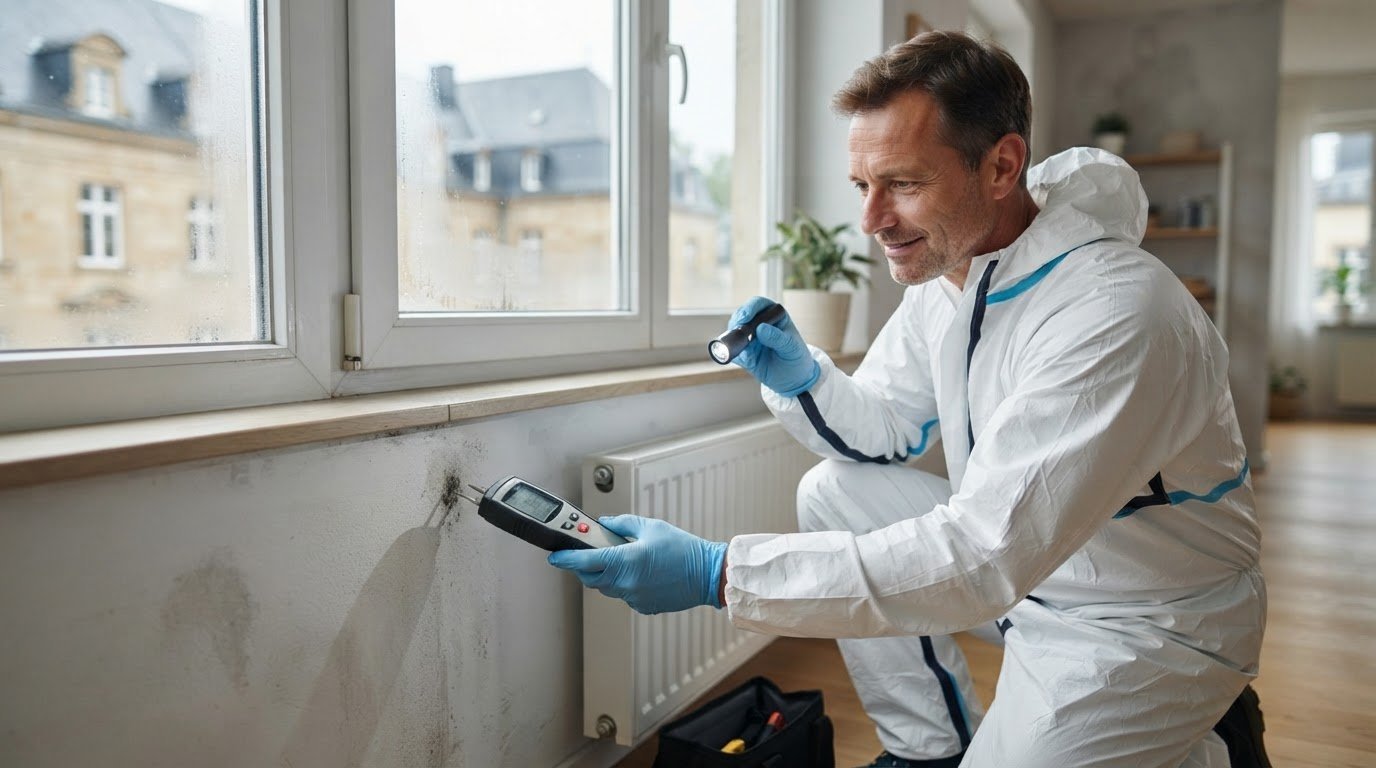
What if a mould stain is only a symptom, and cleaning it is the least important part of the job? If it returns after cleaning or appears elsewhere, the dampness or condensation behind it may still need attention. Effective mould treatment Luxembourg property owners can rely on starts by considering both the visible growth and possible moisture sources.
A small patch on a non-porous surface may be manageable to clean, but recurring mould, a larger affected area or an unclear source of dampness can call for professional assessment. Removing a stain alone may not prevent it from returning. Deepclean Services offers mould removal for residential and commercial properties across Luxembourg. Before booking, find out what the proposed service includes and what may need separate attention.
This guide explains the stages of a considered treatment plan, how to compare different approaches, and when DIY cleaning may not be enough. It also offers practical questions to ask about the work scope, safety measures and follow-up, so you can plan a sensible next step without relying on vague promises.
Key Takeaways
- Effective mould treatment Luxembourg should consider both visible growth and the moisture conditions that may be sustaining it.
- A sound plan can move from assessing signs and investigating moisture to selecting treatment and reviewing the result.
- Recurring or widespread mould, or an unclear source of dampness, may call for professional assessment rather than surface cleaning alone.
- Compare providers by asking what their scope includes, how they handle preparation and occupant access, and whether they review the area afterward.
- Track condensation, dampness and any return of visible growth to help identify whether moisture conditions still need attention.
Mould Treatment in Luxembourg: What Effective Treatment Needs to Address
Effective mould treatment involves more than making a mark disappear. It considers the visible growth and the dampness or moisture conditions that may be allowing it to develop. Leaks, condensation and inadequate ventilation can all contribute, but the same visible sign can have different explanations in different properties. A photo or brief description cannot establish the cause remotely.
Visible mould removal addresses the growth you can see; cause-focused treatment also investigates the moisture conditions that may allow it to return. This distinction matters in homes and commercial properties across Luxembourg. Cleaning can improve the appearance of an area, but it does not prove that a leak, condensation pattern or ventilation issue has been resolved. For a general overview of indoor mould, its possible causes and health effects, see Indoor mold.
How is mould treatment different from surface cleaning?
Surface cleaning targets visible residue. Cause-focused treatment also considers what the affected area and surrounding conditions may reveal, then identifies what needs cleaning, removal or further review. The material matters: mould on a non-porous surface may be approached differently from growth on porous material, which can retain moisture or be harder to clean thoroughly. The right handling depends on the material and circumstances, so do not assume one cleaning method suits every surface. For more context, read about the health risks of household mould.
What moisture clues should property occupants look for?
Recurring condensation on windows, damp patches, musty odours and discoloured staining can be useful clues. None proves a particular cause on its own. A patch near a window, for example, may prompt questions about condensation, but further assessment may be needed to understand the cause.
Before arranging cleaning or assessment, keep a simple record. Note where and when signs appear, whether they return after cleaning, and whether they seem to change after wet weather or changes in ventilation. Photographs taken over time can help show how an area changes. Record observations rather than drawing firm conclusions: a pattern can guide questions, but it is not a diagnosis.
This gives property owners and occupants a practical starting point. Mould removal is a listed service from Deepclean Services, which serves residential and commercial properties across Luxembourg. Before booking, ask what the proposed scope covers, including whether it addresses visible growth, affected materials and any follow-up review. Confirm the specific steps with the provider rather than assuming they are included.
The Mould Treatment Process: From Assessment to Follow-Up
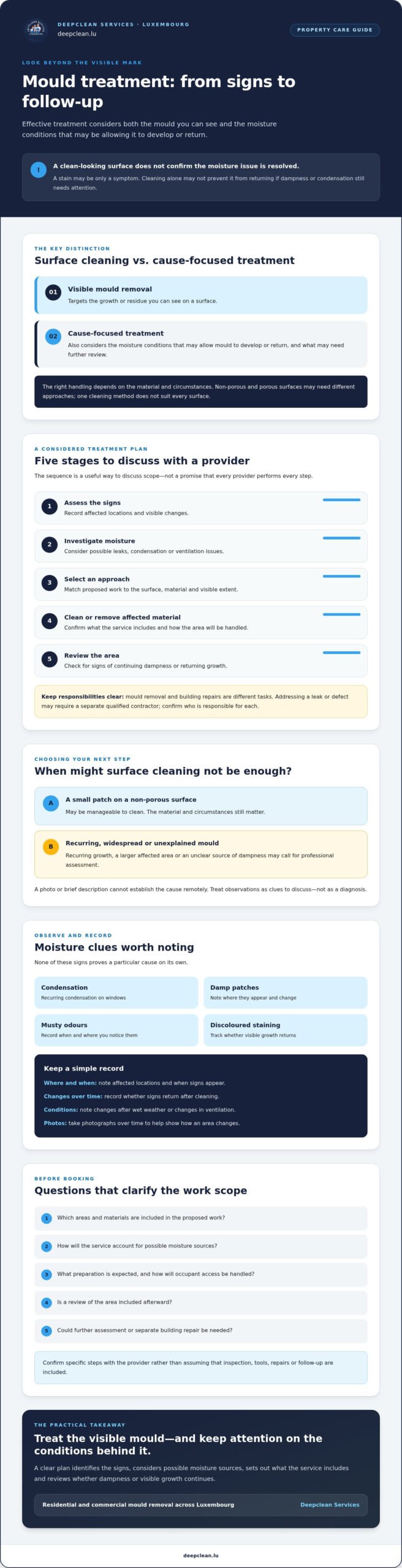
A considered mould treatment Luxembourg plan follows a sequence rather than jumping straight to cleaning. The exact work depends on the visible extent, the materials involved, access to the area and the suspected moisture source. Ask the provider to explain what its mould-removal service covers and where further assessment or building work may be needed.
- Assess the signs: Record affected locations and visible changes.
- Investigate moisture: Consider possible leaks, condensation or ventilation issues.
- Select an approach: Match the proposed work to the surface, material and extent.
- Clean or remove affected material: Confirm what the service includes and how the area will be handled.
- Review: Check for signs of continuing dampness or returning growth.
This sequence is a useful way to discuss the scope, not a promise that every provider performs each step. Building repairs, such as addressing a leak or defect, may require a separate qualified contractor. Mould removal and repair are different tasks, so confirm who is responsible for each before work begins.
What happens during an initial mould assessment?
Before contacting a provider, note the affected rooms or surfaces, the visible extent, any musty odour and known water events, such as a leak or spill. Ask how the provider will identify or account for the moisture source. Moisture meters or other tools may support an assessment, but ask which checks are included rather than assuming a particular tool or inspection process will be used.
Ask for a specific proposed scope: which materials and areas are included, what preparation is expected, and whether any concerns fall outside the mould-removal service. The EPA guide to mold and moisture also explains why managing moisture matters alongside cleanup. It is general guidance, not Luxembourg-specific regulation.
Why treatment does not end when the visible mould is gone
After cleaning or removal, drying and moisture management remain important considerations. If visible growth returns, reassess possible dampness, leaks or condensation instead of simply repeating surface cleaning. Ask what post-treatment review is included and what signs should prompt follow-up. For broader context on professional service considerations, see the complete mould removal guide for Luxembourg.
Deepclean Services lists mould removal for residential and commercial properties across Luxembourg. If you are considering the service, ask Deepclean Services about the scope of mould removal before booking, including which steps and follow-up are covered.
DIY or Professional Mould Treatment in Luxembourg: How to Compare
A small, limited patch on a manageable surface may seem suitable for cautious cleaning, but no single area threshold determines whether DIY is appropriate. The material, recurrence, moisture conditions and safety concerns all matter. For mould treatment Luxembourg property occupants should follow current authoritative public-health guidance and assess the circumstances rather than rely on a blanket rule.
When may a cautious DIY response be reasonable?
Consider DIY cleaning only when the affected area is limited, the surface can be handled safely, and there are no signs of hidden or continuing dampness. Follow the cleaning product label and relevant public-health guidance. Do not disturb extensive or uncertain contamination. The CDC Mold Cleanup Guidelines provide general cleanup and safety information, but are not a substitute for advice suited to a specific property. Stop and seek appropriate help if growth is extensive, the source is unclear, or occupants have health concerns.
When should you ask a professional to assess the problem?
Recurring growth, persistent dampness, affected porous materials or uncertainty about the moisture source are good reasons to seek an assessment. If you are concerned that a service may only clean the visible stain, ask what the work includes, what it excludes, and whether follow-up is available. Deepclean Services lists mould removal for residential and commercial properties across Luxembourg; confirm its specific scope before booking. For additional DIY safety detail, see the safe mould removal guide for walls.
Use the questions below to compare options. They help clarify what a cleaning-only response can address and where further assessment may be needed.
| Decision point | DIY consideration | Ask a professional |
|---|---|---|
| Uncertainty | Can you identify the affected surface and limits of the visible area? | How will uncertainty about hidden or recurring growth be handled? |
| Affected materials | Is the surface suitable for cleaning without damage or disturbance? | Which materials and areas are included in the proposed work? |
| Safety | Can you follow product directions and public-health guidance safely? | What preparation or occupant-access precautions should you expect? |
| Moisture source | Is the cause known, or could dampness continue? | How does the scope account for the suspected source, and what may need a separate contractor? |
| Follow-up | Can you monitor the area for signs of return? | Is post-treatment review available, and what should prompt reassessment? |
Choosing a Mould Treatment Service in Luxembourg: Questions to Ask
A useful proposal explains what the service will do, what it will not do, and what happens if the suspected moisture source remains unresolved. This is more informative than a broad claim of “permanent removal,” since a cleaning scope alone cannot establish that a leak, condensation issue or building defect has been corrected. For mould treatment Luxembourg property owners and managers can compare providers by asking the same practical questions before booking.
Questions that clarify the service scope
Ask the provider to describe the proposed work in terms of affected areas and materials, preparation, access and review. If part of the affected space is difficult to reach, clarify whether it can be assessed or treated, or whether it falls outside the scope. Also ask what the provider will do if the work raises concern about a continuing leak or another moisture source.
- Areas and materials: Which rooms, surfaces and materials are included? How are inaccessible areas handled?
- Preparation and access: What should occupants move or protect, and are there access or safety instructions to follow?
- Moisture concerns: If a leak, condensation pattern or other source is suspected, how will this be communicated? Is further assessment needed?
- After treatment: Is a post-treatment review included, and what signs should prompt a follow-up?
- Boundaries: What is excluded from the service, including any building repairs or work to correct the moisture source?
How to compare providers without relying on promises
Compare how clearly each provider explains assessment, treatment boundaries, communication and follow-up. A careful answer should distinguish mould removal from repairs to leaks, ventilation or building fabric. Those repairs may require a separate qualified contractor, so confirm who is responsible rather than assuming they are included in a cleaning service.
Before booking, ask which areas and materials are included, how access and preparation work, what happens if moisture remains, whether repairs are excluded, and what follow-up is available. Clear answers help you compare proposals by scope and practical next steps, not unsupported guarantees. These questions apply to residential and commercial properties across Luxembourg without relying on assumptions about local requirements.
Deepclean Services lists mould removal among its services across Luxembourg, but its service information does not specify treatment steps or follow-up arrangements. Ask the team to confirm what the proposed scope includes and excludes before booking. Ask Deepclean Services about mould removal for your property.
After Mould Treatment: Reduce Recurrence and Plan Your Next Step
Cleaning frequency alone will not prevent mould from returning if moisture conditions remain. After treatment, monitor the affected area and note changes that may help clarify whether dampness is continuing. For mould treatment Luxembourg property occupants, a steady monitoring routine can make it easier to spot a pattern and decide whether further assessment is needed.
What should occupants monitor after treatment?
Check the treated location and nearby surfaces for new staining, visible growth, dampness or recurring condensation. Record where and when changes appear, along with ventilation patterns or known moisture events. Practical steps, such as ventilating rooms appropriately, may help manage moisture where suitable for the property. They will not resolve every cause, and changes to building fabric, ventilation systems or suspected leaks may require assessment or repairs by a qualified professional.
If mould returns, dampness persists or the suspected source has not been resolved, arrange a reassessment rather than relying on repeated cleaning. Keep your observations and photographs together. They can help explain what has changed since treatment and guide the next discussion.
How to enquire about mould removal from Deepclean Services
Deepclean Services lists mould removal for residential and commercial properties across Luxembourg. Before contacting a provider, prepare a concise account of the property type, affected locations, whether the mould has returned, and any known leaks or water events. This context can help clarify whether the requested cleaning scope appears suitable or whether another assessment may be needed.
Ask which mould-removal steps are included, what preparation is expected, and whether the service covers a post-treatment review. Do not assume that repairs to leaks, ventilation or building materials are part of mould removal. Confirm whether those tasks fall outside the service and may require another professional. Deepclean Services offers online booking for its cleaning services, but it does not specify whether mould-removal appointments can be booked directly through that route.
- Describe the property and affected areas.
- Note recurrence and any known moisture events.
- Confirm the proposed scope, exclusions and follow-up.
- Check whether to book mould removal online or make an enquiry first.
If mould removal seems like the right next step, contact Deepclean Services through its online service route to ask about the scope and confirm the booking process for your property. Sharing clear details upfront can help you decide whether the service fits your needs and what further action, if any, should be planned.
Take a Clear Next Step Toward a Drier Property
Effective mould treatment Luxembourg property owners can assess starts with more than removing a visible stain. Consider the affected materials and possible moisture conditions, then compare service scopes carefully. Recurring growth, persistent dampness or an unclear source may call for professional assessment rather than repeated surface cleaning.
After treatment, keep monitoring for condensation, damp patches and any return of visible growth. Cleaning can address mould, but repairs to leaks or building elements may require a separate qualified professional. Knowing what a service includes, excludes and offers for follow-up helps you plan responsibly.
Online booking is available for its cleaning services, but confirm whether mould removal can be booked directly or requires an enquiry. Ask about the proposed scope before arranging a service, and share the affected locations and any known recurrence or moisture events.
Ask Deepclean Services about mould removal and clarify the next step for your property. With a clear plan and careful follow-up, you can move forward with greater confidence.
Frequently Asked Questions
What does mould treatment involve?
A sound mould treatment Luxembourg plan combines removal of visible growth with attention to dampness that may support it. Depending on the property, the process may involve assessing affected areas and materials, considering possible moisture sources, selecting suitable cleaning or removal, and reviewing conditions afterward. The exact scope varies. Cleaning a stain alone does not show that a leak, condensation pattern or ventilation concern has been addressed.
Can mould come back after professional treatment?
Yes, mould can return if moisture conditions remain or develop again after treatment. A leak, recurring condensation or inadequate ventilation may continue to create damp conditions even after visible growth has been removed. Monitor treated areas and nearby surfaces for new staining, dampness or visible growth. If signs return, ask for the situation to be reassessed rather than assuming repeated surface cleaning will resolve the underlying issue.
Is it safe to remove mould yourself?
DIY cleaning may be reasonable for a limited, manageable area on a surface you can clean safely, but it is not suitable for every situation. Follow the cleaning product label and relevant public-health guidance, and do not disturb extensive or uncertain contamination. If mould is widespread, dampness may be hidden, or anyone has health concerns, stop and seek appropriate advice. If unsure, ask a professional to assess the affected materials and circumstances.
How do I know whether mould treatment has worked?
Visible growth should be gone from the treated area, but appearance alone cannot confirm that moisture conditions are resolved. Check the treated location and nearby surfaces for recurring dampness, condensation, staining or new growth. Keep notes about when and where changes occur. Ask the provider what post-treatment review, if any, is included and what signs should prompt follow-up. If mould returns, reassess the possible moisture source.
Does mould treatment include repairing a leak or ventilation problem?
Not necessarily. Mould removal and building repairs are different tasks, and a cleaning service may not include work to repair a leak, change ventilation or correct a building defect. Before booking, ask what the proposed scope covers and what is excluded. If a moisture source is suspected, clarify whether it needs assessment or repair by a separate qualified professional so responsibilities and next steps are clear.
How should I choose a mould treatment service in Luxembourg?
Compare providers by asking which areas and materials are included, how occupant access and preparation are handled, what happens if a moisture source is suspected, and whether follow-up is available. Online booking is available for its cleaning services, but confirm whether mould removal can be booked directly or requires an enquiry. Ask for the proposed scope before proceeding.


Pingback: Health Risks of Household Mould: Facts, Myths and When to Act – Deepclean Services