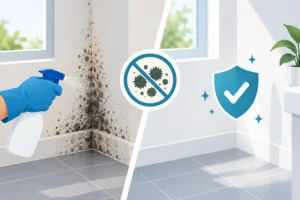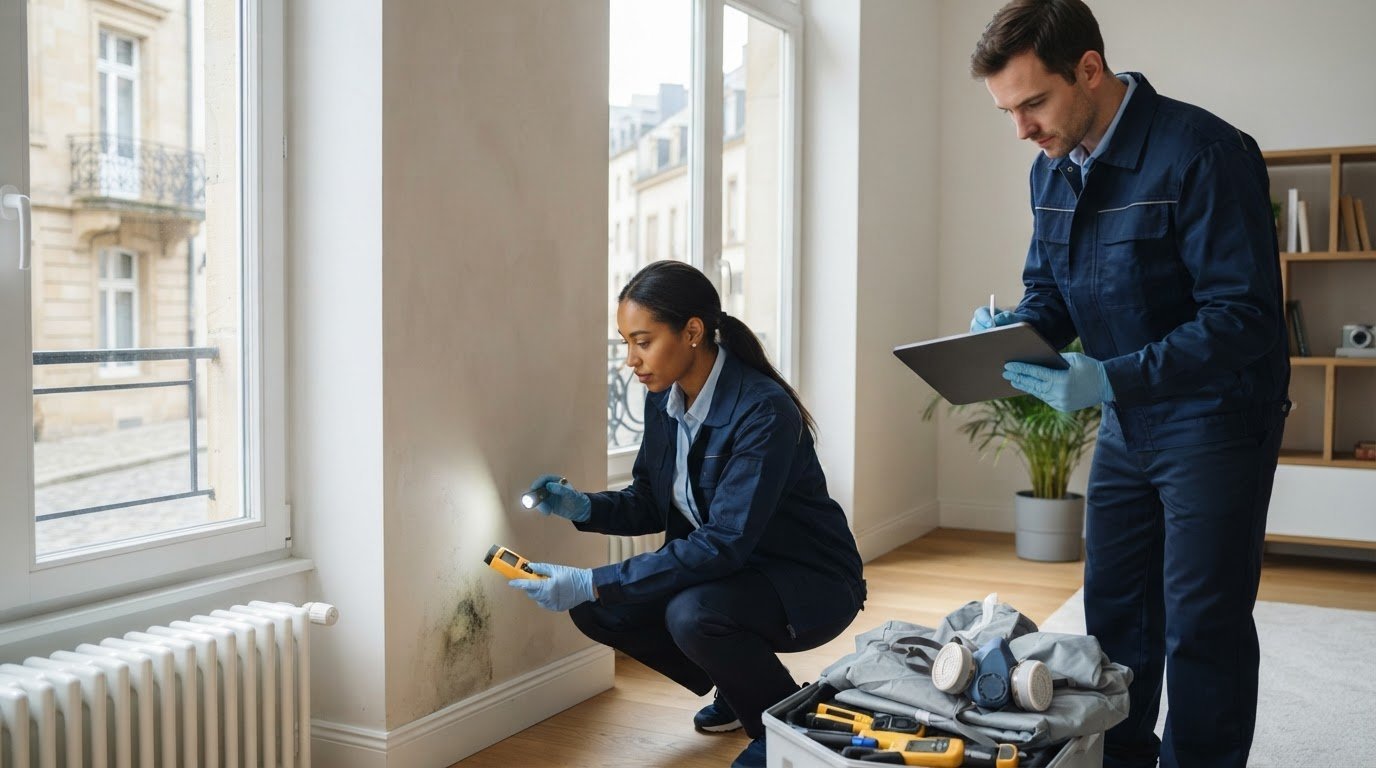
A spotless wall isn’t proof that a mould problem has been properly dealt with. When comparing a mould removal professional service in Luxembourg, focus on whether the proposed work fits the size and circumstances of the affected area, not just whether visible marks disappear.
It’s reasonable to wonder whether a small patch needs professional attention or whether a cleaning-only visit will leave the dampness that contributed to it untouched. Luxembourg’s Santé.lu guidance recommends seeking a specialist for larger mould-affected surfaces and cautions against indoor fungicides and biocides. Knowing what to ask before booking can help you distinguish a suitable cleaning service from work that may require further assessment.
This guide explains what a thorough service should clarify, how to compare providers, and what to ask about the work, its limits and any follow-up. You’ll also learn how to judge whether your situation fits a professional cleaning service or calls for a moisture or mould specialist. With a clearer picture of the process, you can choose a provider with confidence and set realistic expectations before work begins.
Key Takeaways
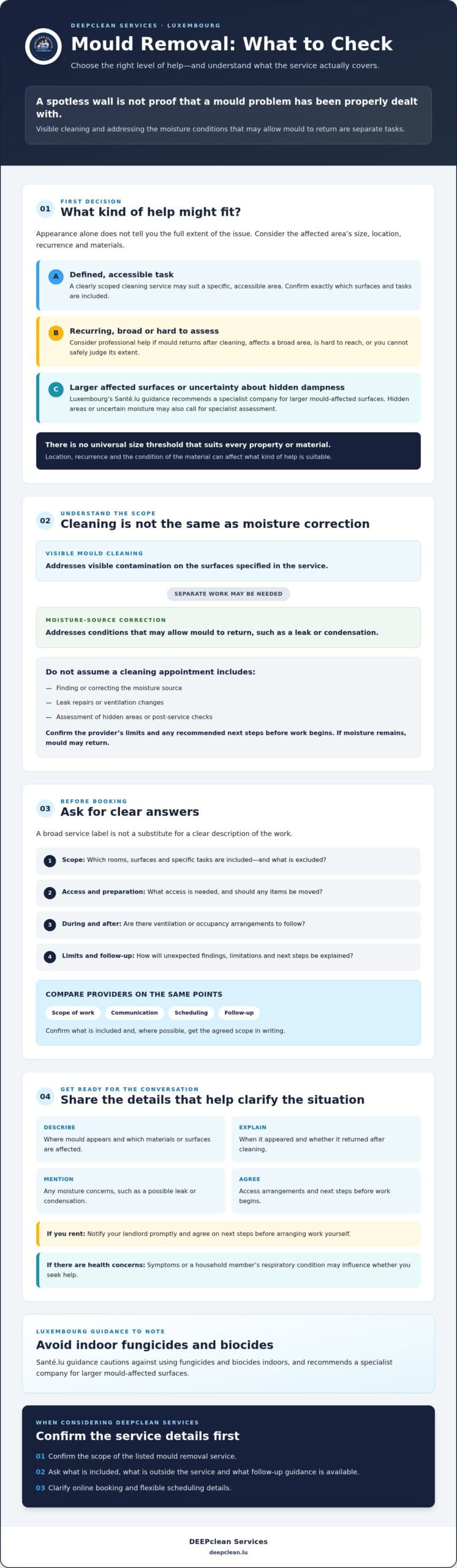
- Use the mould’s size, location, recurrence and affected materials to judge whether professional help may be appropriate.
- Before booking a mould removal professional service, confirm the tasks included and what guidance or follow-up you can expect.
- Compare providers on scope, communication, scheduling and follow-up so you can assess proposals on a like-for-like basis.
- Be ready to describe when the mould appeared, whether it returned and any moisture concerns. Agree on access and next steps before work begins.
- When considering Deepclean Services, confirm the scope of its listed service and ask about its online booking and flexible scheduling.
When Is a Mould Removal Professional Service the Right Choice?
Finding mould can leave you unsure whether to clean the mark, monitor it or call for help. The right choice depends on more than appearance. Consider the size of the affected area, where it appears, whether it keeps returning and what materials are involved. A mould removal professional service may be appropriate when the situation is difficult to assess or manage safely, but the service label alone doesn’t tell you what work a provider will carry out.
Visible staining is only part of the picture. It may not reveal the moisture source, such as a leak or condensation, or show whether mould extends behind or beneath a surface. For general background on general mould remediation methods, see Wikipedia’s overview of indoor mould, its causes and approaches to cleanup.
Signs a professional assessment may be appropriate
Consider seeking professional help if mould returns after cleaning, affects a broad area or appears somewhere hard to reach, such as behind fixed furniture or inside a concealed space. Professional help may also be appropriate if you can’t safely judge the extent of the issue or access the affected material without disturbing it.
There isn’t a universal size threshold that suits every property or material. Luxembourg’s Santé.lu guidance recommends a specialist company for larger mould-affected surfaces. Location, recurrence and the condition of the material can also affect what kind of help is suitable. If you rent, notify your landlord promptly and agree on the next steps before arranging work yourself.
Health concerns may also influence your decision, particularly if someone in the household has symptoms or a respiratory condition. For more context, read about the health risks of household mould.
What a professional service can, and cannot, be assumed to do
A service description may refer to cleaning, mould removal or remediation, but these terms don’t guarantee the same scope. Before booking, ask which areas and materials are included, how visible contamination will be addressed, and whether assessment or follow-up guidance is part of the service. Confirm any limits in writing so you know what to expect.
Removing visible mould and identifying or correcting the moisture conditions are separate tasks. A cleaning appointment may address specified visible areas without investigating the source of dampness. Don’t assume that mould removal includes leak repairs, ventilation changes, hidden-area assessment or post-service checks unless the provider confirms this. If the moisture problem remains, mould may return.
What Should a Thorough Mould Removal Service Include?
A thorough service starts with clarity. Before agreeing to work, understand which areas and materials are included, what tasks the provider will carry out, what falls outside the scope and what guidance you’ll receive afterwards. The work can vary with the property and affected surfaces, so a broad label such as “mould removal” isn’t a substitute for a clear description.
Visible mould cleaning addresses contamination on a surface; moisture-source correction addresses conditions that may allow mould to return. These may be separate parts of a response, and one provider may not offer both. Ask who is responsible for any repair or building work if it’s outside the cleaning service. The EPA guidelines on mould cleanup also explain why controlling moisture matters. Use this as general background, not as a Luxembourg-specific rule or threshold.
Questions to ask before you book
Ask for the proposed work to be described in clear, practical terms. For example, if mould is visible on a wall and nearby furnishings, confirm whether the appointment covers the wall only or other affected surfaces as well. Before agreeing, clarify:
- Which rooms, surfaces and specific tasks are included, and what is excluded?
- What preparation or access is needed, including whether items should be moved?
- Are there ventilation or occupancy arrangements you should follow during or after the work?
- How will the provider explain limitations, unexpected findings and recommended next steps?
These questions help you compare the promised work with your actual concern, rather than relying on the service name alone. If anything is uncertain, ask for clarification before confirming the appointment.
How to assess safety, scope, and follow-up
Request an explanation of the proposed approach for your property and the materials affected. Ask whether the provider can discuss known moisture concerns and what next step it recommends if the source appears to require attention beyond cleaning. Don’t assume that inspection, repairs, specialist testing or later checks are included unless the provider confirms them.
Also clarify what happens if the work reveals a larger affected area or a surface that can’t be treated as expected. A clear answer helps you make an informed decision and plan for any separate work. Cleaning and moisture management may involve different steps, so ask which concerns the appointment can address.
If you’re comparing options for a mould removal professional service, Deepclean lists mould removal among its cleaning services. You can review Deepclean’s mould removal service and confirm the exact tasks, preparation requirements and follow-up guidance before booking.
How to Compare Mould Removal Providers in Luxembourg
Providers may use similar labels while covering different tasks. Compare proposals against the same details: what work is included, how clearly questions are answered, whether the appointment suits your schedule, and what follow-up information you’ll receive. This makes it easier to judge whether a mould removal professional service fits your home or commercial premises, rather than relying on a vague service name.
| Criterion | What to confirm | What a clear answer helps you understand |
|---|---|---|
| Scope | Which rooms, surfaces and tasks are included? What is excluded? | Whether the proposed work matches the affected areas and property type. |
| Communication | How will the provider explain access, preparation, limitations and next steps? | Whether you know what to expect before work begins and whom to contact with questions. |
| Scheduling | What appointment arrangements and timing are available? | Whether the proposed visit can fit your household or site operations. |
| Follow-up | What guidance is provided after the work, and what issues may need separate attention? | Whether you understand any remaining steps, without assuming repairs or later checks are included. |
Compare service scope and communication
Describe the same situation to each provider, including the property type, affected rooms and surfaces, and whether the mould has returned. Ask each one to outline the included tasks and exclusions. A useful response should address your specific description, not just repeat a general service label. Notice whether the provider answers questions about access and preparation directly, and explains what may happen if the requested work falls outside the agreed scope.
For added context, the EPA mould cleanup guide provides U.S. guidance for homeowners and renters. Treat it as background information, not as Luxembourg-specific requirements or a substitute for a provider’s explanation of the work proposed for your property.
Check scheduling and practical suitability
Confirm appointment arrangements and expected timing directly with each provider, since availability can vary. If you manage commercial premises, explain how the affected area is used and ask whether the proposed schedule can account for site operations. Confirm any access or occupancy arrangements rather than assuming they are standard.
Deepclean Services lists mould removal for residential and commercial customers across Luxembourg, alongside trained staff, flexible schedules and online booking. Confirm the exact tasks and appointment details directly. For further reading, see this professional mould removal guide for Luxembourg.
Before and After Professional Mould Removal
A little preparation helps a provider understand the situation and helps you know what to expect. Keep the process straightforward: describe the issue, confirm the agreed scope, prepare access as requested, then clarify any follow-up before the appointment ends. Preparation can vary by provider and job, so ask for instructions that fit your property and the planned work.
Prepare useful information for the provider
Before contacting a provider, note which rooms and surfaces are affected, when you first noticed the mould and whether it returned after previous cleaning. Share relevant property context, such as a known leak, condensation or dampness concern. If you can do so without disturbing the affected area, a photograph may help explain what you’ve observed.
Ask what access the team will need and whether any items should be moved. Don’t remove, scrape or otherwise disturb affected materials unless the provider advises you to do so. For a home or commercial property, mention any access considerations that could affect the appointment, such as restricted entry to a room or site procedures.
Before the appointment, confirm the affected areas, included tasks, preparation and access requirements, expected arrangements, and who to contact about follow-up.
Confirm follow-up after the service
Before the work is considered complete, ask what changes to monitor and whom to contact if mould reappears. Clarify whether the provider offers post-service guidance, since follow-up checks or monitoring shouldn’t be assumed. If the source of moisture appears to need attention, ask whether those repairs or building work are outside the cleaning scope and who you may need to contact separately.
Keep a record of the agreed work and any recommendations. If the affected area changes or mould returns, this information can help you explain the history clearly when seeking advice. For related context on household cleaning, see safe ways to remove mould from walls.
Deepclean Services lists mould removal among its services in Luxembourg. Confirm the exact tasks, preparation instructions and follow-up arrangements before booking. If you’re considering this option, review Deepclean’s mould removal service and check that its confirmed scope suits your property and needs.
Booking Deepclean’s Mould Removal Service: What to Confirm First
Deepclean Services lists mould removal among its cleaning services for residential and commercial customers across Luxembourg. The company states that it has trained staff, offers flexible schedules and accepts online bookings. These details can help you decide whether to make an enquiry, but they don’t define the exact work included in a mould removal professional service. Confirm the scope and arrangements for your property before booking.
Decide whether the service matches your property needs
Prepare a short description of the situation before you get in touch. Note whether the property is a home or commercial premises, which rooms or surfaces are affected, when you noticed the mould and whether it has returned. Include any known moisture concerns, such as a leak or persistent dampness, so Deepclean can respond to the circumstances you describe.
Ask whether the tasks you need fit Deepclean’s mould-removal offering. Confirm which affected areas are included, what the appointment covers and whether any requested work falls outside the service. Don’t assume that a booking includes an inspection, moisture-source investigation, repairs, certification or a guaranteed outcome. If you need any of these, ask directly whether they’re available or whether you’ll need another provider.
Make the next step straightforward
Before confirming, check the appointment arrangements, expected timing and any preparation or access requirements. Deepclean states that it offers flexible schedules, but confirm specific availability directly. You can use the online portal to book cleaning services. Review the booking details carefully and make sure the selected service and your requirements align.
It’s also useful to ask what guidance, if any, you’ll receive after the work and whom to contact with questions. Confirm follow-up arrangements rather than assuming they’re included. Clear answers help you understand what the service covers and whether separate action may be needed for a moisture problem.
If the listed service appears relevant to your home or commercial property, discuss your mould removal service requirements with Deepclean. Share the affected areas and any recurrence or moisture concerns, then confirm the scope and appointment details before proceeding.
Choose a Service That Fits Your Mould Concern
The right provider is defined by clear, suitable work, not just a promise to remove visible marks. Before booking, confirm which areas and tasks are included, what preparation is needed and what follow-up guidance you can expect. Ask separately about moisture-source concerns or repairs, since these may fall outside a cleaning service’s scope.
Assess a mould removal professional service against your property, affected materials and needs. Compare providers on scope, communication, scheduling and follow-up, and explain whether the mould has returned or you know of a moisture issue.
Deepclean Services lists mould removal for residential and commercial customers across Luxembourg. The company states that it has trained staff, flexible schedules and online booking. Confirm the exact tasks and appointment arrangements directly before booking. Discuss your mould removal requirements with Deepclean and take the next step with a clearer understanding of what your property needs.
Frequently Asked Questions
When should I hire a mould removal professional service?
Consider professional help if mould affects a widespread area, keeps returning, appears in a hard-to-access place or involves materials you can’t safely assess. Luxembourg’s Santé.lu guidance recommends hiring a specialist company for larger mould-affected surfaces. The right response also depends on the location and condition of the affected materials. If you’re unsure what lies beyond visible staining, describe the situation to a provider before deciding what work to book.
What does a professional mould removal service include?
The exact scope varies by provider, property and affected materials, so ask for a clear description before booking. Confirm which rooms and surfaces are covered, what tasks are included, what preparation is expected and whether follow-up guidance is provided. Don’t assume the service includes moisture-source investigations, repairs or checks after cleaning. A detailed explanation helps you understand what the appointment addresses and what may require separate attention.
Can a cleaning service remove mould permanently?
No cleaning service should be assumed to prevent mould from returning in every circumstance. Cleaning may address visible contamination, but mould can return if the moisture conditions that contributed to growth continue. Ask the provider what its work covers and whether it can discuss moisture concerns or recommend an appropriate next step. If repairs or building work are needed, confirm who is responsible for arranging them and whether another provider is required—for example, if underfloor dampness or poor airflow is the culprit, discover Subfloor Ventilation Sydney to learn how specialized extraction systems help eliminate excess moisture.
How do I choose a reliable mould removal provider?
Compare providers on the clarity of their proposed scope, communication, appointment arrangements and follow-up guidance. Describe the same affected areas and property details to each provider, then check whether their responses address your situation rather than relying on a general service label. Ask them to explain exclusions and limitations, too. Choose the option whose confirmed work fits your needs, and don’t assume a particular method, qualification or guarantee unless it’s clearly stated and verified.
Is professional mould removal different from cleaning the stain?
Yes, the terms can describe different levels of work. Cleaning a visible stain may address the affected surface, but appearance alone doesn’t establish the full extent of mould or identify a moisture source. A broader remediation service may have a different scope, but don’t assume assessment, repairs or follow-up are included. Ask the provider to specify exactly what it will do and what concerns may need attention outside the appointment.
What should I ask before booking mould removal?
Ask which rooms, surfaces and tasks are included, what is excluded, and what preparation or access the provider requires. Confirm appointment arrangements and ask how limitations or unexpected findings will be explained. Also clarify whether follow-up guidance is offered and whether moisture-source repairs are outside the service. Share when the mould appeared, whether it returned, and any known dampness or leak concerns so the provider can respond to the situation you describe.
Will mould return after professional removal?
It can return if moisture conditions remain, so removal alone shouldn’t be treated as a guarantee against future growth. Ask what signs to monitor after the service and whom to contact if mould reappears. Clarify whether the provider’s work includes any assessment of moisture concerns or whether you’ll need a separate professional for repairs. Keeping a record of the affected areas and any recurrence can help explain changes when you seek further advice.