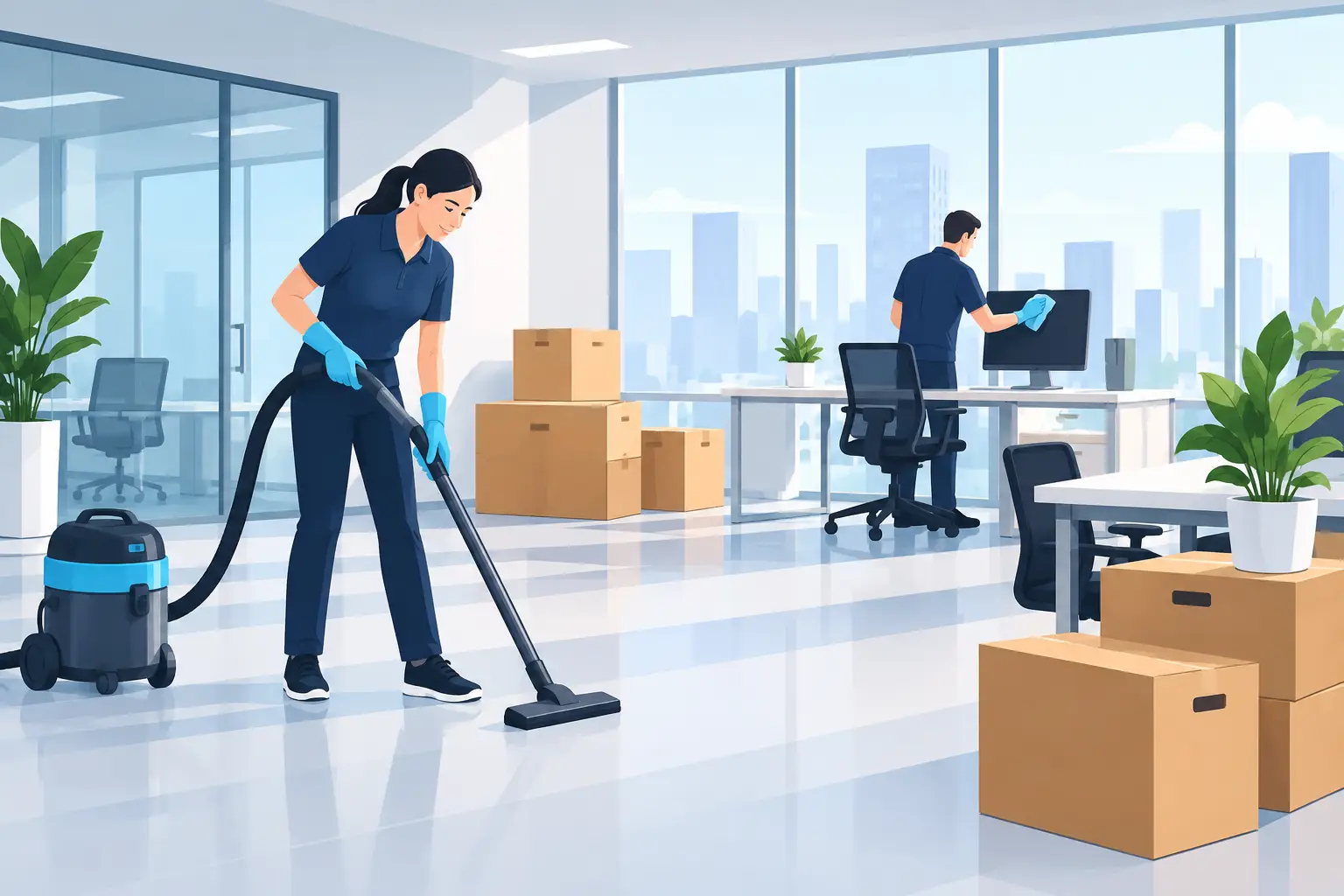
A moving truck can clear out desks in a few hours. What it leaves behind is usually far more noticeable: dust under workstations, marks on walls, stains in break rooms, and overlooked storage areas full of old supplies. Office relocation cleaning gives your team a clean handover at the old location and a fresh, professional start at the new one.
For office managers and business owners, this is not simply a final task to squeeze into moving day. It affects lease obligations, employee comfort, client impressions, and how quickly the business can get back to normal. A clear cleaning plan prevents last-minute surprises when the keys are due.
Why office moves create more cleaning work than expected
Offices gather dirt in places that regular cleaning does not always reach. Desks and chairs hide dust when they stay in the same place for years. Carpet tiles show traffic patterns only after furniture is removed. Kitchen cabinets, refrigerator shelves, server closets, vents, and window ledges can all need attention once the office is emptied.
The old office often needs more than a routine clean. Landlords may expect floors, restrooms, kitchen areas, glass, and common workspaces to be left in good condition. If the building manager finds damage, adhesive residue, heavy carpet staining, or waste left behind, it can delay the handover or affect the security deposit.
The new office has a different purpose. Even if it looks clean at first glance, it may have been vacant, under construction, or used by another tenant. Fine dust can settle on surfaces, floors, and air vents. Restrooms and kitchen areas should be sanitized before employees arrive. Starting with a properly cleaned workspace sends a simple message: this place is ready for work.
Plan office relocation cleaning before moving day
The best time to arrange cleaning is when your move date is confirmed, not when the last boxes are packed. A professional team needs to know whether it is cleaning an empty office, preparing a new space before furniture arrives, or working around movers and IT staff. Those details shape the schedule, equipment, and number of cleaners needed.
Walk through both locations with a practical checklist. Note carpeted areas, hard floors, interior glass, windows, restrooms, kitchen appliances, meeting rooms, storage spaces, and any areas with visible buildup. Take photos of stains, wall marks, or damaged surfaces before the move begins. This makes it easier to separate cleaning needs from repairs that require a landlord, contractor, or maintenance team.
It also helps to check your lease or building handover requirements. Some properties have specific expectations for carpet cleaning, waste removal, access hours, elevator use, or cleaning products. A cleaning crew can handle the work, but they need access to the building and clear information about what must be completed.
Schedule the old and new offices separately
Cleaning both offices on the same day sounds efficient, but it is not always the best choice. The old office should usually be cleaned after desks, furniture, files, and equipment have been removed. Otherwise, cleaners cannot reach the floor edges, wall areas, or surfaces behind large items.
The new location is often best cleaned before moving trucks arrive. This gives the crew full access to floors, cabinets, restrooms, and shared spaces without working around boxes. If that is not possible, schedule a final touch-up after the move to remove packing dust, fingerprints, and debris from high-traffic areas.
For larger businesses, a phased approach may work better. One floor can be cleaned and handed over while another department is still packing. The right option depends on building access, the size of the move, and how much downtime the business can accept.
What a thorough relocation clean should cover
A good office relocation clean focuses on the parts of the workplace people see, touch, and often forget. General dusting alone will not prepare a property for handover or give a new office that clean and fresh feeling.
At the old location, cleaning commonly includes detailed dust removal from desks, shelves, ledges, baseboards, doors, and switches. Floors need vacuuming, mopping, or professional carpet treatment depending on the material and condition. Interior glass, partitions, and reception areas should be cleaned to remove fingerprints and marks.
Restrooms need careful sanitation, including toilets, sinks, faucets, mirrors, dispensers, and floors. Kitchen and break room cleaning should cover counters, cabinets, sinks, backsplashes, microwaves, refrigerators, and other appliances that will remain in the space. Waste bins and leftover supplies should be removed according to building rules.
The new office may need the same core service, with extra attention to construction dust, empty cabinets, interior windows, and newly installed fixtures. If carpets or upholstered furniture are being reused, professional cleaning can remove embedded dirt and odors before the first workday. This is especially useful in meeting rooms, reception areas, and shared seating zones where appearance matters.
Do not leave specialist tasks to the last minute
Some cleaning needs require more time or different equipment than a regular office clean. Deep carpet stains, mold in damp areas, heavy grease in a staff kitchen, and marks left by tape or furniture pads may need specialist treatment. These issues are easier to address while the office is empty and before a final inspection is scheduled.
Windows are another common example. Interior glass can often be handled during a standard relocation clean, while exterior windows may depend on building access, height, and property rules. The same applies to high ceilings, vents, and hard-to-reach fixtures.
Be realistic about what cleaning can solve. A trained crew can remove dirt, dust, buildup, and many stains, but cleaning cannot repair damaged flooring, broken tiles, holes in walls, or worn-out paint. Identifying those items early avoids confusion at handover and gives you time to arrange repairs if needed.
Keep employees focused on the move, not the mess
Asking employees to clean their own desks and shared areas can help reduce clutter, but it should not replace professional cleaning. Employees can clear personal belongings, label equipment, and dispose of outdated papers. They should not be expected to scrub restrooms, clean appliances, or deal with heavy floor dirt after a demanding move.
Give the team a clear deadline for emptying drawers, lockers, and cabinets. Assign responsibility for company records, electronics, keys, access cards, and confidential waste. Once those items are removed, cleaners can work faster and more thoroughly without the risk of moving something important.
This division of work also protects productivity. Your employees can focus on settling into the new office, reconnecting equipment, and serving customers. The cleaning crew takes responsibility for the detailed work that turns an empty space into a presentable property.
Choose a cleaning team that can work around your schedule
Office relocation work often happens outside standard business hours. You may need an evening clean after movers leave, an early morning service before staff arrive, or weekend availability to avoid disrupting operations. Flexible scheduling matters just as much as the cleaning itself.
Look for a provider that can assess the site, explain what is included, bring commercial-grade equipment, and give you a clear price before work starts. Reliable supervision is also valuable on larger jobs, where several rooms, floors, or teams may need to be coordinated.
Deepclean Services supports businesses across Luxembourg with trained crews for one-time, deep, carpet, window, and office cleaning needs. The goal is straightforward: leave the old location clean enough for a confident handover and make the new workplace ready for people from day one.
A well-planned move does more than get boxes from one address to another. It gives your business a clean break from the old space and a workplace your team will feel good walking into.