
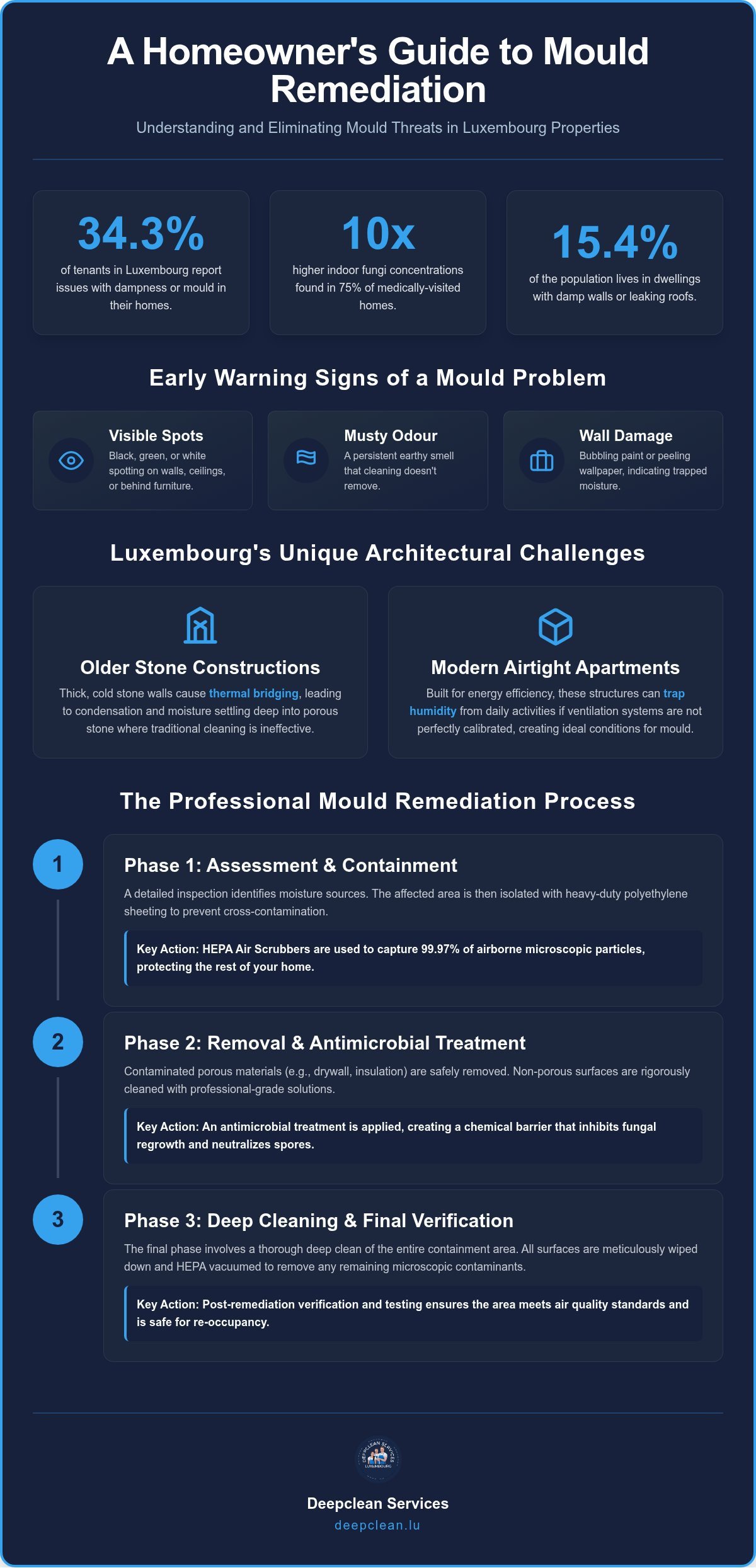
Did you know that 34.3% of tenants in Luxembourg currently report issues with dampness or mould in their living spaces? For many residents, those recurring black spots on walls or ceilings are more than just an aesthetic problem. They represent a genuine health concern for vulnerable family members and a significant financial risk regarding rental deposit losses. Addressing these persistent spores requires a methodical approach to mould removal Luxembourg property owners can rely on to restore their environment to a healthy state.
You understand that a superficial fix isn’t enough when your family’s well-being is at stake. This guide provides the professional standards for permanent remediation, ensuring your home remains a safe, spore-free sanctuary. We’ll examine the essential steps to identify the root causes of humidity, the precision of expert cleaning protocols, and the latest 2026 standards for indoor air quality. By following this structured path, you can secure a certified mould-free home and the peace of mind that comes with a job done right.
Key Takeaways
- Identify the specific environmental factors in Luxembourg that promote fungal growth and learn how to spot early structural vulnerabilities in your property.
- Discover why professional mould removal Luxembourg protocols are essential for eliminating deep-seated spores that standard household cleaners cannot reach.
- Learn to distinguish between minor surface spotting and serious contamination that requires industrial-grade remediation equipment and respiratory protection.
- Implement a reliable maintenance framework focused on precise humidity control and airflow to ensure your living environment remains healthy year-round.
- Understand the systematic remediation process that bridges the gap between general cleaning and heavy construction to provide a permanent solution.
Understanding Mould in Luxembourg: Identification and Risks
Household mould is a type of fungal growth that thrives in damp, poorly ventilated environments. While it plays a vital role in nature by breaking down organic matter, its presence inside a property is a serious concern. These organisms reproduce via tiny, airborne spores that remain invisible to the naked eye until they form visible colonies. For a comprehensive overview of mold, it’s essential to recognize that moisture is the primary catalyst for growth. In the Grand Duchy, the combination of high seasonal humidity and specific building styles makes professional mould removal Luxembourg a common necessity for maintaining a healthy indoor climate.
The health risks of household mould are documented and significant. A 2022 study in Luxembourg revealed that in 75% of houses visited for medical reasons related to air quality, indoor fungi concentrations were up to ten times higher than outdoor levels. Prolonged exposure to these spores can trigger allergic reactions, asthma attacks, and chronic respiratory issues. Children and the elderly are particularly at risk. Because 15.4% of the national population resides in dwellings with damp walls or leaking roofs, understanding the early warning signs is the first step toward remediation.
Signs You Have a Mould Problem
Detecting an infestation early prevents extensive structural damage. Look for visible black, green, or white spotting on walls, particularly in corners or behind furniture. These clusters often indicate a deep-seated moisture issue. You might also notice a persistent, earthy odour that doesn’t disappear with standard cleaning; this “musty” smell is a byproduct of active fungal metabolism. Additionally, keep an eye on your walls for peeling wallpaper or bubbling paint. These are clear indicators that moisture is trapped within the substrate, providing an ideal breeding ground for spores.
Luxembourgs Climate and Architectural Challenges
Luxembourg’s unique architectural landscape presents specific challenges. Older stone constructions are highly susceptible to thermal bridging. This occurs when the thick, cold stone walls meet the warm, heated air of the interior, causing immediate condensation. Without expert intervention, this moisture settles into the porous stone, making traditional cleaning methods ineffective. Conversely, modern apartments are often built to be exceptionally airtight for energy efficiency. While this saves on heating, it can trap humidity from cooking and showering if ventilation systems aren’t perfectly calibrated. Managing these distinct environmental factors is key to preventing a recurring problem.
The Professional Mould Remediation Process
Professional remediation is a systematic, multi-step protocol that prioritizes safety and long-term air quality. Unlike standard household cleaning, which often only addresses surface discoloration, professional mould removal Luxembourg involves industrial-grade equipment and specialized knowledge. This approach ensures that microscopic spores aren’t simply shifted from one room to another but are actively captured and removed. Following recognized EPA guidelines for mold cleanup, the process focuses on source control and thorough decontamination to protect the property’s structural integrity.
Phase 1: Assessment and Containment
The process begins with a detailed inspection to identify the specific moisture sources fueling the growth. Once the extent of the infestation is mapped, technicians establish physical barriers using heavy-duty polyethylene sheeting. This containment isolates the affected area, preventing spores from migrating through the property during the removal process. To manage airborne particles, we utilize HEPA air scrubbers. These machines continuously filter the air within the containment zone, capturing 99.97% of microscopic particles and ensuring the rest of your home remains protected from cross-contamination.
Phase 2: Removal and Antimicrobial Treatment
During this stage, any contaminated porous materials that cannot be salvaged, such as heavily infested drywall or insulation, are safely removed and disposed of. Non-porous surfaces undergo a rigorous cleaning process using professional-grade solutions. We then apply an antimicrobial treatment to these areas. An antimicrobial treatment acts as a specialized chemical barrier that inhibits fungal regrowth and neutralizes remaining spores. This step is critical for properties in Luxembourg where high humidity can otherwise trigger a rapid return of the infestation if the substrate isn’t properly protected.
Phase 3: Deep Cleaning and HEPA Vacuuming
The final phase focuses on microscopic clearance. Every surface within the containment area is meticulously cleaned to remove settled dust and spores that may have escaped initial containment. We perform a final pass using HEPA vacuums, which are designed to trap particles that standard vacuum filters would simply exhaust back into the room. For homeowners seeking to maintain this standard of hygiene, transitioning to a regular cleaning service Luxembourg helps monitor potential moisture issues before they escalate. If you suspect your property requires this level of systematic care, you can easily book a professional assessment online to begin the remediation process.
DIY vs. Professional Mould Removal: When to Call the Experts
Many property owners in the Grand Duchy initially attempt to resolve dampness issues using off-the-shelf sprays. While these products might offer a temporary visual fix, they rarely address the biological reality of the infestation. Scrubbing a patch of black spots without proper containment measures often does more harm than good. This action releases millions of microscopic spores into the air, which can then settle in your carpets, upholstery, or even enter the ventilation system. Once spores are in the HVAC ducts, a localized problem quickly evolves into a property-wide contamination that is far more complex to resolve.
Choosing professional mould removal Luxembourg ensures that the remediation is handled with industrial-grade precision. Experts don’t just “clean” the surface; they eliminate the colony at its source. While a DIY approach might seem cost-effective initially, the high rate of recurrence often leads to multiple failed attempts and eventually, structural damage. Investing in a professional protocol the first time protects your property’s value and prevents the long-term degradation of building materials.
The Limitations of Domestic Cleaning Products
Standard domestic cleaners, particularly those containing bleach, are often deceptive. Bleach is a high-water-content solution. While it strips the dark pigment from the surface, the water can actually penetrate porous materials like plaster or drywall, effectively feeding the fungal roots. This results in a “clean” look that lasts only a few weeks before the mould returns more aggressively. If you want to understand exactly how to remove mould from walls safely and effectively without making the problem worse, it’s essential to learn why common household agents fail on porous surfaces. Professional remediation uses specialized surfactants and biocides designed to penetrate deep into the substrate, ensuring the mycelium is completely neutralized without adding unnecessary moisture to the problem area.
Safety Standards and Protective Equipment
Safety is the most significant differentiator between a weekend DIY project and a professional service. Understanding the health risks of household mould is vital before you decide to handle an infestation yourself. Exposure to high concentrations of spores during cleaning can lead to immediate respiratory distress or long-term sensitivities. Professionals utilize full-body protective suits, nitrile gloves, and N95 or P100 respirators to ensure total isolation from biological agents. Understanding the precise distinction between deep cleaning vs regular cleaning is also essential here, as mould remediation demands the intensive sanitation protocols of a deep clean rather than routine maintenance.
In the Luxembourgish rental market, these standards are particularly relevant. Tenants are often required to return properties in a pristine, healthy condition to secure their full deposit. A failed DIY attempt that leaves behind musty odors or hidden spores can lead to costly disputes. Utilizing a professional service provides the documentation and results needed to meet the strict hygiene requirements of modern lease agreements. For facility managers overseeing multiple properties or office spaces, partnering with a trusted provider of commercial cleaning Luxembourg businesses depend on ensures consistent hygiene standards across all managed spaces.
Prevention and Maintenance: Keeping Your Property Spore-Free
Maintaining a healthy indoor environment requires more than just reactive cleaning; it’s about creating conditions where fungi cannot take root. Effective mould removal Luxembourg relies on a proactive maintenance framework that manages the building’s microclimate throughout the shifting seasons. By implementing a disciplined approach to moisture control, you can protect your property’s structural integrity and ensure the air remains fresh and safe for all occupants. Consistency is the foundation of long-term prevention.
Airflow is perhaps the most critical factor in preventing spore colonization. Stagnant air pockets, particularly against cold exterior walls, allow condensation to form and linger. We recommend leaving a gap of at least five to ten centimetres between large furniture pieces and outside walls. This simple adjustment allows warm air to circulate behind wardrobes and sofas, preventing the “dead-air” zones where mould typically begins its growth. Integrating these checks into your move out cleaning Luxembourg strategy is also a wise way to ensure no hidden issues jeopardize your rental deposit.
Humidity Control Strategies
Monitoring your indoor climate is essential. You should aim to keep relative humidity levels between 40% and 60%. Using a simple hygrometer allows you to track these levels in real-time. In high-risk areas like basements or laundry rooms, a dehumidifier can be an invaluable tool to extract excess moisture from the air before it settles on surfaces. During the cold Luxembourgish winters, we advise practicing “Stoßlüften” or impact ventilation. Open your windows fully for five to ten minutes twice a day. This technique rapidly exchanges moist indoor air for dry outdoor air without cooling down the masonry, which is far more effective than leaving windows tilted for long periods.
Structural Maintenance Tips
External factors often dictate internal health. In the Grand Duchy, heavy seasonal rainfall can quickly overwhelm poorly maintained drainage systems. Regularly checking your gutters and downpipes for blockages prevents water from overflowing onto the facade and saturating the stone or brickwork. Inside the home, ensure that bathroom and kitchen extractors are cleaned regularly and function at peak efficiency. If you notice a leak, no matter how small, address it immediately. Catching a plumbing issue early is significantly easier than remediating a full-blown colony later. If you’ve recently dealt with an infestation and want to ensure it doesn’t return, book a professional mould inspection to verify your home’s current humidity status.
Why Choose Deepclean Services for Mould Removal in Luxembourg
Deepclean Services operates as a disciplined expert in the Luxembourgish property market. We act as the bridge between general maintenance and heavy construction remediation. Our team understands that discovering an infestation is a stressful experience for any homeowner or business manager. We position ourselves as the “silent professional,” focusing on meticulous execution rather than flashy marketing. Our approach to mould removal Luxembourg is designed to alleviate client burdens through organized, systematic solutions that prioritize reliability and long-term results.
Every remediation project we undertake follows a logical progression of assessment, containment, and elimination. We take pride in a job well done, maintaining a quiet confidence that stems from our focus on quality and systematic processes. By choosing a partner that understands the specific architectural challenges of the Grand Duchy, you ensure your property is managed by professionals who value thoroughness and precision. Our commitment to excellence ensures that every client receives a tailored solution that addresses their specific environmental needs.
Trained Professionals and Systematic Quality
Our focus on excellence begins with rigorous training for all remediation staff members. We ensure that our team is equipped with the knowledge to handle the complexities of fungal growth in various environments. We manage both residential homes and large commercial facilities with the same level of industrious care. This versatility is essential in Luxembourg, where property types range from historic stone houses to modern, airtight offices. We don’t just aim for a surface-level clean; we’re dedicated to leaving your space fundamentally healthy. This means removing the root cause of the issue and ensuring the air quality meets the highest standards for all residents.
Seamless Booking and National Support
We understand that time is a valuable resource for our clients. To facilitate a stress-free experience, we offer a seamless online booking portal. This allows busy professionals to schedule a remediation assessment quickly and efficiently. Our infrastructure supports national service coverage, meaning we can serve clients across the entire country of Luxembourg with consistent reliability. This stability ensures that whether you’re managing a single rental unit or a commercial portfolio, you receive the same disciplined level of service. Our methodical rhythm of work mirrors the systematic nature of the remediation itself, providing a predictable and efficient flow from start to finish.
If you’re ready to restore your environment to a spore-free state, we’re here to help. Book your professional mould removal consultation today and experience the difference of a truly systematic approach to property health.
Securing a Healthy Future for Your Property
Ensuring your home or commercial space remains free from fungal growth requires a disciplined, multi-step strategy. We’ve explored the biological risks associated with high humidity and the critical importance of addressing structural vulnerabilities before they escalate. A surface-level clean is rarely sufficient; permanent results depend on a systematic remediation protocol that isolates the source and neutralizes spores at the substrate level. By implementing the prevention frameworks discussed, you can maintain a fresh environment that protects both your property’s value and your family’s well-being.
When you require expert intervention, choosing a partner with national Luxembourg coverage and trained remediation specialists provides the reliability you need. We utilize comprehensive HEPA-grade equipment to ensure microscopic clearance and long-term air quality. Securing professional mould removal Luxembourg services is an investment in stability and peace of mind. Our methodical approach removes the burden of remediation from your shoulders, allowing you to focus on your daily priorities with confidence. Book Professional Mould Remediation in Luxembourg today to restore your property to its optimal state. A healthy, spore-free home is well within your reach.
Frequently Asked Questions
Is mould removal covered by property insurance in Luxembourg?
Insurance coverage in Luxembourg typically depends on the underlying cause of the moisture. If the mould is a direct result of a sudden, accidental event like a burst pipe, your homeowner’s insurance will likely cover the remediation costs. However, if the growth stems from long-term lack of maintenance or high humidity, coverage is often excluded. You should review your specific policy or contact your insurer to verify the terms regarding biological contaminants.
How long does the professional mould remediation process take?
The duration of a professional mould removal Luxembourg project depends on the severity of the infestation and the size of the affected area. Most residential remediation tasks are completed within one to five business days. This timeframe includes the initial setup of containment barriers, the physical removal of contaminated materials, antimicrobial treatment, and the final HEPA vacuuming. Larger commercial facilities or extensive structural issues may require additional time for thorough execution.
Can I stay in my home while the mould removal is being carried out?
You can usually remain in your home during the remediation process because professional teams utilize strict containment protocols. Technicians set up physical barriers and HEPA air scrubbers to isolate the work zone, ensuring that spores don’t migrate to other living areas. However, if the infestation is widespread or located in essential rooms like the only bathroom or the kitchen, you might find it more comfortable to relocate temporarily until the project is finished.
What is the difference between black mould and common mildew?
The primary difference lies in the depth and texture of the growth. Mildew is typically a surface-level fungus that appears grey or white and has a powdery texture; it’s often found on plants or damp fabrics. Black mould often grows deeper into porous materials like drywall and appears slimy or fuzzy. While both indicate moisture issues, black mould requires more intensive remediation to ensure the structural substrate is completely clear and healthy.
Will the mould return after a professional remediation service?
Mould will not return after a professional remediation service if the underlying moisture source is permanently resolved. Professional treatment eliminates existing colonies and applies an antimicrobial barrier, but it cannot prevent new growth if high humidity or leaks persist. Maintaining indoor humidity levels between 40% and 60% and ensuring proper ventilation are essential steps to keep your property spore-free. Following the maintenance framework provided in this guide ensures long-term success.
Can professional cleaning help with the smell of mould in my office?
Professional cleaning is highly effective at neutralizing musty odours in commercial environments. These smells are caused by microbial volatile organic compounds released by active colonies. By performing a thorough deep clean and utilizing HEPA air filtration, we remove the spores and gases responsible for the earthy scent. This process is particularly beneficial for offices, schools, and hospitals in Luxembourg where maintaining a fresh, professional atmosphere is vital for occupant productivity and health. If you manage multiple facilities, reviewing the best commercial cleaning Luxembourg providers can help you establish a consistent hygiene standard across all your locations.
Is the mould removal process safe for children and pets?
The mould removal process is safe for children and pets when performed by trained specialists using proper containment measures. We utilize sealed barriers and negative air pressure to keep all biological agents and cleaning solutions within the work area. While the antimicrobial treatments used are professional-grade, they are applied with precision to ensure no residues affect the rest of the property. We recommend keeping pets and children away from the immediate work zone for safety.
Do I need to throw away furniture that has been near mould?
Whether you need to dispose of furniture depends on the material’s porosity. Non-porous items made of metal, glass, or hard plastic can usually be cleaned and sanitized effectively. However, porous items like upholstered sofas, mattresses, or unsealed wood that have been heavily contaminated are often impossible to clear completely. Spores can settle deep within the fibers, leading to a recurrence of growth. Our specialists assess each item to determine if it can be salvaged safely.

Pingback: The Comprehensive Guide to Requesting an Office Cleaning Quote in Luxembourg – Deepclean Services
Pingback: Deep Cleaning vs Regular Cleaning: The Definitive Comparison for 2026 – Deepclean Services
Pingback: Commercial Cleaning Price List 2026: The Luxembourg Business Guide – Deepclean Services
Pingback: Deep Clean Apartment Luxembourg: The 2026 Professional Buying Guide – Deepclean Services
Pingback: Mould Treatment Luxembourg: How to Address the Cause, Not Just the Stain – Deepclean Services
Pingback: How Often Should You Deep Clean Your Home? The 2026 Expert Schedule – Deepclean Services