
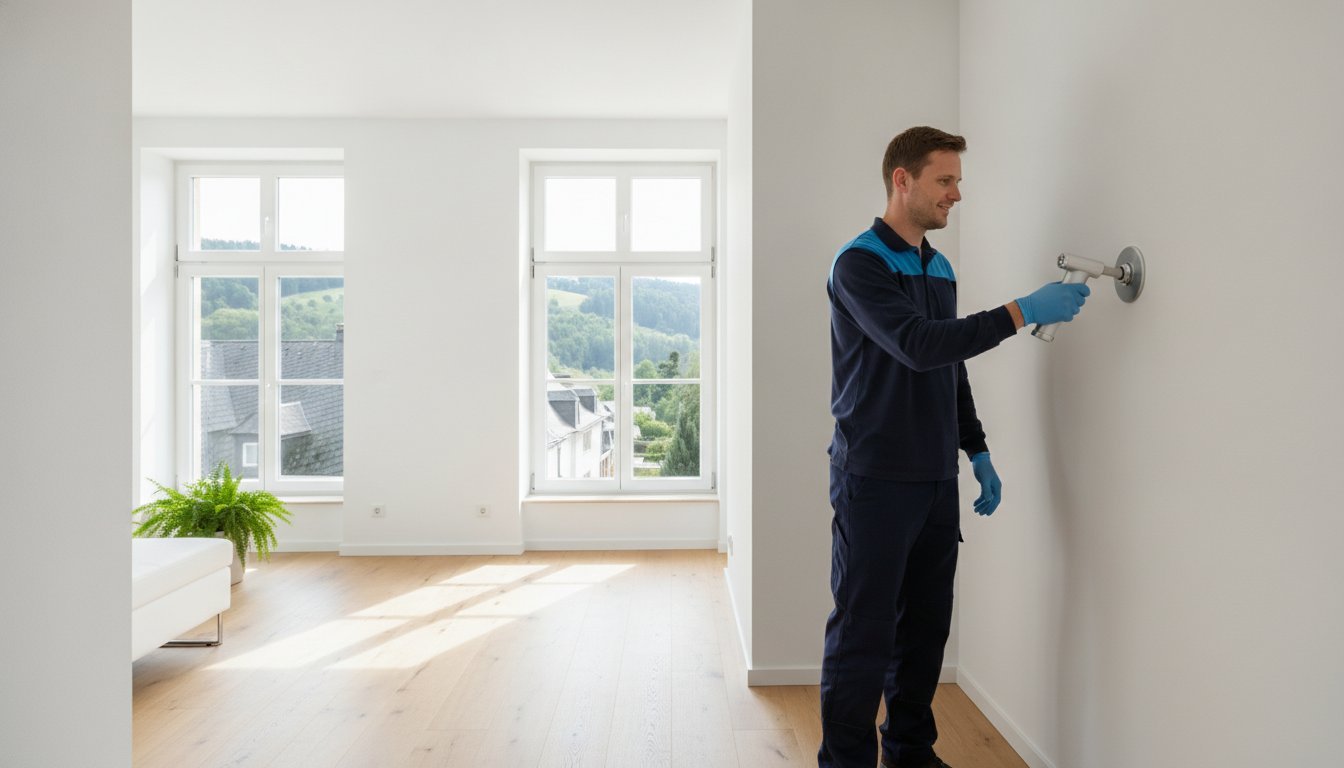
Did you know that scrubbing a dark patch on your plaster might actually feed the very organism you’re trying to kill? It’s a common frustration for many homeowners in Luxembourg who find themselves battling recurring stains that refuse to disappear. You’re likely feeling anxious about the respiratory impact on your family and confused by the conflicting advice on how to remove mould from walls effectively. We understand that a clean, healthy living environment is your priority, and seeing those persistent spores return can feel like a losing battle.
This guide provides a professional, systematic strategy to help you reclaim your space. You’ll discover how to safely identify growth, the specific steps for remediation, and exactly when the situation requires professional intervention, such as when an area exceeds one square metre. We’ll explain why common household agents like bleach often fail on porous surfaces and how to maintain the 30% to 50% humidity levels needed for a permanent fix. By the end, you’ll have a clear, long-term prevention plan to ensure your home remains a fresh and mould-free sanctuary.
Key Takeaways
- Distinguish between surface mildew and structural mould to identify if your home requires professional remediation or a basic surface clean.
- Learn the precise steps for how to remove mould from walls using effective antimicrobial washes while avoiding the common pitfalls of using chlorine bleach.
- Address the root cause of dampness by understanding the relationship between heat, organic food sources, and the condensation typical of the Luxembourg climate.
- Implement long-term prevention strategies by maintaining indoor relative humidity between 30% and 50% and applying the cross-ventilation rule.
- Recognise when an infestation exceeds one square metre, signaling the need for high-standard equipment like HEPA vacuums and air scrubbers.
Identifying Mould Types and Assessing the Safety Risk
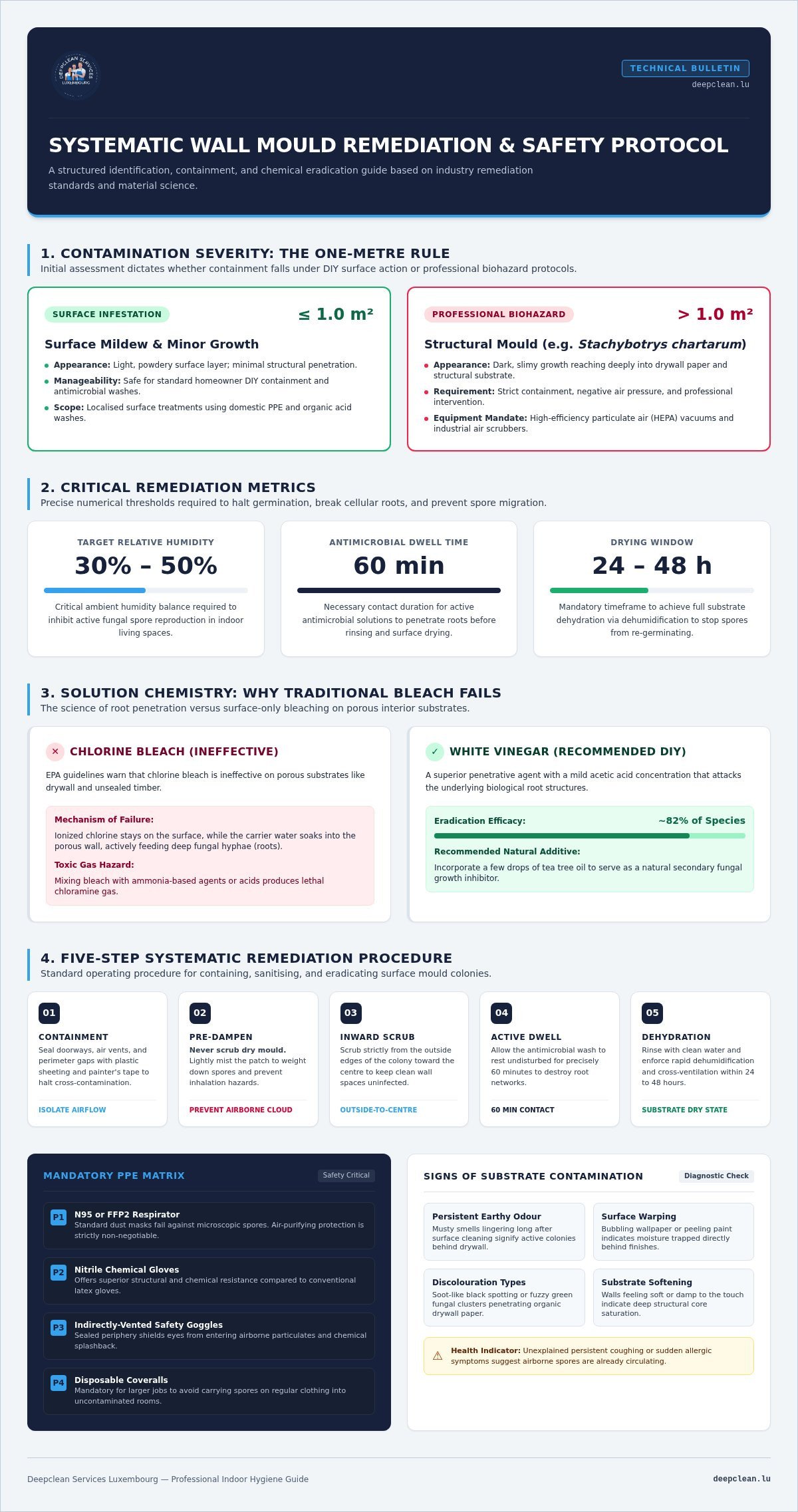
Household mould is a fungal growth that thrives in moist, poorly ventilated environments. It feeds on organic materials like drywall paper, wood, or dust. While many residents search for information on indoor mold contamination to understand the risks, it’s vital to distinguish between surface mildew and deep-rooted structural mould. Mildew typically appears as a light, powdery substance on the surface. In contrast, structural mould, such as Stachybotrys chartarum, is often dark and slimy; it penetrates deep into the wall’s substrate. If you’re researching how to remove mould from walls, you must first determine the scale of the issue.
Industry standards follow the ‘One Metre Rule’. Any infestation covering more than one square metre is classified as a professional biohazard. Small patches are manageable for DIY, but large-scale growth requires specialized containment. Ignoring this rule risks spreading spores throughout your home. Watch for health indicators like persistent coughing or sudden allergic reactions. These symptoms often suggest that spores are airborne and impacting your family’s respiratory health. It’s a sign that the environment requires immediate attention. Understanding the health risks of household mould — including which symptoms are genuinely linked to fungal exposure and which are commonly misattributed — can help you make more informed decisions about when to act.
Common Signs of Hidden Wall Mould
Mould often hides where you can’t see it. A persistent, earthy odour that lingers after cleaning is a primary indicator. You might notice wallpaper bubbling or paint peeling; this usually signals moisture trapped behind the surface. Discolouration patterns vary. You might see soot-like black spots or fuzzy green patches. If the wall feels soft or damp to the touch, the contamination has likely reached the structural core. Identifying these signs early prevents a small problem from becoming a costly remediation project.
The Essential PPE Checklist for Homeowners
Safety is paramount when learning how to remove mould from walls. An N95 or FFP2 respirator is non-negotiable. Standard dust masks don’t filter out microscopic spores. Use nitrile gloves for better chemical resistance than latex. Indirectly-vented safety goggles are essential to prevent spores from entering your eyes. For larger jobs, wear disposable coveralls. This prevents you from carrying spores on your clothing into other rooms. Always dispose of your PPE carefully after finishing the task.
Step-by-Step DIY Mould Removal for Surface Infestations
Effective remediation begins with strict containment. Before you address the visible growth, you must seal off the affected area to prevent cross-contamination. Use plastic sheeting and painter’s tape to cover air vents, doorways, and any gaps where microscopic spores could escape. This preparation is a critical part of learning how to remove mould from walls safely, as it protects the rest of your home from becoming a secondary site for fungal colonies.
Once the room is secured, use a systematic scrubbing technique. Always work from the outside of the colony toward the centre. This methodical approach ensures you don’t inadvertently spread spores across clean sections of the wall. For minor surface issues, you can manage the process yourself, but if you’re dealing with extensive growth or persistent dampness, our professional mould removal team can provide a more thorough assessment using specialized equipment.
Mixing Your Cleaning Solutions Safely
The choice of cleaning agent depends on the surface material. While many people reach for bleach, the EPA mold cleanup guide warns that bleach is often ineffective on porous materials like drywall or unsealed wood. The water in bleach can actually soak into the substrate and feed the mould’s hyphae, or root structures. White vinegar is a more reliable DIY alternative; its acetic acid penetrates the roots and kills approximately 82% of mould species. You should never mix bleach with ammonia-based cleaners or acids, as this creates dangerous chloramine gas. For a natural secondary inhibitor, consider adding a few drops of tea tree oil to your solution.
The Cleaning Process: A Systematic Approach
Never scrub dry mould. Doing so releases a cloud of spores into your breathing zone. Lightly dampen the area with your cleaning solution first to keep the spores heavy and localized. Apply your chosen antimicrobial wash and allow a 60-minute ‘dwell time’ for the active ingredients to work effectively. After the hour has passed, rinse the area with clean water and dry it immediately. You must achieve a dry state within 24 to 48 hours to prevent the mould from germinating again. Use a dehumidifier to ensure the wood moisture equivalent (WME) drops below 18%, as anything higher remains a risk for secondary blooms. If the task feels overwhelming or the area exceeds ten square feet, it’s safer to pause and seek expert guidance.
Why DIY Often Fails: Addressing the Root Cause of Dampness
Many homeowners find that even after following standard CDC guidelines for cleaning mold, the dark patches return within weeks. This happens because cleaning only addresses the visible symptoms. To understand how to remove mould from walls permanently, you must disrupt the ‘Mould Triangle’. This biological requirement consists of heat, an organic food source, and moisture. Since your home’s structure provides the food and your heating provides the warmth, moisture is the only variable you can effectively control. A comprehensive approach to mould treatment Luxembourg property owners can rely on must consider both the visible stain and the underlying moisture source driving its return.
In the Luxembourg climate, condensation is the most frequent cause of wall dampness. When warm, moist air from cooking or bathing hits a cold exterior wall, it turns into liquid water. If this moisture isn’t evacuated, it saturates the plaster. Beyond condensation, structural defects like leaking gutters or cracked masonry can lead to penetrating damp. Painting over these spots with ‘mould-resistant’ paint is a dangerous shortcut. It merely masks the problem while the fungi continue to digest the drywall core, eventually causing the paint film to bubble and fail.
Condensation vs. Rising Damp
Identifying the moisture source is essential for a lasting solution. You can use a simple ‘foil test’ to diagnose the issue. Tape a piece of aluminium foil to the damp patch and leave it for 24 hours. If moisture appears on the outer surface, your problem is condensation. If the underside of the foil is wet, moisture is migrating through the wall itself. Rising damp is rarer and typically presents as ‘tide marks’ or salt deposits on the lower third of ground-floor walls. Older buildings often suffer from thermal bridges, which are specific points in the structure that conduct cold more readily than the surrounding area.
The Failure of Anti-Mould Paint as a Solo Solution
Anti-mould paint contains biocides designed to prevent new spores from settling. However, these coatings are not a cure for an active infestation. If the underlying substrate remains damp, the mould will simply grow behind the paint layer. Thermal bridging is a primary cause of cold-spot condensation. In high-moisture rooms like kitchens or bathrooms, you should use breathable paints that allow moisture to move through the surface rather than trapping it. A truly professional approach requires resolving the thermal or structural defect before applying any finish. If you’ve tried DIY methods and the stains keep returning, it’s a clear sign that the root cause remains unaddressed.
Preventing Future Growth: Environmental Controls and Maintenance
The Luxembourg climate presents unique challenges during the winter months. High external humidity and cold temperatures often lead to excessive indoor moisture. To maintain a healthy environment, you should use a digital hygrometer to monitor relative humidity levels. The goal is to keep these levels strictly between 30% and 50%. If the reading exceeds 60%, the risk of fungal germination increases significantly. Managing these environmental factors is just as important as knowing how to remove mould from walls in the first place.
Effective airflow is your most reliable tool. In Luxembourg, the ‘Cross-Ventilation’ rule, or Stoßlüften, is a standard practice for property care. Open windows on opposite sides of the building for five to ten minutes several times a day. This rapidly exchanges moist indoor air for drier outdoor air without cooling the structural fabric of the building. Consistent heating is equally vital. Allowing rooms to drop below 15°C creates cold spots on external walls where condensation will inevitably form.
Furniture placement plays a silent but critical role in moisture management. You should always maintain at least a 5cm gap between large items like wardrobes and external walls. This space allows air to circulate, preventing pockets of stagnant, moist air from feeding hidden colonies. Knowing how to remove mould from walls is a necessary skill, but creating an environment that discourages growth is the mark of a well-maintained home.
Daily Habits for a Mould-Free Home
Small changes in your routine can drastically reduce moisture production. Squeegee shower walls after every use and leave extractor fans running for at least 20 minutes to clear residual steam. When cooking, always cover pots and pans with lids to contain vapour. Most importantly, avoid drying laundry indoors without proper ventilation. A single load of wet washing can release several litres of water into the air. If you must dry clothes inside, use a dedicated dehumidifier to capture the moisture at the source.
Maintenance Tasks for Property Longevity
Preventing moisture ingress requires looking outside the home’s interior. Clear your gutters and downpipes annually to ensure rainwater is directed away from the masonry. Blocked gutters often lead to penetrating damp that saturates the wall from the outside in. Check window seals and frames for signs of rot or failing caulk. For those preparing to leave a property, following a Move Out Cleaning Luxembourg guide helps ensure your home meets the high standards required for deposit recovery. If you’ve addressed the root causes but still face persistent issues, you can book a professional mould assessment through our online portal to restore your property’s health.
Professional Mould Remediation: When to Call the Experts
While small surface patches are manageable with household solutions, there’s a clear threshold where DIY efforts become insufficient. Professional remediation is a necessity for infestations larger than 1 square metre or when the contamination involves structural cavities. At this scale, attempting to scrub the area without industrial containment risks dispersing millions of spores into your ventilation system. Our trained staff at Deepclean Services has spent over 3 years providing systematic remediation across Luxembourg, ensuring that complex colonies are neutralized at their source.
The professional advantage lies in specialized technology that standard household tools cannot match. We utilize HEPA air scrubbing machines that capture microscopic particles down to 0.3 microns with 99.97% efficiency. This equipment doesn’t just clean the surface; it actively filters the air you breathe during the process. For landlords and tenants, a professional certificate of remediation provides essential peace of mind. It serves as documented proof that the property is safe for habitation and that the root cause of the dampness has been professionally assessed.
What to Expect During a Professional Remediation
Our process begins with strict containment strategies. We use 6-mil polyethylene barriers and negative air pressure to isolate the affected zone, preventing cross-contamination to the rest of your property. Once the area is secured, we apply industrial-grade antimicrobial fogging. This mist penetrates porous substrates to deactivate deep-rooted hyphae that vinegar or surface washes can’t reach. After the physical removal is complete, we conduct post-remediation testing. This verification ensures that spore counts have returned to safe, natural levels before we declare the space clear for use.
Protecting Your Investment
Mould is a biological threat to your property’s structural integrity. If left unmanaged, it will eventually rot timber frames and degrade plasterboard beyond repair. Professional removal prevents this permanent damage, saving you from the high costs of structural reconstruction. Maintaining a healthy home is an ongoing commitment. Integrating these remediation standards into your regular cleaning service Luxembourg routine ensures that moisture levels remain controlled and spores never get the chance to settle. If you’ve discovered a persistent or large-scale growth, don’t wait for the damage to spread. Book your professional mould assessment with Deepclean Services today through our online booking portal to restore your home’s freshness and safety.
Reclaim Your Healthy Home Environment
Mastering the process of how to remove mould from walls is a critical skill for any property manager or homeowner in Luxembourg. You now understand that successful remediation requires more than just surface cleaning; it demands a thorough investigation into the root cause of moisture. By maintaining relative humidity between 30% and 50% and ensuring consistent airflow through cross-ventilation, you can protect your family from respiratory irritants and preserve your property’s structural integrity. Small, proactive steps in your daily routine make a significant difference in preventing fungal colonies from returning.
When the scale of contamination exceeds your comfort level or involves structural damage, our team is here to help. Deepclean Services is a trusted national service provider known for a systematic, quality-focused approach. Our trained staff utilizes specialized antimicrobial equipment to handle even the most intensive remediation projects with precision and care. Don’t let persistent dampness compromise your peace of mind. Book a Professional Mould Remediation Assessment today to restore the freshness and safety of your living space. With a clear plan and the right expertise, a healthy, mould-free home is well within your reach.
Frequently Asked Questions
Is it safe to sleep in a room with mould on the walls?
Sleeping in a room with active fungal growth is not advisable because it exposes you to airborne spores throughout the night. This exposure can trigger allergic reactions, persistent coughing, and exacerbate existing asthma. While small patches might seem harmless, the microscopic spores can significantly impact your indoor air quality. It’s best to isolate the room and address the contamination before returning to sleep there to ensure your long-term respiratory health remains protected.
Does white vinegar actually kill mould on walls?
White vinegar is an effective DIY solution for about 82% of mould species because its acetic acid penetrates the porous surface to reach the roots. Unlike chlorine bleach, which only treats the surface and can leave moisture behind to feed the fungi, vinegar actively kills the organism. When you’re learning how to remove mould from walls, applying undiluted white vinegar and letting it sit for an hour is a reliable starting point for minor surface infestations.
Can I just paint over mould with anti-mould paint?
Painting over an active colony with anti-mould paint is a temporary mask that often leads to more significant structural damage. These paints contain inhibitors designed to prevent new spores from settling, but they don’t kill existing roots. If the wall remains damp, the mould will continue to digest the substrate behind the paint layer. This eventually causes the new coating to bubble and peel, requiring a more expensive and intensive remediation process later.
How much does professional mould removal cost in Luxembourg?
The cost for professional remediation in Luxembourg depends on the extent of the contamination and the specific equipment required for safe removal. Deepclean Services applies Specialized Remediation Fees that account for the labour of trained staff and the use of industrial-grade antimicrobial tools. Since every project varies in scale, we recommend scheduling an assessment through our online portal to receive a precise evaluation based on your property’s unique requirements and the square metre coverage.
Why does mould keep coming back after I clean it?
Mould typically returns because the underlying moisture source remains unresolved. Even if you follow the correct steps for how to remove mould from walls, the spores will germinate again if indoor relative humidity stays above 60%. Common triggers include thermal bridging, inadequate ventilation during winter, or hidden pipe leaks. A permanent solution requires you to identify and fix the dampness issue while maintaining consistent heating and airflow throughout your home to disrupt the growth cycle.
Will a dehumidifier stop mould from growing on my walls?
A dehumidifier is an excellent preventative tool, but it cannot remove mould that has already established a colony. Its primary function is to maintain relative humidity between 30% and 50%, which creates an environment where spores cannot thrive. While it helps dry out the air after a cleaning session, you must still physically remove the fungal growth first. Using a dehumidifier consistently is a key part of a long-term maintenance strategy for any Luxembourg property.
What is the difference between black mould and mildew?
Mildew is a surface-level fungus that appears as a light, powdery grey or white patch and is generally easy to wipe away. In contrast, black mould is much more invasive. It’s typically dark green or black, often has a slimy texture, and penetrates deep into porous materials like drywall. While mildew is a minor nuisance, black mould often indicates a serious moisture problem that may require professional-grade antimicrobial equipment and systematic removal to ensure the area is safe.
Can tenants be held responsible for mould growth on walls?
Responsibility for mould growth is usually determined by the root cause of the dampness. If the issue stems from structural defects like leaking gutters or poor insulation, the property owner is generally responsible for repairs. However, if the growth is caused by tenant lifestyle factors, such as drying laundry indoors without ventilation or failing to use extractor fans, the tenant may be held accountable. Clear communication and regular maintenance inspections are essential for resolving these disputes in the Luxembourg market.

Pingback: Professional Mould Removal Luxembourg: The 2026 Remediation Guide – Deepclean Services
Pingback: Health Risks of Household Mould: Facts, Myths and When to Act – Deepclean Services