
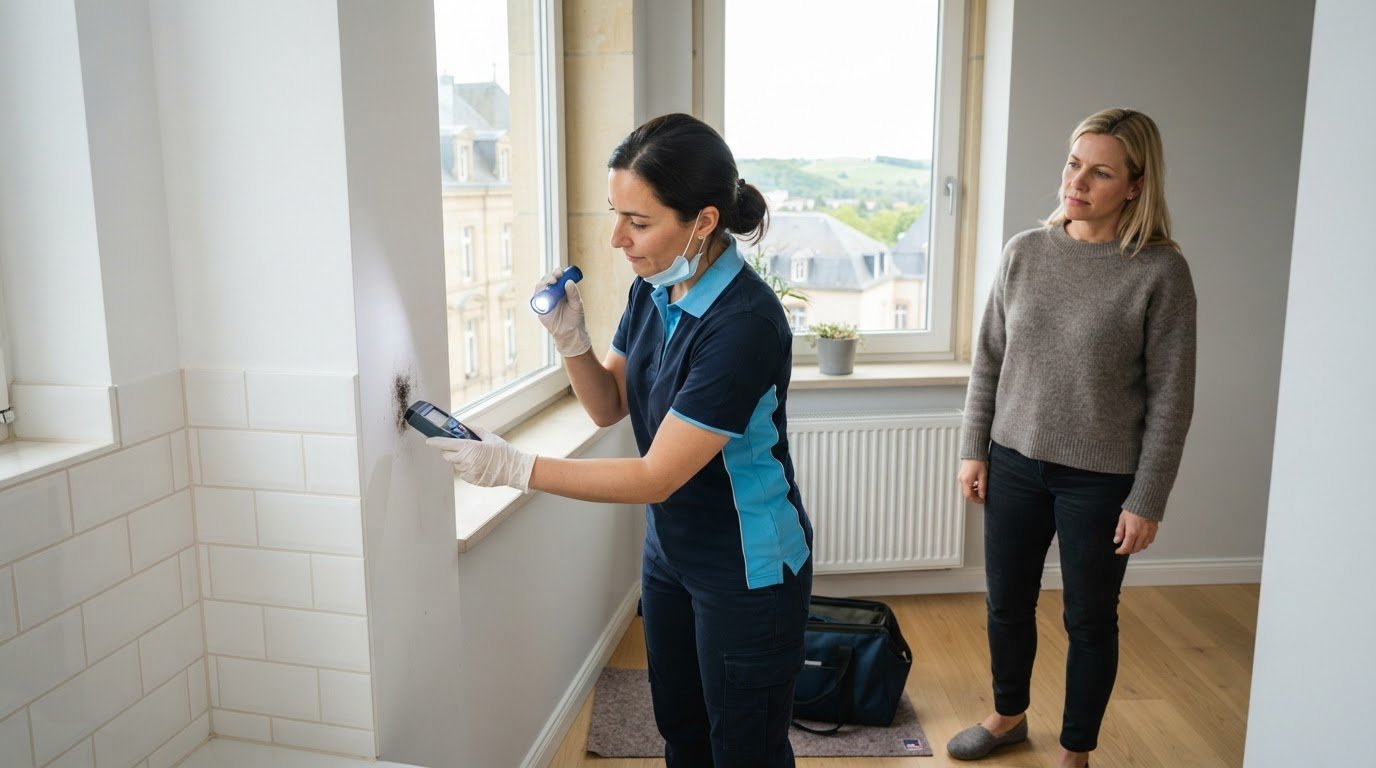
Can household mould affect your health, and does a dark patch automatically mean serious danger? The health risks of household mould are often discussed in alarming terms, but colour alone doesn’t tell you how harmful a patch is. Damp and mould can be associated with respiratory symptoms and allergies. Similar symptoms can have other causes, so finding mould doesn’t prove it is behind how you feel.
It’s understandable to worry, especially when claims about “black mould” conflict or someone at home has asthma or another health concern. People with asthma, allergies, chronic lung conditions or weakened immune systems may be more vulnerable and should take extra care around mould. They should avoid cleaning affected areas themselves. If symptoms concern you, a healthcare professional can advise on them. A property assessment can address the mould itself, but it cannot diagnose or treat illness.
This article explains what the evidence says, why mould colour isn’t a reliable measure of health risk, and which household members may need extra caution. You’ll also learn when to seek medical or property advice, why moisture needs attention, and how to choose sensible next steps without taking on unsafe or unsuitable DIY cleanup.
Key Takeaways
- Understand the health risks of household mould by separating general evidence about exposure from proof that mould caused a particular person’s symptoms.
- Learn which health conditions may call for extra caution and when to discuss symptoms with a healthcare professional.
- Don’t use colour to judge danger. Focus instead on where mould appears and whether dampness keeps returning.
- Note practical details that can guide your next steps. Visible mould or a musty smell usually makes addressing the moisture a higher priority than testing.
- Consider professional mould removal for recurring, widespread or hard-to-reach growth, while keeping property cleaning separate from medical care.
What Are the Health Risks of Household Mould Exposure?
Household mould grows indoors when materials remain damp. It can release spores and fragments into the air, which people may breathe in or otherwise come into contact with. The US Centers for Disease Control and Prevention (CDC) describes mould exposure as contact with mould or its airborne particles in an indoor environment. Exposure alone doesn’t prove mould caused a particular symptom. The health risks of household mould depend in part on a person’s sensitivity and the nature of the exposure.
How can mould affect the body?
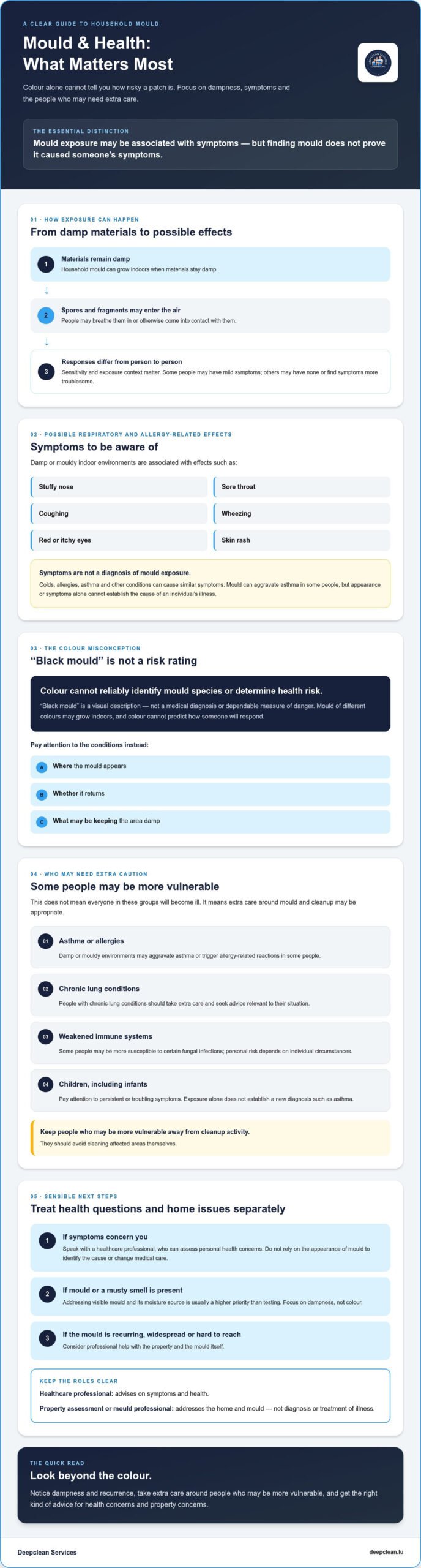
People respond differently. The CDC and US Environmental Protection Agency (EPA) associate damp or mouldy indoor environments with respiratory and allergy-related effects. These may include a stuffy nose, sore throat, coughing, wheezing, red or itchy eyes, or a skin rash. Mould can also aggravate asthma in some people. Symptoms may be mild or absent for one person and more troublesome for another.
These effects don’t establish the cause of an individual’s illness. Colds, allergies, asthma and other conditions can produce similar symptoms. This overview of health issues caused by mold describes allergic and irritant reactions, but a healthcare professional is better placed to assess personal concerns. Claims that a particular household mould inevitably causes severe illness need stronger evidence than appearance or symptoms alone.
Does the colour of household mould reveal its health risk?
No. Colour and appearance can’t reliably identify a mould species or determine whether it produces harmful substances. “Black mould” is a visual description, not a medical diagnosis or a dependable measure of risk. Mould of different colours may grow indoors, and colour alone can’t show how someone will respond.
Focus instead on where growth appears, whether it returns, and what may be keeping the area damp. The CDC and EPA recommend addressing visible mould and its moisture source rather than relying on colour to judge health danger. If symptoms are concerning, seek medical advice. If mould is widespread, recurring or difficult to access, consider professional help with the property.
Who May Be More Vulnerable to Household Mould?
Mould exposure doesn’t affect everyone in the same way. The EPA identifies people with allergies or asthma as more likely to experience reactions. Public-health guidance also cautions that people with weakened immune systems or chronic lung conditions may face greater health concerns. This doesn’t mean everyone in these groups will become ill, or that a symptom automatically points to mould.
Individual susceptibility and exposure context both matter. A person’s existing health, the type and duration of contact, and conditions in the home can all shape how they respond.
Are children and people with asthma or allergies at greater risk?
People with asthma may find that damp or mouldy indoor environments aggravate existing respiratory symptoms. Those with mould allergies may experience reactions such as a blocked nose, sneezing, itchy or watery eyes, skin irritation, coughing or wheezing. The EPA explains how molds can cause health problems, including allergic and irritant effects. Reactions vary, and symptoms can have causes other than mould.
Children, including infants, are often a particular concern for caregivers. That concern is a reason to pay attention to symptoms and household dampness, not to assume exposure will cause a new diagnosis such as asthma. If a child has persistent or troubling breathing, allergy-like or other symptoms, consult a healthcare professional. They can assess the child’s health rather than relying on the appearance of mould to identify a cause.
What should people with weakened immune systems know?
People whose immune systems are weakened may be more susceptible to certain infections, including infections caused by fungi. The risk depends on personal circumstances. The presence of household mould alone can’t determine an individual’s likelihood of becoming ill. The same caution applies to people with chronic lung conditions. They shouldn’t use general online information to predict their personal risk.
If you’re immunocompromised, have a chronic lung condition, or are unsure how mould exposure relates to your health, ask your healthcare professional for advice specific to your situation. Don’t assess symptoms or change medical care based on a mould patch. If mould is present in a home, keep people who may be more vulnerable away from cleanup activity and seek suitable help with the property.
For household mould that needs attention, professional mould removal may be one option for addressing the property. Deepclean Services offers mould removal in Luxembourg. This service addresses mould in the home, not health conditions. Learn more about professional mould removal if you need support with the property.
Household Mould Health Myths: What Evidence Does and Does Not Show
Online claims can make a mould patch seem like either an immediate emergency or nothing to worry about. Neither conclusion follows from appearance alone. To understand the health risks of household mould, consider the dampness, the setting and the people exposed. Leave diagnosis of symptoms to a healthcare professional.
Is black mould always more dangerous than other household mould?
Visible mould colour cannot establish its species, toxicity or the health risk it poses to a particular person. “Black mould” is not a diagnosis. A dark mark can’t show whether it produces substances that cause illness or predict how someone will react. The EPA advises that mould colour is not an indicator of how dangerous it is. Focus on visible growth, persistent dampness and the circumstances of exposure rather than trying to identify mould by sight.
Does mould exposure always cause illness?
No. People can respond differently, and some may have no noticeable symptoms. Others may experience allergic or irritation-related effects. The EPA describes possible health effects and explains that symptoms such as coughing or eye irritation can have other causes. A symptom occurring in a home with mould doesn’t, on its own, prove mould caused it. Persistent or concerning symptoms warrant clinical advice, not self-diagnosis based on a patch or photograph.
| Myth | What the evidence says |
|---|---|
| “Black mould is always the most dangerous.” | Colour can’t reliably identify mould or determine its effects. Assess the dampness and exposure instead of judging by appearance. |
| “Mould makes everyone ill immediately.” | Responses vary. Some people may have symptoms, while others notice none. Exposure does not establish that mould caused an individual’s illness. |
| “Everyone faces the same level of risk.” | People’s sensitivity and health differ. Existing conditions and exposure context matter, so one person’s response can’t predict another’s. |
| “A symptom near mould proves the cause.” | Respiratory or allergy-like symptoms can have several explanations. A healthcare professional can assess personal health concerns. |
The EPA’s guidance on mould and health effects distinguishes possible allergic and irritant reactions from the assumption that every exposure causes illness. Take persistent dampness and visible growth seriously, but don’t infer a medical outcome from colour or proximity alone. Property concerns call for attention to the mould and moisture. Health concerns belong with a healthcare professional.
What to Do if You Notice Mould or Develop Symptoms
Finding mould can be unsettling, particularly if someone at home is unwell. Keep the response measured: note what you can see, avoid disturbing extensive or recurring growth, and treat health concerns and property concerns separately. Mould exposure may be relevant to symptoms, but it doesn’t establish their cause. The health risks of household mould can’t be assessed from a photograph or patch alone.
What should you do first when mould appears indoors?
Record where the mould appears and what the surrounding area is like. Note signs such as damp materials, condensation, leaks or water staining, and whether growth returns after cleaning. These observations can help you describe the property issue clearly and identify patterns without disturbing the affected area.
For extensive, recurring or hard-to-reach growth, avoid attempting cleanup while you decide what to do next. Addressing the source of moisture is a property matter. Cleaning mould doesn’t diagnose or promise to improve anyone’s health. For practical safety considerations, read this safe mould removal guide. You can also review the mould removal and remediation guide for property-focused next steps.
When should you speak with a healthcare professional?
Seek medical advice if symptoms persist, worsen or concern you, especially if someone at home has asthma, allergies, a chronic lung condition or a weakened immune system. Share when symptoms began, whether they recur in particular settings, and any relevant observations about dampness or mould. This information may help a clinician assess possible causes, but don’t assume mould is responsible.
A cleaner can address a property issue, not assess symptoms or diagnose a health condition. If someone has severe difficulty breathing or is in acute distress, seek urgent local medical help.
Once health concerns have been directed to an appropriate professional, consider whether the mould needs property-level attention. Deepclean Services offers mould removal in Luxembourg. If you need help addressing mould in your home, explore mould removal support.
When Professional Mould Removal May Help Address the Home
Professional support may be worth considering when mould keeps returning, covers a broad area or appears somewhere difficult to reach. These signs don’t indicate a particular health outcome, but they can make the property issue harder to assess and manage. A cleaning service can’t determine the health risks of household mould for an individual. A healthcare professional should assess symptoms and personal health concerns.
How do you decide between household action and professional support?
Consider the situation as a whole rather than relying on colour or a single measurement. Ask yourself:
- Is the visible growth limited and straightforward to access, or is it widespread or hidden from view?
- Has it returned after previous cleaning?
- Are there signs of ongoing dampness, such as water staining, condensation or persistently wet materials?
- Do you know what is causing the moisture, or does the source remain unresolved?
A small, accessible patch may seem manageable, but people with asthma, allergies, chronic lung conditions or weakened immune systems should avoid taking on mould cleanup themselves. In other situations, follow relevant public-health guidance and seek advice if you’re unsure. There isn’t one universal area threshold that determines the right response for every home and circumstance.
Cleaning visible growth alone may not resolve the problem if moisture continues. A recurring patch near a leak, for example, is a reason to consider what is keeping the surface damp, not just how it looks. Effective mould treatment Luxembourg property owners can rely on starts by considering both the visible growth and the moisture source behind it, not just the stain on the surface. In cases where hidden leaks or water intrusion are at fault, property recovery teams like Triangle Legacy Flood Restoration & Carpet Cleaning demonstrate how resolving underlying water damage is essential. Identifying and addressing the moisture issue is a separate property concern. Removal should not be presented as a guarantee of symptom relief.
What can a mould-removal service help with?
A mould-removal service provides property-focused support for dealing with mould in a home or workplace. Deepclean Services offers mould removal for residential and commercial properties in Luxembourg. The service addresses the property, not the diagnosis or treatment of health conditions, and it doesn’t establish whether mould caused someone’s symptoms.
Before arranging help, describe where the growth appears, whether it has returned, and any visible signs of dampness. This gives the service provider useful context about the issue you want addressed. If you’re comparing providers, ask what their mould-removal service covers and whether the moisture source may need separate attention. In properties where moisture is trapped within structural cavities or framing, specialist contractors such as cavclear.co.uk illustrate how addressing hidden damp is crucial to preventing recurring growth.
If recurring, widespread or hard-to-reach mould needs property-focused support, explore Deepclean Services to learn more about its mould-removal offering.
Take a Calm, Practical Next Step
The health risks of household mould depend on more than its appearance. People may respond differently, and symptoms near mould don’t prove it’s the cause. Pay attention to recurring dampness, note where mould appears, and seek medical advice for persistent or worrying symptoms. For severe breathing difficulty or acute distress, get urgent medical help.
Keep health and property concerns separate. A healthcare professional can assess symptoms. Mould removal addresses the property and can’t diagnose or treat a medical condition. If growth keeps returning, is widespread or is difficult to reach, professional support may help you decide how to address the home.
Deepclean Services offers mould removal for residential and commercial properties across Luxembourg, and customers can book services online. If you need property-focused support, explore Deepclean Services and its mould removal offering. With reliable information and a measured plan, you can take the next step with confidence.
Frequently Asked Questions
Is household mould dangerous to breathe?
Mould exposure can affect people differently. Some may experience allergy-like or respiratory symptoms, while others may notice none. The health risks of household mould depend partly on individual sensitivity and the conditions of exposure, so visible growth alone can’t determine someone’s risk or diagnose an illness. If symptoms persist or concern you, speak with a healthcare professional. Public-health guidance from the US Environmental Protection Agency and Centers for Disease Control and Prevention describes possible effects and sensible precautions.
Can household mould cause a cough or make asthma worse?
Mould exposure may be associated with coughing and other respiratory or allergy-related symptoms, and people with asthma or allergies may be more susceptible. However, a cough can have many causes. Being near mould doesn’t prove it’s responsible, and a cleaner can’t diagnose the cause. If a cough or other symptoms persist, worsen or cause concern, seek advice from a healthcare professional who can assess your circumstances.
Is black mould more dangerous than other mould?
Not necessarily. Colour alone can’t reliably identify a mould species, its properties or the health risk for a particular person. “Black mould” describes appearance, not a diagnosis. Rather than judging danger by sight, note where mould is present and whether there are signs of ongoing moisture. Seek medical advice for health concerns, and consider suitable property support if growth is recurring, widespread or difficult to reach.
What happens if you live in a home with mould?
Outcomes vary. Some people may notice no symptoms, while others experience irritation or allergy-like effects. Existing respiratory conditions and individual sensitivity can influence how someone responds, but mould doesn’t explain every symptom. Consider where the mould appears and whether dampness persists or returns. Don’t self-diagnose based on timing alone. Contact a healthcare professional about persistent, worsening or severe symptoms, and address recurring moisture as a property concern.
Should I leave my home if I find mould?
Finding mould doesn’t automatically mean everyone must leave their home. Consider how extensive it is, where it appears, whether anyone is experiencing significant symptoms, and what relevant health or property professionals advise. Avoid disturbing extensive growth while you decide on next steps. If someone has severe difficulty breathing or is in acute distress, seek urgent local medical help. For extensive or uncertain mould concerns, consult an appropriate property professional.
Can cleaning mould remove the health risk?
Cleaning visible mould may address part of the property problem, but the result depends on the situation and whether the source of moisture is also addressed. Cleaning can’t diagnose or treat health effects, and no cleaning service should promise a medical outcome. If symptoms persist or worry you, consult a healthcare professional. For mould that returns, is widespread or is difficult to access, seek suitable property support.
When should I call a professional for household mould?
Consider professional property support if mould keeps returning, is widespread, is difficult to reach, or appears linked to a moisture problem you can’t resolve. The appropriate response depends on the property, not the colour of the growth alone. Deepclean Services offers mould removal for residential and commercial properties across Luxembourg, with online booking available. This service addresses the property. A healthcare professional should assess symptoms or personal medical concerns.



Pingback: How to Remove Mould from Walls: A Complete Safety and Remediation Guide – Deepclean Services
Pingback: Mould Treatment Luxembourg: How to Address the Cause, Not Just the Stain – Deepclean Services
Pingback: Mould Removal Professional Service: How to Choose in 2026 – Deepclean Services