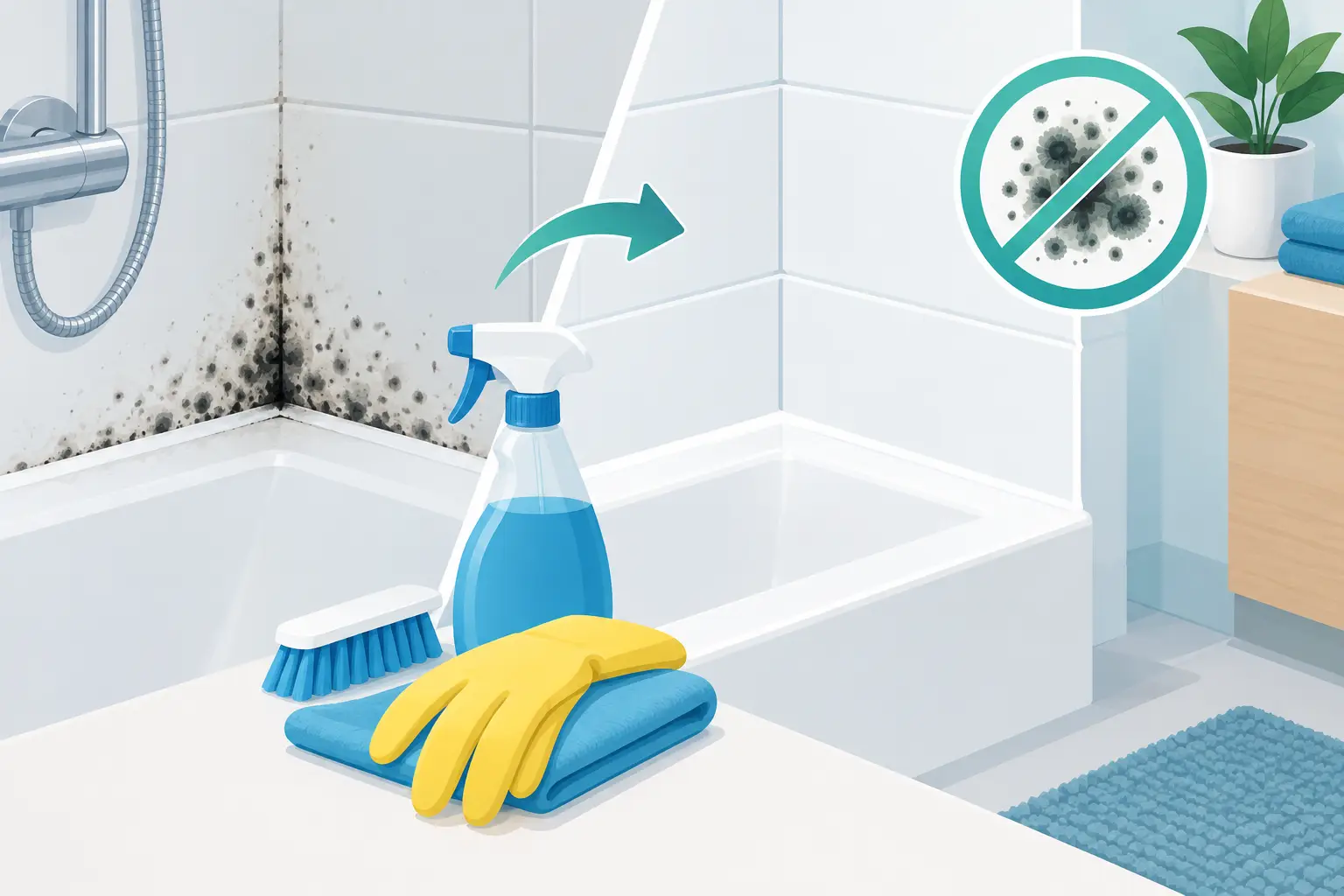
A few black marks around the shower sealant can turn into a much bigger cleaning job faster than most people expect. Knowing how to remove bathroom mould properly means doing more than wiping away what you can see. The visible growth needs to be cleaned, but the moisture that allowed it to grow must also be controlled. In American English, it is usually spelled mold, but the problem is the same: a damp bathroom is giving spores a place to settle and spread.
Why bathroom mold keeps coming back
Bathrooms create the conditions mold likes most: warmth, moisture, and limited airflow. Steam from showers settles on tiles, ceilings, mirrors, grout, and window frames. If those surfaces stay damp for hours, mold spores can grow on soap residue, dust, paint, caulk, and porous grout.
A quick clean may improve the appearance for a few days, but mold often returns when the underlying cause is still there. The usual reasons are an extractor fan that is not strong enough, a window that stays closed, wet towels left in the room, a leaking pipe, or cracked caulk around a tub or shower.
The location matters, too. A small spot on nonporous tile is usually a manageable cleaning task. Growth beneath soft caulk, in damaged drywall, under flooring, or across a large section of ceiling may point to a leak or long-term moisture issue. Cleaning alone will not solve that kind of problem.
Before you remove bathroom mould, check the surface
Look closely at where the mold is growing. Tile, glass, metal fixtures, and sealed shower panels are generally easier to clean because mold stays on the surface. Grout is more porous, so discoloration can remain even after the active growth has been treated. Caulk can be harder still. When mold has penetrated deeply into cracked, stained, or peeling caulk, replacement is often cleaner and more reliable than repeated scrubbing.
Do not assume every dark mark is mold. Mineral deposits, old stains, and mildew can look similar. Mold often appears as black, green, brown, or gray dots and may have a musty odor. If you see bubbling paint, soft walls, dripping water, or a stain that expands after cleaning, address the moisture source before spending time on surface treatment.
For a small, contained area, wear gloves and open a window or run the exhaust fan. Avoid dry brushing or scraping, which can send spores into the air. If anyone in the home has severe allergies, asthma, or a weakened immune system, it is sensible to keep them away from the room while you clean.
What you need for a safe cleaning job
Most bathroom mold can be handled with basic supplies, provided the affected area is small and the surface is sound. Prepare the room first, then gather:
- Rubber gloves, protective eyewear, and a mask if ventilation is poor
- A bathroom mold cleaner or diluted white vinegar, depending on the surface and product directions
- A non-abrasive scrub brush or old toothbrush for grout and corners
- Clean microfiber cloths, a sponge, and a dry towel
Never mix cleaning products. In particular, bleach must never be combined with vinegar, ammonia, toilet cleaner, or any other chemical. Mixing products can release dangerous fumes. Choose one cleaner, follow its label directions, and rinse surfaces well when required.
Bleach is not always the best answer. It can brighten mold stains on hard, nonporous surfaces, but it may not reach mold rooted in porous grout, caulk, wood, or drywall. Strong bleach solutions can also discolor fabrics, damage finishes, and irritate your eyes and lungs. A purpose-made mold cleaner used according to its instructions is often the more practical option for routine bathroom surfaces.
How to remove bathroom mold step by step
Start by ventilating the room. Open the bathroom window if you have one, switch on the exhaust fan, and keep the door open when possible. Remove bath mats, towels, and toiletries from the immediate area so they stay dry and do not get splashed with cleaner.
Apply your chosen cleaner directly to the moldy surface. Make sure the area is wet enough for the product to work, especially along grout lines, shower tracks, tile corners, and the edge where the tub meets the wall. Do not rush straight to scrubbing. Give the cleaner the contact time stated on its label. Vinegar also needs time to work, typically around an hour on suitable surfaces.
Next, scrub gently. Use a toothbrush for narrow grout lines and a non-abrasive brush for tile or larger areas. Work from the cleanest edge toward the affected spot so you do not spread residue across the bathroom. Avoid aggressive scrubbing on painted walls, acrylic tubs, natural stone, or delicate finishes. These surfaces can scratch, dull, or discolor, so check the manufacturer’s cleaning advice first.
Wipe away the cleaner and loosened residue with a damp cloth, then rinse if the product instructions call for it. Dry the surface fully with a clean towel. This final drying step is easy to skip, but it matters. Leaving water behind simply recreates the conditions that allowed mold to grow in the first place.
If staining remains after the first cleaning, repeat the process once the area is dry. Old grout stains may lighten without disappearing completely. If the surface is clean, dry, and free of odor, a faint stain is not always proof that mold is still active. For heavily stained grout, professional cleaning or regrouting may be the better use of time.
Cleaning mold from shower caulk
Shower caulk is one of the most common trouble spots because it holds water and can split as it ages. Surface mold can sometimes be treated with a suitable cleaner and careful scrubbing. However, black growth that runs through the caulk, returns quickly, or sits behind loose edges usually means the sealant needs to come out.
Removing old caulk, drying the area completely, and applying fresh bathroom-grade silicone creates a cleaner seal. This job should not be rushed. New caulk applied over damp surfaces is likely to fail, and trapped moisture can bring the problem back.
Cleaning mold from ceilings and painted walls
For a few small marks on a painted ceiling or wall, use as little liquid as possible. Apply cleaner to a cloth rather than soaking the surface, wipe gently, and dry it immediately. Saturating drywall can cause further damage.
If paint is peeling, the wall feels soft, or mold covers more than a small patch, stop cleaning and investigate for a leak, poor insulation, or inadequate ventilation. A larger affected area may need professional assessment and restoration rather than household products.
Stop mold before it gets a foothold
The best bathroom mold routine is simple: remove moisture quickly and clean residue before it builds up. Run the exhaust fan during every shower and leave it on for at least 20 to 30 minutes afterward. If there is no fan, open a window as soon as practical. A fan that is noisy, weak, or not venting outdoors may need attention.
Use a squeegee or microfiber cloth on shower walls, glass, and tile after bathing. It takes less than a minute and removes the water mold needs. Hang towels so air can circulate around them, wash bath mats regularly, and avoid leaving damp clothes in a hamper inside the bathroom.
Give high-risk spots a weekly check: the shower corners, grout near the floor, caulk around the tub, window frames, and the ceiling above the shower. Clean soap scum regularly because it acts as food for mold. In bathrooms with recurring humidity, a small moisture absorber or dehumidifier can help, but it is not a substitute for fixing leaks or improving airflow.
When it is time to call a professional
A trained cleaning team can be useful when mold has built up after a move, a tenant turnover, a long period of vacancy, or a neglected bathroom. Professional-grade equipment and controlled cleaning methods can save time on stubborn grout, shower doors, tile, and hard-to-reach areas.
But cleaning professionals are not a replacement for a plumber or building repair specialist when there is an active leak or structural damage. If mold returns within days, appears repeatedly in the same place, smells strongly musty, or covers a large area, find and fix the moisture problem first. Otherwise, even an excellent deep clean will only be temporary.
For busy households and property managers, Deepclean Services can handle demanding bathroom cleaning and visible mold removal with care, while you focus on getting the space dry, ventilated, and back to normal.
A bathroom should feel clean and fresh, not like another problem waiting behind the shower curtain. Treat small spots early, dry the room after use, and take recurring growth as a useful warning that moisture needs your attention.