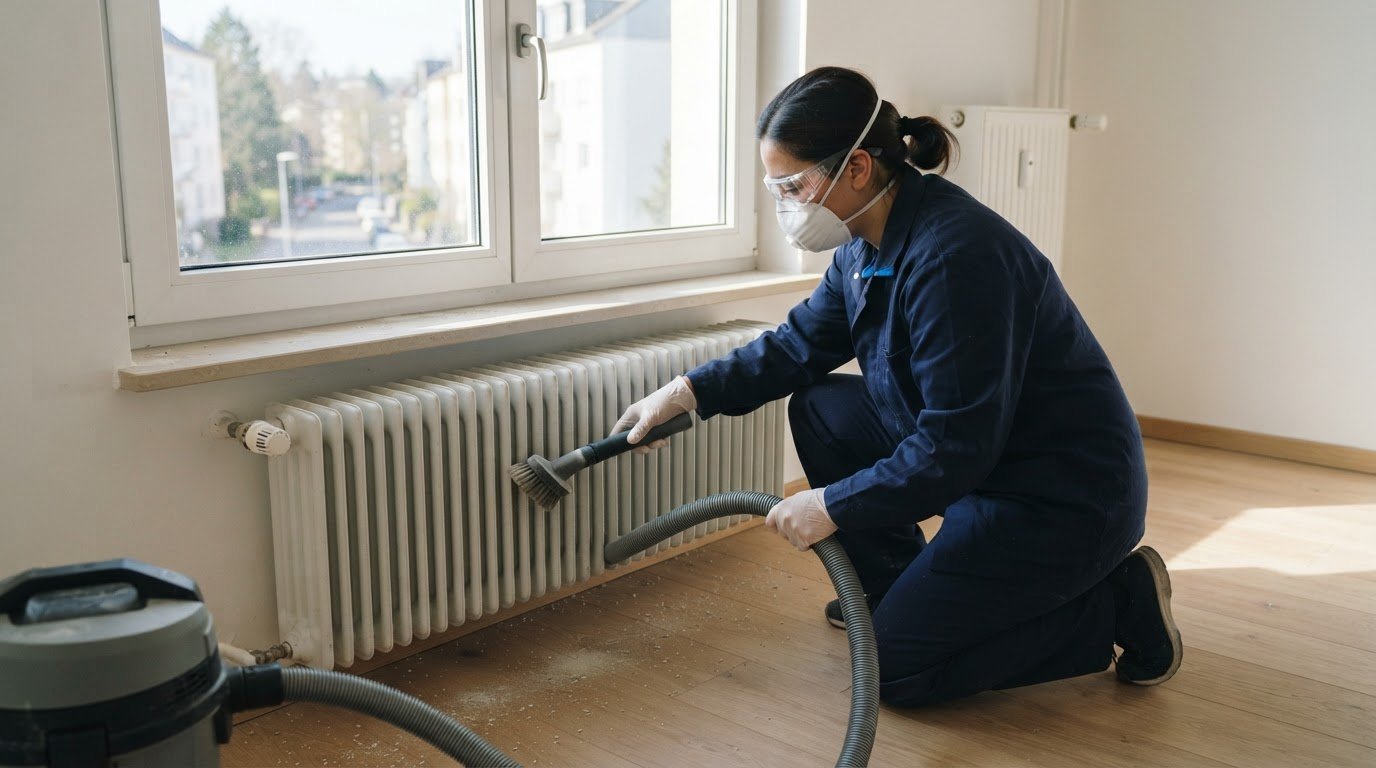
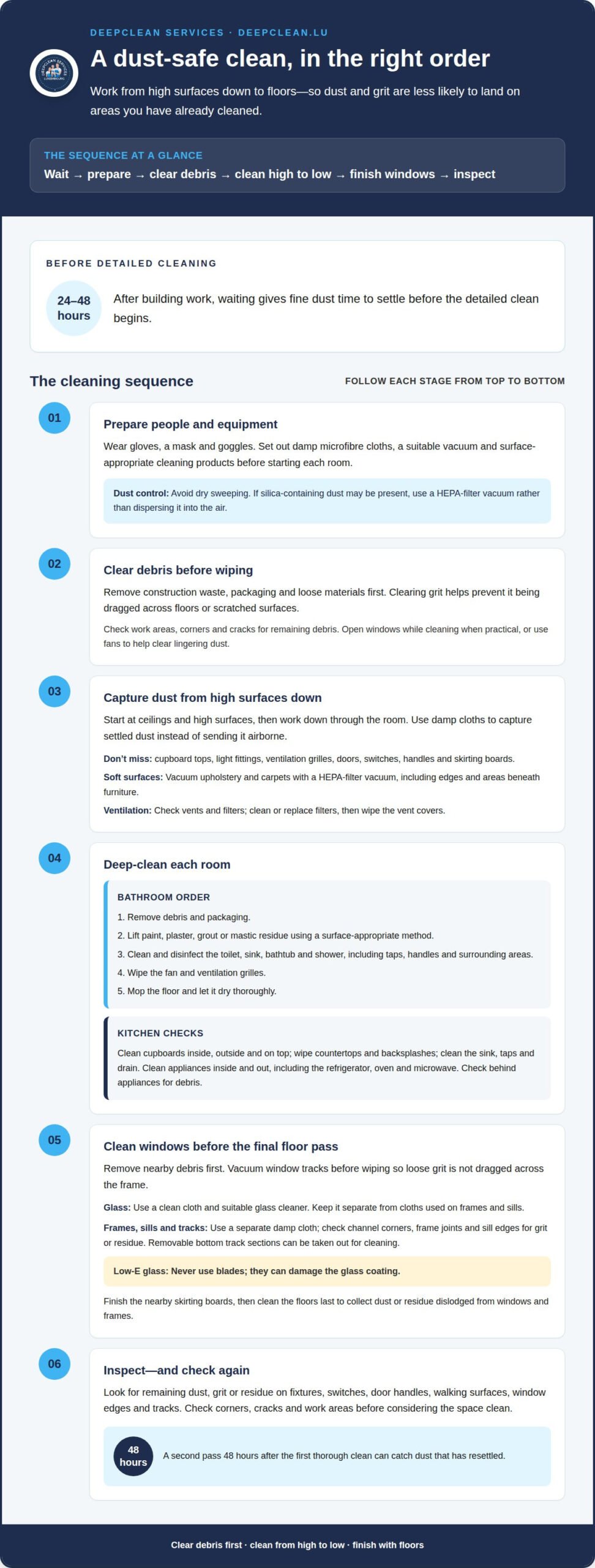
A thorough after builders cleaning checklist starts with removing construction debris, then works room by room from high surfaces down to floors. Waiting 24-48 hours after building work gives fine dust time to settle before detailed cleaning begins. The sequence matters: it helps prevent dust from settling again on areas already cleaned.
Renovation dust can linger on walls, skirting boards, fixtures, floors, windows and tracks, so a quick wipe is rarely enough. Cleaning also calls for suitable tools and protective equipment, including gloves, a mask and goggles.
This guide covers the essential checks for kitchens, bathrooms, living spaces and floors, then explains how to clean windows, frames, sills and tracks without missing trapped grit. You’ll learn which tools and surface-appropriate products to use, how to work systematically, and what to inspect before the space is ready for everyday use.
Key Takeaways
- Work from high surfaces down, using damp cloths and a suitable vacuum to capture fine dust instead of spreading it around.
- Clear bathroom debris before cleaning, then give fixtures, vents, and floors a thorough, surface-appropriate clean.
- Vacuum window tracks first and remove trapped grit carefully; avoid blades on Low-E glass.
- Prepare gloves, a mask, goggles, and tools suited to each surface before starting the clean.
Does post-construction cleaning include windows and tracks?
Include internal windows, frames, sills and tracks in your after-builders cleaning checklist. Fine dust also settles on skirting boards, light fittings, doors, furniture and ventilation grilles. Start at ceilings and high surfaces, then work down to the floors. Damp microfibre cloths capture dust; dry dusting can send it airborne. Vacuum upholstery and carpets with a HEPA-filter vacuum, paying attention to edges and areas beneath furniture. Check vents and filters, clean or replace filters, then wipe the vent covers.
- Vacuum window tracks before wiping them, because loose grit can scratch the frame.
- Use a damp cloth on skirting, furniture, and other hard surfaces to collect settled dust.
- Clean ventilation grilles and inspect filters, where dust can accumulate after building work.
- Vacuum upholstery and carpet carefully, including edges where fine particles collect.
For paint, grout, cement or adhesive residue, use a cleaner suited to the surface and remove the residue gradually with a soft cloth. Avoid abrasive scraping, and never use blades on Low-E glass.
Timing depends on the dust load. Waiting 24-48 hours after building work lets fine dust settle before detailed cleaning; after the first thorough clean, a second pass 48 hours later can catch dust that has resettled. Check the work area again for dust and debris before considering it clean.
What Are the Essential Steps in an After Builders Cleaning Checklist?
Often-missed areas include bathroom fans, cupboard tops, spaces behind appliances and light switches. Check door handles and the insides of drawers, too. These spots can hold renovation dust even when visible surfaces look clean.
Follow a consistent order: clear loose materials, clean high surfaces, then finish with the floors. Work from top to bottom in each room so falling dust doesn’t settle on areas you have already cleaned.
- Remove construction debris and packaging from the bathroom before using cleaning equipment. Loose materials can obstruct access to fixtures and floors.
- Lift paint, plaster, grout, and mastic residue from bathroom walls and floors before deep cleaning. Use a method suited to the surface to avoid damage.
- Clean and disinfect the toilet, sink, bathtub, and shower. Pay attention to taps, handles, and the areas around each fixture.
- Wipe the bathroom fan and ventilation grilles. Dust caught there can remain above eye level and be overlooked during a quick clean.
- Mop the bathroom floor and let it dry thoroughly. This removes remaining residue and leaves the walking surface ready for inspection.
In the kitchen, clean cupboards inside and out, including their top surfaces. Wipe countertops and backsplashes, then clean the sink, taps and drain. Clean appliances inside and out, including the refrigerator, oven and microwave. Check behind appliances for renovation debris, and remove protective films from new fixtures if present.
Finish with a room-by-room inspection. Look for residue on light fittings, switches, door knobs, and walking surfaces. Confirm that floors are clear and work surfaces are clean. For a more thorough reset after renovation, consider a deep cleaning service.
Cleaning windows, frames, sills, and tracks
Post-construction window cleaning includes internal glass, frames, sills and door tracks. First remove nearby debris and packaging so loose grit won’t be dragged across finished surfaces. Clean windows before the final floor pass to catch dust and residue dislodged from frames and sills.
Work methodically across each window. Use glass cleaner on the pane and a separate damp cloth for the frames and sills. Carefully remove paint or drywall filler with a method suited to the surface. Never use blades on Low-E or tinted glass, as scraping can permanently damage delicate coatings and films. If you are planning residential solar or privacy film installations once cleanup is complete, specialist providers such as mrtintsd.com offer guidance on selecting and caring for architectural films. Check frame edges and corners for residue.
- Vacuum the tracks. Lift loose grit from each channel before wiping, including corners where debris collects.
- Clean removable track sections. Bottom tracks can be taken out for cleaning and replaced when needed.
- Wipe frames and sills. Use a damp cloth to remove dust, then inspect edges for paint or filler.
- Clean doors and handles. Wipe door surfaces, frames, and handles, including around fixtures and contact points.
- Finish the skirting boards. Wipe boards beneath windows after cleaning frames, so falling dust is removed.
For glass, use a clean cloth and suitable glass cleaner, working across the pane to remove smears and construction residue. Don’t transfer grit from a sill or track onto the glass. Keep glass cloths separate from those used on frames to help prevent marks during a thorough clean. If a post-renovation inspection reveals that older panes or drafty frames need full replacement rather than just a wash, specialists like Galaxy Home Remodeling can help guide new installations.
Cleaning tools, supplies, and personal protective equipment
Prepare your equipment before starting each room to avoid spreading dust and residue between surfaces. Wear gloves, a mask and goggles while removing construction dust and debris. Avoid dry sweeping, which can stir fine particles into the air. Use a suitable vacuum and damp cloths for dust, then choose cleaning products according to the surface.
The European Union identifies water-based dust suppression and local exhaust ventilation as technical measures for controlling dust. Ventilate the room during cleaning when practical, and contain debris rather than brushing it across floors. If a commercial site specifies an M or H class dust-rated vacuum, use the stated class for that work.
- For floors: Vacuum edges and corners, then use a floor cleaner suited to the material. Wood floors need a wood-appropriate cleaner before polishing.
- For kitchen surfaces: Use a degreaser for kitchen grime, and clean counters with a product suitable for their finish.
- For glass and frames: Apply glass cleaner to windows, and use a separate cloth for frames and sills. Keep grit away from the glass.
- For skirting boards and switches: Use a damp cloth to collect dust from boards, light switches, and door handles.
- For fixtures: Select a compatible cleaner, and avoid abrasive tools that may mark new finishes.
Keep clean cloths separate from those used on dusty surfaces. Change or rinse a cloth when it becomes visibly soiled, so it won’t leave residue on kitchen fixtures or switches. Never mix cleaning products; use each according to its label and intended surface. Store tools away from clear walking areas to help prevent trips.
A well-prepared kit helps manage residue across floors, frames, and fittings. If the post-construction clean needs more coordinated attention, arrange a deep cleaning service.
Deepclean Services
Deepclean Services can help when renovation dust and residue call for more than routine upkeep. A Deep Cleaning or One-Time Basic Cleaning can suit a thorough reset, while Moving In / Out Cleaning can help prepare a property for its next occupants. Choose the service according to the rooms and surfaces that need attention.
Use the checklist to identify what needs cleaning, from bathroom fixtures to window tracks and floors. When booking a service, share the areas that need attention so the cleaning can match your priorities. Regular Cleaning is also available for ongoing upkeep after the renovation clean.
Contact Deepclean Services to discuss your cleaning needs.
Set Up the Space for What Comes Next
Before settling into a renovated home, plan how to keep the finished rooms manageable. A short handover note can record surfaces needing special care, rooms still awaiting furniture, or remaining dust that needs attention. Keep your after builders cleaning checklist with those notes so it remains useful after the initial clean.
If you’d like help deciding what cleaning support fits your situation, contact Deepclean Services to discuss your needs. A considered next step can make the move from building work to everyday living feel more straightforward.
Frequently Asked Questions
What is the difference between after builders cleaning and regular cleaning?
After-builders cleaning tackles construction residues, while regular cleaning maintains an occupied home. Renovation cleanup, for example, may require attention to grout haze, paint marks, packaging and dust inside newly installed cupboards. Routine cleaning generally focuses on everyday dirt and household upkeep. The source and type of dirt determine the cleaning method and which surfaces need particular attention.
When Should You Hire Professional After Builders Cleaning Services?
Consider professional cleaning when renovation work has left several rooms dusty, finishes need careful treatment, or the property must be prepared for occupation. It can also help when time is limited and cleaning needs to be coordinated around furniture deliveries or a move. Start by listing the affected rooms and any delicate finishes so the work can be planned around the property’s needs.
How Can You Ensure Every Surface is Thoroughly Cleaned?
Use a room-by-room record that pairs each surface with its cleaning status and suitable product. For example, list painted walls, timber trim, glass and tiled surfaces separately instead of marking a whole room complete after one pass. Use good lighting during the final inspection to spot smears and missed edges. Record any surface that needs another pass before furniture or belongings are returned.
How Do You Handle Dust and Debris Left by Builders?
Handle bulky waste and fine dust as separate tasks. Remove loose packaging and debris first, then contain dust during detailed cleaning rather than sweeping it through adjoining rooms. Close doors to spaces already cleaned, and avoid carrying dusty tools across finished areas. If dust reappears, revisit nearby ledges, storage spaces and other areas where particles may have collected.
How soon can an after builders clean start once trades finish?
A detailed clean is best scheduled after trades have finished and their materials and equipment have been removed. Fine dust is allowed 24-48 hours to settle before it is disturbed, which helps make the first detailed pass more effective. Coordinate access around any remaining deliveries or follow-up work, since activity in the property can introduce fresh debris and undo completed cleaning.
What is included in an after-builders cleaning checklist?
An after builders cleaning checklist covers the post-work clean throughout the property, including kitchens, bathrooms, living spaces, floors, windows and adjoining details. It also includes a final inspection for overlooked residue and debris. The tasks depend on the work completed: a kitchen renovation may require close attention to newly fitted units, while a bathroom refit may leave residue around fixtures.