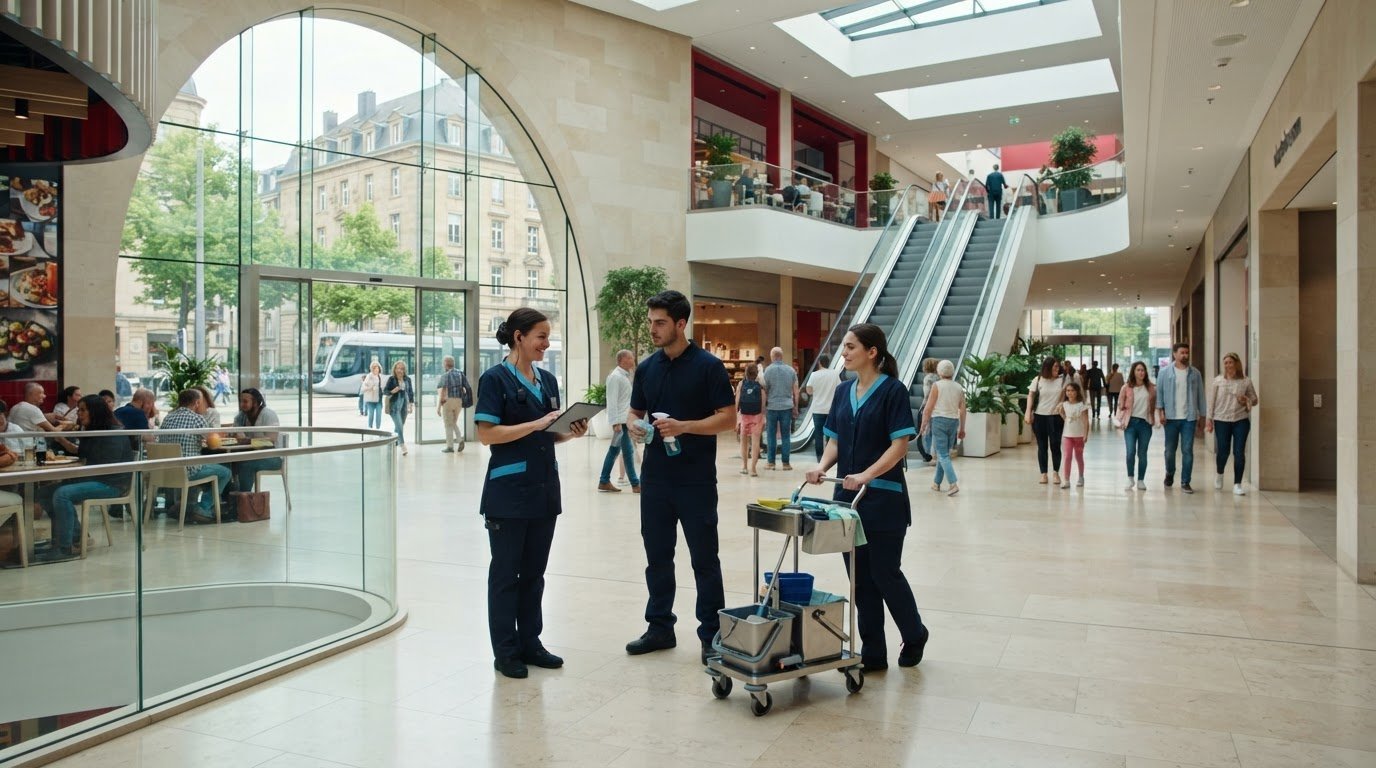
What does it take to keep a busy shopping centre presentable without getting in the way of customers or tenants? High visitor traffic creates recurring cleaning needs in entrances, shared walkways, food areas and washrooms. Work must also fit around opening hours and daily operations. A practical plan for shopping centre cleaning Luxembourg managers can use starts with how each area is used, when it is busiest and what the agreed service covers.
This guide explains how to organise cleaning by zone, prioritise high-use areas and build a schedule around visitor movement and operational needs. It also covers what to include in a service brief and how trained staff and flexible scheduling can support consistent care. Deepclean Services provides commercial cleaning for shopping centres across Luxembourg, with a focus on quality and schedules suited to the property’s needs. Use the steps below to plan a service that supports a clean, welcoming centre while respecting its daily activity.
Key Takeaways
- Map the centre into practical zones so cleaning priorities reflect how each area is used.
- Separate regular upkeep from one-time or intensive cleaning when defining the service scope.
- Plan shopping centre cleaning Luxembourg around busy periods, visitor movement and tenant activity to reduce disruption.
- Use a service brief that describes the site, priority areas, timing needs and communication arrangements.
- Deepclean Services supports shopping centres across Luxembourg with trained staff, flexible schedules and a focus on quality.
Shopping centre cleaning in Luxembourg: why a planned approach matters
Shopping centre cleaning is the planned upkeep of shared spaces and other agreed areas, organised around how the centre is used. A cleaning plan identifies the zones, recurring tasks and suitable time slots. A one-time visit addresses a particular need without setting up an ongoing routine. Defining the difference helps managers choose a service scope that fits the property instead of treating every visit as a stand-alone job.
Visitor patterns, opening hours and tenant activity all influence what needs attention and when. For example, an entrance may collect more dirt during busy arrival periods, while shared seating may see concentrated use at certain times of day. A practical plan takes these patterns into account alongside the centre’s wider operational needs. Facility management principles offer broader context on how building services, maintenance and daily operations fit together.
Which shopping centre areas need regular attention?
Divide the property into useful planning zones. Entrances, corridors and shared seating are typical high-traffic areas. Restrooms and food areas may need separate consideration because their use differs from that of general walkways. Include other shared spaces according to the centre’s layout and priorities. The service scope should state which spaces and tasks are covered, so managers and cleaning staff have clear expectations before the schedule begins.
How visitor traffic changes cleaning priorities
Footfall patterns help determine which areas need the most attention and which time slots are workable. Compare busier and quieter periods, then consider how each zone connects to visitor routes and tenant activity. The aim is to schedule routine tasks when they are least likely to interfere with movement, while keeping high-use spaces in view.
Visible cleanliness also shapes how visitors experience shared areas and how tenants work within them. A tidy entrance can create a welcoming first impression, while maintained seating and clear corridors help shared spaces feel cared for. These are useful planning considerations, not a reason to give every area the same treatment or schedule.
Regular cleaning supports ongoing upkeep. One-time basic cleaning or deep cleaning can address a specific occasion or a more intensive need. The right arrangement depends on the site, the agreed scope and how its spaces are used. For shopping centre cleaning Luxembourg managers benefit from this planned approach because it makes it easier to coordinate consistent service with the centre’s operating rhythm.
How to organise shopping centre cleaning by zone and task
A zone-based plan turns a large property into manageable areas with clear priorities. Before defining the service scope, map shared circulation routes, entrances, seating and tenant-adjacent spaces. For each zone, note how it is used, what visible soiling occurs, which surfaces need attention and what operational constraints apply. These might include customer movement or tenant activity. The result is a shared reference for managers and cleaning staff, rather than a set of broad instructions.
Build a zone-based cleaning plan
Make the scope specific. Identify the areas and tasks expected, then record timing and access considerations. A corridor used for continuous circulation may need a different approach from seating that sees concentrated use at certain times. Clear zone descriptions also make it easier to review the plan and adjust priorities as the centre’s needs change.
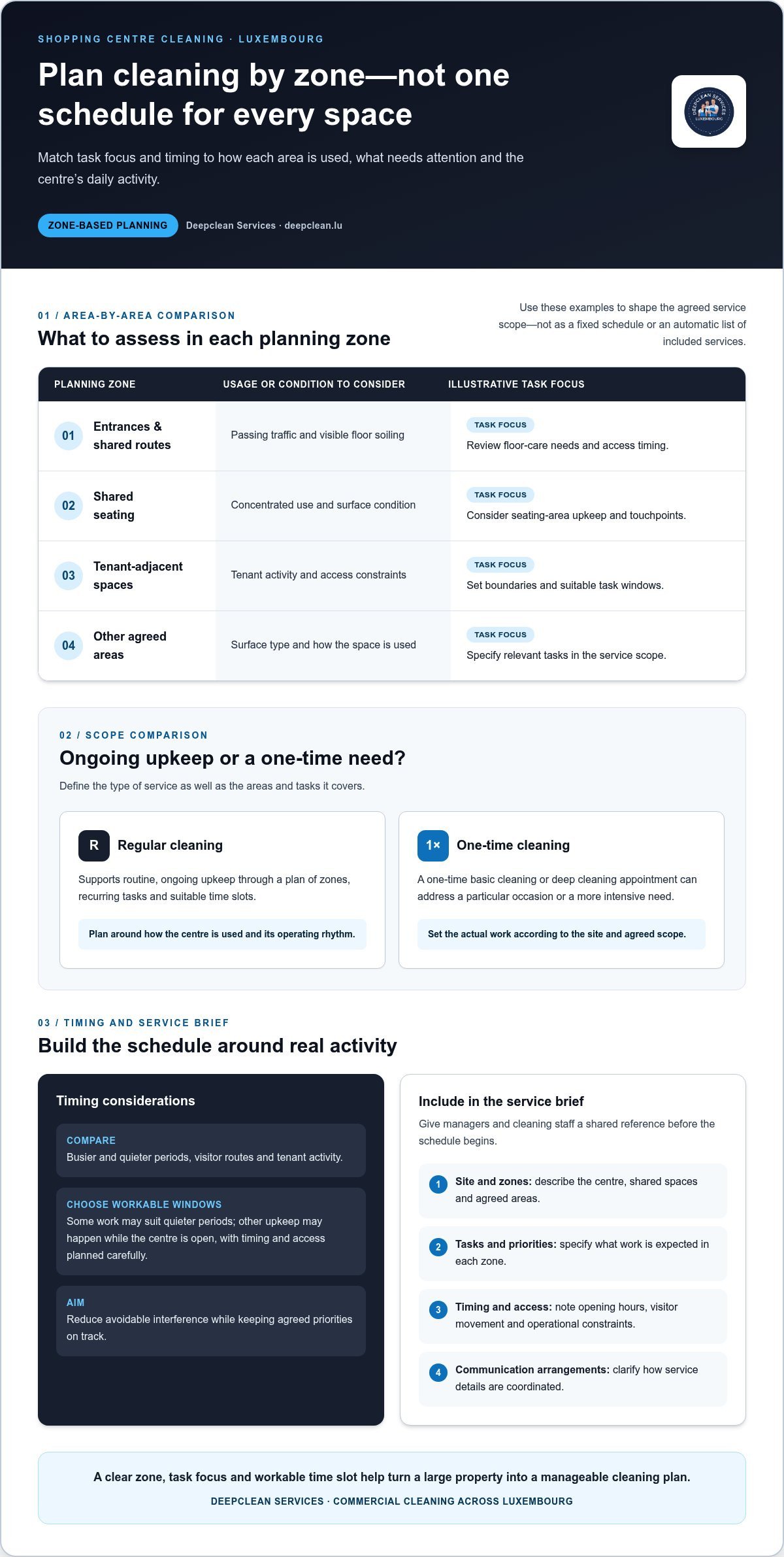
Use the example below as a planning aid, not as a fixed schedule or a list of included services. Set the actual tasks and timing in the agreed scope.
| Planning zone | Usage or condition to consider | Illustrative task focus |
|---|---|---|
| Entrances and shared routes | Passing traffic and visible floor soiling | Review floor-care needs and access timing |
| Shared seating | Concentrated use and surface condition | Consider seating-area upkeep and touchpoints |
| Tenant-adjacent spaces | Tenant activity and access constraints | Set boundaries and suitable task windows |
| Other agreed areas | Surface type and how the space is used | Specify relevant tasks in the service scope |
Match tasks to the area and its use
Regular cleaning supports routine upkeep, while a one-time basic cleaning or deep cleaning appointment can address a particular need beyond the ongoing plan. Set priorities with each area’s materials, visible condition and use in mind. Floor care, for example, may differ according to the surface and the marks present. Managers can also identify frequently handled surfaces for attention. These are planning examples, not automatic inclusions: the agreed scope defines the work. The CDC cleaning and disinfection guidelines explain the distinction between cleaning and disinfection, which is useful context when describing the intended task.
A well-defined plan for shopping centre cleaning Luxembourg links each zone to a clear task focus without assuming that every area needs the same treatment. Managers planning an organised commercial service can explore shopping centre cleaning services from Deepclean Services.
How to keep shopping centre cleaning from disrupting visitors
Cleaning should fit the centre’s activity, not interrupt it. A workable schedule accounts for visitor movement, tenant operations and the type of task. Some work may suit quieter periods; other upkeep may need to happen while the centre is open, with timing and access planned carefully. The aim is to reduce avoidable interference while keeping agreed priorities on track.
Plan cleaning around opening patterns and footfall
Use the centre’s own operating patterns to identify busy and quieter periods. Review how visitor movement changes through the day and across different areas, then assign time slots according to each task’s impact on circulation. Don’t assume every task can be completed outside opening hours. The ISSA Clean Standard for Commercial Facilities offers useful context for setting expectations for facility care.
Turn those observations into a schedule with a practical planning sequence:
- Identify busy periods. Note when and where visitor movement is most concentrated.
- Flag operational constraints. Record opening patterns, tenant activity and access considerations that could affect when work can take place.
- Prioritise tasks by impact. Consider which activities are least disruptive during busy periods and which need a quieter window.
- Assign suitable time slots. Match tasks to workable periods, allowing for changing conditions instead of relying on a rigid template.
- Review and adjust. Use feedback from facility teams and tenants to refine the schedule when site activity shifts.
Coordinate cleaning with tenants and facility teams
Clear responsibilities help prevent confusion in shared and tenant-adjacent spaces. Facility management can identify shared areas, note access constraints and communicate priorities. Tenants can share operational information through the centre’s established channels. Cleaning teams need clear instructions about the agreed tasks and timing.
Use those same communication channels for schedule changes, so affected teams know what has shifted and when. This is especially useful when tenant activity, access needs or visitor patterns change. Flexible scheduling helps the plan adapt to operational requirements while keeping agreed priorities in view. For managers arranging shopping centre cleaning Luxembourg, the most useful schedule reflects the site’s actual use rather than a generic template.
How to assess a shopping centre cleaning plan before it begins
Before service starts, check that the plan describes the property clearly enough for managers and cleaning staff to share the same expectations. A useful brief connects the site’s size and layout with the agreed areas, priorities, timing needs and communication arrangements. This helps reveal gaps early, such as an overlooked space or an access constraint that could affect the schedule.
What to include in a cleaning brief
Describe the site in practical terms: its approximate size, main zones and how each space is used. Distinguish shared areas from tenant-controlled spaces, and note access limits or activity that may affect timing. For broader context on planning commercial services in Luxembourg, see this commercial cleaning guide for Luxembourg.
Use this checklist to make the brief complete:
- Areas: List the spaces to be considered and identify which are shared or managed by tenants.
- Priorities: Note the zones and tasks that need particular attention based on use and visible condition.
- Timing: Describe opening patterns, access considerations and the flexibility needed to work around centre activity.
- Communication: State how schedule updates, access changes and shifting priorities should be shared through established channels.
- Site details: Provide the layout and size information needed to understand the scope and operational context.
Keep expectations clear but adaptable. The brief should explain how managers and tenants will communicate changes, without assuming operating conditions will always stay the same.
How to review the plan over time
A schedule may become less suitable as visitor patterns, tenant activity or the centre’s use changes. Revisit the plan when these conditions shift, and ask facility managers and tenants for feedback on areas that may need a different focus. Compare their input with the original zones and priorities, then update the agreed scope or timing where appropriate. Keep the review practical: the goal is to keep the plan relevant, not to create unnecessary procedures.
For managers organising shopping centre cleaning Luxembourg, a clear brief and regular review help turn site requirements into a workable service plan. Book commercial cleaning online with Deepclean Services as part of planning service for your centre.
Shopping centre cleaning with Deepclean Services in Luxembourg
Putting a cleaning plan into practice calls for a commercial cleaning partner who understands that each facility has its own layout and operating needs. Deepclean Services provides commercial cleaning for shopping centres across Luxembourg. Trained staff, flexible schedules and a focus on quality support an organised approach to maintaining the agreed areas of a busy property.
A professional service shaped around the facility
The zone-and-schedule framework in this guide gives managers a practical starting point: describe the spaces that need attention, identify their priorities and explain how centre activity affects access and timing. This information helps shape service planning around the facility instead of relying on a generic arrangement. For example, managers can distinguish shared areas from spaces next to tenant operations and highlight where scheduling flexibility is useful.
Flexible scheduling can help accommodate changing operational requirements. It does not mean every task must happen at a particular hour or that all work can take place outside opening times. Instead, it gives the planning process room to account for visitor activity, tenant needs and the priorities in the service brief. Trained staff and a focus on quality underpin Deepclean Services’ commercial cleaning approach.
Prepare your request and take the next step
A concise, well-prepared brief makes it easier to describe what the centre needs. Bring together these practical details:
- Facility areas: Outline the spaces involved, including shared and tenant-adjacent areas.
- Cleaning priorities: Identify the areas and tasks that matter most to the centre.
- Operating needs: Note opening patterns, access considerations and preferred scheduling flexibility.
- Communication: Describe how managers and tenants should receive updates if priorities or arrangements change.
This gives the service-planning process useful context without requiring an overly complex document. Explain how the centre operates and what you want the cleaning plan to address, then arrange service online. Deepclean Services provides shopping centre cleaning Luxembourg managers can plan around their facility’s needs.
Book a cleaning service online.
Build a cleaning plan that works for your centre
Consistent shopping centre cleaning Luxembourg managers can rely on starts with a clear understanding of how the facility is used. Map shared and tenant-adjacent areas, match tasks to each zone and set suitable time slots around visitor activity. A concise service brief aligns priorities, access needs and communication before cleaning begins.
Deepclean Services provides commercial cleaning for shopping centres across Luxembourg. Trained staff, flexible schedules and a focus on quality support a professional approach shaped around the facility’s requirements. Prepare a brief by outlining the areas involved, key priorities and scheduling considerations, then arrange service online.
Take the next step and book a professional cleaning service with Deepclean Services. A clear plan makes cleaning easier to coordinate and helps keep your centre welcoming for visitors and tenants.
Frequently Asked Questions
What does shopping centre cleaning usually include?
Shopping centre cleaning covers the agreed shared areas and tasks set out in the service scope. Managers may plan attention for entrances, corridors, seating, restrooms or food areas according to their use, surface types and priorities. Floor care and touchpoint cleaning are examples to consider, not automatic inclusions. A clear brief identifies which spaces are covered and distinguishes shared areas from tenant-controlled spaces.
How often should a shopping centre be cleaned?
There is no single schedule that suits every centre. Frequency depends on how areas are used, visitor patterns, opening operations and the priorities in the agreed scope. Managers can plan recurring attention for high-use zones and one-time or deep cleaning for specific needs. Review the schedule when site activity or tenant operations change, rather than relying on a fixed frequency that may no longer fit the property.
Can shopping centre cleaning be scheduled around visitors?
Yes. A cleaning schedule can be planned around visitor movement and centre operations. Use the centre’s activity patterns to identify busier and quieter periods, then assign time slots based on the task and area. Some work may suit quieter periods, while other tasks may need a different arrangement. Flexible scheduling helps managers account for changing operational needs without assuming all cleaning can happen outside opening hours.
How much does shopping centre cleaning cost in Luxembourg?
The cost depends on the property’s size, the areas included, the type of cleaning and whether the requirement is recurring or one-time. For a useful service brief, describe the site and its layout, priority spaces, requested tasks and scheduling needs. These details help define the service scope. Deepclean Services provides commercial cleaning across Luxembourg, and customers can book cleaning services online.
What should a shopping centre cleaning brief include?
A useful brief describes the site’s size and layout, the areas requiring attention, and which spaces are shared or tenant-controlled. Include priorities, opening patterns, access considerations and preferred scheduling flexibility. Also explain how managers, tenants and cleaning staff should communicate schedule changes or revised priorities. A concise, specific brief gives everyone a common understanding of the requested scope and the operational needs that shape the plan.
Can a cleaning service handle both regular and one-time shopping centre cleaning?
Yes. Deepclean Services provides commercial cleaning for shopping centres across Luxembourg, including regular cleaning and one-time cleaning. Managers can describe whether they need ongoing upkeep or a particular cleaning appointment, then outline the facility’s areas and priorities. Deep cleaning is also available for more intensive cleaning needs. The service scope should make clear which spaces and tasks are included, so the arrangements match the centre’s requirements.
How can managers reduce disruption during shopping centre cleaning?
Managers can reduce avoidable disruption by planning around the centre’s actual activity. Identify busy periods, note tenant and access constraints, then assign suitable time slots based on each task’s impact on visitor movement. Set clear responsibilities for shared and tenant-adjacent spaces, and share schedule changes through established communication channels. Review the arrangement as visitor patterns or operational priorities change so the plan remains practical for the site.