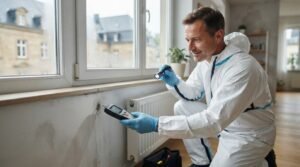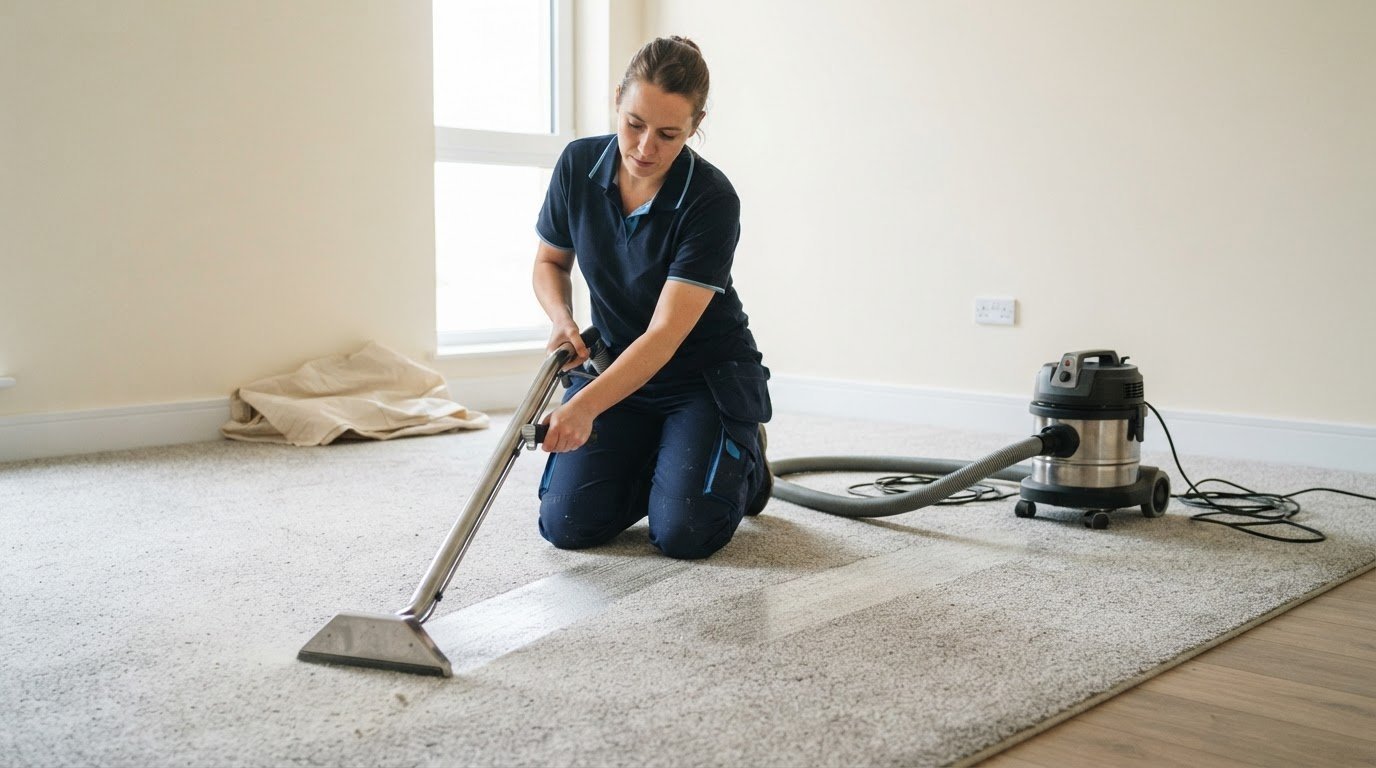
The hardest part of cleaning after decorators is often fine dust trapped in carpets and upholstery, not the paint splashes you can see. Deal with fresh paint and wallpaper paste promptly, work carefully around switches and hinges, and remove settled dust before it spreads. For embedded dust in soft furnishings, carpet cleaning can help lift residue from floors and upholstery.
Decorating leaves more than a changed room behind, and it’s understandable to want the space clean and usable again. The right method depends on the surface: an approach that works on glass may not suit painted walls or fabric.
This guide explains how to tackle fresh decorating residue, reach tight crevices, clean walls and floors carefully, and address dust embedded in carpets and upholstery. Follow a practical order of work, and learn when a careful surface clean may not be enough.
Key Takeaways
- Choose a cleanup method that suits the residue and surface, and deal with fresh paint or paste before it dries.
- Use a small brush to reach decorating dust in narrow spaces around switches, sockets and hinges.
- For dust embedded in carpets or upholstery, a carpet cleaner can help lift residue from the fibres.
- Vacuum walls before washing, then clean gently and avoid leaving painted surfaces overly wet.
1. Removing fresh paint, wallpaper paste and filler with wipes
For fresh water-based paint, wallpaper paste or soft filler, start with a clean, damp cloth and gently lift the residue. Work from the outside of a splash towards its centre, turning the cloth to a clean area as it picks up material. This helps stop paint or paste spreading across wood, tiles or carpet. Use only enough moisture to loosen the mark, then blot carpet fibres rather than rubbing them. Test the method on a hidden spot first, especially on painted or delicate surfaces.
On glass or mirrors, a glass scraper can remove dried paint splashes. Hold it at a shallow angle and move carefully across the glass, keeping the surface damp to reduce scratching. Don’t use the blade on wood, tiles or painted surfaces. For sticky paste on a washable surface, a damp cloth may be enough. Avoid soaking joints, edges or unfinished wood.
Clean water-based paint from brushes with warm, soapy water. Rinse and repeat until the water runs clear, removing excess paint from the bristles before it dries. Solvent-based paint requires white spirit or a solvent-based brush cleaner. Wear gloves and work in a well-ventilated area. Keep solvent away from flames and follow the cleaner’s label.
Offer unwanted paint to family, friends or local community groups for reuse. Never pour paint into a sink or stormwater drain; contact your local authority for disposal advice. Keep leftover paint in its container, secured away from children and pets.
For professional post-renovation cleaning in Luxembourg, Deepclean Services offers Deep Cleaning when dust and general surfaces need thorough attention. This service is not a substitute for specialist paint removal. Ventilate the room while using solvent, wear gloves, and avoid disturbing suspected lead-based paint. Lead-based paint can be hazardous, especially for pregnant women and young children, so don’t remove it yourself.
2. Cleaning crevices around switches, sockets and hinges
Fine decorating dust gathers along switch plates, socket edges and hinge joints, where broad cloths can miss it. Use an electric toothbrush or a baby bottle brush to loosen grime from narrow spaces. Keep the brush dry near electrical fittings, and work only on their outer surfaces. Never push bristles or another tool into a socket or the gap behind a switch plate.
Start with the room’s switches and sockets. Brush gently along the outside edge of each plate, moving dust away from the fitting rather than deeper into its seams. Use a dry microfibre cloth to collect loosened particles from the wall. If paint or paste has dried beside a plate, don’t scrape it with a metal tool, which can mark the wall or damage the finish. Keep liquids away from sockets and switches.
For door hinges, open the door to expose the joint, then brush the hinge leaves and the narrow space around the pin. Use short strokes to lift dust without forcing it further into the mechanism. A folded cloth can catch residue beneath the hinge as you work. Check both sides of the door, especially the upper hinge, where settled dust can be less visible.
Finish by wiping nearby trim and vacuuming the floor below, so loosened dust doesn’t settle back onto the cleaned area. A small brush attachment can help collect particles along the skirting board. If fine residue extends across several rooms or into other surfaces, a more thorough post-decoration clean can help restore order without leaving dust in the surrounding spaces.
Choose a brush that fits the area: an electric toothbrush or baby bottle brush can clean dirt from tight spaces around switches, sockets and door hinges. Work along visible edges and joints with gentle, controlled movements. For electrical fittings, stay on the exterior and keep the brush dry. The aim is to lift accessible dust, not to reach behind a plate or into a socket. Around hinges, open the door to expose the joint and collect loosened residue with a cloth. Finally, check the surrounding trim for any visible dust.
3. Cleaning embedded decorating dust from carpets and upholstery
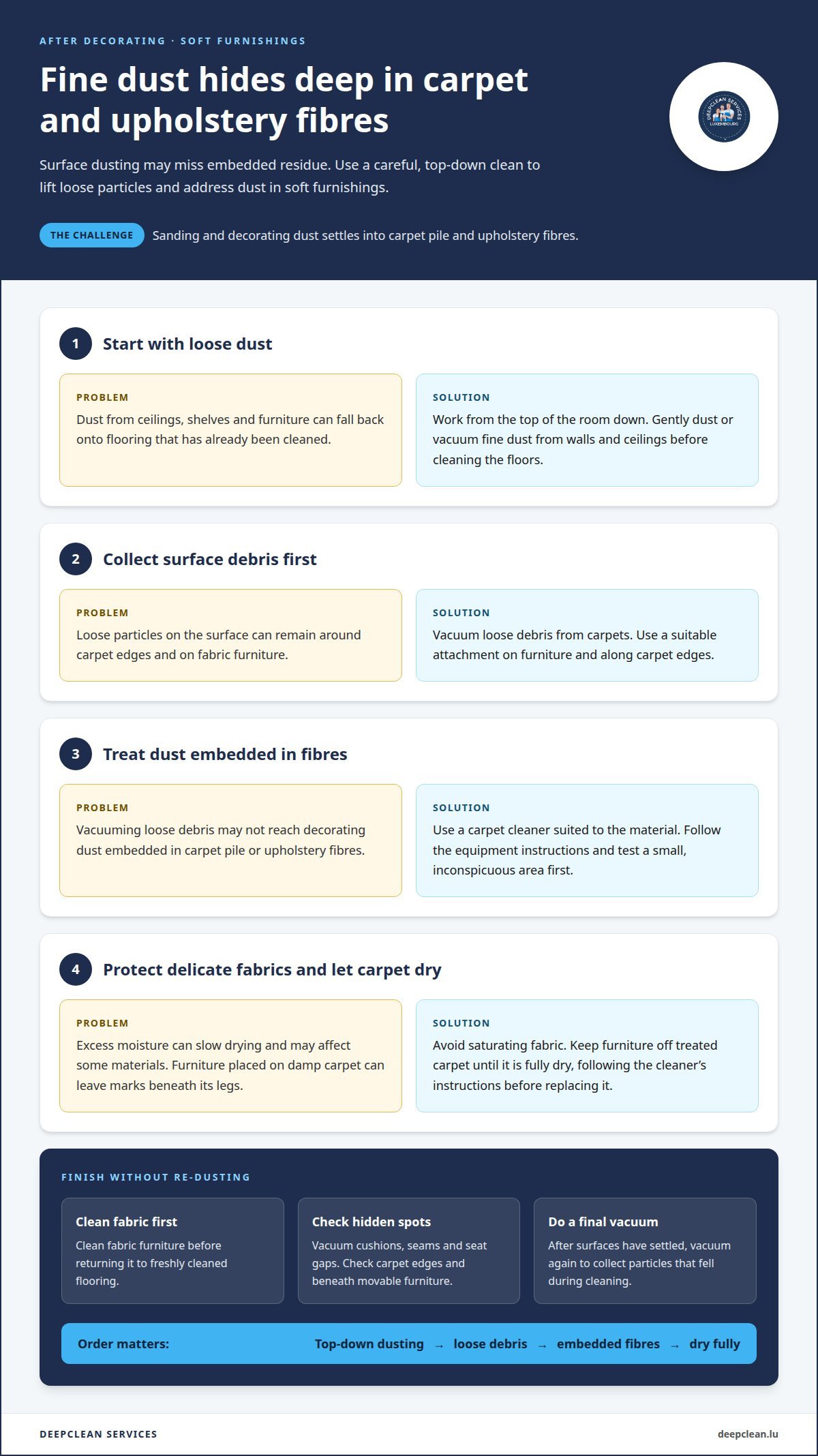
Sanding and decorating dust settles into carpet pile and upholstery fibres, where surface dusting alone won’t reach it. Begin by vacuuming loose debris, using a suitable attachment on fabric furniture and along carpet edges. Work from the top of the room down, so dust from ceilings, shelves and furniture doesn’t fall onto clean flooring. For fine dust on walls and ceilings, use a duster or vacuum gently before wiping washable surfaces.
For residue embedded in carpets or upholstery, use a carpet cleaner. It can remove sanding, decorating and building dust from floors and soft furnishings. Follow the equipment instructions and choose a method suited to the material. Test a small, inconspicuous area first, especially on upholstery with delicate fibres or colour. Avoid saturating fabric: excess moisture can slow drying and may affect some materials.
How long cleaning after decorators takes depends on the room size, the amount of settled dust, and whether carpets and upholstery need machine cleaning. Drying time also varies with the material, moisture used and room conditions. Keep furniture off treated carpet until it is fully dry, and follow the carpet cleaner’s instructions before replacing it. This helps prevent damp marks beneath chair or table legs.
For a thorough result, clean fabric furniture before returning it to freshly cleaned flooring. Vacuum cushions, seams and gaps between seat sections, where fine particles collect. Clean curtains and other soft furnishings only with methods suited to their care instructions. Check carpet edges and the floor beneath movable furniture for remaining dust. A final vacuum after surfaces have settled helps collect particles that fell during cleaning. While domestic spaces can often be managed with domestic equipment, larger workplaces and commercial fit-outs often rely on specialized teams like RPS Building Services to handle heavy post-construction dust and deep carpet remediation.
4. How to remove paint, plaster, dust and adhesive from floors and walls safely
Start by vacuuming the wall before washing, so wet dust doesn’t smear across the paint. Use a clean cloth or sponge with warm water and regular detergent for ordinary marks. Work in small areas, avoid overwetting the wall, and absorb moisture as you go. On floors, vacuum dry plaster and dust first, then wipe washable surfaces with a damp cloth suited to the material.
For heavier staining, washing soda crystals or sugar soap can help clean the surface. Test the solution on a hidden area before treating a visible wall, then follow its product directions. If using sugar soap, wipe the area with clean water while it’s still wet. The colour of the water on the cloth can indicate how much dirt the wall released. Use a fresh section of cloth as it becomes soiled.
Paint, plaster and adhesive need different approaches. Carefully lift loose plaster instead of grinding it into floor joints. For paint on a washable surface, use a damp cloth and gentle pressure. Avoid abrasive pads that may scratch tiles or strip a finish. Test any cleaning method discreetly on wood or painted walls first. Where renovation residue has affected delicate architectural surfaces like exposed brick or timber beams, specialist restorers such as Surfprep can lift paint and plaster using superheated steam without eroding the substrate. Don’t flood floor edges or wall seams, where moisture can collect.
Take particular care with older paint. Lead-based paint can be hazardous, especially for pregnant women and young children; don’t attempt to remove suspected lead paint without professional help. Keep dust from dry scraping or sanding from spreading through the room, and avoid disturbing questionable coatings. For help restoring rooms after decorating, arrange a thorough cleaning service tailored to the surfaces and residue involved.
Treat the hidden-area test as a check before using a cleaner across a larger patch: apply the chosen solution discreetly and assess the result before continuing. With sugar soap, the colour of the water on the cloth offers a visual cue to how much dirt has come away. Use this to judge whether further cleaning is needed, rather than assuming every mark needs the same effort. Work gently and let the result guide any additional wiping.
Deepclean Services
Deepclean Services can help restore order when decorating leaves dust and general cleaning to do. Choose a service that fits the property and the work required: One-Time Basic Cleaning for a single visit, Regular Cleaning for ongoing upkeep, or Deep Cleaning when more thorough attention is needed. Moving In / Out Cleaning can help prepare a home during a change of occupancy.
These services cover general cleaning needs, rather than specialist paint or adhesive removal. Describing the rooms and remaining residue helps define the cleaning required. To choose a suitable cleaning service for your home after decorating, book with Deepclean Services online.
Make the room ready for what comes next
A freshly decorated room is a good opportunity to reset how you’ll use the space. Before bringing belongings back, decide what needs attention first: clearing the last signs of work, preparing the room for everyday use, or arranging a broader clean across the property. Setting a clear priority makes cleaning after decorators part of a smooth return to normal, rather than another task competing for your time.
The right support depends on the rooms involved and the level of cleaning you want. Share your priorities and the areas that need attention, so the next step can match your home’s needs. Contact Deepclean Services today to discuss cleaning support. With a clear plan, you can move forward and enjoy your refreshed space.
Frequently Asked Questions
How to clean a home after decorating or renovation?
For cleaning after decorators, work from the highest surfaces down, room by room, so dust doesn’t spread over areas already cleaned. Dust ledges, fittings, doors and baseboards, then vacuum floors and upholstered furniture before wiping surfaces and accessible interior windows. Finish with the floors. Deep Cleaning from Deepclean Services can cover detailed tasks such as cleaning inside empty cabinets, the fridge and the oven.