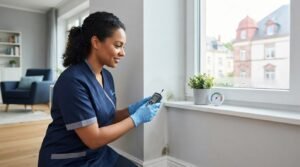
An air cleaner alone won’t remove the sources of indoor allergens. To reduce allergens in your house, start with recurring sources such as dust, pet dander and moisture, then treat filtration as one part of a broader cleaning plan.
When indoor air feels uncomfortable, it’s tempting to look for a single fix. But allergens settle on surfaces and collect in fabrics as well as circulate through the air. This article covers practical ways to manage common indoor allergens, improve air quality and identify possible sources.
Learn how cleaning routines, humidity control and attention to pets and pollen can help, and when an air-cleaning device may be useful. The guidance also distinguishes everyday dust and dander from visible or recurring mould, which may call for a more thorough cleaning approach.
Key Takeaways
- Use air-cleaning devices as a complement to surface cleaning, not a substitute for removing settled dust and other allergen sources.
- Learn how a consistent professional cleaning routine and suitable flooring choices can help limit allergen build-up indoors.
- Recognise how dust mites, pet allergens, pollen, mould and pest allergens can enter or collect in different parts of the home.
- Trace recurring symptoms to likely indoor sources so you can focus on the areas and conditions that matter most.
1. Will Air Cleaning Devices Help?
Yes. Professional cleaners can remove allergen particles settled on floors, rugs, furniture and other surfaces, while filters capture some particles circulating in the air. Both help: an air cleaner cannot remove dust mite material already collected in a carpet. A consistent cleaning schedule can help reduce allergens in your house by limiting settled debris, though it cannot eliminate every allergen or identify what causes someone’s symptoms.
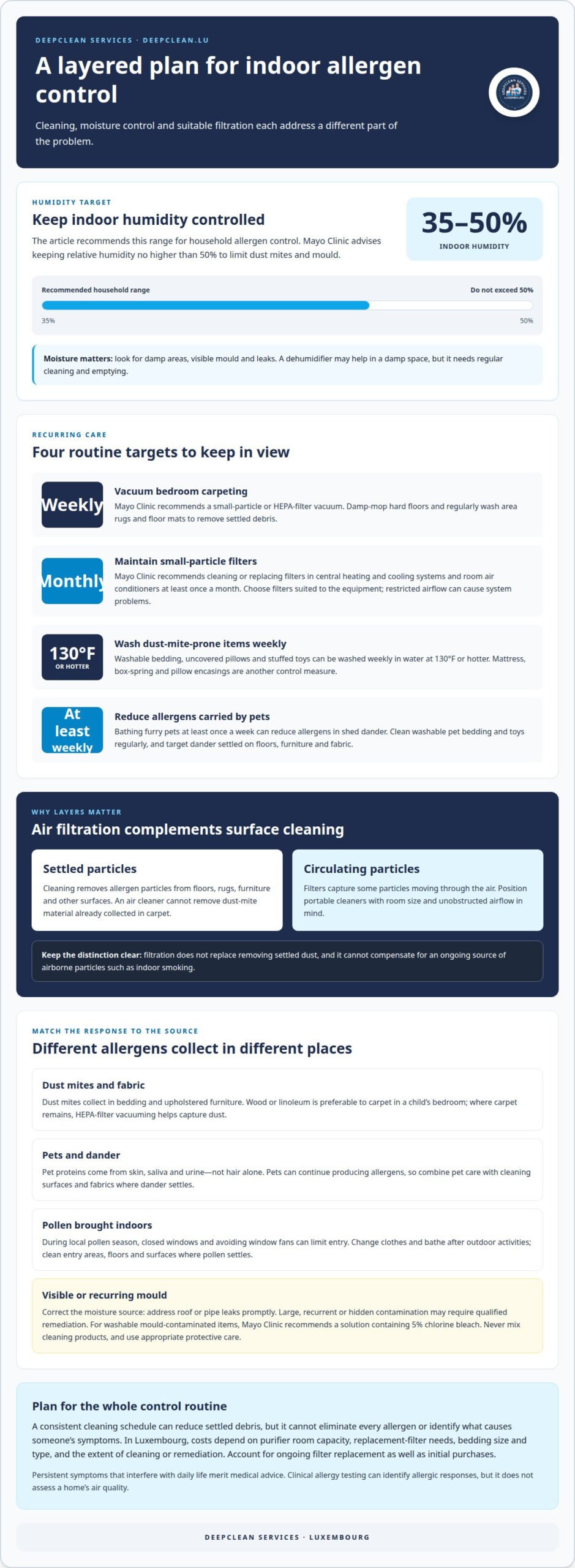
Start with a room-by-room assessment. For a portable air cleaner, consider the room’s size, the device’s position, and whether furniture blocks air circulation. For central heating and cooling systems, the filter must suit the equipment; a filter that restricts airflow can cause system problems. Mayo Clinic recommends cleaning or replacing small-particle filters in central heating and cooling systems and room air conditioners at least once a month. An HVAC upgrade depends on system compatibility and filtration needs.
Cleaning frequency matters. A planned professional routine can address recurring dust on surfaces and fabrics, while a one-time deep clean can target accumulated debris. Damp-mop hard floors, and vacuum carpets and rugs. Mayo Clinic recommends vacuuming bedroom carpeting weekly with a small-particle or HEPA-filter vacuum. Regularly washing area rugs and floor mats can help remove settled debris. Discuss low-irritant cleaning products and known sensitivities before work begins.
Smoking indoors adds avoidable particles, so Mayo Clinic recommends not allowing smoking anywhere inside. Filtration cannot compensate for an ongoing source of airborne particles. Keep cleaning consistent and maintain filters separately from surface care. Replace system filters according to their maintenance needs, choosing one that does not restrict airflow. Combining source control, cleaning and suitable filtration can help reduce allergens in your house over time.
How Can Professional Cleaning Help Control Indoor Allergens and Improve Indoor Air Quality?
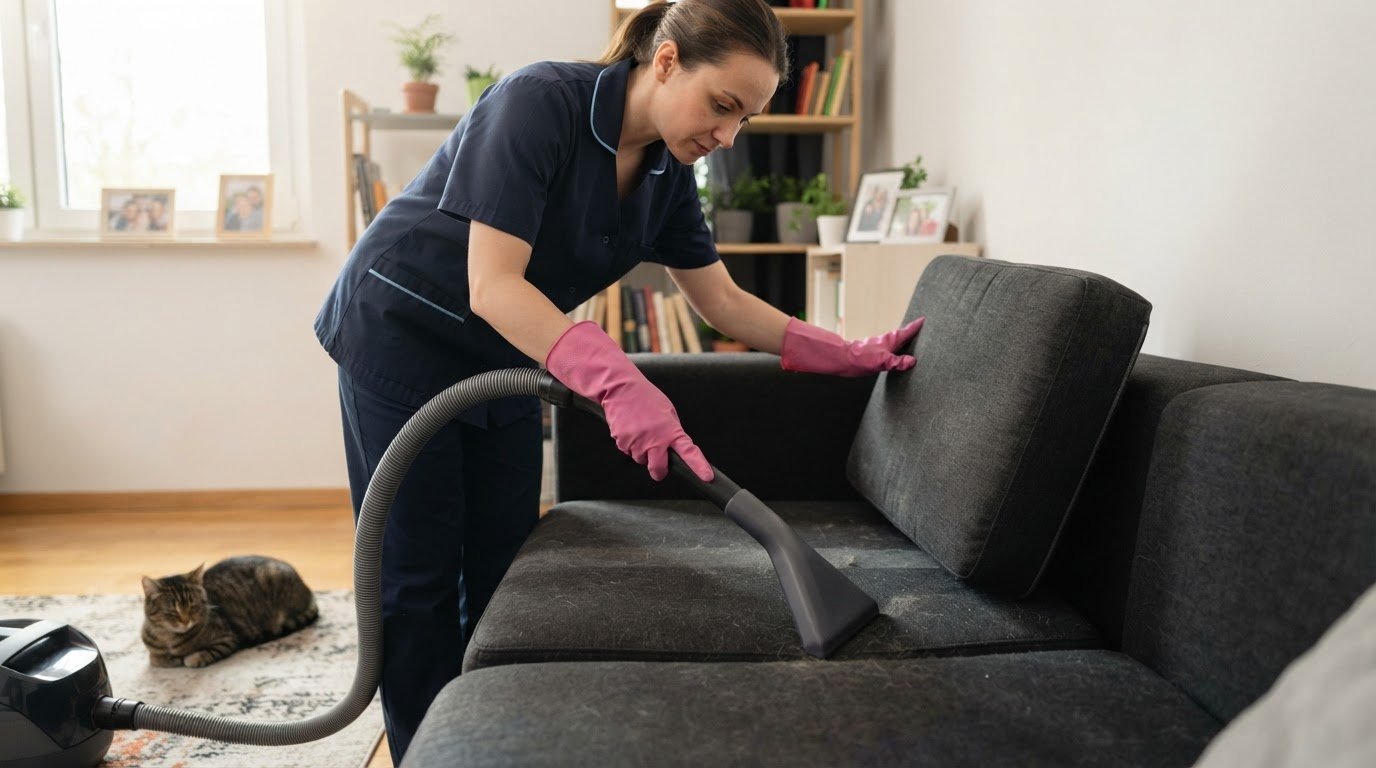
Flooring affects how easily settled particles can be removed. Wood or linoleum is preferable to carpet in a child’s bedroom because carpet can hold dust and other allergens. Where carpet remains, professional vacuuming with a HEPA-filter vacuum helps capture dust rather than stirring it up. A planned cleaning routine can also address rugs, upholstered furniture, and fabric where particles collect. For bedroom dust-mite control, regular attention to bedding and other soft surfaces matters.
Moisture needs its own assessment. Professionals can look for damp areas, visible mould, and signs of leaks that keep surfaces wet. Indoor humidity between 35% and 50% is recommended for household allergen control. Mayo Clinic advises maintaining relative humidity no higher than 50% to limit dust mites and mould. A dehumidifier may help in a damp space, but it needs regular cleaning and emptying. Otherwise, it can become a place where mould and mildew develop.
Cleaning visible mould without correcting its moisture source leaves the underlying problem in place. Roof or pipe leaks should be addressed promptly, and persistent dampness calls for attention beyond repeated surface cleaning. Large, recurrent, or hidden mould contamination may require qualified remediation. For washable materials, Mayo Clinic recommends cleaning mould-contaminated items with a solution containing 5% chlorine bleach. Cleaning products should never be mixed, and mould work requires appropriate protective care.
Pet dander can settle on floors, furniture, and fabric, so targeted cleaning helps remove what routine tidying may miss. Washable pet bedding and toys also need regular cleaning. Bathing furry pets at least once a week can reduce allergens in shed dander. If asthma or other symptoms persist, a clinic can assess allergies, but clinical allergy testing does not measure home air quality. For a structured approach to settled dust, moisture, and dander, consider professional deep cleaning as part of a broader plan.
3. Dust mites, pet allergens, pollen, mold, and pest allergens
Different sources need different controls. Dust mites collect in bedding and upholstered furniture, while pet allergens can travel on fabric and settle in dust. Washable bedding, uncovered pillows, and stuffed toys can be washed weekly in water at 130 degrees Fahrenheit or hotter. Encasings for mattresses, box springs, and pillows provide another dust-mite control measure. Pet proteins come from skin, saliva, and urine, not hair alone. Cleaning can remove settled dander from floors, furniture, and fabric, but pets can continue producing allergens.
Pollen can enter through windows, doors, clothing and ventilation. During local pollen season, keeping windows closed and avoiding window fans can help limit its entry. Professional cleaners can focus on entry areas and regularly clean floors and surfaces where pollen settles. A methodical routine can include damp-wiping hard surfaces and cleaning from higher areas downward, so settled particles are collected rather than spread. Filters support air quality, but they don’t remove pollen already settled indoors. After outdoor activities during pollen season, changing clothes and bathing can also reduce pollen carried inside.
Costs in Luxembourg depend on the purifier’s room capacity, replacement-filter needs, bedding size and type, and the extent of any cleaning or remediation. Plan for ongoing filter replacement as well as the initial device or bedding purchase. No single price covers these different choices; consider the equipment, materials and scope of work.
Consult a doctor when allergy symptoms persist or interfere with daily life. Clinical allergy testing can identify allergic responses, but it doesn’t assess a home’s air quality. For visible mould, correct the moisture source, not just clean the affected surface. Large, recurrent or hidden mould contamination may require qualified remediation rather than repeated surface treatment. Pest allergens also need attention at the source, since cleaning settled dust alone won’t prevent new particles from accumulating.
4. Common indoor allergen sources
Finding the trigger means looking beyond airborne particles. Dust mites are the most common indoor allergen and often collect in bedrooms, especially in bedding and upholstered items. Pet allergy triggers come from proteins in skin, saliva and urine, not hair itself. These particles can travel on clothing or fabric, then settle on floors, furniture and other surfaces. A useful first step is to note where dust, pet contact or dampness occurs most often.
Seasonal patterns can point to pollen. It enters through open windows, doors, clothing and ventilation, so symptoms that worsen during local pollen season may reflect exposure brought indoors. Pay particular attention to entryways and frequently used rooms, where pollen carried on shoes or clothing can settle. Cleaning floors and surfaces removes settled particles, while keeping windows closed during peak pollen periods can reduce further entry.
Moisture-related sources need a different response. A persistent damp smell, visible growth or recurring marks on a wall can indicate a moisture problem that ordinary surface cleaning won’t resolve. Identify and correct the source, such as a leak, rather than repeatedly treating the same spot. Large, recurrent or hidden mould contamination may require qualified remediation. Pay attention to pest-related allergens if you notice signs of an infestation; cleaning alone won’t remove the source while it remains active.
Carpets and rugs can hold dust and other particles, while hard floors make settled material easier to remove during routine cleaning. No home can be made completely free of allergens, so focus on likely sources and where they collect. If symptoms follow a particular season, room, or contact with an animal, that pattern can help guide the response. For recurring visible mould, arrange professional mould removal alongside correction of the moisture source.
Deepclean Services
Deepclean Services can help keep indoor surfaces, floors and furnishings cleaner with a planned cleaning routine. Regular Cleaning supports ongoing upkeep, while Deep Cleaning addresses areas that need more thorough attention. One-Time Basic Cleaning may suit a single cleaning need, and Moving In / Out Cleaning can help prepare a home during a move.
For allergen control, professional cleaning removes settled dust and debris from household surfaces. It works alongside measures such as managing moisture, washing bedding and controlling sources like pet dander. Cleaning can support a consistent routine, but visible or recurring mould also requires attention to its moisture source. Contact Deepclean Services to discuss the cleaning option that suits your home.
Make your next step manageable
A more comfortable home starts with a clear priority, not an attempt to change everything at once. Choose the area where dust, pet allergens or recurring dampness is most noticeable, then decide whether you need routine upkeep or a more thorough clean. A focused plan makes it easier to reduce allergens in your house while keeping attention on the sources that matter in your home.
Deepclean Services offers Regular Cleaning for ongoing care, One-Time Basic Cleaning for a single visit and Deep Cleaning for a more detailed clean. The right option depends on the areas and surfaces that need attention. Professional cleaning can support your household routine, while persistent moisture still needs its source addressed.
Take the next step at a pace that suits your home. Contact Deepclean Services today to discuss a suitable cleaning service. A considered plan can help you move toward a cleaner, more comfortable indoor environment.
Frequently Asked Questions
How Can I Control Indoor Allergens and Improve Indoor Air Quality?
Manage indoor allergens by combining source control, ventilation and regular cleaning. For example, address dampness rather than repeatedly wiping the same mould spot, and reduce pollen entry by keeping windows closed during peak pollen season. Clean surfaces where dust settles, and maintain heating and cooling filters according to their requirements. These measures work together: filtration alone cannot remove allergen particles already settled on furnishings or floors.
Will Air Cleaning Devices Help?
Air-cleaning devices can capture some airborne particles, but work best alongside cleaning that removes settled dust and dander. Choose a portable cleaner sized for the room, and position it where furniture won’t block air circulation. For a central HVAC filter, compatibility matters because restricted airflow can cause system problems. Mayo Clinic recommends cleaning or replacing small-particle filters in heating and cooling systems and room air conditioners at least once a month.
What professional cleaning services can help reduce allergens at home?
Regular Cleaning supports ongoing upkeep, while Deep Cleaning is suited to a more thorough clean of household surfaces. One-Time Basic Cleaning provides a single-visit option, and Moving In / Out Cleaning can address a home during a change of occupancy. These services can remove settled dust and debris from accessible areas. Persistent mould also requires correcting the moisture source, not just cleaning the surface.
How often should professional cleaners vacuum and dust to reduce indoor allergens?
Cleaning frequency depends on room use, floor coverings, pets and where dust accumulates. Mayo Clinic recommends weekly vacuuming of bedroom carpeting with a small-particle or HEPA-filter vacuum. A professional schedule can give high-use rooms regular attention, with extra focus on carpeted bedrooms or areas where pets rest. Damp dusting helps collect particles on surfaces rather than scatter them into the room.
Can HEPA air purifiers reduce dust, pollen, and pet allergens, and how can a professional help choose the right size?
A HEPA air purifier can capture airborne dust, pollen, and pet-allergen particles when properly sized and positioned for its room. A professional can assess room dimensions, placement, and possible airflow obstructions, such as large furniture. Air cleaning won’t remove particles already settled on floors or fabric, so combine filtration with surface and carpet cleaning. Keep the device’s filter maintained according to its instructions.
How can professional cleaning help reduce dust mites in bedrooms, mattresses, and bedding?
Professional cleaning can remove dust and debris from bedroom floors, upholstered furniture, and accessible mattress surfaces. Dust mites commonly collect in bedding and upholstered areas, so coordinate cleaning with regular laundering of sheets, pillowcases, and blankets. Washable bedding and uncovered pillows can be washed weekly in water at 130 degrees Fahrenheit or hotter. Mattress and pillow encasings also help limit dust-mite exposure.