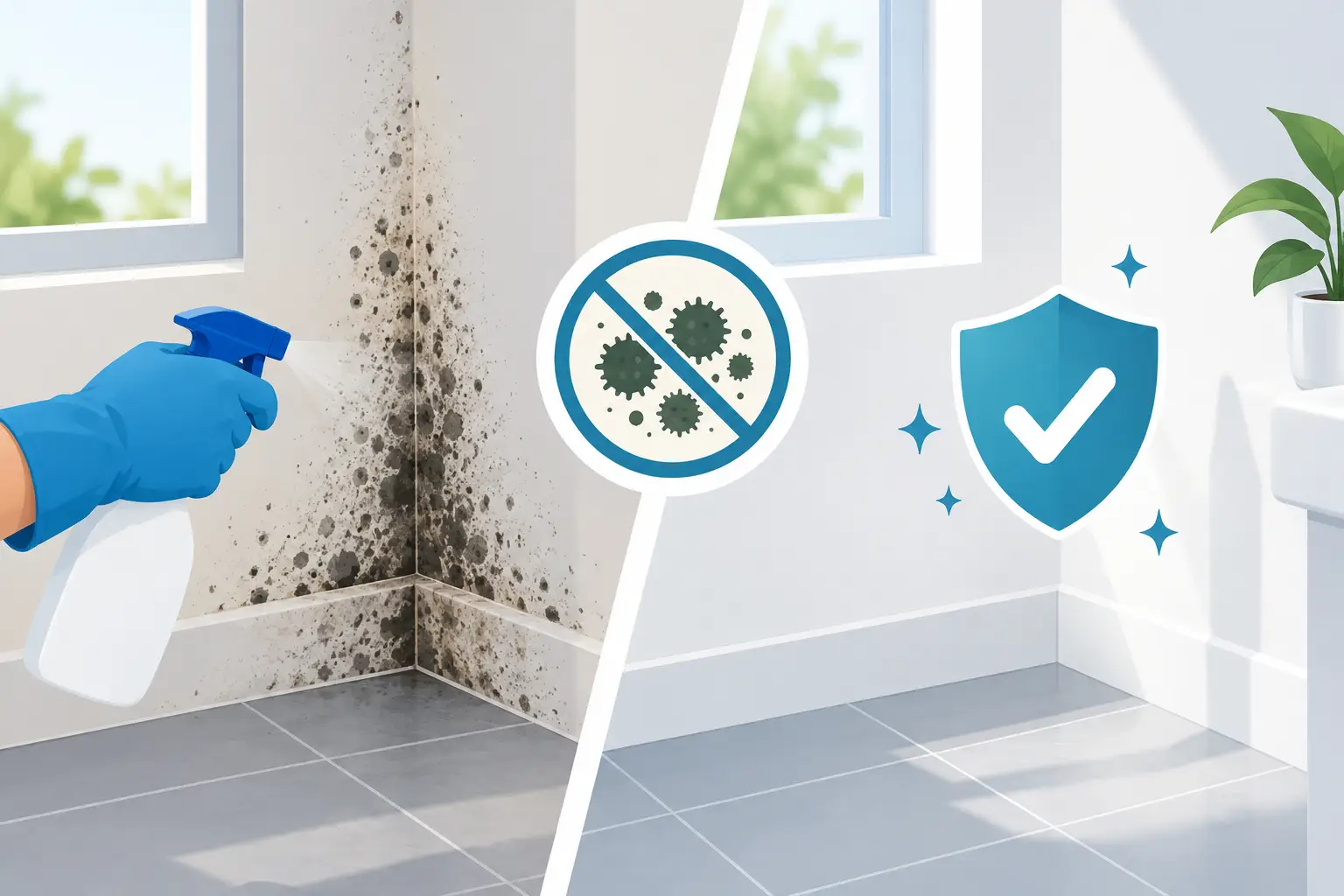
A bathroom can look spotless on Monday and show dark specks around the shower seal by Friday. Can mould return after cleaning? Yes. Cleaning removes visible growth, but mold can come back quickly when the damp conditions that helped it grow are still there.
That does not mean the cleaning failed. It usually means moisture, poor airflow, a hidden leak, or mold roots left in a porous surface still need attention. The good news is that repeat mold is often preventable once you treat both the surface and the cause.
Can Mould Return After Cleaning? Yes, Here Is Why
Mold spores are naturally present in indoor and outdoor air. They are tiny, and you cannot realistically remove every spore from a home, office, or building. What controls mold is the environment. Give spores moisture, warmth, and a surface with dust or organic material, and they can begin growing again.
Bathrooms, kitchens, laundry areas, basements, window frames, and poorly ventilated bedrooms are common trouble spots. In commercial spaces, mold may also appear around plumbing runs, air-conditioning units, storage areas, or exterior walls affected by condensation.
A cleaned wall or shower tray can become moldy again if it remains damp for hours at a time. This is why a strong mold-removal job is not just about spraying and wiping. It should include drying, checking the surrounding area, and reducing the conditions that allow regrowth.
The moisture source was not fixed
A slow pipe leak, loose shower seal, dripping valve, roof issue, or water entering through a window can keep materials damp behind the scenes. You may clean the visible stain repeatedly, but mold will return until the leak or water entry point is repaired.
Condensation causes similar problems. Warm indoor air hits a cold window, exterior wall, or uninsulated pipe and turns into water droplets. If that happens often, especially during colder months, mold can develop on the surface or just behind furniture placed too close to the wall.
The area does not dry fast enough
A steamy bathroom with no working extractor fan is a classic example. So is a laundry room where damp clothes are dried indoors without enough ventilation. Even a clean shower can develop mold around caulk and grout when moisture stays trapped after every use.
Open windows can help in suitable weather, but they are not always enough. An extractor fan, dehumidifier, proper heating, and good air circulation often make a bigger difference. The right solution depends on the room and the reason humidity is building up.
Mold was wiped away, not fully removed
Surface mold on smooth, nonporous materials such as tile, glass, metal, and some sealed surfaces can often be cleaned effectively. But mold can grow into paint, drywall, untreated wood, fabric, carpet backing, insulation, and damaged caulk. Wiping the surface may improve the appearance while leaving growth underneath.
Bleach is often treated as a universal answer, but it is not a cure for every surface. It can lighten stains, yet it may not reach mold growing inside porous materials. It also creates fumes and should never be mixed with other cleaning products. When materials are badly affected, removal and replacement may be safer and more effective than repeated cleaning.
How to Tell Whether It Is New Mold or an Old Stain
Not every dark mark is active mold. Old staining can remain after a successful cleaning, especially in grout, caulk, painted walls, and wood. Active growth is more likely if the mark spreads, feels damp, has a fuzzy or powdery texture, or returns shortly after cleaning.
A musty odor is another warning sign. Odor can mean moisture or microbial growth is still present, even when the surface looks clean. Look beyond the visible patch. Check nearby seals, the underside of window frames, corners behind furniture, under sinks, and the ceiling below bathrooms or roofs.
If paint is bubbling, drywall feels soft, flooring is lifting, or the affected area keeps expanding, treat it as a moisture problem first. Cleaning alone will not solve structural water damage.
What to Do After Cleaning Mold
The best follow-up is practical and consistent. Once the affected surface is cleaned or treated, dry it thoroughly and keep an eye on it for the next two to three weeks. If the area remains clean and dry, your prevention steps are working. If the same patch returns, investigate the source rather than using stronger chemicals.
Start with four simple checks:
- Run the bathroom or kitchen exhaust fan during moisture-producing activities and for at least 20 minutes afterward.
- Wipe down shower walls, glass, trays, and sills after use, especially where water gathers near seals.
- Keep humidity under control with ventilation, regular heating, and a dehumidifier where needed.
- Repair plumbing leaks, damaged caulk, roof issues, and poor window seals as soon as you notice them.
Do not push wardrobes, beds, or large cabinets tightly against a cold exterior wall. Leave a small gap for air movement and check those spaces periodically. For rentals, report leaks and recurring moisture promptly and keep a record of the issue. This protects the property and helps establish that the problem is not simply a housekeeping matter.
When DIY Cleaning Is Reasonable
Small, isolated surface spots in a well-maintained area can often be handled carefully. Wear gloves, improve ventilation, use a cleaning method suitable for the surface, and dry the area completely afterward. Avoid dry brushing or sanding mold, which can spread particles into the air.
DIY work becomes less suitable when the affected area is large, keeps coming back, follows flooding or a major leak, or involves soft materials such as drywall, insulation, carpets, and upholstered furniture. It is also wise to get help when people in the space are particularly sensitive to damp environments, including those with asthma or allergies.
For landlords, office managers, and property operators, recurring mold should be handled promptly and documented clearly. A clean-looking space is not enough if the moisture cause remains hidden. Fast action can prevent damage from spreading into walls, floors, furnishings, and neighboring rooms.
When Professional Mold Removal Makes Sense
Professional help is useful when the work needs more than a surface clean. A trained team can assess the affected area, clean suitable surfaces with commercial-grade equipment, identify signs of ongoing moisture, and help restore the room to a clean, fresh condition. For larger or repeated problems, this approach saves time and reduces the cycle of cleaning the same patch again.
The process should be matched to the material. Tile and sealed bathroom surfaces need a different method from carpets, furniture, painted walls, or wood. In some cases, focused cleaning and drying are enough. In others, damaged caulk, wallboard, or flooring may need to be removed after the water issue is resolved.
Deepclean Services supports homes and workplaces with specialized cleaning for demanding areas, including mold-affected bathrooms, kitchens, and high-moisture spaces. For a one-time issue or part of regular property care, the goal is straightforward: remove visible contamination properly, leave the area fresh, and help prevent the conditions that bring it back.
Keep the Space Dry, Not Just Clean
A clean surface is the first step. A dry, well-ventilated space is what keeps it that way. Watch the spots that collect steam, condensation, and hidden water, and act early when you notice a musty smell or a recurring mark. A small repair and a better drying routine today can spare you a much larger cleanup later.