
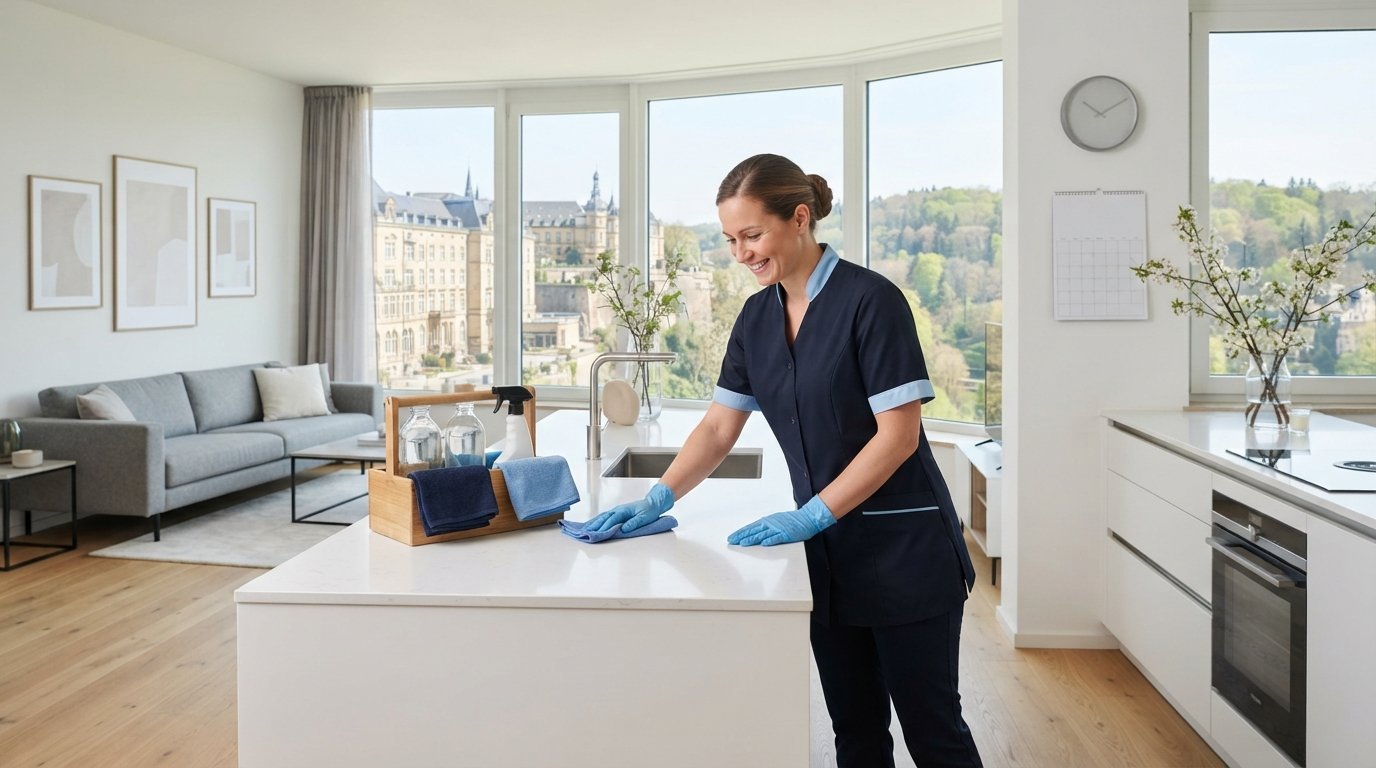
What if your regular weekend dusting isn’t actually keeping your living space as fresh as it looks? It is easy to feel frustrated when you spend hours tidying, yet stubborn bathroom scale, trapped pet dander, and kitchen grease remain out of sight. Understanding how often deep clean home routines are necessary allows you to target these hidden burdens before they compromise your comfort and indoor air quality.
Deep cleaning isn’t a chaotic annual chore; it is a systematic maintenance cycle designed around how you actually live. In this guide, you will discover the ideal cleaning frequency for your household and learn how to maintain a pristine, allergen-free environment all year round. We provide a clear, actionable schedule for 2026, explore high-priority zones from kitchens to ventilation points, and outline exactly when a DIY approach works versus when bringing in trained professionals makes the most practical sense.
Key Takeaways
- Understand the essential difference between surface-level maintenance and intensive deep cleaning that targets hidden contaminants.
- Determine how often deep clean home routines should occur based on household occupancy, pets, and daily lifestyle demands.
- Implement a structured room-by-room schedule that addresses high-moisture bathrooms, busy kitchens, and living spaces at optimal intervals.
- Discover how a predictable seasonal cleaning cycle protects your indoor air quality and helps you decide when professional intervention is required.
Defining the Scope: What Exactly is a Professional Deep Clean?
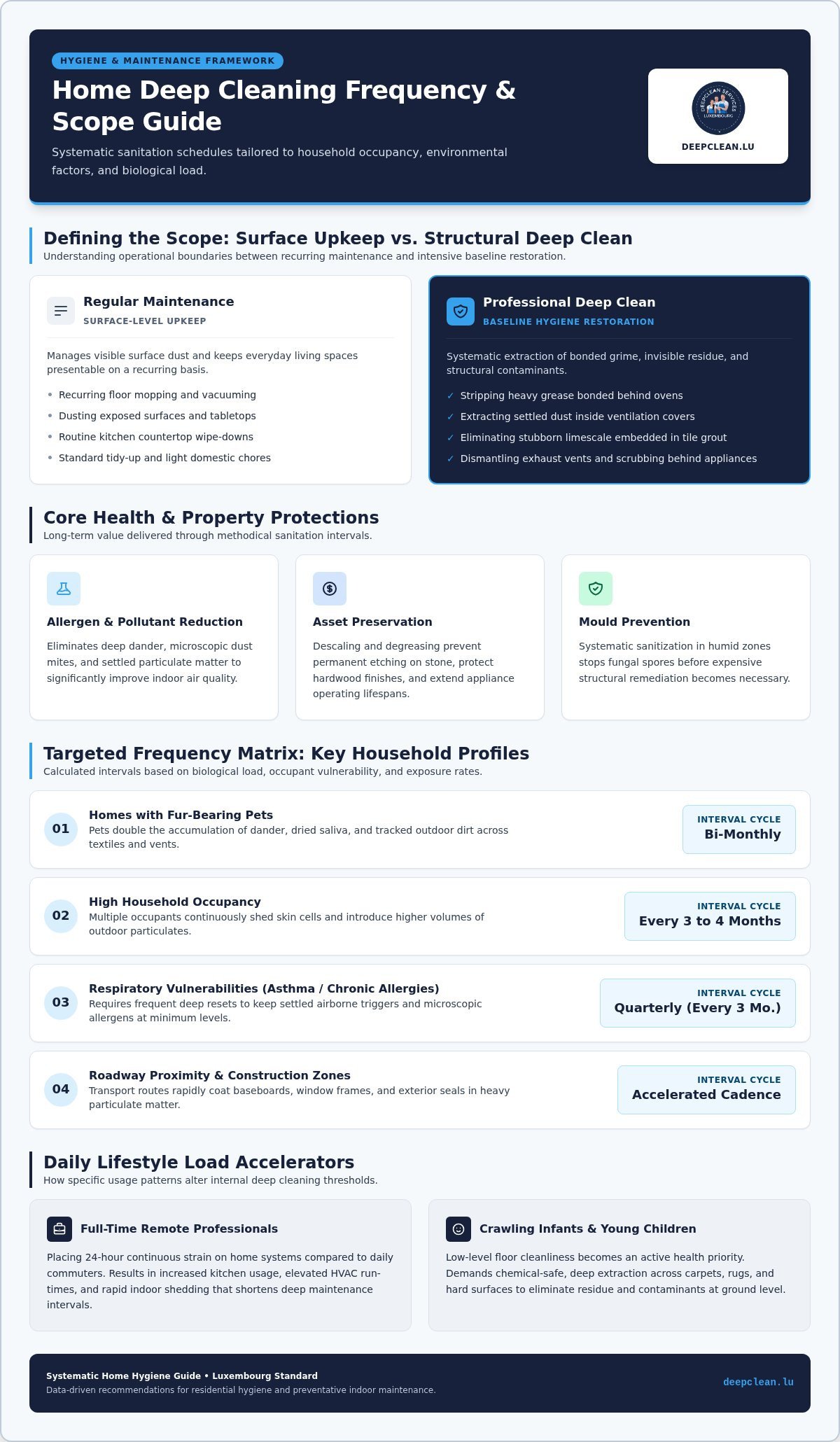
At its core, a professional deep clean is the systematic restoration of a home to its baseline hygiene level. While surface tidying keeps living spaces presentable from day to day, true deep sanitation targets the neglected areas that routine domestic upkeep consistently misses. This process involves stripping away heavy grease bonded behind ovens, extracting settled dust inside ventilation covers, and eliminating stubborn limescale embedded in tile grout.
Many homeowners confuse standard upkeep with comprehensive structural care. Scheduling a regular cleaning service Luxembourg residents rely on handles recurring tasks such as floor mopping, dusting exposed surfaces, and kitchen counter wipe-downs. However, regular visits aren’t designed to dismantle exhaust vents or scrub behind heavy appliances. Deciding how often deep clean home sessions should take place depends on recognizing when routine maintenance reaches its practical limit.
Deep Cleaning vs. Regular Maintenance
The primary distinction lies in scope and mechanical execution. Regular cleaning manages visible surface dust, whereas deep cleaning targets the hidden, structural elements of the property. When layers of invisible residue dull surfaces despite frequent domestic chores, your home has transitioned from needing surface maintenance to requiring an intensive reset. For a detailed breakdown of these operational boundaries, reviewing our comparison of deep cleaning vs regular cleaning clarifies what each scope includes.
The Health and Longevity Benefits
Executing an intensive reset at deliberate intervals safeguards both resident wellness and household investments:
- Allergen and pollutant reduction: Eliminating deep dander, microscopic dust mites, and settled particulate matter significantly improves indoor air quality.
- Asset preservation: Routine descaling and degreasing prevent permanent etching on stone, protect hardwood finishes, and extend the operating life of expensive kitchen appliances.
- Mould prevention: Humid spaces with poor air circulation are prime breeding grounds for fungal spores. Systematic sanitization arrests moisture-related growth before structural remediation becomes necessary.
Modern hygiene practices have transformed traditional seasonal spring cleaning routines into methodical, proactive care plans. Understanding how often deep clean home appointments are needed ensures your interior remains healthy, pristine, and fully protected year-round.
Determining Your Frequency: Factors That Impact Home Hygiene
A single universal schedule rarely works for every property. Instead of asking how often deep clean home sessions should happen in the abstract, you need to calculate the biological and environmental load your property absorbs each week. Daily foot traffic, household size, and proximity to busy roadways all influence how rapidly dust, dead skin cells, and microscopic residues collect across hard surfaces and textiles.
Baseline cleaning schedules must shift based on tangible operational demands. Reviewing the CDC cleaning and disinfecting guidelines shows that targeted sanitization frequencies should always align with exposure levels and occupant vulnerabilities. Consider the core factors that accelerate your maintenance intervals:
- High household occupancy: Each occupant naturally sheds skin cells and introduces outdoor particulates, demanding deeper resets every three to four months.
- The pet factor: Fur-bearing pets double the accumulation of dander, dried saliva, and tracked dirt, making bi-monthly textile and vent extractions essential.
- Respiratory vulnerabilities: Residents experiencing asthma or chronic allergies require quarterly resets to keep airborne triggers at minimum levels.
- Roadway proximity: Properties situated near main transport routes or ongoing construction projects accumulate heavy particulate matter that coats baseboards and window frames far faster.
The Impact of Lifestyle and Household Members
Daily activity patterns drastically shift sanitization demands. Crawling infants and young children turn low-level floor cleanliness into an active health priority, requiring chemical-safe, thorough extraction. Meanwhile, full-time remote professionals place twenty-four-hour strain on home systems compared to daily commuters. Increased kitchen usage, higher HVAC run-times, and constant indoor shedding require shortening deep maintenance intervals to avoid overwhelming your routine cleaning sessions.
Humidity and Seasonal Environmental Factors
Regional climate plays an equally pivotal role. Prolonged damp periods throughout the cooler months trap moisture indoors, creating prime conditions for condensation along cold external walls and bathroom silicone. When neglected, moisture problems evolve past standard cleaning into hazardous infestations. If you spot persistent black spotting on grout or behind furniture, arranging a specialized mould removal Luxembourg homeowners rely on becomes necessary before basic deep cleaning can resume.
Managing these overlapping environmental factors requires a dependable maintenance plan. If balancing busy work schedules against extensive seasonal hygiene tasks feels unmanageable, you can easily secure structured assistance through Deepclean Services to restore your living space on a predictable, professional cadence.
The Room-by-Room Breakdown of Deep Cleaning Intervals
Treating every room with the exact same maintenance cadence is inefficient. High-moisture areas and heavy cooking environments degrade far quicker than guest bedrooms or utility corridors. Rather than tackling the entire property in an exhausting, single-day marathon, mapping how often deep clean home zones need service creates a structured, manageable workflow.
Biological contaminants accumulate at different rates across wet, dry, and soft surfaces. As outlined in the EPA indoor air pollutant overview, persistent irritants like dander, dust mites, and moisture-driven fungi thrive when specific microenvironments are left unaddressed. Applying targeted cleaning intervals keeps these structural risks under control:
- Bathrooms (Every 2–3 Months): Frequent humidity causes rapid limescale buildup, soap scum binding, and mildew formation along grout lines and perimeter silicone seals.
- Kitchens (Quarterly): Aerosolized cooking oils combine with airborne dust to form sticky layers on range hood filters, cabinetry tops, and appliance kickplates.
- Bedrooms and Lounges (Every 3–6 Months): Soft furnishings, fabric headboards, and area rugs trap sloughed skin cells and require intensive HEPA extraction.
- Storage and Utility Zones (Annually): Low-traffic spaces need a dedicated annual purge and wash to eliminate dormant dust layers before mechanical systems distribute them.
Kitchens and Bathrooms: The High-Priority Zones
Sanitizing these spaces demands deliberate mechanical effort. In the kitchen, pull freestanding refrigerators and ovens away from walls to eliminate grease reservoirs and degrease extraction hood filters. In bathrooms, descale shower mixer valves and showerheads to restore proper water flow. Scrub tile grout with neutralizing agents to prevent permanent yellowing, and disinfect hidden touchpoints like toilet supply lines, isolation valves, and vanity plinths.
Bedrooms and Living Spaces: Managing Dust and Fabric
Living rooms and sleeping quarters demand methodical airborne particulate management. Strip and thoroughly vacuum mattress surfaces using certified HEPA equipment to remove dust mite populations. Move sofas and media consoles to wash the neglected baseboards underneath. Finally, work strictly from top to bottom by dusting ceiling fixtures, clearing high shelving, and wiping door frames before washing window sills and floors.
Structuring your calendar around these zone-specific cycles prevents heavy grime from bonding to structural surfaces. Knowing how often deep clean home areas need attention transforms a daunting whole-house burden into predictable, bite-sized tasks that maintain baseline hygiene all year long. To understand exactly what each zone should include during a professional visit, our guide to a thorough house cleaning service outlines the full procedural depth of what trained technicians address room by room.
Creating a Sustainable Seasonal Deep Cleaning Cycle
Relying solely on an exhaustive annual reset frequently leads to burnout and neglected living spaces. The most efficient framework divides intensive property care into manageable, four-season phases aligned with changing environmental conditions. Understanding how often deep clean home schedules should adapt to outdoor weather patterns helps preserve structural surfaces without excessive disruption to your weekly routine.
A systematic quarterly breakdown provides a predictable cadence across the calendar year:
- Spring: Clear out accumulated winter soot, purge settled heating dust, and thoroughly wash window tracks before peak pollen dissemination begins.
- Summer: Focus on interior glass pane washing, track degreasing, and sanitizing outdoor-to-indoor transitional spaces like entryways and utility thresholds.
- Autumn: Prepare living zones for sealed-window season by vacuuming radiator fins, inspecting mechanical extraction grilles, and clearing lint collection paths.
- Winter: Disinfect shared high-contact hardware, sanitize tile surrounds subject to interior condensation, and focus on indoor air purification points during viral seasons.
The 6-Month “Deep Clean” Rule
For standard households, scheduling a comprehensive professional reset every six months represents the operational gold standard. Staggering intensive zones between visits ensures that appliances, cabinetry seals, and bathroom grouting never drop below their baseline hygienic standard. Investing in recurring deep care consistently prevents the substantial financial toll of emergency surface restoration, replacing stained silicone, or fixing grease-choked exhaust motors down the line.
Transitioning Between Tenancies
Certain moments demand an immediate, whole-property intervention outside normal seasonal cycles. Moving requires complete sanitization that routine occupant turnover rarely satisfies. Executing rigorous move out cleaning Luxembourg landlords expect involves degreasing oven cavities, pulling appliances to scrub floor footprints, and descaling every plumbing fixture to ensure full deposit recovery. Similarly, completing an intensive clean prior to moving into a new residence guarantees a sterile, fresh environment free from previous tenant contaminants.
Establishing how often deep clean home interventions fit your seasonal rhythm maintains high living standards while protecting property value. If you want to streamline your household maintenance without sacrificing personal time, book a professional deep clean online to secure systematic care delivered by trained specialists.
Professional Deep Cleaning: Why Methodical Execution Matters
Executing an intensive property reset requires technical capability, systematic oversight, and industrial-grade equipment. While homemade solutions like diluted white vinegar or baking soda manage superficial kitchen spills, they cannot dissolve bonded calcification inside concealed pipework or neutralize sub-surface bathroom spores. Professional technicians, including specialized teams like Do Pure Cleaning, utilize high-grade extraction systems, targeted descaling formulas, and commercial steamers to restore surfaces without damaging delicate factory sealants.
Efficiency separates amateur efforts from professional execution. Where an untrained individual might spend three full days scrubbing corners, a trained team systematically finishes the property in hours. Standardized operational checklists guarantee complete coverage from ceiling vents down to floor tracks. For busy households calculating how often deep clean home schedules should be fulfilled by specialists, handing over heavy seasonal work delivers verifiable hygienic results while protecting personal downtime. Before booking your first appointment, reviewing what a thorough house cleaning service actually covers helps you set accurate expectations and prepare your property for maximum efficiency.
When to Outsource the Heavy Lifting
Certain domestic challenges clearly exceed the practical scope of standard weekend upkeep:
- Post-renovation resets: Fine plaster dust penetrates mechanical ducts, window runners, and cabinet hinges, requiring commercial HEPA containment.
- Persistent biological threats: Active fungal colonies demand targeted mould removal equipment rather than cosmetic surface bleaching.
- Demanding work schedules: Active professionals can reclaim entire weekends by delegating labor-intensive resets to dedicated specialists.
How Deepclean Services Streamlines the Process
Bringing over three years of dedicated service experience to residential and commercial properties across Luxembourg, Deepclean Services applies structured rigor to property maintenance. Our background-checked, trained staff execute methodical deep clean protocols tailored directly to your property’s dimensions and specific layout challenges.
We believe securing premier property care should be effortless. Residents nationwide can easily customize their deep cleaning service scope and confirm their preferred dates through our intuitive online booking system. Whether resetting high-moisture bathrooms, purging accumulated dust from baseboards, or conducting intensive tenancy handovers, our disciplined teams deliver reliable, dependable results backed by clear standards. Deciding how often deep clean home appointments should take place ultimately comes down to your personal standards, but our structured approach ensures every visit establishes a truly immaculate living baseline.
Establish Your Home Maintenance Baseline Today
Maintaining an orderly living space shouldn’t feel like an endless cycle of reactive chores. Knowing how often deep clean home routines need executing comes down to balancing your household size, daily lifestyle demands, and seasonal shifts. While high-moisture bathrooms and busy kitchens benefit from focused attention every two to three months, a structured semi-annual reset keeps allergen loads low and preserves the structural condition of your interior surfaces.
When demanding work schedules make thorough property care impractical, disciplined professional support makes all the difference. Deepclean Services delivers dependable national coverage across Luxembourg. Our trained professional staff follow systematic procedures to eliminate hidden grime, backed by specialized mould removal expertise for challenging moisture issues. You don’t have to sacrifice precious weekend hours to achieve a pristine environment. Book your professional deep clean in Luxembourg today and enjoy the lasting comfort of a thoroughly restored living space.
Frequently Asked Questions
Is deep cleaning every 6 months enough for a home with pets?
No, a six-month interval is usually too long if you live with cats or dogs. Fur, dander, and tracked dirt collect quickly inside textile fibers and behind heavy furniture. For homes with pets, assessing how often deep clean home appointments are scheduled usually points to a three- to four-month cycle. This cadence stops pet allergens from settling deeply into carpets, skirting boards, and ventilation covers.
What is the difference between a one-time basic clean and a deep clean?
A one-time basic clean focuses on visible surface tidying, floor mopping, and exterior fixture wipe-downs across the home. Deep cleaning goes much further into structural sanitation. It targets neglected grime by descaling bathroom tile grout, scrubbing behind kitchen appliances, degreasing extraction fan housings, and washing down door frames. Basic cleans maintain everyday appearance, while deep cleans restore baseline hygiene from top to bottom.
How long does a professional deep cleaning usually take?
A professional deep clean generally takes between four and eight hours, depending on property dimensions and overall condition. Because trained teams work methodically through detailed checklists, they move through tasks systematically. Very large properties or residences that haven’t received intensive care for over a year may require additional time to treat heavy limescale deposits, built-up cooking grease, and stained surfaces thoroughly.
Do I need to be present while the professional cleaners are working?
You don’t need to remain on site during the service appointment. Most clients simply let the cleaning crew in, provide any specific access instructions, and head out to handle their daily work or personal commitments. You can return once the service is complete to review the finished spaces. Trained teams follow strict operational processes to complete all scheduled tasks independently and securely.
Can deep cleaning help with recurring mould issues in my bathroom?
Standard deep cleaning washes away superficial surface spores, but recurring fungal growth requires specialized intervention. If mould has penetrated porous grout, wallboard, or aged silicone beads, standard cleansers won’t permanently eradicate it. Deepclean Services provides dedicated mould removal using specialized equipment and treatments. Addressing underlying humidity problems alongside professional remediation ensures fungi don’t return to degrade your bathroom walls and trim.
What should I do to prepare my home before a deep cleaning service arrives?
The best preparation is simply clearing personal clutter from floors, countertops, and furniture. Pick up stray clothing, children’s toys, and loose paperwork so the technicians have immediate, unobstructed access to baseboards, corners, and work surfaces. You don’t need to pre-clean or dust beforehand. Securing pets in a comfortable room ensures the crew can work efficiently throughout the scheduled visit.
How often should I deep clean my carpets and upholstery specifically?
Carpets and fabric furnishings should receive intensive extraction every twelve to eighteen months under normal household conditions. However, homes with active children, shedding pets, or allergy sufferers benefit from professional extraction every six months. Evaluating how often deep clean home textiles need treatment helps prevent ground-in grit from wearing down pile fibers prematurely while eliminating embedded dust mites and dander reservoirs. For homeowners interested in professional fabric and floor care methods, read more about specialized carpet and upholstery maintenance.
Is professional deep cleaning worth it for a small apartment?
Yes, professional deep cleaning provides significant value for compact apartments. Smaller living spaces actually accumulate concentrated dust, cooking grease, and bathroom condensation much faster than sprawling residences because airflow is more restricted. A systematic reset ensures limited storage zones, compact kitchen appliances, and small bathrooms stay entirely free from stubborn grime without requiring you to sacrifice your weekend leisure hours. For residents evaluating service options, our dedicated guide to deep clean apartment Luxembourg properties covers how to select and book the right professional service for compact living spaces.

Pingback: The Anatomy of a Thorough House Cleaning Service: What to Expect – Deepclean Services
Pingback: Deep Cleaning vs Regular Cleaning: The Definitive Comparison for 2026 – Deepclean Services