A coffee spill on a light sofa can feel like an emergency, especially when guests are on the way or a move-out inspection is near. This upholstery stain removal guide gives you a calm, practical plan: act quickly, use the right amount of moisture, and avoid turning a small mark into a permanent water ring.
The biggest mistake is reaching for the strongest cleaner in the cabinet. Upholstery is not one material. Cotton, linen, microfiber, velvet, wool, and blended fabrics can react very differently to water, heat, and cleaning products. A careful approach protects both the stain area and the furniture you paid for.
Start With the Fabric Care Code
Before applying anything, find the manufacturer’s cleaning tag. It is often under a seat cushion, beneath the sofa, or on the frame. The code tells you what type of cleaning method the fabric can handle.
A W code means water-based cleaning products are generally suitable. S means use a solvent-based cleaner only. WS or SW means either water- or solvent-based products may be used. X means vacuuming or professional cleaning only. If the tag is missing, test any method on a hidden area first, such as the back of a cushion or a skirt edge.
Testing is not a formality. It can reveal color transfer, fading, fabric shrinkage, or a rough texture before those problems appear in the middle of your sofa. Wait until the test spot is fully dry, because some changes only become visible afterward.
The First Five Minutes Matter Most
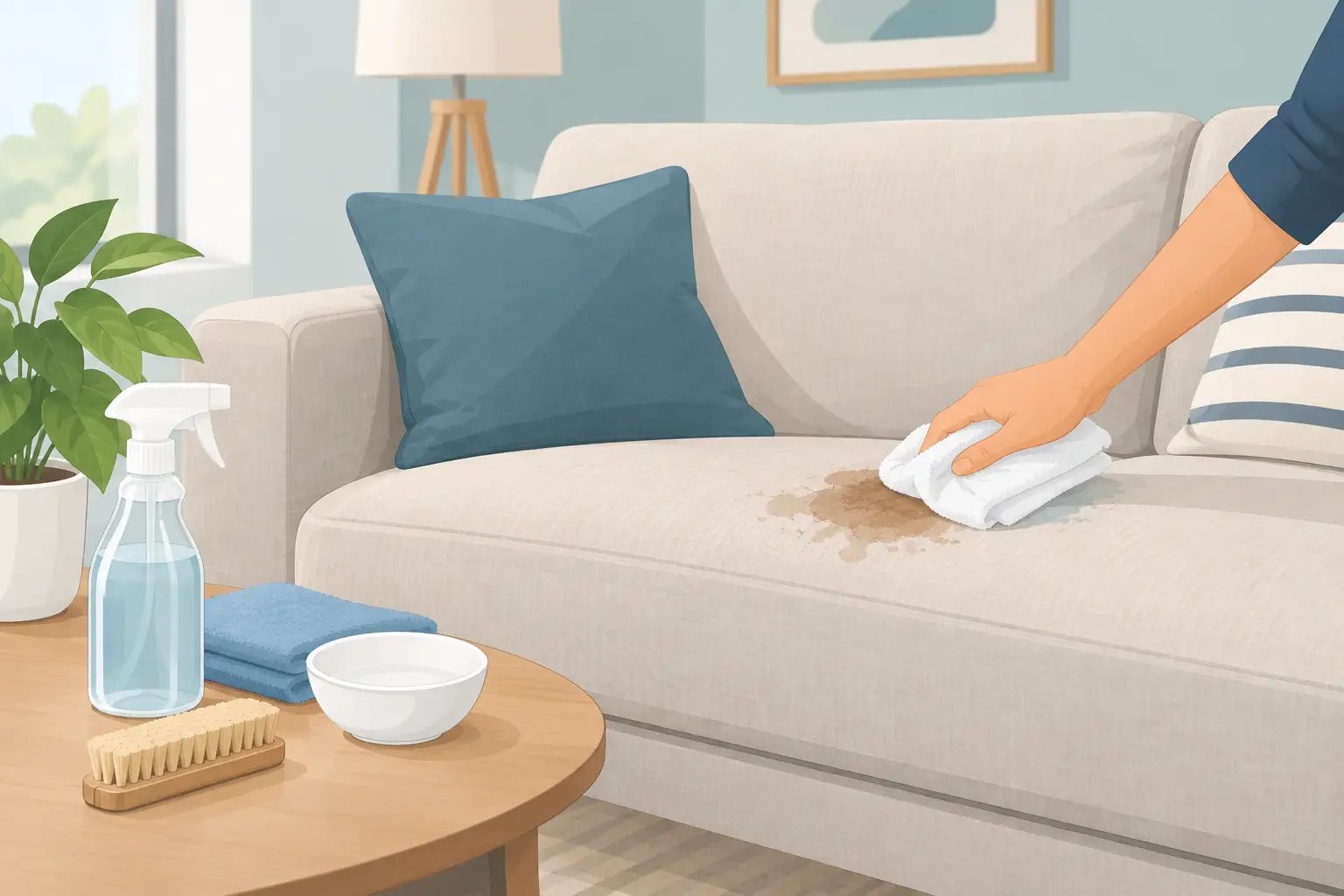
Fresh stains are easier to remove because they have not settled deep into the fibers or cushion filling. Work from the outside of the stain toward the center, using a clean white cloth or plain paper towel. Colored towels can transfer dye onto damp fabric.
Blot gently. Do not scrub. Scrubbing spreads the spill, pushes it further into the upholstery, and can damage the fibers enough to create a fuzzy patch that remains visible even after the stain is gone.
Remove crumbs, pet hair, or thick residue first with a spoon, dull knife, or vacuum attachment. Then blot up as much liquid as possible. For a greasy spill, place a small amount of cornstarch or baking soda on the affected area, let it sit for 15 to 30 minutes, and vacuum it carefully before treating the remaining mark.
Use only enough product to treat the stain. Overwet upholstery is a common cause of musty odors, water rings, and slow drying cushions. If moisture reaches the foam or padding, the surface may look clean while the inside stays damp for far too long.
How to Treat Common Upholstery Stains
The right treatment depends on what caused the mark. When in doubt, start with the mildest suitable option and repeat carefully rather than using a harsh product immediately.
Coffee, tea, juice, and soft drinks
For W or WS fabrics, blot the spill and mix a small amount of clear dish soap with cool water. Lightly dampen a clean cloth with the solution and blot the stain. Follow with a second cloth dampened with plain water to remove soap residue, then blot dry.
Avoid hot water, particularly on spills that contain milk or cream. Heat can set protein-based residue and make the stain harder to lift. If a coffee stain has dried, it may need several gentle treatments instead of one heavy application.
Wine and berry stains
Blot immediately and use cool water sparingly. A mild upholstery-safe cleaner can help after the first blotting step. Do not pour salt, bleach, or hydrogen peroxide directly onto upholstery. These popular home remedies can leave pale spots, weaken fibers, or create uneven color, especially on darker fabrics.
Red wine on a cream sofa may call for professional help if it has reached the cushion filling or if the fabric is natural fiber. Fast treatment improves the odds, but aggressive DIY cleaning often makes the final result less even.
Food, sauce, and grease
Lift solid food without pressing it into the fabric. For oily marks, absorb first with cornstarch or baking soda, then vacuum. On W or WS fabric, use a lightly dampened cloth with a drop of clear dish soap. Blot, rinse the area lightly with a clean damp cloth, and allow it to dry fully.
Grease can leave a shadow after the visible food stain disappears. This is normal when oil has moved below the surface. Repeated soaking will not solve that problem and may spread the oil. Extraction cleaning is often the better next step.
Pet accidents and pet odors
Blot urine promptly, then use an upholstery-safe enzyme cleaner if the care code allows it. Enzyme products break down the organic material that causes odor, but they need time to work. Follow the label directions and do not mix them with other cleaners.
If the smell returns after the fabric dries, the contamination may be in the cushion foam or beneath the upholstery. Surface spraying can mask the odor temporarily, but it will not remove the source. This is a good case for deeper professional treatment.
Ink, makeup, and dye transfer
These stains require patience. Ink, lipstick, and denim dye can spread quickly if treated with water alone. For S or WS-coded fabrics, apply a small amount of upholstery-safe solvent to a white cloth, not directly to the furniture, and dab carefully. Rotate to a clean part of the cloth as color transfers.
Do not use nail polish remover, rubbing alcohol, or household degreasers without checking the fabric code and testing first. They can strip color, stiffen the fabric, or leave a larger outline than the original mark.
Dry the Area Properly
Once the stain has lifted, blot the area with a dry towel to remove as much moisture as possible. Let the furniture air-dry with good ventilation. Open windows when conditions allow, or use a fan nearby. Keep cushions separated so air can reach all sides.
Avoid sitting on damp upholstery, placing it in direct heat, or using a hair dryer on high. Fast, uneven heat can shrink some materials and may set a remaining stain. When the fabric is nearly dry, gently brush the fibers in one direction with a soft upholstery brush if the texture looks flat.
When DIY Cleaning Is Not Enough
Home treatment works best for small, fresh spills on clearly labeled, cleanable fabric. It is less reliable when a stain is old, the furniture has a strong odor, the cushions are damp inside, or the material is delicate. Velvet, silk, wool, suede, antique upholstery, and furniture with an X code should be handled with extra care.
Professional upholstery cleaning is also a practical choice before a move, after a tenant change, or when furniture is used heavily by children, pets, or office visitors. Commercial equipment can rinse and extract soil more thoroughly than spot cleaning, helping remove embedded dirt and cleaning residue without soaking the furniture.
Deepclean Services uses trained crews and specialized equipment for furniture and carpet cleaning, making it easier to restore high-use sofas, chairs, and upholstered office seating without adding another demanding task to your week.
A Simple Prevention Routine
Vacuum upholstered furniture regularly with the proper attachment, including seams, cushion edges, and under removable cushions. Dust and grit wear down fibers over time, making fabric look dull even when there are no visible spills.
Treat new stains promptly, keep food and dark drinks away from light upholstery when possible, and consider washable throws for the seats that get the most use. These small habits do not replace deep cleaning, but they can keep your furniture looking clean and fresh between professional visits.
A stain does not have to decide the future of a favorite sofa. Work gently, respect the fabric code, and stop before a quick fix becomes a larger repair. When the mark, odor, or moisture has gone beyond the surface, getting the right help is often the cleanest solution.