A clean apartment can still hide grease, dust, odors, and buildup in the places you do not look at every day. The apartment areas needing deep cleaning are usually the ones that collect moisture, foot traffic, food residue, and airborne dust over time. Regular wiping helps, but it cannot always reach behind appliances, into fabric fibers, or around bathroom fixtures where grime settles.
Deep cleaning is not about making every surface look perfect for one afternoon. It is about restoring the areas that affect how your home feels, smells, and functions. If you are preparing for guests, moving out, settling into a new place, or simply tired of cleaning without seeing a real difference, start with the high-impact spaces below.
1. The Kitchen Behind and Around Appliances
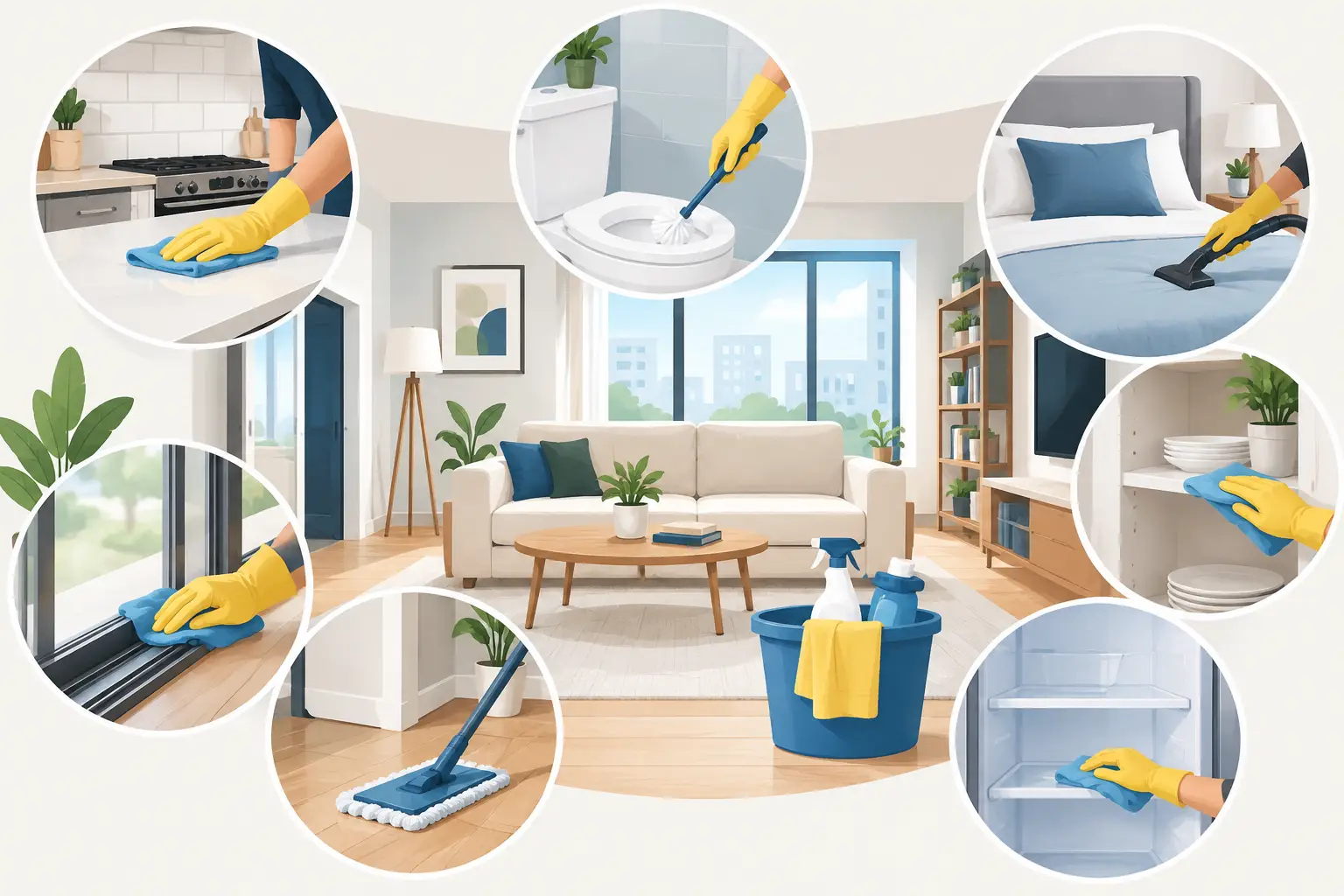
The visible countertop may be clean, but the space around the stove, refrigerator, dishwasher, and microwave often tells a different story. Cooking grease sticks to cabinet fronts, backsplashes, range hoods, and walls. Crumbs and spills collect beneath appliances, where they can create odors and attract pests.
A proper deep clean includes degreasing the stove top, oven door, hood filters, backsplash, cabinet handles, and the narrow spaces beside appliances. It also means pulling out movable appliances when it is safe to do so and cleaning the floor underneath. For renters, this work can make a major difference during a move-out inspection.
The oven deserves special attention. Light splatters can be handled during routine cleaning, but baked-on residue needs more time and the right products. Avoid harsh methods that could damage a self-cleaning oven, painted cabinet finish, or delicate cooktop surface. When grease is heavy or has been ignored for months, professional cleaning can save time and prevent damage from trial-and-error scrubbing.
2. Bathrooms With Scale, Soap Scum, or Mold
Bathrooms are one of the first apartment areas needing deep cleaning because moisture turns everyday residue into stubborn buildup. Soap scum dulls shower glass and tile. Mineral deposits leave white marks around faucets and shower heads. Grout can darken, and moisture around seals or corners can encourage mold growth.
A deep bathroom clean focuses on more than the toilet bowl and sink basin. It covers shower walls, doors, tracks, tile, grout, faucet bases, drains, light switches, exhaust fan covers, and the floor behind the toilet. These details make the room feel genuinely fresh rather than quickly wiped down.
Mold should be treated carefully, especially if it keeps returning. Cleaning the visible spot without addressing trapped moisture, poor ventilation, or a leaking seal may only provide a short-term result. Small surface marks may be manageable, but widespread mold, strong musty odors, or recurring growth calls for a more thorough assessment and specialized treatment.
3. Carpets, Rugs, and Upholstered Furniture
Carpets and sofas work hard in an apartment. They catch dust, pet hair, skin flakes, food crumbs, pollen, and dirt tracked in from outside. Vacuuming is essential, but it mainly removes loose debris from the surface. Embedded dirt remains in fibers, especially in busy walkways, under coffee tables, and around entry doors.
Deep cleaning carpets and upholstery can improve the look of the room and help remove lingering odors. It is particularly useful after a pet accident, a spilled drink, seasonal allergies, or a long period without professional care. Fabric furniture needs the right method for its material, though. Too much water can leave cushions damp, while the wrong product can cause fading or marks.
Move furniture when possible and clean the carpet beneath it. The difference can be surprising, especially under beds, couches, and desks. If your lease requires the apartment to be returned in clean condition, carpet and upholstery cleaning may also be worth documenting before handover.
4. Floors, Baseboards, and Corners
Floors get regular attention, but their edges rarely do. Dust gathers where the floor meets the wall, behind doors, under furniture, and along baseboards. In a small apartment, these neglected lines can make a room look tired even when the center of the floor is clean.
Deep cleaning should include vacuuming edges, wiping baseboards, spot-cleaning marks on walls, and washing floors with a method that suits the surface. Hardwood, laminate, tile, vinyl, and natural stone all have different needs. Using too much water on wood or laminate can cause swelling, while strong acidic cleaners can damage some stone surfaces.
This is also a good time to clean under radiators, around air vents, and behind freestanding furniture. These spots collect fine dust that gets stirred into the room each time you walk through it or turn on the heat.
5. Windows, Tracks, and Blinds
Apartment windows do more than let in light. They collect fingerprints, cooking film, street dust, condensation marks, and pollen. Window tracks hold dead insects, debris, and sometimes signs of moisture. Blinds and shades collect dust in plain sight, even when they appear clean from across the room.
Cleaning glass inside and out, where accessible and safe, immediately brightens a room. But tracks, frames, and blinds are what complete the job. A clean window track helps the window open and close smoothly, while removing dust from blinds can make the air feel fresher.
High exterior windows, awkward frames, or heavily soiled glass may require a trained crew with suitable equipment. Safety matters more than reaching one difficult corner. Never lean out of a window or stand on unstable furniture to clean it.
6. Balcony, Entryway, and Outdoor Edges
Balconies are easy to postpone, particularly after winter or rainy weather. Leaves, dust, bird droppings, algae, and city grime can build up quickly. Because balconies are exposed to the elements, they need a different approach than indoor flooring. Drainage must remain clear, and cleaning methods should not send dirty water or debris onto neighboring properties.
The entryway deserves the same attention. It is where outside dirt enters the home first. Deep clean the mat, door frame, threshold, switches, and the floor around the entrance. If shoes are stored there, wipe shelves and baskets as well. This small area can reduce the dirt carried into the rest of the apartment.
7. Cabinets, Closets, and Storage Spaces
A closet may look organized while still holding dust along shelves, corners, and the floor. Kitchen cabinets collect crumbs and sticky residue. Bathroom storage can hold leaked products, hair, and powdery buildup. These spaces are especially important before a move because landlords often check inside cabinets and closets, not just the open room.
Emptying storage areas takes time, but it gives you a chance to clean properly and get rid of items you no longer use. Wipe interior shelves, clean handles and hinges, vacuum corners, and let surfaces dry before putting belongings back. Watch for moisture damage, pest signs, or mildew odors while you work.
8. Vent Covers, Light Fixtures, and High Dust Areas
Dust does not stay at floor level. It settles on ceiling fan blades, vent covers, light fixtures, the tops of cabinets, and door frames. These areas are easy to miss because they are out of reach, but they can affect indoor air quality and make dust return quickly to lower surfaces.
Turn off power before cleaning light fixtures and use a stable step stool only when it is safe. Vent covers can often be vacuumed or wiped, but avoid pushing dust deeper into the system. If a vent is releasing visible debris, has a persistent odor, or shows moisture staining, the issue may need more than surface cleaning.
When a Deep Clean Is Worth Scheduling
There is no single schedule that works for every apartment. A household with pets, children, heavy cooking, or allergies may need deep cleaning more often than a one-person home with little daily traffic. Many residents plan one intensive clean every few months, then maintain the space with regular weekly tasks.
A professional service is especially useful before moving in or out, after renovations, following a long busy period, or when buildup has gone beyond what a standard cleaning can handle. Deepclean Services uses trained crews and appropriate equipment to take on demanding work in kitchens, bathrooms, carpets, furniture, balconies, and other hard-to-reach spaces.
Choose one neglected area this week and give it the attention it has been waiting for. A cleaner apartment is not just easier to show or hand over – it is a more comfortable place to come home to.