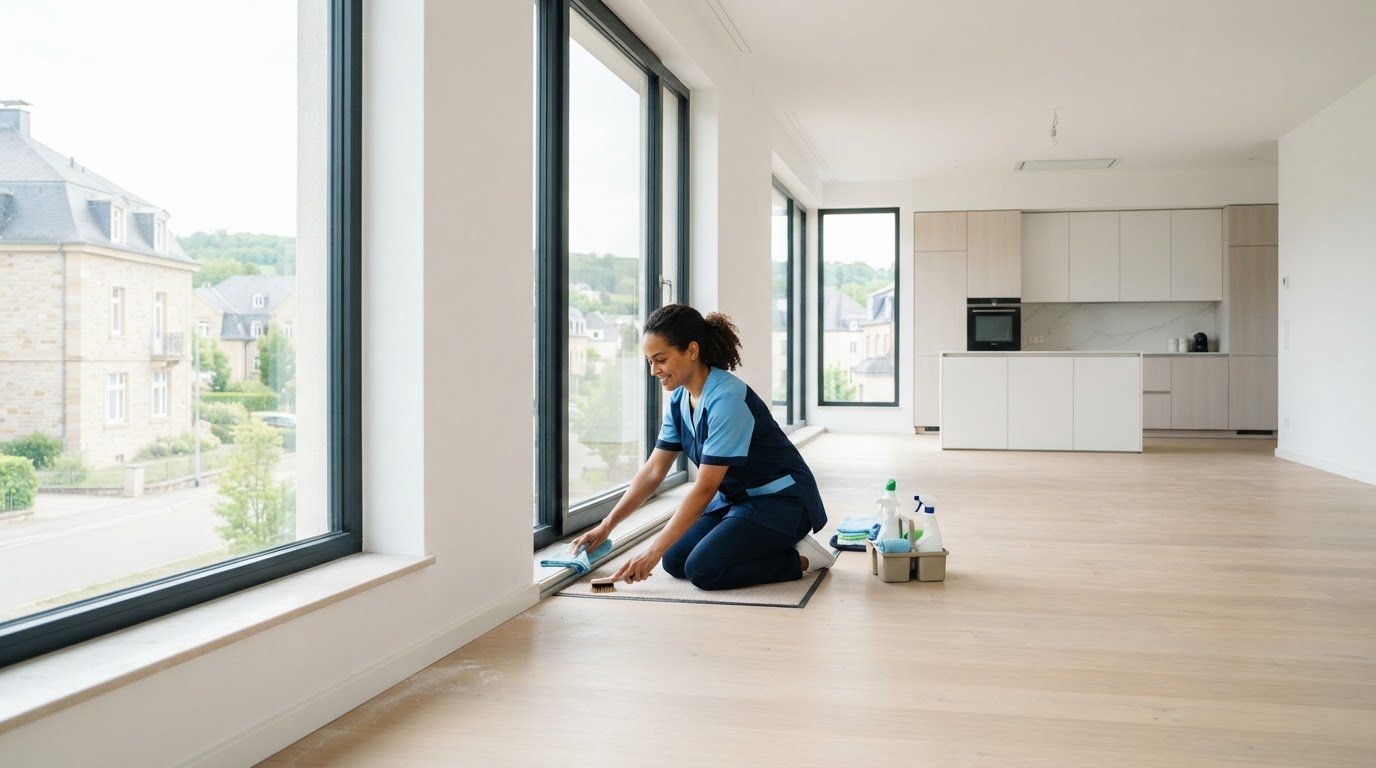
A newly built home can look finished and still need a thorough clean before move-in. Fine dust may linger after building work, while leftover construction materials are a separate issue. New home deep cleaning focuses on the condition of the property after construction, not just day-to-day upkeep.
It’s understandable to want the home ready before furniture arrives, without creating another round of work for yourself. Start by assessing the home’s condition, then choose a cleaning scope that fits its surfaces and stage of completion. Keep cleaning separate from construction-waste removal.
This guide explains what a new-build clean can involve, how it differs from routine or move-in cleaning, and what to consider when comparing service scopes. You’ll also learn how to prepare the property and plan a professional clean. Deepclean Services provides residential deep cleaning across Luxembourg, with trained staff, flexible scheduling, online booking, and a scope tailored to the property.
Key Takeaways
- Plan new home deep cleaning around the property’s condition and move-in timing, rather than assuming a finished home is ready to occupy.
- Use a room-by-room checklist to identify priorities, from accessible floors and fittings to ledges where dust may collect.
- Compare DIY and professional cleaning based on the home’s size, surface variety, time available, and the level of readiness you want.
- Before booking, note the property size, room count, surface types, and visible residue to help define a practical scope.
- A clear scope and schedule make professional deep cleaning easier to organize as part of your move-in plan.
New Home Deep Cleaning: Why a Newly Built Property Needs Its Own Plan
The keys are ready, the rooms look finished, and move-in day is approaching. Yet a new home may still need attention before boxes and furniture arrive. Building work can leave a film of dust or residue on accessible surfaces, even after tradespeople have finished. Assessing the home’s condition gives you a more reliable starting point than judging readiness by appearance alone.
New-home deep cleaning is a one-time, move-in-focused clean that addresses accessible dust and surface residue according to the home’s condition and finishes. It is different from removing leftover building materials or trade waste. Keeping these tasks separate helps you set a realistic scope and avoid confusing surface cleaning with construction-site clearance.
The term “deep cleaning” can describe thorough cleaning in different contexts; What is Deep Cleaning? offers a general overview. For a newly completed home, the practical priorities depend on the work completed and the surfaces present, rather than a fixed checklist that suits every property.
What can remain after building work is complete?
Fine dust can settle on ledges, floors, fixtures, and other accessible surfaces. Where it collects depends on the work completed and the home’s condition. A home with smooth, open rooms may have different priorities from one with multiple fittings, textured surfaces, or details that collect dust.
As you assess the property, separate ordinary cleaning needs from tasks that require a different kind of handling:
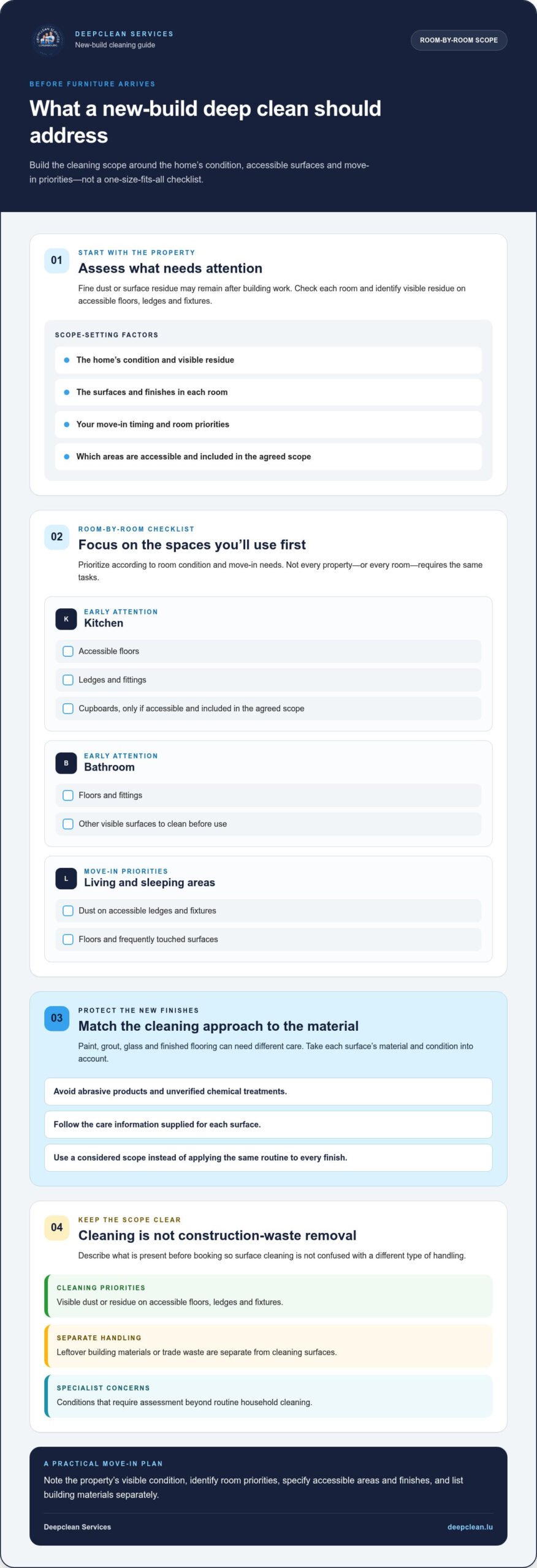
- Cleaning priorities: Visible dust or residue on accessible floors, ledges, and fixtures.
- Bulky debris: Leftover materials or waste from building work, which are separate from cleaning surfaces.
- Specialist concerns: Conditions that require assessment beyond routine household cleaning.
Before booking, describe the home’s visible condition and identify whether you need finished rooms cleaned, materials removed, or specialist remediation.
How is a new-build clean different from routine cleaning?
Routine cleaning maintains a home through recurring tasks as people use its rooms. A new-build clean is a one-time preparation shaped by the property’s condition after construction and your move-in timing. Consider the surfaces and visible residue in each space rather than assuming every room needs the same attention. Floors, fittings, and ledges may have different priorities depending on their materials and exposure to building work.
That is the practical difference between deep cleaning and regular cleaning: routine service supports ongoing upkeep, while a move-in clean responds to a particular starting condition. For a new home, a room-by-room scope helps you plan the work without treating construction-waste removal as part of surface cleaning.
What a Professional New-Build Deep Clean Should Address
A useful cleaning scope starts with the home, not a standardized package. Consider each room, the surfaces that may hold dust, and what needs attention before furniture arrives. In a kitchen, priorities might include accessible floors, ledges, and fittings. Elsewhere, floors and fixtures may need the most attention. Include cupboards and other enclosed areas only when they’re accessible and part of the agreed scope.
The right cleaning plan depends on the property’s condition and the surfaces that need attention. Paint, grout, glass, and finished flooring can each require different care. A considered scope takes the home’s finishes into account instead of treating every surface alike.
Cleaning finished rooms is distinct from handling construction materials. Visible bulky items or trade waste need separate handling, rather than being treated as ordinary dusting or floor care.
Room-by-room priorities before the first night
Start with the spaces you’ll use first and the surfaces that matter most for move-in readiness. Kitchens and bathrooms often deserve early attention, along with floors and frequently touched surfaces. The checklist should reflect the room condition, accessible areas, and your priorities, not assume every property needs the same tasks.
- Kitchen: Identify accessible floors, ledges, and fittings. Include cupboards only if they’re accessible and within the agreed scope.
- Bathroom: List the floors, fittings, and other visible surfaces that need cleaning before use.
- Living and sleeping areas: Note dust on accessible ledges, fixtures, and floors, then identify frequently touched surfaces.
Writing down these priorities makes it easier to explain what matters without assuming every detail is automatically covered. Record materials from building work separately so they aren’t confused with cleaning tasks.
Protecting new finishes while removing residue
New finishes deserve careful handling. The right approach for paint may differ from what suits grout, glass, or finished flooring, so avoid abrasive products and unverified chemical treatments. Follow the care information supplied for each surface, and make sure the cleaning plan takes its material and condition into account. The EPA’s guidance on cleaning and disinfecting also emphasizes planning and choosing appropriate products.
Professional deep cleaning can be tailored to the home’s surfaces and condition instead of applying a one-size-fits-all routine. Deepclean Services provides residential deep cleaning with a scope tailored to the property. If you’re planning a move, you can read about professional deep cleaning for your home.
DIY or Professional New Home Deep Cleaning: How to Compare
A newly built home may look spotless at first glance, but fine dust can remain on accessible surfaces after building work. The choice between cleaning it yourself and arranging professional help depends on how much needs attention, the time you have, and how ready you want the home to be before moving in.
Use four practical factors to guide the decision:
- Available time: Can you clean before furniture and boxes arrive without adding pressure to move-in preparations?
- Property size: Is the work limited to a small area, or spread across several rooms?
- Surface variety: Are there finishes that need different care, such as glass, grout, painted surfaces, and finished flooring?
- Desired readiness: Do you need to address a few visible areas, or would a planned clean across the home better suit your move?
A focused DIY clean may suit a small, lightly affected space when you have enough time. A professional service may be more manageable for a larger property, varied finishes, or a move-in date that leaves little room for preparation. Neither option guarantees a particular result, so define the scope clearly to set expectations.
When can a homeowner handle the clean?
DIY can be reasonable when residue is limited to accessible surfaces and you have time to work methodically before moving in. Start with higher surfaces, such as ledges and fixtures, then work down to floors so settled dust doesn’t make you repeat completed tasks. Before using a product, check that it’s suitable for the specific finish, especially on new paint, glass, grout, or flooring.
Keep the task focused. Note which rooms need attention, gather appropriate supplies, and avoid abrasive products or unverified treatments. If visible materials from building work remain, treat that as separate from ordinary household cleaning rather than adding it to the DIY task without a clear plan.
When is a professional service a better fit?
Professional deep cleaning may be more practical for a larger home, a mix of delicate finishes, limited preparation time, or several rooms that need attention. Trained staff and flexible scheduling can help you plan the clean around your move. Deepclean Services provides residential deep cleaning in Luxembourg, with a scope tailored to the property.
For new home deep cleaning, prepare a short list of rooms, surfaces, and visible residue to guide the scope. The same factors can help apartment dwellers planning a professional deep clean: property size, surface needs, time available, and intended readiness. Choose the option that fits your home and schedule rather than assuming a newly built property needs no cleaning or the same approach in every room.
How to Prepare and Compare New-Build Cleaning Services
A clear plan makes it easier to arrange a clean that matches your home, rather than relying on a vague request for “a full clean.” For new home deep cleaning, gather a few practical details, then use them to set priorities, define the scope, and schedule the work around your move.
Follow this sequence:
- Assess the home. Note its approximate size, room layout, and current condition. Check whether building work is finished and the property is ready to be cleaned.
- Identify priorities. List rooms and surfaces that need particular attention, including visible residue or delicate, newly finished materials.
- Agree the scope. Set out which accessible areas and tasks matter most. Distinguish surface cleaning from handling construction materials or trade waste.
- Schedule the clean. Share your preferred date and move-in timing so the work can be planned as part of the transition.
Information to gather before requesting a clean
Prepare the home’s approximate size, room count, and layout, along with your preferred cleaning date. Write down areas that need extra attention and identify finishes that may need careful handling, such as new flooring or painted surfaces. Note whether tradespeople have completed their work and whether any materials remain. These details give the cleaning scope a clear starting point.
Specific observations are more useful than a general description. Record which rooms show visible dust, whether surfaces are accessible, and which areas you want ready first. A short list keeps booking discussions focused and helps prevent important priorities from being overlooked.
How to make the agreed scope clear
Compare service arrangements by looking at the areas covered, your priorities, the scheduling plan, and the home’s condition. Deepclean Services provides residential deep cleaning with a scope tailored to the property, supported by trained staff, flexible scheduling, and online booking. Keep the agreed cleaning tasks distinct from construction-waste removal, which is a separate matter.
Keep the scope practical: identify what needs cleaning, what is accessible, and which finishes require consideration. This also helps you distinguish a one-time move-in clean from the ongoing upkeep your household may need later. Once you’re settled, regular cleaning can support maintenance rather than repeat the same move-in preparation.
With your property details and priorities ready, you can plan the service more clearly. Explore Deepclean Services.
Book Deepclean Services for a New Home Deep Clean
The right clean depends on the home’s condition, its surfaces, and your move-in date. A newly completed property with a few dusty areas may need a different scope from a larger home with varied finishes and several rooms to prepare. Set your priorities first, then arrange a service that fits the property rather than relying on a one-size-fits-all assumption.
Deepclean Services provides residential deep cleaning across Luxembourg, with trained staff, flexible schedules, and online booking. The scope is tailored to the property, helping you organize the clean around your home’s needs and planned occupancy without assuming a fixed duration or outcome.
What to expect when arranging the service
Use the booking process to describe the property and the areas you want prioritized. Helpful details include the home’s approximate size, room layout, visible residue, and any newly finished surfaces that need careful attention. Include whether building work is complete and when you expect to occupy the home, so the planned clean can be considered alongside the property’s condition and your move-in schedule.
- Property: Share its approximate size and room layout.
- Priorities: Note the rooms and accessible surfaces needing attention.
- Timing: Include your preferred date and intended move-in timing.
- Condition: Describe whether tradespeople have finished and whether materials remain.
Keep construction materials or trade waste distinct from cleaning tasks. A clear description helps define the intended scope without treating removal of leftover materials as part of surface cleaning.
From one-time deep cleaning to ongoing home care
A one-time deep clean can be a practical starting point before you unpack and settle in. Regular cleaning serves a different purpose: maintaining the home through recurring care as rooms are used. First plan a clean based on the property’s move-in condition; later, consider what ongoing routine suits your household.
Before booking, bring together your priorities, surface notes, and preferred timing. Deepclean Services’ online booking offers a straightforward next step, and flexible scheduling supports planning around your move. If you’re ready to arrange a professional clean for your new home, Book a cleaning service online.
Make Your Move-In Plan Easier to Manage
Give cleaning its own place in your move-in schedule, alongside key collection, final building work, and delivery arrangements. Choose a preferred date and note any access or room priorities before booking. Consider whether the home will be empty or already filling with boxes, since that can affect which areas are accessible and the scope that makes sense.
New home deep cleaning is most useful when the plan reflects the property and the stage of your move. Deepclean Services provides residential deep cleaning with trained staff, flexible schedules, and online booking. Share the home’s condition and priorities through the booking process so the scope can be tailored to the property, without assuming a fixed duration or outcome.
When you’re ready to plan the clean, book a cleaning service online. A considered plan can help you move into your new home with greater confidence and focus on settling in.
Frequently Asked Questions
Can I move into a new home before it has been deep cleaned?
Yes, if the property’s condition and your priorities make that comfortable. Before unpacking, look at the rooms you’ll use first, such as the bedroom and bathroom, and check accessible surfaces for visible residue. You can schedule new home deep cleaning before furniture arrives if you’d rather prepare empty rooms first. If you move in beforehand, keep priority areas accessible so they can be cleaned later.
What is the difference between a new-build clean and a post-construction clean?
The labels can overlap, so the task list matters more than the name. A new-build clean generally focuses on preparing finished rooms and accessible surfaces for occupancy, while post-construction work may refer to a broader range of tasks. Describe what remains, such as dust on finished floors or leftover packaging, and separate surface cleaning from construction-waste removal when setting expectations.
Should I clean a newly built home before or after moving furniture in?
Before furniture arrives is usually the simpler time to reach open floor areas and surfaces that would later be blocked. If delivery timing means some items arrive first, keep priority rooms or pathways as accessible as possible. For example, you might leave a bedroom clear until its floors and ledges are ready. Plan cleaning after building work has finished, with occupancy timing in mind.
Can ordinary household cleaning remove fine construction dust?
It can address some accessible dust, but the effort depends on where residue has settled and which finishes are involved. Avoid dry sweeping or dusting that may spread particles, and use a suitable cloth and product for each surface. A method appropriate for a hard floor may not suit a delicate finish. If dust is widespread or time is limited, professional deep cleaning may be a practical alternative.
How long does a deep clean of a newly built home take?
There’s no single duration that applies to every home. Room count alone won’t describe the work: an open layout with a few accessible surfaces can differ from a property with varied finishes and residue in several rooms. When arranging a clean, share the approximate size, layout, condition, and priorities. This helps plan around the property and your move-in date without relying on a generic time estimate.
Do I need to remove building debris before booking a home deep clean?
Construction debris and household surface cleaning are separate tasks. Make a note of anything remaining, such as packaging, offcuts, or bulky materials, and distinguish it from dust or residue on finished surfaces. Clearing materials separately can leave rooms and pathways accessible for cleaning. It’s also helpful to arrange the clean after building work is complete, so the task list reflects the home’s condition at that point.
Is professional deep cleaning worth arranging before moving into a new home?
It can be worthwhile if you want help preparing the home before unpacking, especially when residue is spread across several rooms or your move leaves little time to clean. Consider what you can comfortably manage yourself and which areas need attention first. If you’re already coordinating deliveries and utility arrangements, a planned cleaning appointment may reduce tasks competing for your time. The decision depends on your priorities and the property’s condition.