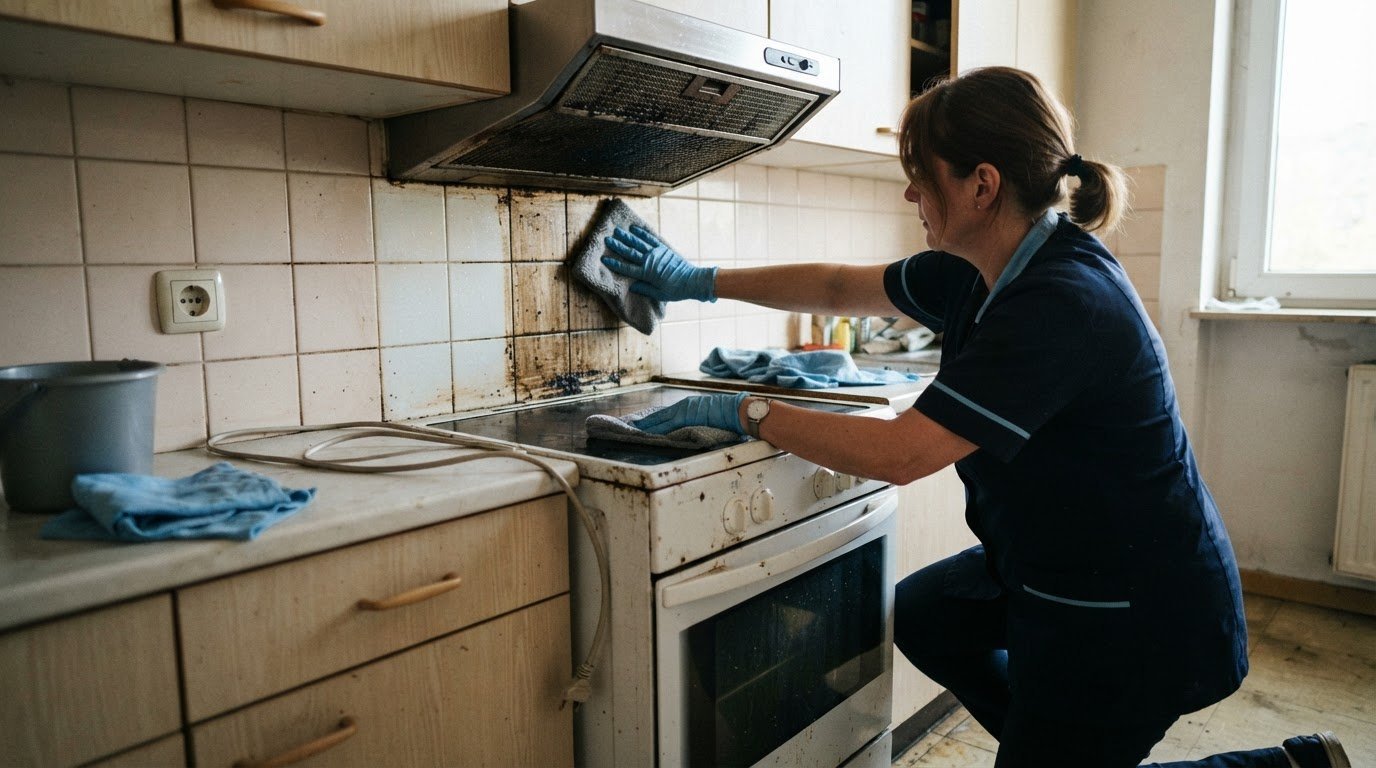
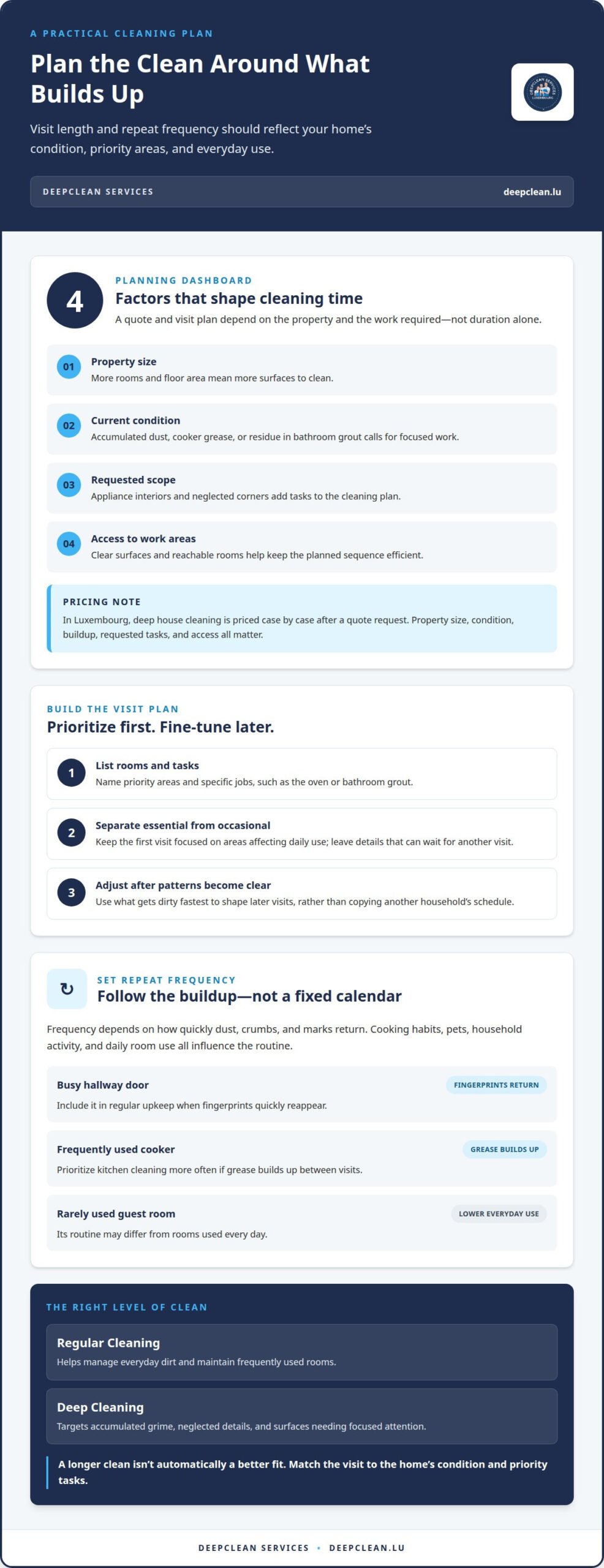
A longer clean isn’t automatically a better fit. Heavy duty house cleaning works best when the visit length matches the home’s condition and priority tasks, while repeat visits reflect how quickly dirt builds up again.
It can be hard to decide whether your home needs a thorough deep clean, a shorter one-time service, or more frequent routine care. The right plan depends on the home’s size and use, the areas needing attention, and how much buildup has accumulated.
This guide explains what a heavy-duty clean can cover, what affects the time required, and how to choose a practical cleaning frequency. It also explains when gross filth cleaning may be relevant, helping you identify the level of service that suits your home’s condition.
Key Takeaways
- Separate routine upkeep from a deep clean by identifying where dirt and buildup need more focused attention.
- Choose a cleaning duration and repeat schedule around the home’s condition, size, and everyday use.
- Recognize when severe buildup may call for gross filth cleaning rather than standard household care.
- Match the cleaning need to a suitable service, from a one-time clean to ongoing maintenance or help around a move.
Heavy-duty home deep cleaning
Heavy-duty house cleaning tackles accumulated grime, neglected details, and surfaces that need focused attention. The scope depends on the home’s condition and priority areas.
Cleaning Types and Service Inclusions
Regular cleaning maintains frequently used rooms, while deep cleaning adds detailed tasks such as cleaning baseboards, interior doors, and cabinet interiors when empty. Moving In / Out Cleaning focuses on preparing a property for a new occupant. Heavy-duty work brings intensive tasks together according to what needs attention, so identify priority rooms and buildup first.
Residential cleaning can focus on a kitchen, bathroom, or the entire home. Commercial deep cleaning follows the same planning principle in spaces such as offices, where floors, shared surfaces, and work areas have different uses. In cases where comprehensive cleaning plans also encompass exterior property care, exterior cleaning providers such as jacksonville-pressurewashing.com demonstrate how specialized power washing tackles stubborn outdoor grime on building surfaces, driveways, and walkways.
Preparing for Intensive Cleaning
Before the visit, list the rooms and tasks, such as cleaning the oven or bathroom grout. Clear personal items from counters and floors, secure valuables, and note delicate finishes that need special care. This gives cleaners access to priority areas and keeps the scope clear.
For Moving In / Out Cleaning, remove belongings first and leave access to cupboards or appliances that need attention. Thorough move-out preparation often pairs deep cleaning with essential household maintenance; for homeowners in Oregon seeking practical support with repairs and fixtures, Local Fishing Handyman LLC offers licensed handyman services to get properties move-ready. If a room has mould or heavy contamination, describe its location and extent before the work begins.
Deep Cleaning includes the inside of cabinets, the fridge, and the oven, along with baseboards and interior doors. The service also includes pulling out the stove and refrigerator, interior window cleaning if accessible, cleaning cabinet interiors if empty, and vacuuming upholstered furniture. The cleaning approach and equipment are suited to the task and surface.
Health and safety risks depend on the contamination, surface, cleaning product, and work method. The World Health Organization says infection can occur when someone touches a contaminated surface, then touches their eyes, nose, or mouth before cleaning their hands. Mould and strong cleaning agents call for careful handling and a method suited to the affected area.
Insurance, guarantees, and VAT-inclusive prices are separate terms, not one standard package across Luxembourg cleaning companies. Review the written service terms and quote to see whether insurance or a guarantee applies and whether VAT is included in the stated total.
Choosing cleaning duration and frequency
Plan the cleaning duration around the home’s condition, available time, and priorities. A lightly used apartment needing kitchen and bathroom attention differs from a family home with accumulated dust in several rooms. List priority areas first, then separate essential tasks from details that can wait for another visit.
In Luxembourg, the price of a deep house cleaning depends on the case and is given after a quote request. Key factors include property size, current condition, buildup, requested tasks, and access to the areas needing attention.
- Property size: More rooms and floor area create more surfaces to clean.
- Condition: Grease around a cooker or residue in bathroom grout takes focused work.
- Scope: Adding appliance interiors or neglected corners changes the task list.
- Access: Clear work surfaces and reachable rooms help keep the planned sequence efficient.
Cleaning frequency depends on how quickly dust, crumbs, and marks return. A home where people cook often may need kitchen attention more frequently than a rarely used guest room. Pets, household activity, and daily room use also shape the routine. Schedule repeat cleaning around the areas that get dirty fastest, rather than copying another household’s schedule.
Use visible changes to guide your routine. If fingerprints quickly return to a busy hallway door, include it in regular upkeep. If grease builds up on the cooker between visits, prioritize kitchen cleaning more often. Deep Cleaning suits accumulated detail work, while Regular Cleaning helps manage everyday dirt.
For a clear plan, group tasks by room and mark each as routine or occasional. Keep the first visit focused on the areas affecting daily use, then adjust later visits as household patterns become clear. Explore cleaning options for your home when deciding how to structure the work.
Gross filth cleaning
Gross filth cleaning addresses severe, widespread buildup that routine maintenance cannot manage. Examples include rooms blocked by accumulated rubbish, sticky food residue across kitchen surfaces, or long-neglected bathroom fixtures. The term describes the condition and intensity of the work, not a standard checklist for every property.
Start by identifying the affected rooms and visible materials. Distinguish ordinary dirt, such as dust on shelves, from extensive contamination or waste that changes the cleaning plan. A kitchen with hardened grease needs a different sequence from a bathroom with thick residue, and both differ from a room filled with discarded belongings.
Cleaning should follow a controlled order: clear accessible surfaces, remove loose debris, work from higher surfaces downward, then clean the floors. Keep clean supplies separate from used cloths, and avoid spreading residue between rooms. The method and cleaning agents should suit the surface, whether it is tile, a sealed worktop, or a painted wall.
Contaminated surfaces need careful handling. The World Health Organization explains that infection can occur when someone touches a contaminated surface, then touches their eyes, nose, or mouth before cleaning their hands. Hand hygiene and avoiding face-touching during cleanup are sensible precautions.
- Describe the condition: Note whether buildup involves food, grease, mould, or discarded items.
- Mark affected areas: Identify rooms and surfaces needing focused attention.
- Protect access: Keep pathways clear and separate unaffected belongings from cleanup areas.
- Set the scope: Distinguish surface cleaning from situations involving extensive waste or damage.
Gross filth work can go beyond ordinary Deep Cleaning when contamination is extensive or access is restricted. Visible mould may need a mould-focused response, while piles of unwanted items require removal beyond surface cleaning. Clear descriptions and photographs help explain the condition and determine which cleaning tasks are appropriate before work begins.
Home cleaning services
When comparing cleaning services in Luxembourg, match the written scope to the rooms and tasks you need. Clear descriptions make heavy-duty work easier to assess.
Finding and Comparing Cleaning Services
Compare services using the same task list, such as kitchen surfaces, bathroom fixtures, floors, and appliance interiors. Check whether each description distinguishes routine upkeep from intensive cleaning and names any exclusions or access limits. A service that specifies the rooms and work steps gives you a clearer basis for comparison than a broad promise of a thorough clean.
- Scope: Match each listed task to the rooms requiring attention.
- Condition: Describe buildup, such as grease or residue, so the work is assessed accurately.
- Schedule: Confirm the proposed visit length and how the team will prioritize tasks.
- Written details: Keep the agreed task list with the quote for reference.
Heavy-Duty Cleaning Quotes and Charges
In Luxembourg, companies can base a quote on the property, its condition, and the requested scope. The quote may reflect the time and work involved, including whether kitchens, bathrooms, or appliance interiors need focused attention. Compare the stated tasks and charging basis, not just the headline total.
Give the same details for each quote: rooms, approximate size, visible buildup, priority surfaces, and access conditions. For example, describe whether an oven interior needs cleaning or whether the request covers general room surfaces. Ask for the task scope, any exclusions, and whether additional work changes the charge. The price depends on the case and is given after a quote request.
A deep cleaning quote can help translate a defined room list into a practical cleaning plan. Share the areas requiring attention and the tasks that matter most, then compare each written scope against those priorities.
Include less obvious surfaces in the written scope, not just floors and counters. Scrubby Dutch cleans wall hangings and the wall behind them. If these areas matter, identify the hangings and wall sections when requesting a quote, then confirm they appear in the agreed task list. This helps you compare the proposed work with your priorities and avoid assuming a general room-cleaning description covers them.
Deepclean Services
Deepclean Services offers cleaning options for different household needs. If dust and everyday dirt return quickly, Regular Cleaning can support ongoing upkeep. For neglected areas or a more detailed reset, Deep Cleaning may suit the task. One-Time Basic Cleaning and Moving In / Out Cleaning address other household situations.
Before arranging a visit, outline the rooms, visible buildup, and tasks that matter most. This gives the cleaning plan a clear focus and helps distinguish routine maintenance from intensive work. For severe contamination or extensive waste, describe the conditions accurately so the required work is clear.
Contact Deepclean Services to discuss the cleaning needs of your home.
Set Up Your Next Cleaning Visit
Turn your priorities into a short service brief before booking. Note which rooms matter most, what you want done in each, and whether you need a one-time reset or ongoing care. This gives the cleaning plan a practical starting point and keeps attention on the work that will make the greatest difference to your home.
Deepclean Services offers Regular Cleaning, One-Time Basic Cleaning, and Deep Cleaning. Choose the service that fits your household’s needs, then describe the areas and tasks you want addressed. A clear starting point helps plan heavy duty house cleaning around your home, rather than treating every room as if it needs the same work.
When you’re ready to discuss your priorities, contact Deepclean Services today. A considered plan is a practical first step toward a cleaner, more manageable home.
Frequently Asked Questions
How long does heavy-duty house cleaning take for different home sizes?
A larger home generally takes longer to clean because it has more rooms and surfaces, but floor area alone does not determine the duration. A compact flat with heavy kitchen buildup may need more focused work than a larger, regularly maintained home. Bathrooms, appliance interiors, clutter, and the number of requested tasks also affect the schedule. A room-by-room task list helps establish a realistic visit plan.