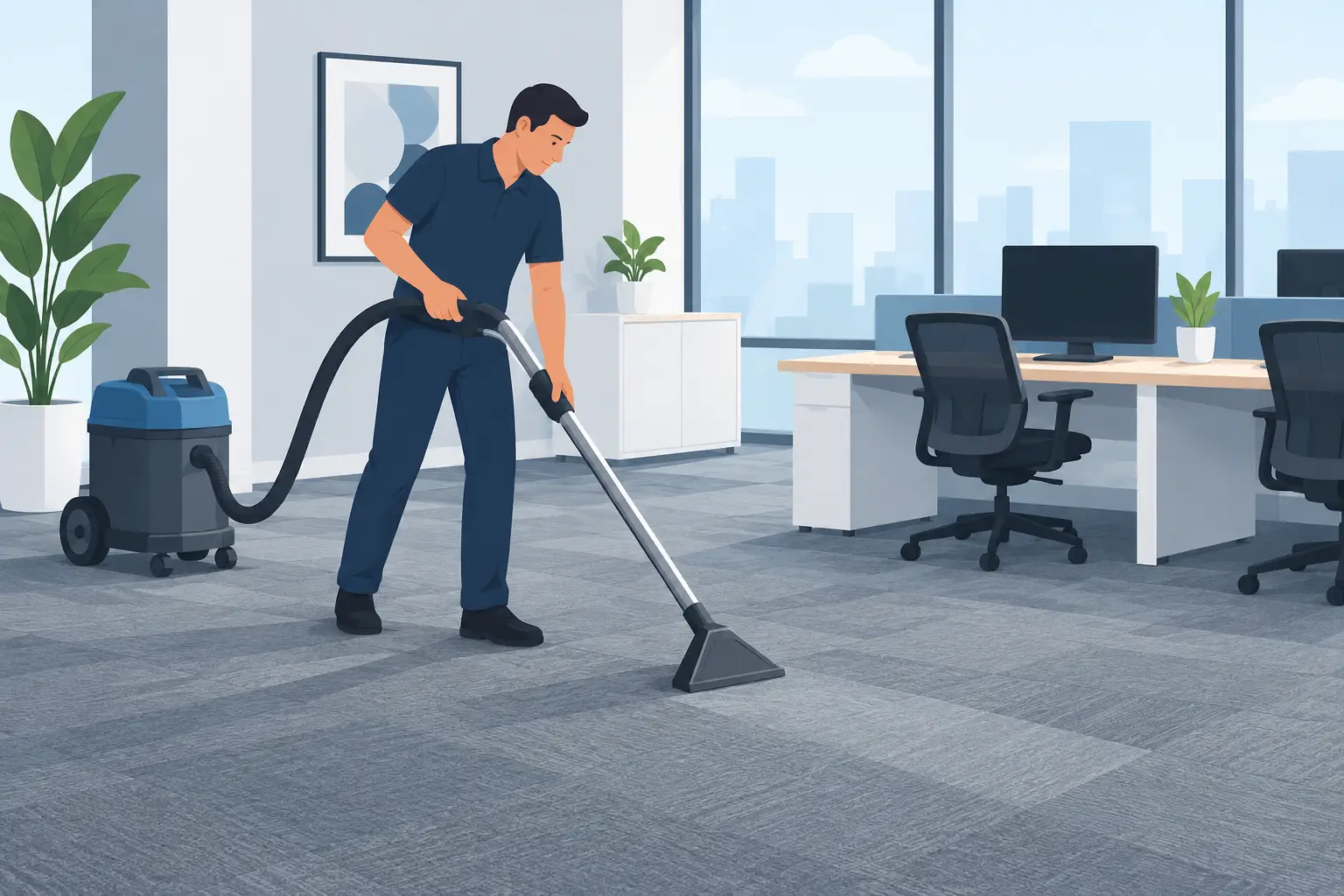
A carpet can look fine from the doorway while holding tracked-in soil, coffee spills, food crumbs, and dust deep in its fibers. That is why the answer to how often clean office carpets are needed is not simply “when they look dirty.” A regular plan protects the appearance of your workplace, helps control odors, and keeps high-traffic areas from wearing out before their time.
For most offices, professional carpet cleaning every 6 to 12 months is a sensible starting point. Busy workplaces, customer-facing spaces, and offices with frequent spills may need service every 3 to 6 months. The right schedule depends on how people use the space, not just its square footage.
How Often Should Office Carpets Be Cleaned?
A standard office with moderate foot traffic should have its carpets professionally deep cleaned at least once a year. This is the baseline for offices where employees work mainly at desks, visitors are occasional, and outside dirt is controlled with effective entry mats.
Twice-yearly cleaning is usually a better fit for active workplaces. Think shared offices, meeting rooms used throughout the day, busy reception areas, medical or education settings, retail spaces, and offices where staff or guests bring in rain, snow, mud, or road dust. These environments collect soil faster, even when the carpet still appears presentable.
In a very busy location, quarterly professional cleaning can be a practical investment. A lobby, call center, showroom, warehouse office, or building with multiple public entrances may see hundreds of steps across the same carpeted paths each day. Cleaning those areas before dirt becomes embedded is easier and often more affordable than trying to restore heavily neglected carpet later.
A Practical Cleaning Schedule by Traffic Level
Traffic is the clearest way to set a schedule. Rather than treating every room the same, look at where people walk, wait, eat, and meet.
Low-traffic offices
Private offices, executive rooms, and small administrative areas may only need professional carpet cleaning every 12 months. Vacuuming once or twice a week and treating spills quickly will usually keep these rooms in good condition between appointments.
Moderate-traffic offices
Most workplaces fall into this category. Employees arrive daily, meeting rooms are used regularly, and corridors connect workstations, restrooms, and break areas. Plan a professional clean every 6 to 12 months, with more frequent vacuuming in walkways and around entrances.
High-traffic and public-facing areas
Reception desks, hallways, conference rooms, waiting areas, retail counters, schools, and healthcare facilities typically need deep carpet cleaning every 3 to 6 months. Spot treatment should happen immediately after spills, and daily vacuuming is often necessary to remove loose dirt before it gets ground into the pile.
Food, pets, and special conditions
If employees eat at desks, the office hosts events, or the space has a pet-friendly policy, carpets can need extra attention. Grease, food particles, pet hair, and accidents create odors and stains that routine vacuuming cannot remove. In these cases, schedule professional service at least twice a year and address problem areas as they arise.
Why Waiting Until Carpets Look Dirty Costs More
Carpet fibers work like filters. They catch dry soil, dust, and small particles carried in on shoes. At first, much of that dirt sits below the surface, where it is easy to miss. Over time, foot traffic pushes it deeper and creates friction against the fibers.
That friction can make a carpet look dull and matted, especially on paths from the entryway to workstations or elevators. Once stains set and fibers become worn, a standard cleaning may improve the appearance but cannot reverse every sign of damage. Regular professional care helps extend the usable life of the carpet, which can delay replacement costs.
There is also a workplace comfort issue. Musty odors, visible stains, and dirty-looking walkways send a message to visitors and employees. A clean, fresh office feels cared for. It gives clients confidence and makes the day more pleasant for the people who spend hours in the space.
Daily and Weekly Care Makes Professional Cleaning Work Better
Professional carpet cleaning does the deep work, but it should not be the only part of the plan. A few consistent maintenance habits can make a major difference.
Vacuum high-traffic areas daily if possible. Entrances, corridors, break rooms, and reception areas collect most of the loose debris. Lower-traffic offices can usually be vacuumed one or two times per week. Use a commercial-quality vacuum with strong suction and make more than one pass over busy lanes.
Place durable mats inside and outside each entrance. Mats reduce the amount of grit and moisture that reaches the carpet, but they only work when they are cleaned regularly. A saturated or dirty mat simply transfers soil back onto shoes.
Spills should be handled quickly, especially coffee, tea, ink, food, and colored drinks. Blot the area with a clean cloth rather than rubbing it, which can spread the stain and push it deeper. Avoid soaking the carpet or applying random cleaning products without checking that they are suitable for the fiber. Some products leave a sticky residue that attracts more dirt afterward.
Signs Your Office Carpet Needs Cleaning Sooner
Your planned schedule is useful, but the carpet may tell you it needs attention earlier. Watch for gray or dark traffic lanes, a stale smell after the office has been closed overnight, recurring stains, flattened fibers, or dust that reappears soon after vacuuming.
Other warning signs are increased complaints about odors, visible spots near desks and break areas, and a carpet that feels rough or sticky underfoot. These can point to embedded soil, old cleaning residue, or moisture problems. If water has entered the building because of a leak, flooding, or snow tracked inside, act quickly. Moisture left in carpet and padding can create conditions for mold growth.
Choose the Right Professional Method for Your Office
Not every office carpet needs the same approach. Hot water extraction is often a strong choice for deep soil removal and periodic restorative cleaning. It flushes out embedded dirt and can greatly improve the look and feel of heavily used carpet when performed with the right equipment and drying process.
Low-moisture methods can be useful when the office needs a faster return to service. They may suit routine maintenance or areas where long drying times would disrupt operations. The trade-off is that very soiled carpet may need a more thorough deep-cleaning method from time to time.
Before booking, tell the cleaning team about the carpet type, stains, office hours, high-traffic zones, and any odor or moisture concerns. A trained crew can recommend a practical method and schedule instead of applying a one-size-fits-all service.
Plan Cleaning Around Your Business Hours
The best carpet-cleaning schedule is one employees barely have to think about. Many offices arrange service after hours, before opening, or during quieter periods so crews can work efficiently without interrupting meetings and daily operations.
Ask about drying time before the appointment. Good ventilation, proper extraction, and commercial-grade equipment help carpets dry more quickly, but timing still depends on the carpet type, cleaning method, humidity, and level of soil. Planning ahead gives the carpet enough time to dry before staff and visitors return.
A dependable cleaning partner should also help you prioritize. You may not need every carpeted room cleaned at the same frequency. Deepclean Services can create a schedule that focuses on entrances, hallways, meeting rooms, and other areas that show wear first, while keeping the rest of the office maintained on a sensible cycle.
The Right Frequency Keeps Your Office Fresh
For most workplaces, start with professional carpet cleaning every 6 to 12 months, then shorten the interval where traffic, food, weather, or customer visits demand it. Combine that service with daily vacuuming, quick spill response, and clean entrance mats.
A clean office carpet is not just about removing stains before someone notices them. It is a simple, visible way to keep the workplace comfortable, professional, and ready for the next workday.