Accidental damage during a clean and a problem discovered after the work are different insurance situations. In Luxembourg, business liability insurance is not compulsory by law, but it can cover the financial consequences of a company’s liability for accidental damage to third parties during its operations. When considering an insured and bonded cleaning company in Luxembourg, understand how cover during the work differs from cover for damage that arises after a service is completed.
It’s reasonable to want clarity before inviting a cleaning team into your home. Focus on practical questions: what liability cover is intended to address, what details may affect a claim, and how the cleaning plan can fit your household’s needs.
This guide explains public and post-completion liability in plain English, shows how to assess a cleaning company’s coverage, and helps you match regular upkeep, a one-time clean, or a deeper clean to your home.
Key Takeaways
- Business liability insurance is not compulsory by law in Luxembourg, but it can cover financial consequences of accidental damage to third parties during business operations.
- Match the cleaning plan to your home, whether you need ongoing upkeep, a one-time clean, or a more intensive visit.
- Distinguish damage that happens during cleaning from issues arising after the service, as public and post-completion liability address different situations.
- When reviewing coverage, focus on covered risks, exclusions, compensation limits, deductibles, and the process for making a claim.
Business liability cover for accidental third-party damage
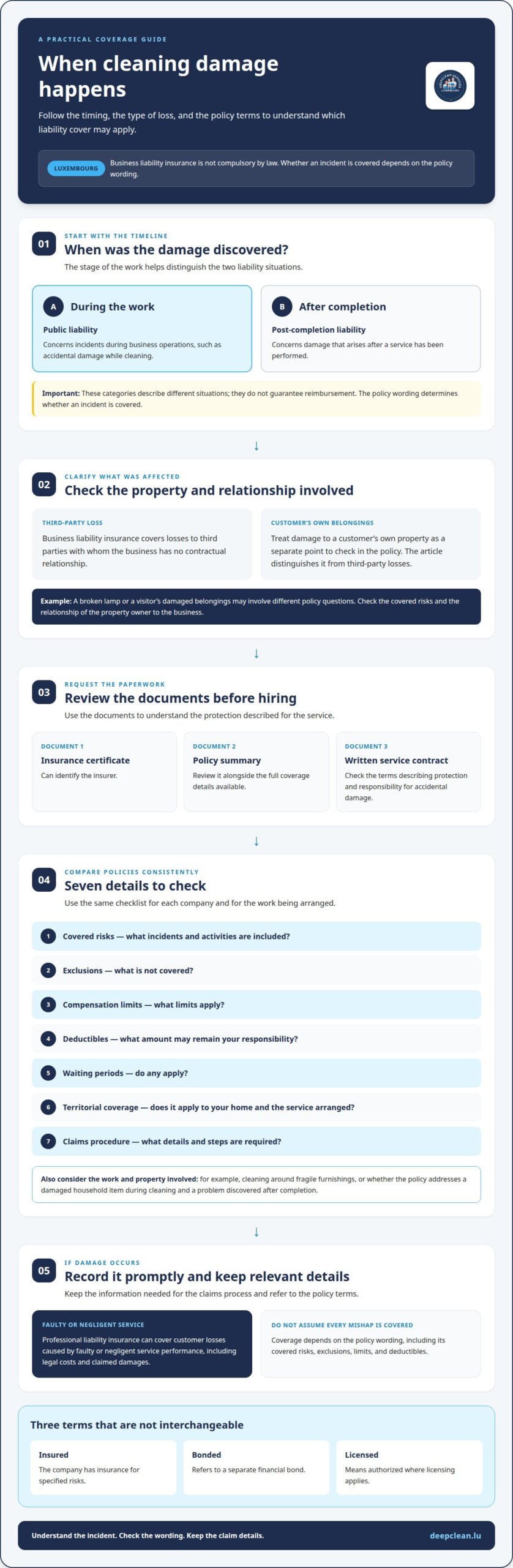
In Luxembourg, business liability insurance is not compulsory by law. It covers the financial consequences of a company’s liability for accidental damage to third parties during its operations. For example, a cleaner could accidentally damage a visitor’s belongings while working at a client’s home. The policy wording determines whether that incident is covered.
Damage insurance for cleaning services does not mean every mishap will be reimbursed. Review the policy’s covered risks, exclusions, compensation limits, and deductibles. If a cleaning tool breaks a lamp, these terms determine whether the loss is covered and how much the insurer may pay. Record the damage promptly and keep the relevant details for the claims process.
Business multi-risk insurance can combine several types of cover in one contract. It is not mandatory, but it is recommended for professionals with business assets or liability towards third parties. A self-employed cleaner can take out this insurance when working from home or at a client’s premises. Depending on the policy, it can cover equipment as well as liability. A damaged vacuum cleaner and accidental damage to someone else’s property are different risks, so review how the policy addresses each.
“Insured” means the company has insurance for specified risks. “Bonded” refers to a separate financial bond, while “licensed” means authorized where licensing applies. These terms describe different things and are not interchangeable.
To compare insured cleaning companies across Luxembourg, use the same checklist for each policy: covered risks, exclusions, limits, deductibles, and claims procedures. Check that the policy’s territorial coverage applies to your home and the service being arranged. Consider the work and property involved, such as cleaning around fragile furnishings. Business liability insurance covers losses to third parties with whom the business has no contractual relationship, so distinguish those situations from damage to a customer’s own belongings.
Cleaning services tailored to household needs
Luxembourg households rarely need the same cleaning plan in every room. A compact apartment with an open kitchen may need routine surface care, while a family home after renovation may need focused dust removal. Start by listing rooms, surfaces, and recurring problem areas. This turns a broad request into a clear scope.
Regular Cleaning suits households seeking consistent care for floors, bathrooms, kitchen surfaces, and high-touch areas. One-Time Basic Cleaning can address a specific need, such as preparing a guest room before family arrives. Deep Cleaning is more suitable when grease, limescale, or built-up dust needs focused attention. For a move, Moving In / Out Cleaning can focus on an empty home, including accessible cupboards, floors, and fixtures.
Before arranging a visit, define the desired result room by room. Note whether the priority is visible surfaces, bathroom details, kitchen residue, or dust around furniture. Identify delicate materials, such as untreated wood or natural stone, so the cleaning plan accounts for them. Clear access to sinks, floors, and worktops also makes the agreed tasks more practical. For example, a household with limited time might prioritize the bathrooms and kitchen rather than every room.
Household schedules matter too. A recurring plan can suit a home that needs steady upkeep, while a one-off visit can target a specific event or transition, such as welcoming guests or preparing for a landlord handover. Agree which rooms are included, which tasks matter most, and what condition the home is in before work begins. Those details make the scope easier to understand and align the visit with household needs. Explore household cleaning options when deciding which type of visit fits your home.
Households can also compare the scope of a visit with the kind of support they want over time. The cleaning services described include regular upkeep, occasional deep cleaning, and laundry care. Bringing these options into the discussion can help clarify whether the request is focused on cleaning rooms, addressing a less frequent need, or including laundry in the household plan.
Before confirming an arrangement, describe your priorities and make sure the agreed scope reflects them. A clear outline keeps expectations aligned with your household’s needs.
Public liability and post-completion liability
Public liability and post-completion liability relate to different stages of cleaning work. Understanding the distinction helps you review a contract and respond clearly if damage occurs.
Insurance and Bond Requirements
Business liability insurance is not compulsory by law in Luxembourg. A bond is distinct from insurance, so don’t treat either term as proof of the other. When assessing an insured and bonded cleaning company in Luxembourg, read the contract terms describing required protection and responsibility for accidental damage. Public liability concerns incidents during business operations; post-completion liability concerns damage occurring after a service is performed.
Verifying Insurance Coverage
Ask for insurance documents and identify the activities and risks covered. Professional liability insurance can cover customer losses caused by faulty or negligent service performance, including legal costs and claimed damages. Compare covered risks with exclusions, compensation limits, deductibles, waiting periods, territorial coverage, and claims procedures. For example, check whether the policy addresses a damaged household item during cleaning and a problem discovered after completion.
Documents to Request Before Hiring
Request the company’s insurance certificate, policy summary, and written service contract. The certificate can identify the insurer and policy period; the summary can help explain the cover. For an insured and bonded cleaning company in Luxembourg, review whether the contract explains responsibility for damage and how to make a complaint. Check whether it addresses fragile items, particular surfaces, or damage noticed after completion. These documents help you understand the protection and process before work begins.
If an item is damaged, photograph it before cleaning or moving anything. Record what happened and notify the relevant insurer as soon as possible, within its required timeframe. Take practical steps to prevent further damage, such as shutting off the water after a leak. If something is missing, note the item and when you last saw it, then promptly report your concern to the company.
How can I verify a Luxembourg cleaning company’s insurance and professional liability coverage?
Review the documents before agreeing to household cleaning work. Compare the company named in the contract with the insured party shown on its insurance certificate. Check that the policy period includes the planned service date and its territorial coverage applies to the work in Luxembourg. A certificate identifies basic policy details, while the policy wording explains the protection.
Professional liability insurance can cover customer losses caused by faulty or negligent service performance, including legal costs and claimed damages. Read the coverage summary alongside the contract, not as a substitute for it. For example, a contract may explain how to report a damaged surface, while the policy sets out exclusions, limits, and claim procedures.
Review these details systematically:
- Covered risks: Identify whether accidental property damage during cleaning falls within the policy.
- Exclusions: Look for limits involving fragile belongings, particular surfaces, or damage discovered after completion.
- Compensation limits and deductibles: Understand the maximum payable amount and the portion that may remain your responsibility.
- Waiting periods and territorial coverage: Check when cover applies and whether the service location is included.
- Claims procedures: Note how to report an incident, what evidence is needed, and how the insurer handles claims.
Compare the documents with your home and requested tasks. If the cleaning involves natural stone, delicate fixtures, or valuable furnishings, identify them in the written scope. Check whether the contract explains responsibility for accidental damage and provides a clear way to report it. Keep the certificate, policy summary, contract, and any written changes together. This record links the work performed to the applicable coverage and claims process.
For a clearly scoped household cleaning plan, discuss your cleaning needs and outline the rooms and tasks involved.
When comparing insurance policies in Luxembourg, examine covered risks, exclusions, compensation limits, deductibles, waiting periods, cancellation terms, assistance services, territorial coverage, and claims procedures. Pay particular attention to cancellation terms and assistance services alongside the policy’s protection and claims arrangements.
Deepclean Services: Regular Cleaning
Deepclean Services offers Regular Cleaning for households that need ongoing home upkeep. It suits homes where kitchen surfaces, bathrooms, and floors need regular attention. For a one-off visit, One-Time Basic Cleaning may better match a specific need; Deep Cleaning is suited to more intensive work, while Moving In / Out Cleaning is designed for a household move.
Before arranging a service, outline the rooms and tasks that matter most, such as bathroom surfaces or kitchen floors. A clear scope helps align the cleaning visit with your household’s priorities. Contact Deepclean Services to discuss your cleaning needs, or visit deepclean.lu.
Choose a cleaning plan that fits your next step
A well-kept home depends on a cleaning routine that works with your household, not against it. Once you know the tasks that matter most, you can choose a practical starting point and adjust the scope as your needs change. An insured and bonded cleaning company in Luxembourg may be part of your decision, but a clear service plan is what turns that choice into useful support at home.
Deepclean Services offers Regular Cleaning for ongoing upkeep, One-Time Basic Cleaning for a specific visit, and Deep Cleaning for more intensive attention. Choose the option that best matches your home and priorities, then outline the rooms and tasks you want addressed.
Contact Deepclean Services to discuss a cleaning plan for your household. A considered first step can make home care feel more manageable and leave you ready to enjoy a fresher space.
Frequently Asked Questions
What does insured and bonded mean for a cleaning company in Luxembourg?
“Insured” means the company holds an insurance policy for specified risks; “bonded” refers to a separate financial bond. Neither label alone explains what losses are covered or how a claim works. Before a home clean, read the policy scope and bond terms separately, then compare them with the company’s written responsibilities. The documents, not the labels, explain the protections involved.
What types of damage and accidents should a cleaning company’s insurance cover in Luxembourg?
Review whether the policy addresses accidental third-party property damage during cleaning and damage arising after the service is completed. For example, a cleaner might knock over a household ornament, or a mark on a surface might become apparent after the visit. Check the exclusions, limits, and claims process for each situation. Coverage depends on the policy wording, so treat examples as illustrations, not promises of reimbursement.