A deep clean reaches beyond the surfaces covered in routine cleaning. What is included in a deep clean typically spans kitchens, bathrooms, living areas and bedrooms, with attention to grime, dust and less accessible spots such as behind furniture or beneath appliances. The exact tasks depend on the rooms and the level of detail needed.
A room can look tidy while dust remains on skirting boards, limescale gathers around taps and dirt sits beneath furniture. This guide explains how deep cleaning differs from regular cleaning and outlines common room-by-room tasks, so you can understand the scope before deciding what your home needs. A systematic approach brings less visible details into focus.
Key Takeaways
- A thorough clean reaches beyond visible surfaces, with attention to overlooked areas and built-up grime.
- Kitchen and bathroom tasks can include detailed appliance care, limescale removal, and grout cleaning.
- Dusting high and low, then cleaning floors, helps address the living and dining room areas routine cleaning can miss.
- Understanding the difference between deep and regular cleaning helps you choose the right level of care for your home.
What is professional deep clean?
Kitchen Appliances and Cabinets
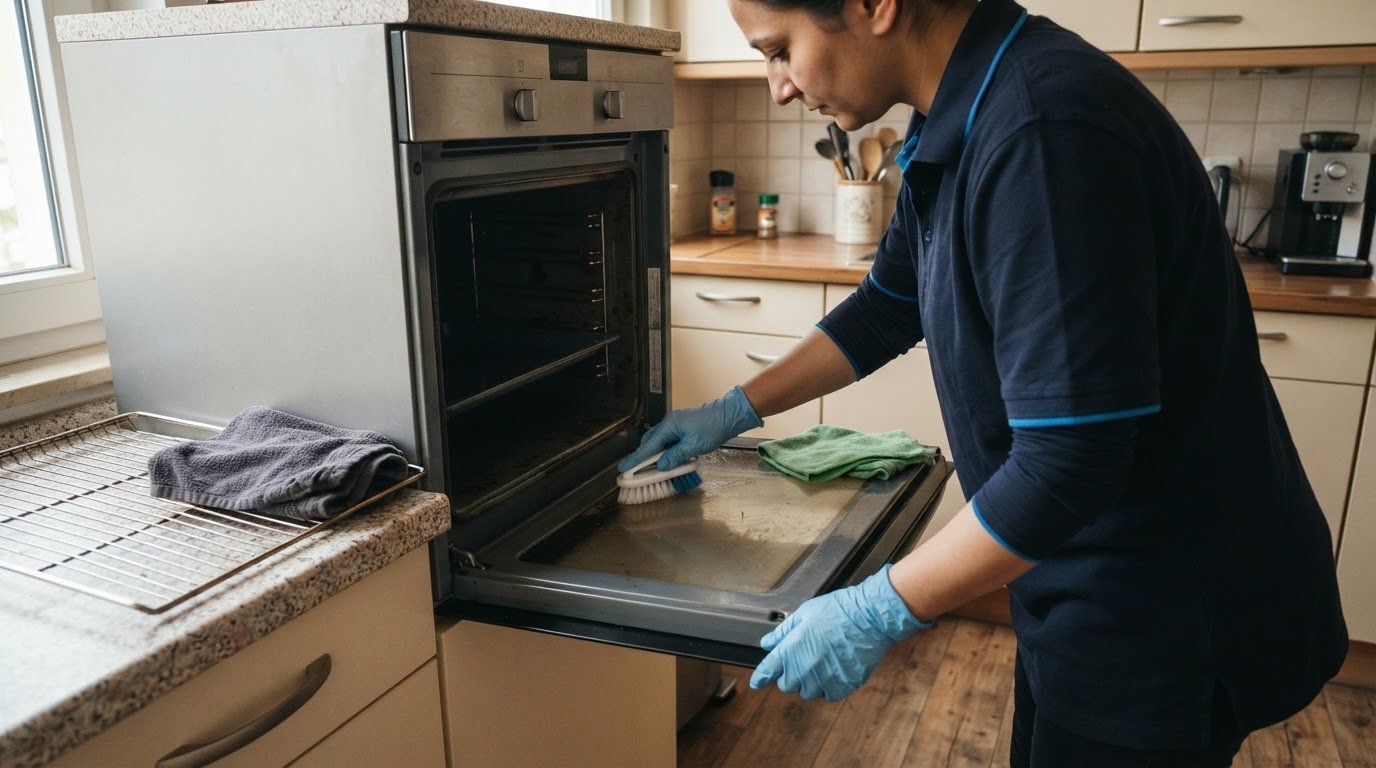
Kitchen deep cleaning covers appliances, cabinets, countertops and floors, including places missed during everyday tidying. Clear clutter from worktops first, then clean surfaces and cabinet fronts so crumbs and grease are easier to remove. Appliance interiors, such as an oven or fridge, can be included as extra tasks. Cleaning beneath or behind appliances also reaches trapped dust and food debris, where access allows.
Washroom and Hygiene-Critical Cleaning
Bathroom cleaning targets fixtures and deposits around toilets, showers, taps and tile grout. A thorough clean tackles soap scum and limescale on shower doors and showerheads, then cleans the toilet bowl and base. In the kitchen, counters, appliance handles and bin surfaces are frequently touched areas that need attention too. Residue can gather around edges and fittings, not just on open surfaces.
Bathroom fixtures, soap scum, toilets and grout
A thorough bathroom clean addresses fixtures and the narrow edges where residue accumulates. A room-specific checklist helps cover less visible areas, not just open tile and basins.
Bathroom Fixtures and Toilets
Deep cleaning bathroom fixtures and toilets means addressing the bowl, seat, base, showerhead, taps and surrounding edges. Visible surfaces alone may leave grime around fittings and behind the toilet. A focused process includes cleaning behind the toilet seat, inside the bowl and around the toilet base. Descaling the showerhead tackles limescale around its outlet.
Tile, Grout, and Soap Scum
Tile and grout cleaning targets residue in the joints, while soap-scum removal focuses on shower doors and fixtures. Grout lines and door edges are easy to overlook during routine cleaning. Scrub tile and grout, then clean taps and shower doors to tackle soap scum and limescale. Dust first so loose particles do not mix with damp surfaces.
Use a checklist to keep the bathroom sequence clear:
- Dust accessible ledges and fittings before wet cleaning.
- Clean the showerhead, taps, doors, tile and grout.
- Wipe and disinfect the toilet seat’s hidden side and bowl.
- Finish at the toilet base and other hard-to-reach edges.
Pay particular attention to grout corners, the drain area and the floor behind the toilet. These examples show the difference between a detailed clean and a quick wipe of the basin and mirror. Work through each fixture and its surrounding surfaces instead of treating the bathroom as one broad area.
For a more complete bathroom refresh, explore professional deep cleaning.
Include grout, toilet bases and hidden areas in a deep bathroom clean, carrying the same attention into corners and edges around fixtures. This extends the work beyond the most visible surfaces and brings less accessible parts into the cleaning sequence.
The shower can receive its own pass: descale the showerhead, clean tile and grout, and clean the shower drain with baking soda and vinegar followed by hot water. Treat these as separate tasks alongside the surrounding fixtures, so both the shower area and drain are covered.
Living and dining room dusting and floors
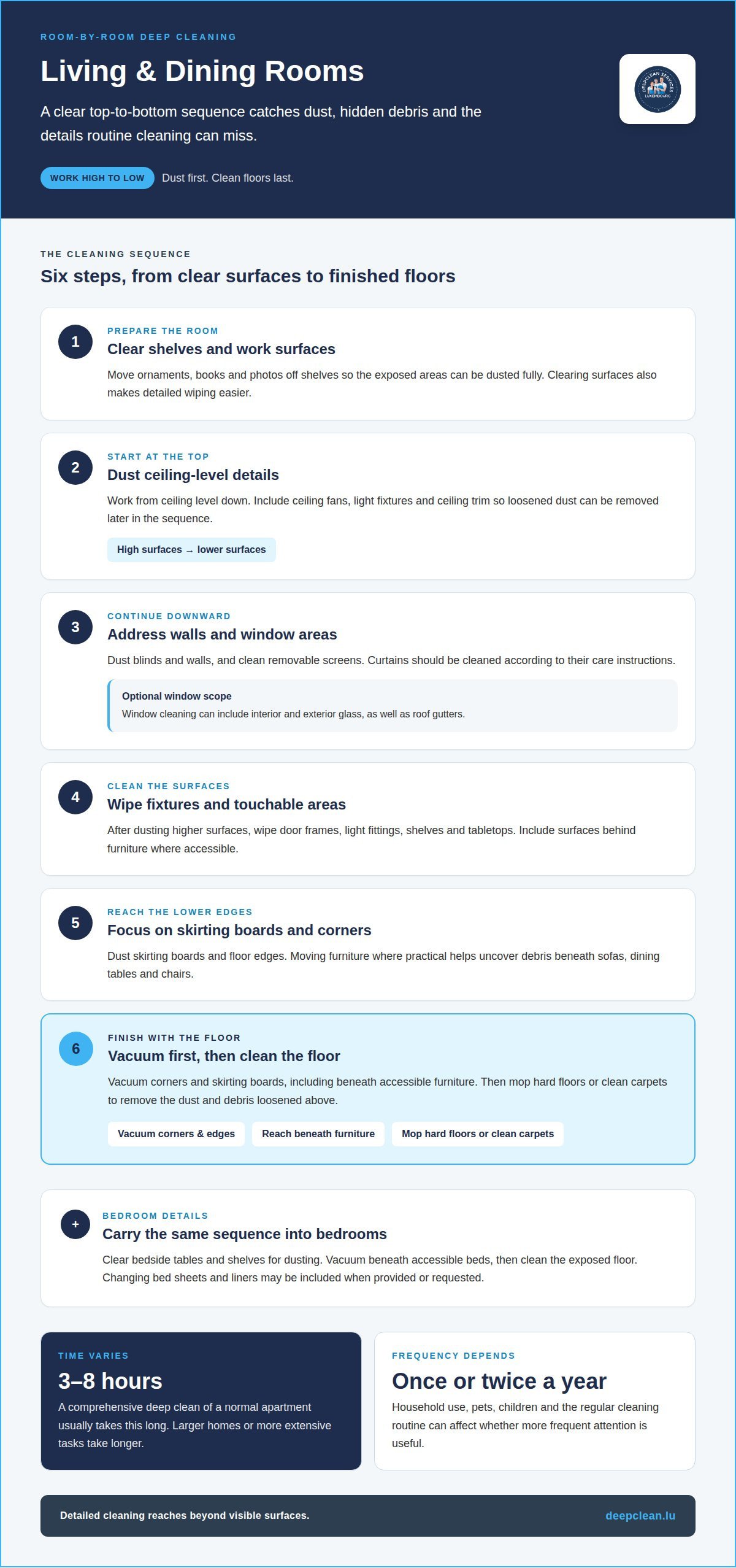
A deep clean can cover living rooms, dining rooms, bedrooms and shared spaces. Common tasks include cleaning light fixtures, blinds, skirting boards and floors, as well as reaching beneath furniture.
Living and Dining Room Dusting
Detailed dusting works from ceiling level down to shelves and lower trim, so dust that falls can be removed when the floors are cleaned. Include ceiling fans, light fixtures, blinds, walls, skirting boards and surfaces behind furniture. Move ornaments, books and photos from shelves first, then dust the exposed areas. This reaches beyond the visible tops of tables.
Floors and Under-Furniture Cleaning
Floor cleaning includes vacuuming and mopping, with attention to corners and edges. Moving furniture where practical reveals dust and debris beneath sofas, dining tables and chairs. Vacuum corners and skirting boards before washing hard floors or cleaning carpets. This sequence removes loosened dust instead of leaving it on freshly cleaned flooring.
Fixtures and Surface Cleaning
Fixtures and touchable surfaces include door frames, light fittings, shelves and tabletops. Wipe these after dusting higher surfaces, then finish with the floor. Window cleaning can cover both interior and exterior glass, as well as roof gutters. Dust blinds and clean removable screens; clean curtains according to their care instructions.
Bedrooms add a few distinct tasks. A deep clean may include changing bed sheets and liners when provided or requested. Clear bedside tables and shelves so their surfaces can be dusted fully. Vacuum beneath accessible beds, then clean the exposed floor. These steps distinguish detailed room care from a routine tidy.
Working room by room makes the sequence easier to follow and helps keep vents, baseboards and the space beneath furniture in view. Begin at the ceiling, then work down through ceiling trim, light fixtures, walls, trim and baseboards. Remove ornaments, books and photos before dusting shelves and other surfaces. This order means dust that falls can be dealt with when the floors are cleaned.
How deep cleaning differs from regular cleaning
Standard cleaning usually takes one or two hours. It may cover tasks such as wiping counters, vacuuming open floor areas and cleaning bathroom surfaces. A deep clean adds detail: professional services like Grades Home Cleaning move items where possible, address corners and less-accessible surfaces, and work through a broader room-by-room checklist. For example, dusting shelves after removing ornaments reaches surfaces a quick tidy leaves covered.
Compare the focus of each visit:
- Regular cleaning: routine upkeep, such as wiping reachable surfaces and vacuuming floors.
- Deep cleaning: detailed work on accumulated grime, edges, and areas beneath or behind accessible items.
- Carpets and upholstery: shampooing may be an additional task rather than standard floor care.
- Appliances: cleaning inside an oven or fridge adds work beyond wiping exterior surfaces.
For clearer expectations, define the rooms and specific tasks before the visit. A focused scope makes it easier to distinguish maintenance from detailed cleaning. Arrange a deep clean when your home needs attention beyond routine upkeep.
Deepclean Services: Regular Cleaning
Deepclean Services offers Regular Cleaning to maintain homes and Deep Cleaning to tackle accumulated grime and overlooked areas. Choose regular upkeep when your home needs routine attention; Deep Cleaning suits rooms that need a more detailed reset.
For a one-off visit focused on general household cleaning, One-Time Basic Cleaning may fit. Deep Cleaning suits more intensive room-by-room work, while Moving In / Out Cleaning supports a transition between homes. Choose according to whether you need ongoing maintenance, detailed cleaning or help with a move.
To discuss the cleaning service that fits your home, visit deepclean.lu.
Plan Your Next Cleaning Step
Use your priorities to shape a clear cleaning plan. Knowing what is included in a deep clean gives you a starting point; next, decide which rooms need attention first and what outcome matters most. You might prioritise a room before guests arrive, prepare a property for a change in occupancy or arrange more consistent upkeep.
Before arranging a visit, make a short list of priorities and note any areas needing particular attention. This turns a general cleaning need into a focused plan for the right scope. Deepclean Services offers cleaning options for routine upkeep, detailed cleaning and moving.
Contact Deepclean Services to discuss your home’s cleaning needs and plan a practical next step.
Frequently Asked Questions
What tasks are included in a standard deep house cleaning?
A deep house clean covers detailed tasks beyond everyday upkeep, with the scope shaped by the rooms and requested work. Deepclean Services’ Deep Cleaning includes the inside of cabinets, the fridge and oven. The checklist also includes baseboards, interior doors, pulling out the stove and refrigerator, accessible interior windows and vacuuming upholstered furniture. Clear cabinet contents beforehand to make their interiors accessible.
How is deep cleaning different from regular house cleaning?
Regular house cleaning maintains the home, while Deep Cleaning adds detail where more intensive attention is needed. A routine visit may suit a home that is already maintained; a deeper clean may be more appropriate before moving in or after a period of limited upkeep. Choose according to the condition of your rooms and whether you need maintenance or a more comprehensive reset.