
Hiring a cleaner can be worth the cost, even if cleaning your home yourself seems cheaper. Whether a professional cleaner is worth it depends on the time you’d regain, how demanding the chores are, and whether the cost fits your household budget. If cleaning is manageable and you only occasionally need more time for other things, less frequent help may suit you better than regular visits.
Cost is only one part of the decision. Cleaning takes time to plan, fit around work and family life, and keep up between visits. A cleaner can reduce that workload, but the value depends on which tasks you want handled and how often your home needs attention.
This guide weighs the trade-offs for households in Luxembourg, including what shapes cleaning costs and how much time you might save. Use the practical steps to compare one-off or regular help with doing the work yourself, and find the option that fits your home and routine.
Key Takeaways
- Weigh the cost of cleaning help against the time and planning it could free up, not just the cleaning hours themselves.
- Decide whether occasional or regular visits better match your household’s routines and cleaning priorities.
- Compare doing the chores yourself with hiring help by considering your budget, available time, and how you’d use the time regained.
- Use the decision guide to identify when regular cleaning, a one-time clean, or a deeper clean may suit your needs.
Is Hiring a Cleaning Person or Service Worth It?
Compare the time, effort, and budget involved, then match the help to the chores you want done. A simple decision table can make the trade-offs clearer.
Hiring a Cleaner vs Cleaning Yourself
Cleaning yourself costs your time and requires you to plan each task, supply equipment, and maintain the routine. Hiring shifts agreed chores to a professional, freeing that time for work, family, or rest. One person estimated that cleaning a fairly large house alone takes 3 or 4 hours, but your home and task list may differ.
Cleaning tasks may include kitchens, bathrooms, carpets, and upholstery. Before comparing services, check which rooms and tasks are covered.
When Hiring May Be Worthwhile
Weigh the hours you regain against what you would do with them, not just the cleaning time saved.
Factors to Weigh Before Hiring
Set a spending limit, list priority rooms, and decide whether you need a one-time visit or recurring help. Before hiring, ask what tasks are included, how the visit is organised, and whether you should prepare rooms or provide supplies. These answers make service scope and household expectations easier to compare.
In Luxembourg, a cleaning invoice alone does not establish eligibility for a tax deduction or credit. Consider possible tax relief separately, and apply the relevant tax rules to your circumstances before including it in your budget.
| Option | Time | Budget | Planning |
|---|---|---|---|
| Clean yourself | Your time | No service fee | Tasks stay with you |
| Hire help | Time freed for other priorities | Paid service | Agree scope and schedule |
| Share or reduce chores | Divided or fewer tasks | Usually no service fee | Coordinate household routines |
Choose the option that suits your budget, priorities, and willingness to manage the chores.
Guilt About Household Help and Alternatives
Paying for household help does not mean you have failed to manage your home. It is a practical choice about how to use limited time, like deciding who handles meals or errands. If hiring feels uncomfortable, start by identifying the chores that create the most pressure.
Alternatives include sharing tasks among household members, reducing non-essential chores, or booking help for a move or a concentrated clean.
How Much Does a House Cleaner Cost?
For households in Luxembourg, compare the quoted cost with the time and planning a visit would remove. The final amount depends on the home and the work requested.
Individual Cleaner Costs
An individual cleaner may charge by the hour, so the total depends on the time required and the agreed task list. A focused visit for bathrooms and floors differs from a whole-home clean involving kitchens, bedrooms, and detailed dusting. Before comparing quotes, write down the rooms and tasks you want covered, then check whether travel, supplies, or extra work affect the price.
A clear task list makes it easier to set the scope. Fewer tasks may mean a shorter visit, while a larger home or more detailed clean may take longer.
Cleaning-Service Costs
A cleaning service may price a visit around the home, requested work, and frequency, rather than only an hourly rate. The price depends on the case and is given after a quote request; factors include home size, cleaning requirements, and visit frequency. Recurring visits can cost less per cleaning than less frequent visits, so compare the total commitment as well as each visit.
Ask for the tasks included in the quoted scope. A routine clean and a detailed clean are not equivalent, even if both are described as one visit.
Cleaning Costs vs Time Regained
To assess value, estimate how many hours you currently spend cleaning and decide what those hours would realistically replace. If cleaning regularly takes time away from paid work, family responsibilities, or rest, the benefit may extend beyond the hours spent at home. If you would rather keep the money and do not mind the chores, cleaning yourself may suit you better.
Use this simple comparison: list the visit cost, the tasks covered, and the time you expect to regain. Then consider whether a one-time clean or recurring visits better fit your routine. For a practical view of cleaning service options, match the requested work to your home’s priorities.
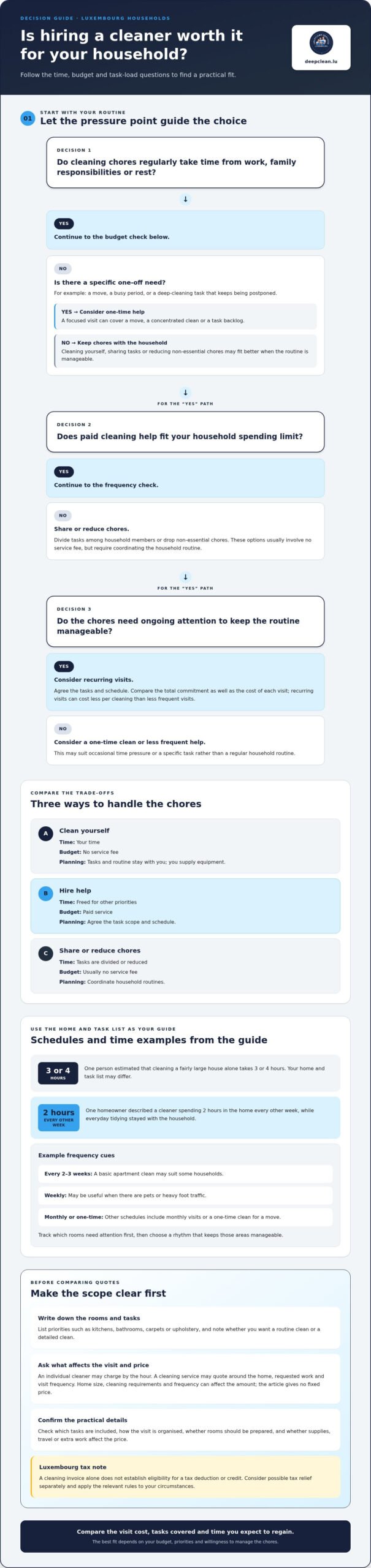
How cleaning help affects time, planning and household chores
Cleaning help changes more than who cleans the kitchen. A planned visit can reduce recurring chores, make tasks easier to coordinate, and free time for other priorities.
Start by listing the jobs that interrupt your routine, such as vacuuming, bathroom cleaning, and wiping kitchen surfaces. Assign household members the tasks that remain, then schedule help around the chores that take the most time. One homeowner described a cleaner spending 2 hours in the home every other week. That kind of arrangement creates a recurring point in the calendar, while leaving everyday tidying with the household.
Frequency depends on the home’s activity and the work you expect between visits. A basic apartment clean every 2-3 weeks may suit some households, while pets or heavy foot traffic can make weekly cleaning useful. Other schedules include monthly visits or a one-time clean for a move. Decide by tracking which rooms need attention first, then set a rhythm that keeps those areas manageable.
Planning affects how much you gain from a visit. Keep a short priority list, make sure rooms are accessible, and put personal items away beforehand. A regular visit at the same time each week, for example, can create a predictable reset instead of another round of household negotiation. A clear task list also helps everyone understand what remains their responsibility.
Outsourcing may improve day-to-day satisfaction if household chores are a repeated source of friction, but the decision is personal. Research involving 6,271 adults across four countries examined time-saving purchases and happiness; a separate study of 60 dual-income spouses examined home perceptions and daily stress-hormone patterns. These topics show why people may consider time and home environment alongside cost, but they don’t establish what any one household will feel. Record which chores cause the most tension, then assess whether help addresses them.
Research on time-saving services and life satisfaction
Research on time-saving purchases offers a useful perspective, but it cannot decide whether cleaning help suits your household. In an experiment discussed by Ashley Whillans, two percent of participants said they would spend a windfall on a timesaver. That finding describes one experiment, not a rule for every household or a measure of cleaning’s value in Luxembourg.
A study involving 6,271 adults across four countries examined time-saving purchases and happiness. Its scale makes the topic relevant to household decisions, but the result doesn’t tell you how much satisfaction one cleaning visit will bring. The practical question is whether freed time improves your own week, such as making space for family commitments or reducing chores after work.
Separate research examined home perceptions and daily stress-hormone patterns among 60 dual-income spouses. The study included 30 couples, highlighting how a home environment can be part of the wider discussion about wellbeing. It doesn’t establish that hiring a cleaner changes stress for every person. Instead, consider whether household upkeep is a recurring source of pressure in your own routine.
Use a personal assessment alongside the research. For a typical week, note which cleaning tasks are postponed, which create tension, and what you would do with the time instead. If bathrooms and floors repeatedly take up your only shared evening, for example, those chores may matter more than an abstract measure of happiness. Keep the comparison grounded in your priorities and budget.
Research can frame the decision; your routine supplies the practical test. Choose the tasks that would make the clearest difference, then consider whether occasional or recurring help fits your household. To take the next step, explore cleaning support for your home and decide which arrangement aligns with the time you want to reclaim.
Deepclean Services: Regular Cleaning
Deepclean Services offers Regular Cleaning for households that want a consistent way to manage routine chores, including dusting, vacuuming, and everyday surface cleaning. One-Time Basic Cleaning is an option for a one-off clean, while Deep Cleaning or Moving In / Out Cleaning may better suit more specific needs.
Before choosing, note the rooms and tasks that matter most, then decide whether you want ongoing help or a single visit. A clear priority list helps match the cleaning service to your routine and the time you want to reclaim.
To discuss cleaning for your home, visit deepclean.lu.
Make Room for the Time You Want Back
The right choice is one that suits your home and fits your budget over time. To decide whether a professional cleaner is worth it, consider what you would do with the time reclaimed and which household tasks you most want off your schedule. You do not need to change your whole routine at once. Starting with a clearly defined cleaning need can help you assess whether professional help makes daily life easier.
Deepclean Services offers options for different cleaning needs, including Regular Cleaning, One-Time Basic Cleaning, and Deep Cleaning. Choose the type of help that matches your priorities, then take the next step at a pace that works for your household.
Contact Deepclean Services today to discuss cleaning support for your home. A more manageable routine can start with one practical decision.
Frequently Asked Questions
How often should you hire a professional cleaner?
Choose a schedule based on how quickly your home needs attention between visits. Pets, frequent cooking, children, and visitors can mean floors and shared spaces need more regular care; a quieter household may manage with less frequent cleaning. Start with a schedule that suits your busiest rooms, then adjust if surfaces become difficult to maintain or visits feel unnecessary.
What are the pros and cons of hiring an independent cleaner versus a cleaning company?
How can you estimate whether a professional cleaner is worth the cost for your household?
To judge whether a professional cleaner is worth it, compare the full cost with the time you would genuinely regain. Include preparation and coordination, not just the hours spent cleaning. Then consider how you would use that time, whether for paid work, family needs, or rest. If the value feels worthwhile within your budget, professional cleaning may be a good fit.