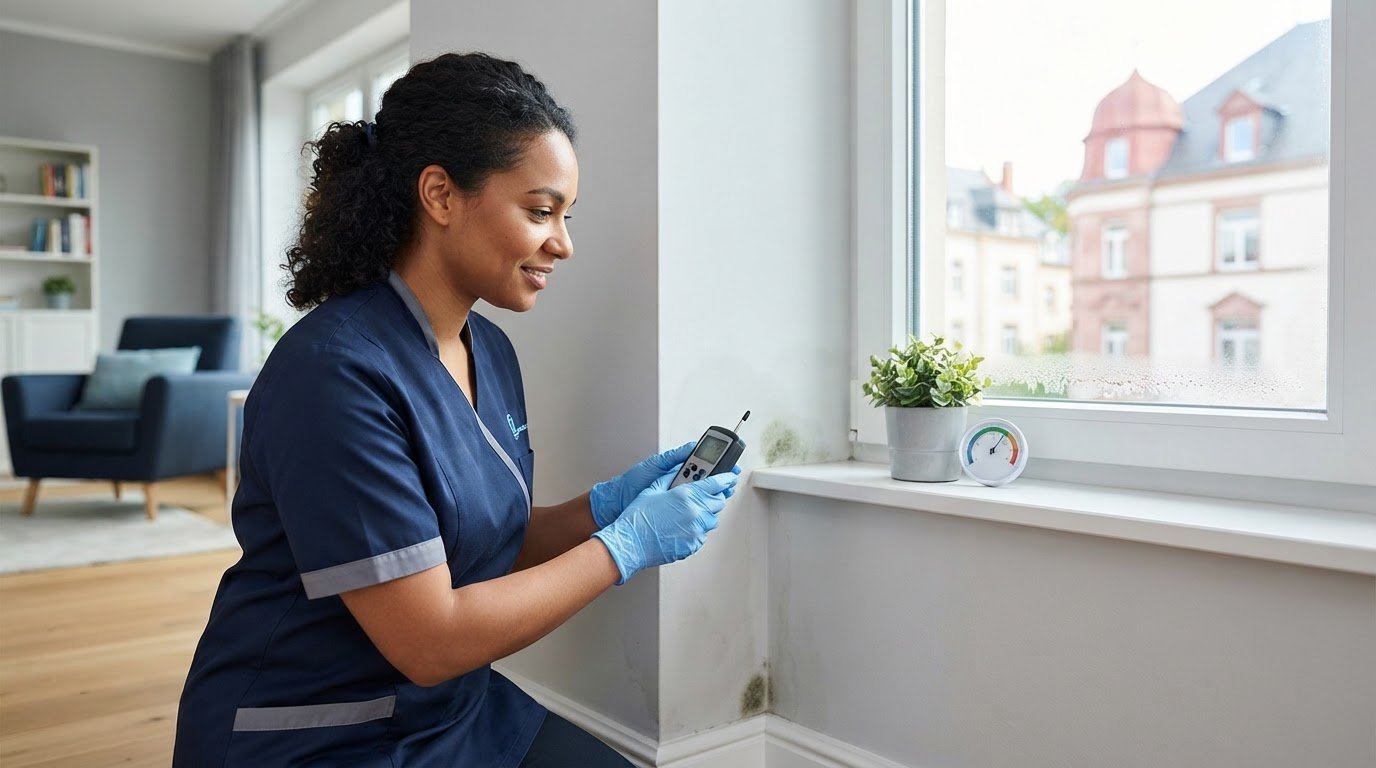
A musty smell or a fuzzy, discoloured patch can be an early warning of mould. Signs of mould in a home can also include slimy patches that grow over time, damp surfaces and condensation. The New York State Department of Health describes mould as potentially fuzzy, discoloured or slimy.
It’s understandable to wonder whether a mark is mould, what caused it and whether it could affect your health. Mould grows where moisture and organic material are present, so leaks, condensation and poor ventilation can create suitable conditions. Some people experience allergy-like symptoms, but symptoms alone cannot confirm that mould is the cause.
This guide explains where to look, how to identify common sources of dampness and what exposure can feel like. You’ll also learn when testing may help, why addressing moisture matters and when professional mould removal may be appropriate. Knowing the signs and next steps can help you make an informed decision about your home.
Key Takeaways
- Look for spreading discoloured or fuzzy patches, musty odours and persistent dampness, including in less visible areas.
- Trace moisture to its likely source, such as leaks, condensation or poor ventilation; keeping indoor humidity between 30% and 50% can help manage damp conditions.
- Mould-related symptoms can resemble allergies or other conditions, so note when they occur and whether they change away from home.
- Testing often isn’t needed when mould is visible or can be smelled; the CDC advises removing mould without identifying its type.
- Consider professional removal for extensive growth or when someone in the home is highly sensitive to mould.
Common causes of indoor mould, including leaks and humidity
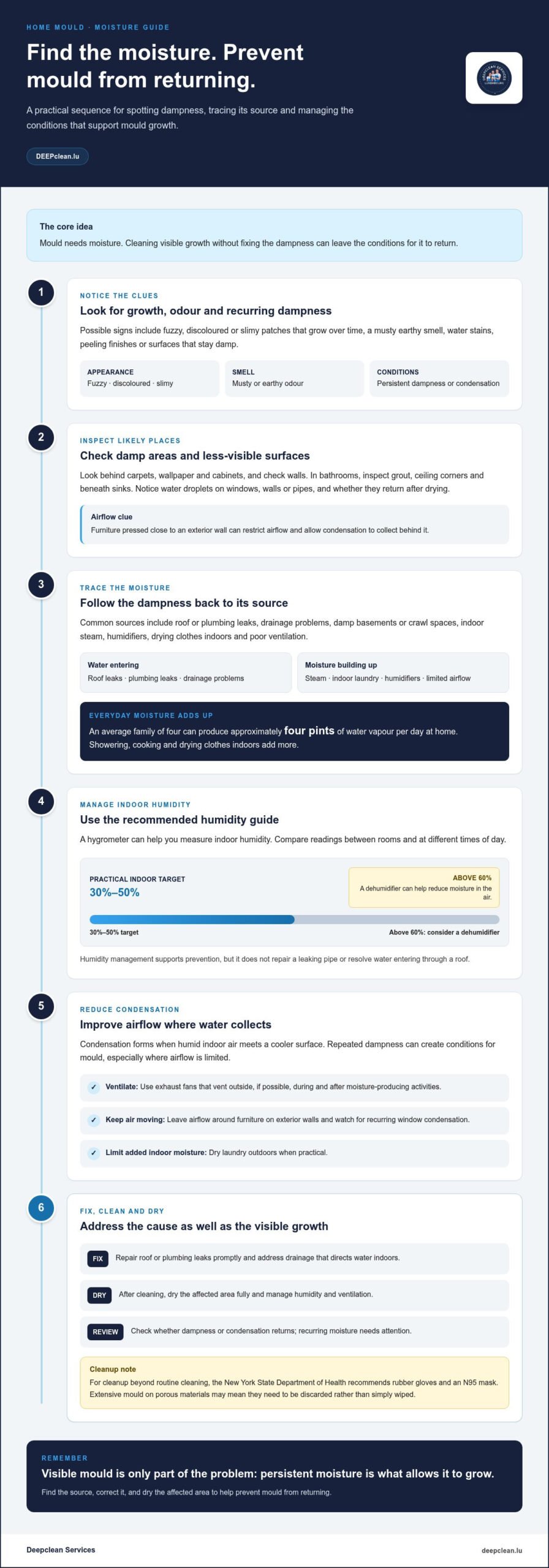
Mould needs moisture, so recurring dampness deserves attention alongside visible growth. Finding the source can help prevent mould from returning after cleaning.
Moisture Sources and Indoor Humidity
Indoor humidity is water vapour in the air, while leaks and damp materials add moisture to a room. When dampness persists, mould can grow on suitable surfaces. The New York State Department of Health identifies roof and plumbing leaks, drainage problems, damp basements and crawl spaces, indoor steam, humidifiers, indoor clothes drying and poor ventilation as common moisture sources.
Keep indoor humidity between 30% and 50% where practical. If readings rise above 60%, a dehumidifier can help reduce moisture in the air. These measures support prevention, but they don’t repair a leaking pipe or resolve water entering through a roof. Address the source as well as the indoor conditions.
Condensation and Mould Growth
Condensation forms when humid indoor air meets a cooler surface, leaving water on windows, walls or pipes. Repeated dampness can create conditions for mould, particularly where airflow is limited. For example, furniture placed close to an exterior wall can restrict ventilation and allow condensation to collect behind it.
Notice where water droplets appear and whether they return after drying. Use exhaust fans that vent outside, if possible, and improve airflow around cold surfaces. Bathrooms, kitchens and laundry rooms often produce steam, so ventilation during and after moisture-producing activities can help limit condensation.
Some moisture comes from everyday activities. An average family of four can produce approximately four pints of water vapour per day at home. Showering, cooking and drying clothes indoors add more moisture. Basements and crawl spaces may remain damp because of drainage problems or limited airflow, while roof and plumbing leaks can wet walls, ceilings and floors.
Use these practical checks to manage common sources:
- Repair roof or plumbing leaks promptly, and address drainage that directs water indoors.
- Run outside-venting exhaust fans during moisture-producing activities, where possible.
- Dry laundry outdoors when practical, rather than adding moisture inside.
- Keep air moving around furniture on exterior walls and watch for recurring window condensation.
- Use a dehumidifier when indoor humidity rises above 60%.
After cleaning mould, address the source of water or dampness to help prevent its return. Then dry the affected area fully and manage humidity and ventilation. Cleaning alone won’t remove the conditions that support regrowth, so effective remediation addresses both visible mould and the moisture behind it.
What are symptoms and effects of mold exposure?
Common visible signs of mould in a home include fuzzy, discoloured or slimy patches that grow over time. The New York State Department of Health identifies these appearances as possible signs of mould.
To inspect your home, check damp areas and hidden surfaces, including behind carpets, wallpaper, cabinets and walls. Measure indoor humidity with a hygrometer, comparing readings across rooms and at different times of day.
Appearance is one clue, but smell and surrounding conditions matter too. A musty, earthy odour, nearby moisture and little light can point to a mould problem, even when growth is hidden. In bathrooms, check grout, ceiling corners and the area beneath sinks. Look for peeling finishes, water stains or material that feels persistently damp.
Carpets, drywall, paper and ceiling tiles can hold moisture. Extensive mould growth on porous materials may mean they need to be discarded rather than simply wiped. A musty smell behind a cupboard may signal dampness where air circulates poorly. Furniture pressed against an exterior wall can restrict airflow, allowing condensation to form out of sight.
Exposure can happen through inhalation, contact or ingestion. Common reactions include sneezing, a runny nose, red or itchy eyes, skin rash, coughing, wheezing and throat irritation. Nasal congestion and headaches can also occur. These symptoms overlap with colds and other allergies, so symptoms alone can’t identify mould as the cause.
Some people may be more sensitive, particularly those with respiratory conditions or compromised immune systems. In a study of more than 40,000 children in the United States, asthma was reported in almost 11% of children exposed to household mould, compared with 7% of children not exposed at home. The finding describes an association, not a diagnosis for an individual.
Track when symptoms occur, whether they improve outside the home and whether breathing problems worsen. Shortness of breath, chest pain, persistent fever, severe fatigue or worsening asthma warrant prompt medical attention. Record damp rooms and visible changes alongside symptoms to make the pattern easier to describe.
Don’t disturb mould without protection, because this can release more spores into the air. For cleanup beyond routine cleaning, the New York State Department of Health recommends rubber gloves and an N95 mask. Cleaning alone won’t solve recurring growth if water continues entering or materials remain damp. Find and correct the moisture source, then dry the area and improve ventilation.
After the leak or dampness is addressed, a thorough clean can help restore affected rooms. For support with professional mould removal, explore the available service details.
Do I need to test for mold or know what kind of mold is growing in my home?
Usually, you don’t need a test to decide what to do about visible mould or a persistent musty smell. The New York State Department of Health does not recommend mould testing, and says no state or federal standard exists for mould in homes. The CDC advises removing mould if you see or smell it, without identifying its type.
The practical focus is mould growth and the moisture supporting it. Knowing a species name won’t repair a leak, dry a wet wall or improve airflow. The CDC also says there are no set standards for acceptable quantities of different mould types in a home, so a test result alone may not show what action a room needs.
Visible mould may appear as fuzzy, discoloured or slimy patches that grow over time. A musty, earthy odour can point to dampness or hidden growth, especially near a water stain, wet surface or poorly ventilated cupboard. An odour isn’t proof of mould, but it is a reason to inspect nearby materials and look for the moisture source.
Check more than open walls and floors. The New York State Department of Health advises looking behind and underneath carpets, wallpaper, cabinets and walls. For example, check carpet edges near a damp exterior wall, wallpaper around a leak and the cabinet base beneath a sink. Inspect window frames and nearby areas for condensation or water damage too.
Testing may be useful when a specific investigation needs evidence, but routine testing isn’t required simply to identify a mould type. First, focus on what you can observe: whether patches are spreading, whether the same area stays damp and whether a musty smell returns after airing the room. These details can help distinguish a one-time wet surface from an ongoing moisture problem.
Use this inspection sequence to keep your findings clear:
- Note each visible patch, its location and whether it changes over time.
- Record musty odours and nearby signs of moisture, such as a stain or condensation.
- Inspect hidden surfaces behind carpets, wallpaper and cabinets, as well as accessible wall areas.
- Look for a practical moisture source, including a leak or persistent dampness.
Take extra care around disturbed materials if someone in the home has a respiratory condition or a compromised immune system. Avoid scraping or pulling apart suspect surfaces just to collect a sample. If mould is visible or clearly smelled, the CDC advises removing it rather than waiting for a species identification. Correcting the moisture problem is essential, as damp conditions can support regrowth after cleaning.
What are molds and where do they grow?
Mould grows where moisture meets organic material, and spores can travel through air, water or on animals. That makes damp surfaces and less visible spaces important places to inspect indoors.
Common Indoor Mould Types
Household mould can take different forms, but colour alone doesn’t identify its type. Patches may look fuzzy, discoloured or slimy, and their appearance can change as growth spreads. The New York State Department of Health describes these appearances as possible signs of mould. For homeowners, locating dampness and affected material is more useful than guessing a species from its colour.
Mould spores can move through indoor air, water or on animals, then settle where moisture and organic material are available. Damp paper or a wet section of wall can provide suitable material. Because different growths may look alike, a visual inspection can help locate a problem without establishing its precise type.
Places Mould Grows in a Home
Bathrooms, kitchens, laundry rooms, basements and crawl spaces are common damp areas to inspect. In a bathroom, check around the shower and window mouldings; in the kitchen, check the refrigerator-door seal. The New York State Department of Health includes these surfaces, along with areas around air conditioners, in routine cleaning to help control mould.
Check less visible spots too: behind furniture on an exterior wall, beneath a sink, around windows and near air-conditioning equipment. Poor airflow behind furniture can allow condensation to form, while damp basements and crawl spaces may retain moisture. Mould can also circulate through a home’s HVAC system, carrying spores into other living spaces.
Mould can begin growing in a moist indoor area within 24 to 48 hours. That’s why a wet patch after a leak or spill deserves prompt attention, even before visible growth appears. The key conditions are moisture and organic material, so inspect areas where water may remain trapped, including carpet edges, wall surfaces and stored paper.
Indoor mould exposure can trigger allergy-like symptoms, including sneezing, a runny nose, red or itchy eyes, skin rash, coughing, wheezing, difficulty breathing and throat irritation. People with respiratory conditions or compromised immune systems may be more sensitive. Symptoms can overlap with colds and other allergies, so they don’t identify mould as the cause on their own.
For a focused inspection, connect each symptom or odour concern with the room and its dampness clues. A musty smell near a basement wall, for example, gives you a location to examine for moisture. Note visible changes and recurring damp spots. If breathing becomes difficult or asthma worsens, seek prompt medical advice while addressing any indoor moisture problem.
Regularly checking likely growth sites can make changes easier to spot. Include bathroom surfaces, window mouldings, refrigerator-door seals and areas around air conditioners in routine cleaning. If mould is visible or can be smelled, the CDC advises removing it without first identifying its type. Follow the moisture trail too, because cleaning doesn’t remove the conditions that allow growth to return.
When to hire a professional mold-removal contractor
Size, location and who lives in the home help determine whether professional removal is appropriate. New York State Department of Health guidance advises using a licensed contractor for mould covering more than 10 square feet or when someone is highly sensitive to mould. This is guidance, not a Luxembourg licensing rule.
The guidance says people can remove mould themselves when the affected area is smaller than three feet by three feet. This provides a practical comparison, not a reason to ignore hidden growth, ongoing dampness or affected materials. A small patch beside a continuing leak can return if the source remains.
Consider professional help when mould covers a larger area, appears in several rooms or keeps returning after cleaning. A spreading ceiling stain, damp drywall or mould near an air-conditioning system may point to a problem beyond one easy-to-clean surface. Mould can circulate through a home’s HVAC system, so the visible area may not show the full extent.
Material matters too. Drywall, carpeting, paper and ceiling tiles are porous, and extensive mould growth on these materials means they should be discarded. Removing or disturbing affected materials can release spores into the air. Avoid disturbing the area without protection, particularly if someone in the household has a respiratory condition or is highly sensitive.
Before removal begins, identify and correct the source of water or dampness. A dehumidifier can reduce indoor humidity, but it won’t repair a roof leak, plumbing leak or drainage problem. If mould returns after cleaning, look for moisture that persists behind a surface, beneath flooring or around a window. Drying and moisture control are central to preventing new growth.
Professional removal is especially relevant when:
- The affected area exceeds 10 square feet.
- A person in the home is highly sensitive to mould.
- Growth returns, spreads, or appears on porous ceiling or carpet materials.
- A leak, damp wall or HVAC system may be affecting more than one visible spot.
- Removing materials could disturb mould and release spores indoors.
Prepare a clear description before arranging help: note where growth appears, whether it has spread, and any known water damage. Photos can document visible changes without touching the area. For extensive or recurring mould, arrange professional mould removal and ensure the moisture source is addressed as part of resolving the problem.
Deepclean Services: Regular Cleaning
Deepclean Services offers Regular Cleaning to help maintain clean, orderly living spaces after the moisture problem has been addressed. Routine cleaning supports ongoing home care, but it doesn’t repair leaks or replace mould removal when growth is present. For a more intensive clean, Deep Cleaning can suit areas needing extra attention; One-Time Basic Cleaning and Moving In / Out Cleaning are options for specific household needs.
If you’ve found mould, first deal with its moisture source and arrange appropriate removal. Then choose a cleaning service that fits the condition of your home and the work needed. For details or to discuss your cleaning needs, visit deepclean.lu.
Make your next step a practical one
Once you’ve noticed signs of mould in your home, turn your observations into a clear plan. Note which rooms need attention, what cleaning feels manageable and whether you’d prefer help with ongoing upkeep or a more thorough clean. A brief written list can make it easier to explain your priorities and organise household tasks.
Cleaning support is most useful after the underlying dampness has been addressed. Deepclean Services offers Regular Cleaning, One-Time Basic Cleaning and Deep Cleaning for different household needs. Choose the approach that fits the condition of your space and the level of care you want to maintain.
For a calm, straightforward next step, contact Deepclean Services to discuss your cleaning needs. A well-organised plan can help you move forward with greater confidence and care for your home.
Frequently Asked Questions
What is mold?
Mould is a fungus that can grow indoors when moisture and organic material are present. Its spores spread through air, water or on animals, so growth in one damp area can matter elsewhere in the home. Mould has existed for millions of years; indoors, the practical concern is whether conditions allow it to develop on materials such as paper, wood or drywall.
Should I have my home inspected?
Arrange an inspection if you find extensive growth, recurring dampness or signs that mould may be hidden. The New York State Department of Health advises using a licensed contractor for a problem larger than 10 square feet or when someone is highly sensitive to mould. A useful inspection focuses on affected materials and the moisture source, rather than simply identifying a mould species.
What are the Signs of Mould in your House?
Signs of mould in your home can include spreading patches, recurring damp areas or a persistent musty odour. The New York State Department of Health describes mould as potentially fuzzy, discoloured or slimy. A single stain may have another cause, so look for changes over time and nearby moisture. Check around window frames, under sinks and near plumbing for related clues.
What does mould smell like indoors?
Indoor mould often has a musty, earthy smell rather than a sharp chemical odour. Notice where the smell is strongest: a cupboard, a closed room or a spot beside plumbing can help narrow down where to inspect. If the odour returns after airing the room, look for damp materials or concealed moisture nearby. Smell alone cannot identify the mould type.
Can mould be hidden behind walls, under flooring, or in ceilings?
Yes, mould can grow out of sight where water reaches building materials. A ceiling mark below a bathroom, lifting flooring beside a leak or wallpaper separating from a wall can point to moisture behind the surface. The New York State Department of Health advises checking behind and underneath carpets, wallpaper, cabinets and walls. Avoid pulling apart suspect materials just to search.
What health symptoms can indoor mould cause, and who is most at risk?
Indoor mould exposure can trigger allergy-like reactions, including sneezing, a runny nose, itchy eyes, cough or skin rash. People with respiratory conditions or compromised immune systems may be more sensitive. Symptoms overlap with colds and allergies, so note when they occur and whether they ease outside the home. Seek prompt medical care for shortness of breath, chest pain or worsening asthma.
How can you tell mould from mildew, dirt, or water stains?
Appearance alone may not reliably distinguish mould from mildew, dirt or a water stain. Mould can look fuzzy, discoloured or slimy and may grow or change, while a water mark can remain after a leak stops. Note whether the surface is damp, whether the mark spreads and whether there is an odour. Don’t rely on colour alone to identify the cause.
What moisture and ventilation problems commonly cause household mould?
Leaks, poor drainage, indoor steam and limited ventilation can all leave materials damp enough for mould to develop. For example, drying clothes indoors adds moisture, while a humidifier can increase indoor humidity. Exhaust fans that vent outside can remove moisture from bathrooms and kitchens. Keep humidity between 30% and 50% where practical, and address the source if dampness continues.