A viewing-ready home doesn’t need a deep clean in every corner. When time is limited, preparing for a home viewing cleaning means prioritising what visitors notice first, rather than trying to make every cupboard and skirting board spotless.
It’s understandable to wonder where to begin. A cluttered entrance, marked kitchen surfaces or bathroom spots can distract from the home itself, while a quick tidy may be enough if the property is already well maintained. Work in a sensible order and focus on the areas visitors are most likely to see and use.
This practical checklist takes you room by room, starting at the entrance and moving through living spaces, the kitchen and bathrooms. It covers straightforward tasks that help the home feel fresh and cared for, plus a final sweep before visitors arrive. You’ll also find guidance on when a focused tidy is likely to be sufficient and when a one-time or deep clean could help. The aim is a calm, presentable home without unnecessary last-minute work.
Key Takeaways
- Prioritise visible areas that shape the first impression instead of aiming for perfection throughout the home.
- Use the room-by-room checklist to spot presentation details, from dusty surfaces to marks on fixtures and floors.
- For preparing for a home viewing cleaning, follow a practical sequence: clear rubbish, clean rooms, finish the floors and do a final check.
- Adjust your plan to the property’s condition and the time available, so essential tasks come first.
- Consider a one-time clean if routine upkeep isn’t enough to get the home ready without added pressure.
Preparing for a Home Viewing: What Needs Cleaning First?
Preparing for a home viewing cleaning doesn’t mean making every corner perfect. The goal is to create a clean, orderly impression so prospective buyers or tenants can focus on the property’s layout, light and condition, rather than avoidable mess. Start with the areas people see and use most, then decide whether less visible spaces need attention based on the viewing arrangements.
This checklist is for an occupied home being shown while you still live there. It isn’t an empty-property or end-of-tenancy clean, so you can leave routine storage areas alone unless visitors are expected to inspect them. Cleaning is also only one part of presentation: decluttering, staging and repairs are separate tasks. The general idea of Home Staging includes arranging a property to appeal to visitors, while this guide focuses on cleanliness.
What does a viewing-ready home look and feel like?
Think clear surfaces, floors without visible debris, clean fixtures and a fresh, neutral atmosphere. A home can still look lived in: put away everyday items where practical, but don’t remove everything that makes the space comfortable. The goal is for visitors to focus on the rooms and their features, not fingerprints on a door or residue around a tap.
Cleanliness can support a positive viewing, but it can’t guarantee a sale or tenancy. A presentable home also doesn’t need the comprehensive treatment that may be appropriate when a property is empty and every cupboard or appliance is accessible.
Which tasks matter most when time is limited?
Look for details that are easy to see or notice as visitors move through the home. Wipe fingerprints from doors and handles, clear crumbs from worktops, remove bathroom marks and address noticeable odours at their source. Don’t try to disguise an odour with fragrance. Air the room if practical and look for the cause instead.
Unless visitors are expected to inspect hidden storage spaces, leave them for another time. Keep cleaning and maintenance separate: a loose fitting, leak or other safety concern needs appropriate attention, not a quick wipe that could conceal the issue.
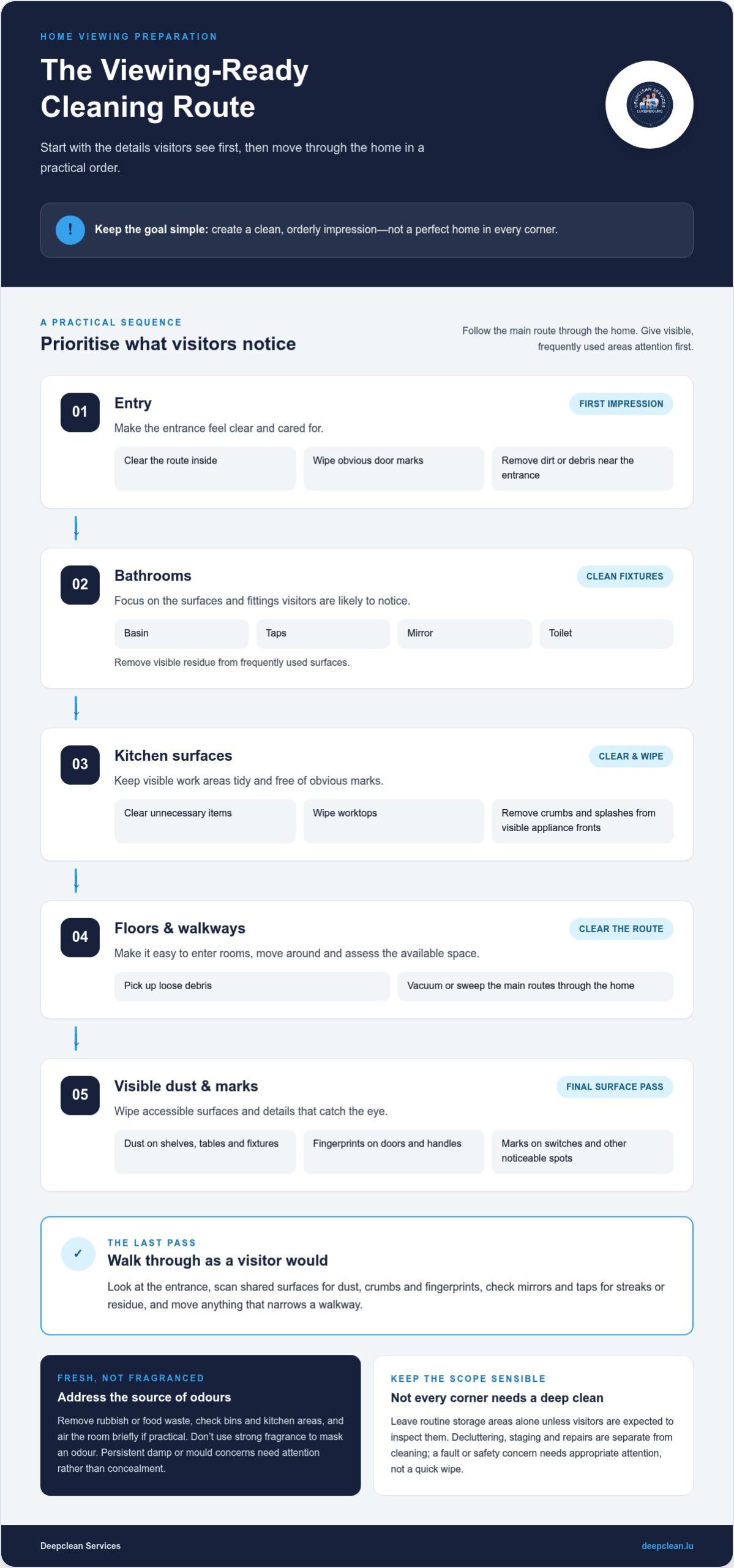
Use this priority order to decide where limited time will have the greatest visible effect:
- Entry: Clear the route inside, wipe obvious marks from the door and remove dirt or debris from the immediate entrance.
- Bathrooms: Clean the basin, taps, mirror and toilet, and remove visible residue from frequently used surfaces.
- Kitchen surfaces: Clear unnecessary items, wipe worktops and remove crumbs or splashes from visible appliance fronts.
- Floors: Pick up loose debris and vacuum or sweep the main routes through the home.
- Visible dust: Wipe accessible surfaces and noticeable dust on shelves, tables and fixtures.
Decluttering helps surfaces and rooms look orderly, but it isn’t the same as cleaning. Put away items that interrupt walking routes or cover surfaces visitors are likely to notice. Staging is about how rooms are arranged; repairs address faults or damage. Keeping these jobs distinct makes the cleaning plan manageable and helps ensure that a concern needing attention isn’t mistaken for dirt.
How Cleanliness Shapes a Prospective Viewer’s First Impression
Visitors experience a home in sequence. They enter through the doorway, move through shared spaces and then reach bedrooms or other private rooms. At each transition, they can notice the condition of surfaces and how easily they can move around. Cleanliness won’t guarantee a sale or tenancy, but it can keep attention on the property rather than on avoidable distractions.
This is why preparing for a home viewing cleaning is about more than ticking off chores. The aim is to create a comfortable setting where visitors can look around without being drawn to neglected details. A real-estate perspective on the Importance of Cleanliness in Home Sales also discusses how a tidy presentation can shape perception of a property.
Which visible details can distract visitors?
Small marks can stand out against otherwise tidy surroundings. A smudged entrance door, dust on a dark shelf, streaks on a mirror, residue around taps or crumbs on a counter are all easy to spot as someone looks around. Check surfaces at eye level and at the height people naturally use them, including handles and light switches.
Floors and walkways matter for practical reasons: clear routes make it easier to enter rooms, look around and assess the available space. Before the viewing, walk through the home as a visitor might and note anything that catches your eye.
- Look at the entrance from the doorway, including visible marks and floor debris.
- Check mirrors and taps for streaks or dried residue.
- Scan shared surfaces for dust, crumbs and fingerprints.
- Move items that narrow walkways or make room access awkward.
This quick visual check helps you direct effort where it will be noticed, rather than cleaning surfaces visitors are unlikely to see.
How can you make the home feel fresh without masking problems?
A fresh-feeling room doesn’t need a strong scent. If practical, open windows briefly to air the home, and remove rubbish or food waste before visitors arrive. Check bins, kitchen areas and other likely sources of lingering smells. Heavy fragrance can feel overpowering and may draw attention to an odour instead of resolving its cause.
If a damp or mould concern persists, don’t cover it with fragrance or simply wipe away visible evidence for the viewing. Treat it as a separate issue that needs attention. Cleaning can improve presentation, but it shouldn’t conceal a condition that may need further assessment or treatment.
Targeted cleaning creates a calmer viewing by keeping attention on the home, not on details that could have been dealt with beforehand.
If routine upkeep isn’t enough to get the property viewing-ready, a one-time home cleaning can provide practical support with broader preparation.
Home Viewing Cleaning Checklist: Work Room by Room
Use this checklist to clean in a steady sequence, finishing one room before moving on. That helps prevent missed surfaces and avoids cleaning the same area twice. Focus on what visitors can see and on clear access through the home. Cupboards and other hidden spaces can wait unless they’re part of the viewing.
The most useful viewing-day priority is simple: clean visible surfaces and fixtures, then leave floors and walkways clear.
Entryway, living areas and bedrooms
Start near the entrance and work towards the rooms visitors are likely to see. In shared spaces and bedrooms, remove dust from reachable surfaces before cleaning the floors. Straighten bedding and move loose items only as needed to wipe or vacuum around them. You don’t need to rearrange furniture or change your personal décor.
- Entryway: Wipe reachable surfaces and visible marks on the door, mirror or glass. Clear shoes or other items that obstruct the route inside.
- Living areas: Dust furniture tops, shelves and window ledges that are easy to see. Remove fingerprints from mirrors or glass, then vacuum or clean the floor, including the main path through the room.
- Bedrooms: Straighten the bed, wipe visible dust from furniture and ledges, and clean the floor. Keep walkways open so visitors can move around without stepping over belongings.
If you spot a mark on glass or another surface, address that specific area rather than turning the task into a full-room overhaul. A consistent pass through each room is usually easier to manage than jumping between small jobs around the home.
Kitchen and bathrooms
These rooms have frequently used surfaces and fixtures, so finish them with a careful wipe-down. Clear only what’s in the way of cleaning or makes a counter difficult to view. Once surfaces are clean, check the floor and remove any remaining debris.
- Kitchen: Wipe counters, the sink and taps. Remove crumbs and rubbish, and clean visible marks from appliance exteriors. Check the floor for dropped food or splashes.
- Bathroom: Clean the basin, taps, mirror and toilet. Look for visible water marks around the sink and on nearby surfaces. Replace used towels with fresh ones, and make sure the floor is clear and dry.
As you work through the rooms, put cleaning tools and products away once each area is finished. This helps the home feel orderly and keeps surfaces accessible for visitors. For preparing for a home viewing cleaning, the aim is a practical, room-by-room reset, not an unnecessary attempt to clean every hidden or rarely used space.
A Practical Cleaning Schedule Before the Viewing
A simple sequence keeps preparation manageable, especially if the home is occupied and time is limited. Start by clearing rubbish and anything blocking access, then clean surfaces and fixtures room by room. Finish with the floors, which can pick up dust and crumbs during earlier tasks, and leave a final walkthrough for just before visitors arrive.
Adapt the order and scope to the property’s size, current condition and the time you have. If the kitchen and bathroom need the most attention, prioritise them rather than trying to complete every possible task. For preparing for a home viewing cleaning, a clear plan is more useful than a fixed timetable that may not suit your home.
What to do in advance
Before starting, gather the cleaning supplies you’ll need and identify which rooms need the most work. Keeping supplies together reduces interruptions, while a quick look around helps you choose a realistic scope. Move belongings so counters, floors and other surfaces are accessible, and collect rubbish before it gets in the way.
- Clear rubbish and obstacles. Remove waste and move loose items that block cleaning access or walkways. Put away dishes and belongings that don’t need to remain on display.
- Clean rooms and surfaces. Work through the home in a consistent order. Wipe visible dust and marks, then clean the kitchen and bathroom fixtures that need attention.
- Finish the floors. Vacuum, sweep or clean floors after other tasks that may leave debris. If you’ve used a damp method, allow surfaces to dry before visitors arrive.
- Complete a final check. Walk through the property using the route visitors are likely to take. Make a short list of remaining marks or items that obstruct access, then address those priorities.
Some jobs are better completed before viewing day if they involve damp surfaces or need extra attention. Plan around how the home is used, too: leave yourself access to everyday essentials while keeping the areas being shown orderly.
What to check shortly before visitors arrive
Keep this last pass brief. You’re checking that the completed cleaning still looks presentable, not restarting the whole process. Look over the entrance, bathroom and kitchen, then scan visible surfaces and the main routes through each room.
- Remove bins, dishes and cleaning supplies from view.
- Look for fresh marks, visible dust or crumbs left after earlier tasks.
- Check that walkways are clear and floors are dry.
- Notice any lingering odours and address likely sources rather than masking them with fragrance.
Scale this walkthrough to the home: a larger property may call for a more deliberate route, while a well-maintained space may need only a brief scan. If broader preparation feels difficult to manage alongside other responsibilities, a one-time cleaning service can help with a more thorough reset before the viewing.
When Professional Cleaning Helps Before a Home Viewing
DIY cleaning may be enough if the home is already maintained and the remaining work is limited to a few visible marks or surfaces. Professional support is worth considering when several rooms need attention, grime has built up, or preparing for a home viewing cleaning is competing with other responsibilities. It’s an option, not a requirement for every viewing.
Decide by considering three things: the time you can set aside, the current condition of the property and the scope of the work. If you can comfortably complete the priority tasks yourself, a focused tidy and clean may be all that’s needed. If the list is longer than you can manage, a one-time clean can help with broader preparation.
When is a one-time or deep clean worth considering?
A one-time clean may suit an occupied home that needs more than routine upkeep before visitors arrive. For instance, several rooms may need a thorough refresh, or grime may have built up in the kitchen and bathroom beyond what you can address in a short preparation window. You can focus your own effort on putting away belongings and handling final presentation details.
Deep cleaning is a separate option for more intensive needs, rather than an automatic step before a viewing. If you’re deciding which level fits your home, compare the purpose of deep cleaning with regular cleaning. The right choice depends on the property’s condition and how much cleaning is needed, not simply on the fact that a viewing is scheduled.
How to arrange help without adding stress
Deepclean Services provides residential one-time and deep cleaning, with online booking, trained staff and flexible scheduling. Professional help can take broader cleaning tasks off your list while you concentrate on preparing the home for visitors. You don’t need to arrange a professional clean if your own checklist is manageable; use it as practical support when the scope or time pressure calls for it.
Before booking, identify which rooms and tasks need the most attention so you can make a clear plan for the property. Keep the focus on an occupied home being shown, rather than treating it as an empty-property or end-of-tenancy clean. That distinction helps keep the preparation appropriate to your circumstances.
If a one-time or deep clean would make preparation easier, book a residential cleaning service online. Choose the support that fits your home’s condition and available time, then use the room-by-room checklist to take care of any final viewing-day details.
Set Yourself Up for a Calm Viewing
Before the viewing, choose a clear stopping point. A home doesn’t need to feel untouched; it needs to feel cared for and comfortable to walk through. Decide which remaining jobs will make a visible difference, and leave less urgent tasks for another day. That way, preparing for a home viewing cleaning stays focused instead of becoming an endless last-minute project.
If cleaning the property feels like too much to manage alongside your other preparations, professional support can help with the practical work. Deepclean offers residential one-time and deep cleaning, carried out by trained staff, with online booking and flexible scheduling.
Give yourself room to focus on the viewing. Find out about professional home cleaning and take the next step towards presenting your home with confidence.
Frequently Asked Questions
Should I deep clean my whole home before a viewing?
No, most occupied homes don’t need a full deep clean just for a viewing. Focus on the areas and surfaces visitors are likely to see, then consider a more intensive clean if grime has built up in several rooms or routine maintenance has been missed. Preparing for a home viewing cleaning is easier if you separate essential presentation tasks from occasional jobs such as cleaning inside appliances.
How do I prepare my home for a viewing if I only have 30 minutes?
Use the time for a focused reset, not a whole-home clean. Collect rubbish and clear the route through the home first. Wipe obvious marks from kitchen and bathroom surfaces, then check the toilet and basin. Use the remaining time to pick up visible floor debris, remove dishes and cleaning supplies, and open a window if practical. Skip hidden storage and focus on what visitors will see.
Is it better to clean before or after decluttering for a home viewing?
Clear the surfaces and floor areas you need to clean first, then wipe or vacuum them. This doesn’t mean sorting every drawer or deciding what to keep. Move only the items that block access, such as dishes on a counter or shoes in a hallway. Once the area is clean, return necessary everyday items neatly. This keeps preparation focused and avoids cleaning around obstacles.
Should I use air freshener before prospective buyers visit?
It’s better not to rely on air freshener to create a fresh impression. Strong fragrance can feel overpowering and may make visitors wonder whether an odour is being concealed. Remove rubbish and food waste, check bins and kitchen areas, and ventilate if practical. If an unpleasant smell remains, look for its likely source instead of adding another scent. Addressing the cause is more useful than masking it.
Do I need to clean inside cupboards before a home viewing?
Usually, you can leave cupboard interiors alone unless visitors are expected to inspect them or the viewing arrangements make them relevant. If a cupboard is likely to be opened, make sure it’s accessible and deal with any obvious spill or debris on the visible shelf. There’s no need to reorganise every stored item for a routine viewing. Keep the effort proportionate to what visitors will actually see.
Can a professional cleaner help prepare an occupied home for viewings?
Yes. Professional cleaning can be useful if several rooms need attention, you’re short on preparation time, or the work feels difficult to complete alongside daily responsibilities. It doesn’t mean every task has to be handed over. Decide which areas matter most for the viewing, then keep personal items and documents you need secure and accessible. A focused plan helps make the support relevant to an occupied home.
What should I do about mould or a persistent damp smell before a viewing?
Don’t cover visible mould or a persistent damp smell with fragrance or paint. If practical, ventilate the room and note where the smell or marks appear, including whether they return after cleaning. A lingering damp odour may have a source that wiping alone won’t address. Arrange suitable attention for the underlying concern; mould removal is separate from routine viewing preparation.
Ready to make viewing preparation easier? Book a residential cleaning service online with Deepclean Services.