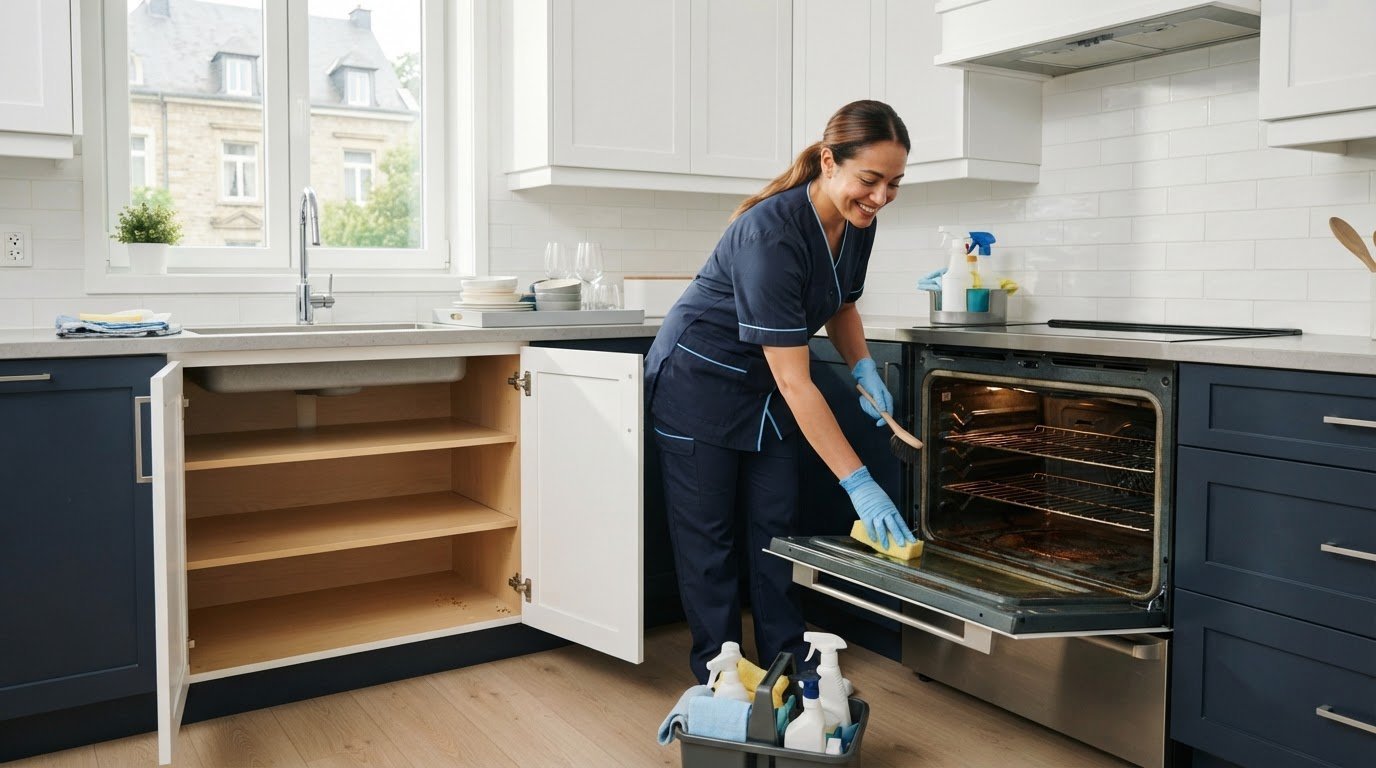
What if the safest way to tackle a messy kitchen is to treat its cabinets and oven as two different cleaning jobs? Grease, crumbs, and spills can collect inside cabinets, while baked-on oven residue may call for a different product and method. Cleaning inside cabinets and oven in one session can feel like a lot, especially when you’re unsure what’s safe for each surface.
That uncertainty is understandable. A clear sequence helps you work methodically, and checking product labels and appliance guidance can help prevent avoidable damage. Start with cabinet interiors: empty one section, remove loose debris, and clean gently. Then turn to the oven, choosing an approach suited to its surface and the amount of residue.
This guide explains how to prepare, clean, and dry both areas, with practical advice on product use and safety. You’ll also learn when a professional deep clean may be helpful if the kitchen reset feels too extensive to manage alone. The result is a clearer plan for restoring order without relying on harsh scrubbing or guesswork.
Key Takeaways
- Cleaning inside cabinets and oven calls for separate methods because their surfaces and types of residue differ.
- Use manufacturer care guidance to choose suitable products and protect cabinet finishes and oven surfaces.
- Work through one cabinet section at a time, keeping clean items separate from anything still waiting to be cleaned.
- A clear sequence, from preparation through drying and putting items back, helps keep the kitchen reset organised.
- When the task feels extensive or time is limited, professional deep cleaning can be a practical option.
Why Cleaning Inside Cabinets and an Oven Takes More Than a Quick Wipe
Kitchen counters and cupboard doors can look tidy while less visible areas collect a different kind of mess. Cleaning inside cabinets and oven means attending to hidden storage surfaces and the appliance interior, not simply wiping the surfaces you see every day. These zones need separate attention: crumbs and dust settle in storage spaces, while spills and cooking grease build up inside the oven.
Everyday upkeep helps manage fresh messes, such as wiping a new spill or brushing crumbs from a shelf. A more detailed clean reaches the corners, edges, and interior surfaces that routine tasks can miss. Treating both areas as part of one organised kitchen reset is useful, but it doesn’t mean using the same method or product everywhere.
Where dirt and cooking residue build up
Cabinet interiors often collect crumbs in corners, dust along shelf edges, and small spills where ingredients are stored. Drawer interiors can hold loose debris, while residue may hide beneath removable liners. Even if doors and handles look clean, opening a cupboard can reveal dust or sticky marks that need more than a quick pass over the front.
The oven has its own pattern of buildup. Food spills can dry onto the interior, and repeated cooking can leave baked-on grease. These marks may be hard to spot until the oven is cool and empty. Some ovens have self-cleaning features, but their operation and suitability vary by appliance. Check the manufacturer’s instructions before cleaning, and consult Self-cleaning oven technologies for an overview of how different systems work.
How to prepare for a controlled kitchen clean
Work through cabinets in manageable groups rather than emptying the whole kitchen at once. Place each group’s contents on a clean, clear surface, keeping items from different cupboards organised so they’re easier to return to the right place. This gives you room to inspect shelves and spot crumbs, sticky marks, or a liner that needs attention.
Remove loose crumbs and other dry debris before damp cleaning begins. A soft brush or suitable vacuum attachment can help reach corners without spreading debris across the shelf. For the oven, wait until it has cooled fully before cleaning the interior. This preparation gives you a clear view of what needs attention before you choose a cleaning method.
Clean-looking kitchen surfaces don’t always mean the interiors are clean. Separate this detailed task from routine upkeep, then plan the work zone by zone. That way, you can avoid treating cabinet finishes and oven surfaces as if they were the same material.
Choose a Safe Cleaning Approach for Cabinet and Oven Surfaces
A cleaner that works well on one kitchen surface may be unsuitable for another. Cabinet doors and interiors can have different materials or finishes, while oven interiors may include coatings that need specific care. Before choosing a product or tool, identify the surface as best you can and read its care guidance. The manufacturer’s instructions should take priority over general cleaning advice.
Match cabinet cleaning to the finish
Check the cabinet maker’s care instructions, especially if you’re unsure whether a surface is painted, laminated, wood, or another finish. Where those instructions allow, start with a soft cloth lightly dampened with water. Avoid soaking shelves or letting moisture sit around joints and edges. Excess water and forceful scrubbing may mark or damage some finishes.
Before cleaning a whole shelf, test your chosen method in a discreet spot. Follow the product label, apply only as directed, then check for changes such as dullness, colour transfer, or a sticky feel. If the finish reacts poorly, stop rather than increasing pressure or trying a stronger product. A soft cloth and careful, controlled passes are generally preferable to rough pads or abrasive powders, unless the manufacturer recommends another approach.
Respect oven surface and product instructions
Read the oven manual before selecting a cleaner. Interior coatings, self-cleaning functions, and removable parts can have different requirements. Racks and trays may need to be cleaned separately, so check their instructions rather than assuming the oven’s recommended method applies to them too. If the appliance has a self-cleaning setting, use it only as directed by its manufacturer.
Use cleaning products according to their labels, including directions on application, contact time, rinsing, and protective equipment. Ventilate the room while cleaning, particularly if a product has strong fumes. Never mix cleaning products: combining formulas can create hazardous fumes or reactions, and can make it harder to follow each product’s directions. Don’t use a scraper, scouring pad, or abrasive powder unless the appliance guidance says it’s suitable. When uncertain, pause and consult the manual instead of experimenting.
Keeping cabinet and oven care separate makes cleaning inside cabinets and oven more controlled: choose the method for each surface, test first, and follow product directions throughout. If the wider kitchen clean feels difficult to manage alongside everyday commitments, a professional residential deep clean may be a practical way to get support with a larger home-cleaning task.
Cabinet Interiors vs Oven Cleaning: Compare the Right Priorities
Cleaning inside cabinets and oven involves two distinct zones, so set priorities by surface rather than reaching for one method for the whole kitchen. Cabinet interiors need careful attention to dry debris, shelf surfaces, corners, and finish protection. An oven requires an approach suited to its cooled interior, food residue, removable components, and appliance care instructions.
| Cleaning zone | Common soil | Preparation | Main precaution |
|---|---|---|---|
| Cabinet interiors | Crumbs, dust, and small spills | Remove stored items and loose debris | Protect the finish and dry shelves thoroughly |
| Oven interior | Food spills and baked-on grease | Let the oven cool; check appliance guidance | Use only a method suitable for the model and surfaces |
Don’t assume one product or technique is right for both areas. A method suited to oven residue may be too aggressive for a cabinet finish, while a gentle cabinet-cleaning approach may not be suitable for the oven’s interior.
Cabinet interiors need a finish-conscious approach
For cabinets, the aim is to remove loose debris and residue without leaving shelves or corners damp. Work on interior surfaces separately from doors and exterior hardware, which may have different finishes and care needs. In food storage areas, follow the cleaner’s label, including any directions for rinsing or wiping, and let surfaces dry before returning food and containers.
Ovens need an appliance-specific approach
For an oven, follow the manufacturer’s guidance to select a suitable method for loosening and removing residue. Treat racks and removable components as separate parts, since their care instructions may differ from those for the fixed interior. Don’t assume every oven supports the same cleaner or self-cleaning method: appliance design and surface materials determine what’s appropriate.
Use the comparison as a checkpoint before starting. If the cabinet shelves are mostly dusty, focus on debris removal and gentle finish care. If the oven has dried spills, consult its instructions before choosing how to address them. For both zones, avoid improvising with a tool or product simply because it worked elsewhere in the kitchen.
How to Clean Inside Cabinets and an Oven Step by Step
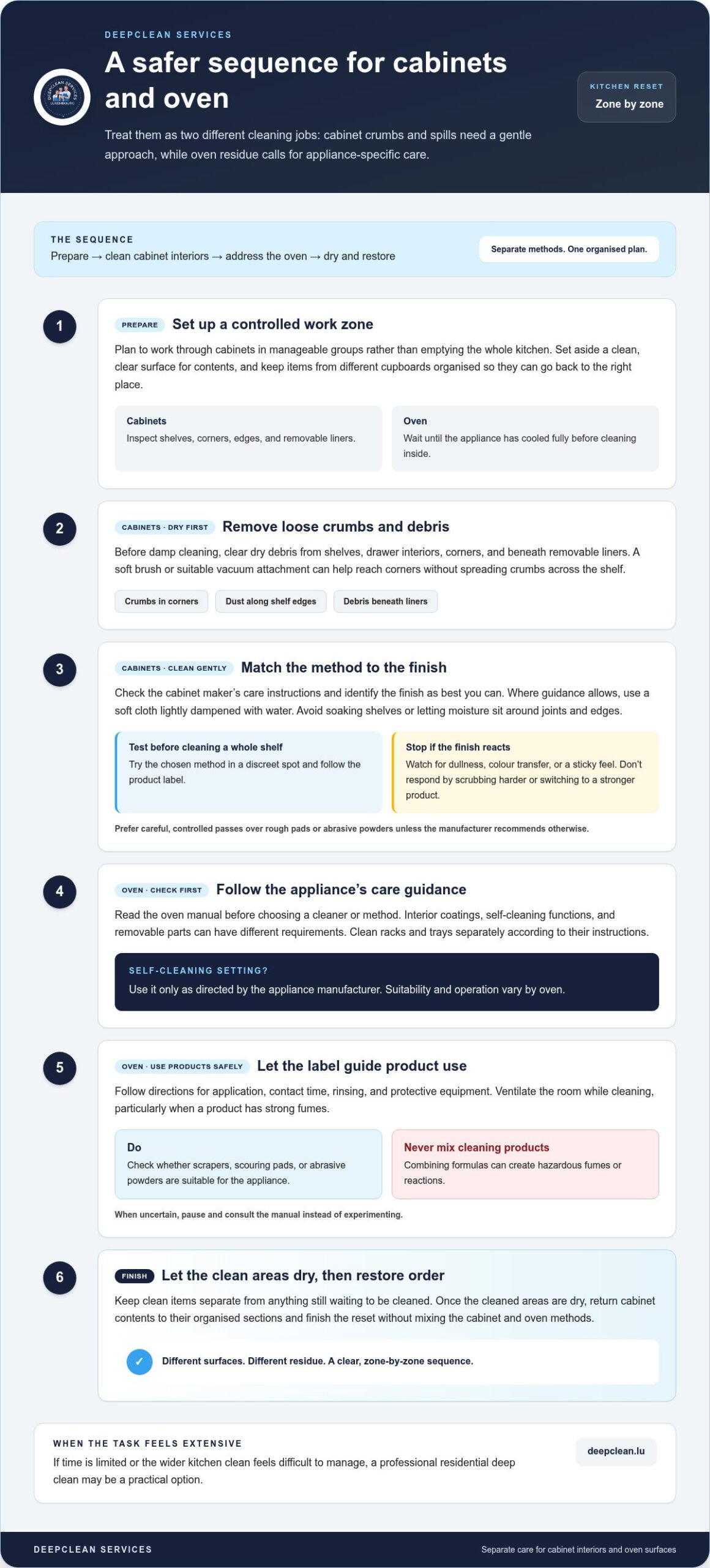
A simple order keeps the task manageable and helps prevent clean items from coming into contact with crumbs or cleaning residue. Work through one cabinet at a time, then clean the oven separately, following its care instructions and each product label. The sequence is straightforward: prepare, clean cabinet interiors section by section, address the cooled oven, and dry surfaces before putting items back.
- Prepare the work area. Gather suitable cloths and cleaning products, check care guidance for both cabinet finishes and the oven, and clear a clean surface for cabinet contents. Keep products for one area separate from those used for another.
- Empty one cabinet or drawer. Move its contents onto the clean surface, keeping items together so they’re easy to return. Avoid emptying every cupboard at once, which can make it harder to keep track of clean and unclean items.
- Remove loose debris. Use a suitable dry method, such as a soft brush or vacuum attachment, to lift crumbs from corners and shelf edges before wiping. This helps prevent dry debris from spreading across damp surfaces.
- Wipe and dry that section. Use a cloth and cleaning method permitted by the finish guidance. Work carefully along shelf surfaces and corners without applying excess moisture. Dry the area thoroughly, then return clean contents in an organised way before moving on to the next cabinet.
- Check the oven before cleaning. Make sure it’s fully cool, then consult the appliance’s care instructions. Confirm which products and methods are suitable for the interior, and follow the cleaner’s label for application, handling, and removal.
- Handle removable parts separately. If the manufacturer’s instructions permit, remove racks or other detachable components and clean them according to their own care guidance. Keep them apart from the fixed oven interior so each part is treated appropriately.
- Remove residue and finish with drying. Wipe away cleaner and loosened residue as directed on the product label and appliance guidance. Allow the oven interior and any removable parts to dry fully. Make a final check that cabinet shelves are dry and clean before replacing items.
Clean cabinet interiors in manageable sections
Complete each cabinet before opening the next. This creates a clear boundary between items waiting to be put away and those already returned to a clean, dry space. Take extra care around shelf joints and corners, where crumbs can remain. If a liner is removable, follow its care instructions rather than assuming it can be washed in the same way as the shelf.
Clean the oven interior with care
Keep oven cleaning distinct from cabinet cleaning, even if you’re doing both during one kitchen reset. Don’t apply a cabinet cloth or product to the oven unless its label and appliance guidance permit it. If residue remains after the directed cleaning process, avoid increasing pressure or switching to an abrasive tool without confirming it’s suitable.
If managing the full sequence feels difficult, book a residential deep clean for practical support with an extensive home-cleaning task.
When Professional Deep Cleaning Can Help With Cabinets and an Oven
Some kitchen cleaning tasks are straightforward to manage in small stages. Others are harder to fit around daily routines, especially when residue has built up or several cupboards and drawers need attention. If you’re weighing up cleaning inside cabinets and oven yourself, consider the scale of the work, how accessible the areas are, and the time you can set aside. Professional deep cleaning can be a practical option when the overall task feels extensive.
Signs that a more thorough clean may be useful
Persistent visible residue, multiple overdue storage areas, or a kitchen that needs attention beyond everyday upkeep can be reasons to reassess your plan. Think about whether you can safely reach the areas that need cleaning and whether you have enough time to work methodically without rushing surface-care instructions. A deep cleaning versus regular cleaning guide can help you consider which level of home cleaning best fits the broader task.
Professional support may also make sense if the job feels difficult to divide into manageable parts or has been postponed because it seems too time-consuming. Deepclean Services provides residential deep cleaning with trained staff and flexible schedules. It’s an option for organising a more extensive home-cleaning task without assuming that every kitchen or cleaning need is the same.
Plan kitchen cleaning around the wider home
Cabinet interiors and an oven can be considered as part of a wider home-care plan when those less-visible areas need attention alongside other priorities. A guide to regular cleaning services can help you think about routine upkeep separately from a more intensive clean. This distinction can make it easier to decide what needs attention now and what can be maintained over time.
Before arranging cleaning, consider the areas that matter most to you and the broader work you’d like to plan. Deepclean Services offers online booking for residential cleaning, including deep cleaning. Choose the service that fits the scale of your home-cleaning needs and plan a practical next step.
If professional help would make an extensive clean easier to organise, book a cleaning service online with Deepclean Services.
Make Your Next Kitchen Reset Easier to Plan
A kitchen feels easier to care for when detailed tasks have a place in your home routine rather than waiting until they become overwhelming. Choose a manageable time to address overlooked areas, or set aside the task if other priorities need your attention first. A clear next step is enough to keep the work from feeling like one more unresolved job.
If cleaning inside cabinets and oven feels too extensive to fit into your plans, professional deep cleaning can offer practical support with a larger household cleaning task. Deepclean Services provides residential cleaning options, including deep cleaning, with trained staff and flexible schedules.
Take the next step by choosing the support that works for your home. Book a cleaning service online with Deepclean Services and make room for a more manageable home-care plan.
Frequently Asked Questions
Can I use the same cleaner inside cabinets and in the oven?
No, don’t assume one cleaner is suitable for both areas. For cleaning inside cabinets and oven, check the care instructions for each surface and follow the cleaner’s label. Keep products and cloths designated for each area separate to avoid mix-ups. Never combine cleaners. If a surface’s care guidance allows it, test the chosen product discreetly before using it more widely.
How do I clean kitchen cabinets before putting food back?
Remove the food and other contents, then clear away loose crumbs before wiping the cabinet interior with a finish-appropriate method. Avoid spraying cleaner directly near food or onto shelves unless the product directions permit it. Check jars and containers for sticky residue, and wipe their exteriors separately if needed. Follow label instructions, then wait until the shelves are fully dry before returning clean, sealed food and other items.
What is the safest way to clean an oven interior?
Start with a completely cool oven and read its care instructions before choosing a cleaner or method. Pay attention to areas such as seals, vents, and heating elements, and don’t apply product to them unless the manufacturer permits it. Follow label directions for ventilation and residue removal. Before using the oven again, make sure the interior is free of cleaner residue and dry according to the appliance guidance.
Can I clean oven racks at the same time as the oven?
Yes, you can include the racks in the same cleaning session, but treat them as separate components. Check the oven guidance to see whether they can be removed and which cleaning method is suitable. Don’t soak or scrub them unless their instructions allow it. Keeping racks aside while you work on the oven interior helps prevent cleaner from transferring between surfaces. Return them only when they’re clean and fully dry.
How often should I clean inside kitchen cabinets and an oven?
There isn’t one schedule that suits every household. Let visible crumbs, spills, or oven residue guide when extra attention is needed, and consider how frequently you cook and use particular cupboards. For example, a cabinet used for baking ingredients may need checking sooner if flour spills are common. Build a quick inspection into your home-care routine, and consult the relevant care instructions before a more intensive clean.
What should I do if grease or baked-on residue does not come off?
Don’t respond by scrubbing harder or combining cleaners. Check the product label and surface instructions, and don’t exceed the recommended contact time. If the directions allow another application, follow them carefully and reassess the surface before repeating. Stop if you notice a change in the finish or coating. If residue remains across several areas or the job feels difficult to manage, professional deep cleaning may be a practical next step.
When should I book professional deep cleaning for kitchen cabinets and an oven?
Consider professional deep cleaning if residue is extensive, several kitchen areas need attention, or you can’t set aside enough time to manage the work carefully. Deepclean Services provides residential deep cleaning with trained staff and flexible schedules, and you can book online. Choose the service that best fits the scale of your home-cleaning needs.