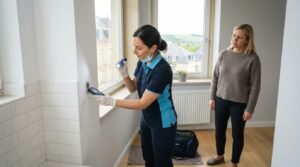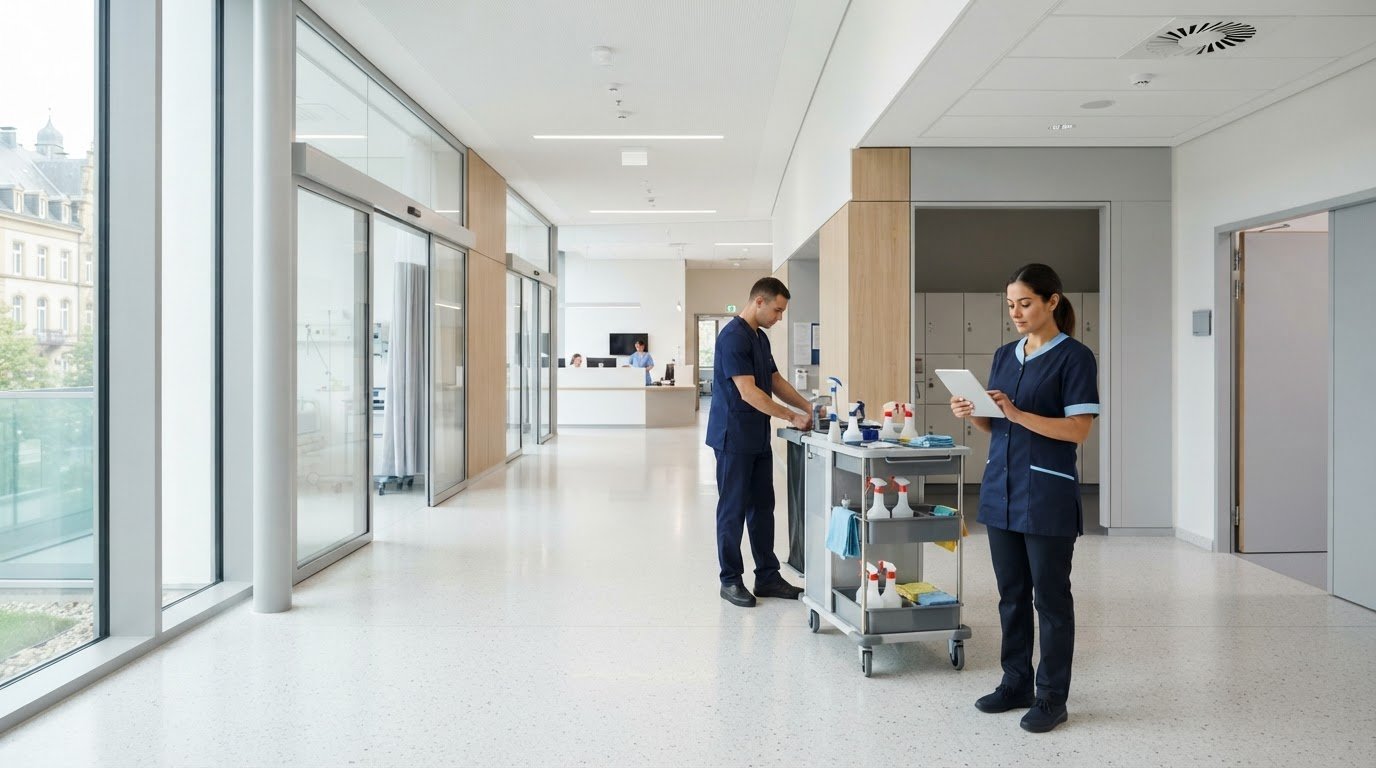
What makes hospital cleaning Luxembourg facilities can rely on is not simply doing more cleaning. It is planning each task around the space, its daily activity and access needs. Changing room use and the presence of patients, staff and visitors can make consistency difficult. A clear plan helps organise the work and limit disruption.
Responsibilities also need to be clear. Cleaning teams and clinical staff need a shared understanding of which tasks belong to each group, guided by the facility’s requirements and procedures. This guide explains how to scope cleaning by area, set a workable schedule and coordinate tasks with hospital operations. Deepclean Services supports hospitals across Luxembourg with regular, one-time and deep cleaning arrangements, flexible scheduling and online booking.
Key Takeaways
- Shape a hospital cleaning Luxembourg plan around the facility’s layout, activity and access needs, rather than relying on one schedule for every area.
- Organise tasks by area and frequency, and distinguish routine cleaning from one-time or intensive deep cleaning.
- Set clear responsibilities and communication points so cleaning fits daily operations without confusion.
- Use a setup checklist to map facility needs, access constraints, preferred schedules and operational contacts.
- Deepclean Services’ regular, one-time and deep cleaning arrangements can be tailored to support hospitals across Luxembourg.
Hospital Cleaning in Luxembourg: What Facilities Need from a Cleaning Plan
Hospital cleaning is planned cleaning of a facility’s environment, organised around the spaces people use and the work taking place there. It supports day-to-day upkeep, but is distinct from clinical care and does not, by itself, prevent infections.
In brief: Hospital cleaning is a defined schedule of environmental cleaning tasks, planned around a facility’s spaces, activity and operating needs.
A practical plan starts with three things: a clear scope, a reliable schedule and coordination with staff. Together, these make expectations visible and clarify who is responsible for each task and when it can be completed. For hospital cleaning Luxembourg facilities should plan around their own operations, rather than assume one schedule will suit every site.
Which hospital areas need different cleaning arrangements?
Different levels of use call for different task timing and coordination. Entrances and waiting areas have changing foot traffic, while offices and staff spaces may have more predictable occupancy. Patient-facing areas require particular attention to access and facility policy. The facility should define the appropriate tasks and timing instead of relying on a universal template.
Map spaces by use, access constraints and operational activity. A busy shared area may need a different schedule from an office occupied at set times. Access to patient rooms can also change as care and room use change. Recording these differences helps create a workable plan without prescribing clinical procedures.
Where does routine cleaning end and clinical responsibility begin?
Environmental cleaning covers facility spaces and surfaces within an agreed scope. Clinical procedures and medical-equipment reprocessing are separate responsibilities, so the plan should state who handles each task and which facility protocols apply, including in patient-facing spaces.
Some facilities use the term terminal cleaning procedures for cleaning a patient room after discharge. The facility’s policy should define the term’s meaning, scope and responsibility. A general explanation is not a substitute for local instructions.
Before setting procedures or assigning duties, facilities in Luxembourg should align the plan with current national guidance and their own policies. A written scope gives cleaning teams and clinical staff a shared reference point. It also provides a basis for organising tasks by area, frequency and access needs.
How Hospital Cleaning Tasks, Zones and Schedules Fit Together
A useful cleaning schedule turns the facility plan into a working document. It groups spaces by use, lists the agreed environmental cleaning tasks and shows when they can take place. For hospital cleaning Luxembourg facilities, this structure helps account for patient movement, appointments and staff workflows without treating every area as if it operates in the same way.
Build a zone-based hospital cleaning schedule
Divide the site into practical zones, such as entrances and waiting areas, offices and staff spaces, and patient-facing areas. For each zone, record the task owner, planned timing, access conditions and facility-specific instructions. Set frequency according to the area’s activity, facility policy and applicable guidance, rather than assigning a standard frequency by default.
Illustrative planning framework, not a clinical standard:
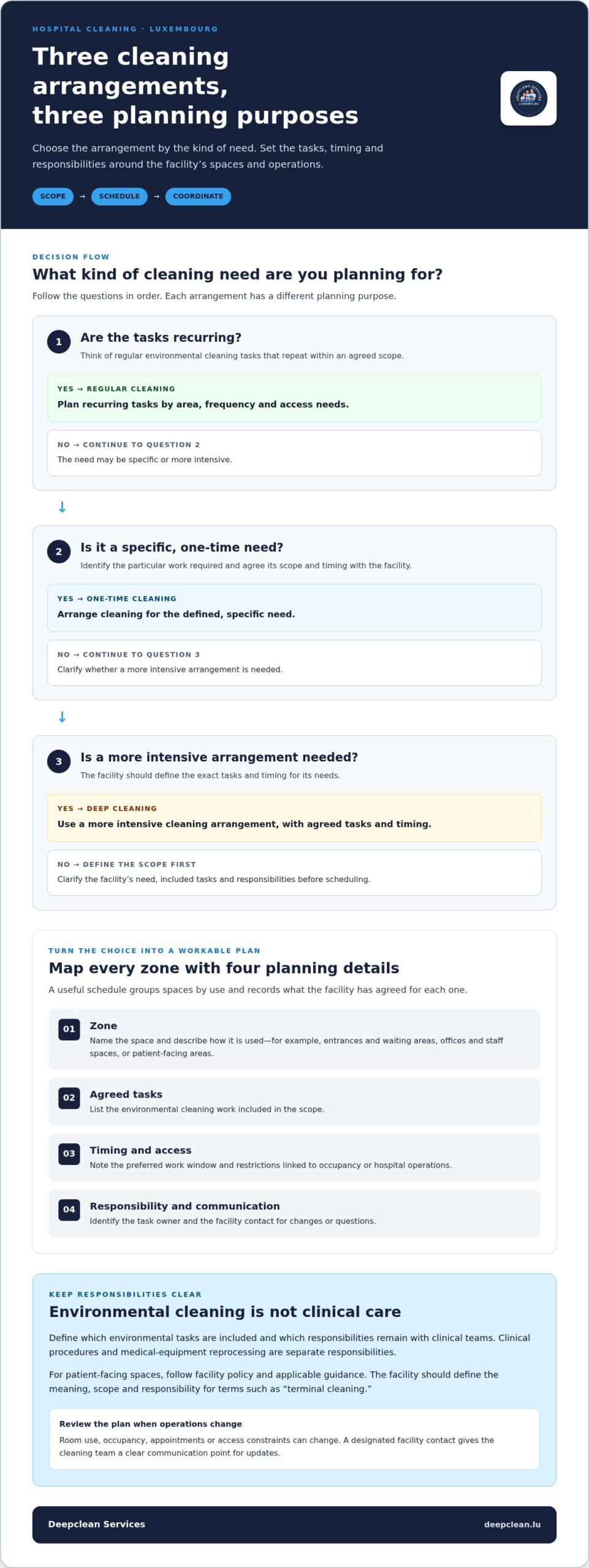
- Zone: Name the space and describe how it is used.
- Agreed tasks: List the environmental cleaning work included in the scope.
- Timing and access: Note the preferred window and restrictions linked to occupancy or operations.
- Responsibility and communication: Identify the task owner and the facility contact for changes or questions.
Review the framework when room use, occupancy or hospital operations change. A schedule that suits one pattern of activity may need adjustment when appointments shift or access becomes limited.
Set clear task boundaries and communication steps
Routine cleaning covers recurring tasks within the agreed scope. One-time cleaning addresses a specific need, while deep cleaning is a more intensive arrangement. Define the exact tasks and timing for the facility. Deep cleaning is not a substitute for clinical procedures or medical-equipment reprocessing.
Before work begins, document the environmental tasks included and the responsibilities that remain with the facility’s clinical teams. Keep clinical protocols under facility leadership and applicable guidance. The European disinfection guidance can serve as a reference, but it does not replace facility-specific instructions or current Luxembourg requirements.
Agree on a simple process for updates. A designated facility contact can communicate access changes, appointment constraints or operational interruptions to the cleaning team. This gives everyone a shared way to adjust the plan without relying on last-minute messages. To define a service scope, explore tailored cleaning arrangements with Deepclean Services.
Choosing Hospital Cleaning Support: Compare Scope, Reliability and Fit
Choosing cleaning support is about agreeing how the work will fit the facility. Compare arrangements by the areas and tasks covered, schedule flexibility, communication process and continuity. Outsourced cleaning can fit alongside hospital routines when responsibilities and access are agreed in advance. A clear scope helps prevent gaps and reduces the risk of disrupting appointments or staff workflows.
When does regular, one-time or deep cleaning fit?
Each arrangement serves a different planning purpose. This table provides a general comparison, not a clinical recommendation. The facility should determine suitable tasks and timing according to its policies and applicable guidance.
| Arrangement | Purpose | Planning consideration |
|---|---|---|
| Regular cleaning | Recurring cleaning needs managed through an agreed schedule. | Set the scope and timing to reflect the facility’s ongoing activity. |
| One-time cleaning | A discrete cleaning appointment for a defined need. | Clarify the areas and tasks included. It does not replace ongoing planning where needs recur. |
| Deep cleaning | A more intensive cleaning arrangement for identified facility needs. | Agree the scope and access arrangements without assuming a specific clinical or remediation outcome. |
These options help facilities plan hospital cleaning Luxembourg arrangements for recurring and occasional needs while keeping clinical work separate from environmental cleaning.
What makes a cleaning arrangement workable for a hospital?
Check the practical details. Does the agreed scope identify the areas and environmental tasks? Does the schedule account for occupancy, appointments and access restrictions? Is there a named facility contact who can communicate changes to the cleaning team? These questions make coordination concrete. Responsibilities can be documented, while clinical protocols remain under facility direction. The ECDC infection prevention and control guidance may provide useful context, but local requirements and facility procedures should guide operational decisions.
Continuity also depends on having a straightforward way to share updates and keep expectations aligned. Deepclean Services provides regular, one-time and deep cleaning for hospitals and commercial facilities across Luxembourg, with trained staff and flexible schedules. For a broader view of facility cleaning arrangements, read about commercial cleaning services in Luxembourg.
Plan Hospital Cleaning in Luxembourg: A Practical Setup Checklist
A workable arrangement starts with a clear brief and a shared understanding of how cleaning fits the facility’s daily operations. Use this checklist to identify needs and review the plan. It can guide hospital cleaning Luxembourg arrangements without prescribing clinical procedures or setting a universal schedule.
Prepare a clear facility brief
Describe the facility and how its spaces are used. A concise brief turns general expectations into an agreed scope of work.
- Map the areas. List the spaces to include, such as entrances, waiting areas, offices, staff spaces and patient-facing areas. Note differences in use and occupancy.
- Identify priorities. Record the environmental cleaning tasks being considered for each area. Separate these from clinical procedures and tasks governed by facility protocols.
- Set out access needs. Note preferred scheduling windows, access arrangements and operational restrictions. For example, explain where appointments or staff workflows may limit access, without assuming a standard time or frequency.
- Agree responsibilities. Name the facility contact who coordinates service details and receives updates. Record the agreed scope, task owner and process for raising access changes or operational issues.
- Check requirements. Review current Luxembourg guidance and facility-specific policies that may affect the arrangement. Keep clinical instructions under facility leadership.
Review the arrangement as facility needs change
Keep the plan useful as spaces and operations change. Schedule conversations between the facility contact and cleaning team to review scope, access constraints and scheduling preferences. A room’s new use or a change in appointment patterns may affect how the work is coordinated.
Keep a dated record of agreed adjustments and share it with relevant staff and the service team. This reduces the chance that people rely on different versions of the plan. If requirements are uncertain, resolve them through the appropriate facility lead or current guidance before changing task responsibilities or instructions.
Before finalising the arrangement, check that the brief identifies each area, describes the agreed environmental tasks, notes access conditions and names a coordination contact. Establish how updates will be communicated and when the plan will be reviewed. A written framework supports continuity while leaving facility-specific clinical decisions where they belong.
With the planning points in place, explore Deepclean’s cleaning services to arrange support tailored to your facility’s needs.
Deepclean Hospital Cleaning Services: Arrange Dependable Support
Deepclean Services provides commercial cleaning across Luxembourg, including for hospitals. Its trained staff, flexible schedules and focus on quality support facilities looking to organise cleaning around their activity and operational needs. Arrangements can be tailored to the facility’s project, agreed scope and preferred schedule, while clinical procedures remain under the facility’s direction.
A clear starting brief makes it easier to discuss hospital cleaning Luxembourg in practical terms. Outline the areas in scope, requested environmental cleaning tasks, access considerations and scheduling preferences. This gives facility contacts and cleaners a shared reference for coordination without assuming a particular clinical protocol or outcome.
What to expect when arranging hospital cleaning
Prepare a concise overview of the facility’s spaces and how they are used. Identify the tasks you want to discuss, access constraints and the schedule that best fits operations. A designated facility contact can coordinate service details and communicate relevant changes. Defining the scope helps everyone understand the arrangement and plan around staff activity and facility routines.
Keep the discussion focused on environmental cleaning. Facility leadership should continue to direct clinical responsibilities and applicable procedures. The cleaning arrangement can then reflect the facility’s needs without confusing the responsibilities of cleaning teams and clinical staff.
Keep hospital cleaning organised over time
Once the arrangement is agreed, keep a written record of its scope, schedule, access notes and coordination contact. Share updates through the facility’s chosen contact when room use, operational activity or access conditions change. Recording adjustments helps facility staff and the cleaning team work from the same expectations instead of relying on informal or outdated instructions.
For recurring arrangements, periodic conversations can keep the agreed scope aligned with current needs. The guide to regular cleaning services offers further context for planning ongoing cleaning. Deepclean Services regular, one-time and deep cleaning arrangements can be tailored to a facility’s requirements, with flexible scheduling and online booking.
Ready to organise support for your facility? Book a cleaning service online and outline the areas, tasks and scheduling needs you’d like to discuss.
Build a Cleaning Plan Your Facility Can Rely On
Dependable hospital cleaning Luxembourg arrangements start with a facility-specific scope, a schedule that fits daily activity and clear responsibilities for cleaning teams and clinical staff. Mapping areas, access needs and operational contacts gives everyone a practical reference. Regular reviews help keep the plan aligned as facility needs change.
Deepclean Services serves hospitals and commercial facilities across Luxembourg, with trained staff, flexible schedules and a focus on quality. Its cleaning arrangements can be tailored to your facility’s needs, helping you organise support with clear communication and less disruption to daily operations.
Take the next step with a defined brief and a schedule that works for your facility. Arrange professional hospital cleaning with Deepclean and move forward with a clearer, more dependable plan.
Frequently Asked Questions
What does hospital cleaning typically include?
Hospital cleaning typically covers agreed environmental cleaning tasks in facility spaces. Depending on the scope, this may include floors, shared surfaces, entrances, waiting areas, offices, staff spaces and patient-facing areas. Facility leadership should define the areas, tasks and timing, since access and policies vary. Clinical procedures and medical-equipment reprocessing are separate responsibilities. Cleaning supports upkeep of hospital environments, but should not be presented as a standalone way to prevent infections.
How often should a hospital be professionally cleaned?
There is no single cleaning frequency that suits every hospital area. Set schedules according to how spaces are used, occupancy, access needs, operational activity and applicable facility procedures. For example, a heavily used shared area may need a different plan from a staff office with predictable occupancy. Define frequencies in the cleaning schedule and review them if room use or operations change, rather than assuming a universal standard.
Can hospital cleaning be scheduled around patient care and staff routines?
Yes. Plan cleaning around patient care and staff routines by agreeing on access conditions, preferred time windows and a process for communicating changes. The facility can identify areas where appointments, occupancy or workflows affect access, then coordinate the schedule accordingly. A designated contact helps share updates with the cleaning team. Agree timing for the specific facility without overriding its clinical direction or procedures.
What is the difference between hospital cleaning and disinfection?
Cleaning generally refers to removing visible soil and everyday dirt from the environment, while disinfection uses a suitable method or product to reduce microorganisms on surfaces. These are different processes, and disinfection may require specific facility instructions and appropriate conditions. State which environmental tasks are included in the agreed scope. Decisions about where or when disinfection is required should remain under facility leadership and applicable guidance.
Who is responsible for cleaning medical equipment?
The hospital’s policies and applicable instructions should define responsibility for medical equipment. Equipment may require cleaning, disinfection or reprocessing according to its use and the manufacturer’s directions, so a general environmental cleaning scope should not assume those tasks are included. Facility leadership should identify the responsible clinical or technical personnel and communicate clear boundaries to cleaning teams. Resolve unclear responsibilities through the facility’s designated lead before work begins.
Can a commercial cleaning company clean hospitals in Luxembourg?
Yes. A commercial cleaning company can provide environmental cleaning support in hospitals when the facility and cleaning team clearly define the service scope, access arrangements and responsibilities. Deepclean Services serves hospitals and other commercial facilities across Luxembourg, with trained staff and flexible schedules. Its cleaning arrangements can be tailored to facility needs. Clinical procedures and medical-equipment reprocessing remain separate from the agreed environmental cleaning work and under the facility’s direction.
How can a hospital prepare for a professional cleaning service?
Prepare a brief that identifies the areas to be cleaned, requested environmental tasks, access conditions, scheduling preferences and operational restrictions. Name a facility contact to coordinate details and communicate changes. Clarify which tasks are included and which remain under clinical or facility responsibility. Sharing this information before work begins gives the facility and cleaning team a practical reference for coordinating with daily operations without relying on assumptions.
What should a hospital include in a cleaning schedule?
A useful schedule identifies each area, the agreed environmental tasks, task owner, planned timing, access conditions and facility-specific instructions. It should also name the contact for updates and explain how operational changes are shared. Do not assume one frequency or set of tasks suits every zone. Review the schedule when occupancy, room use or facility operations change, and keep clinical procedures under the facility’s direction.