
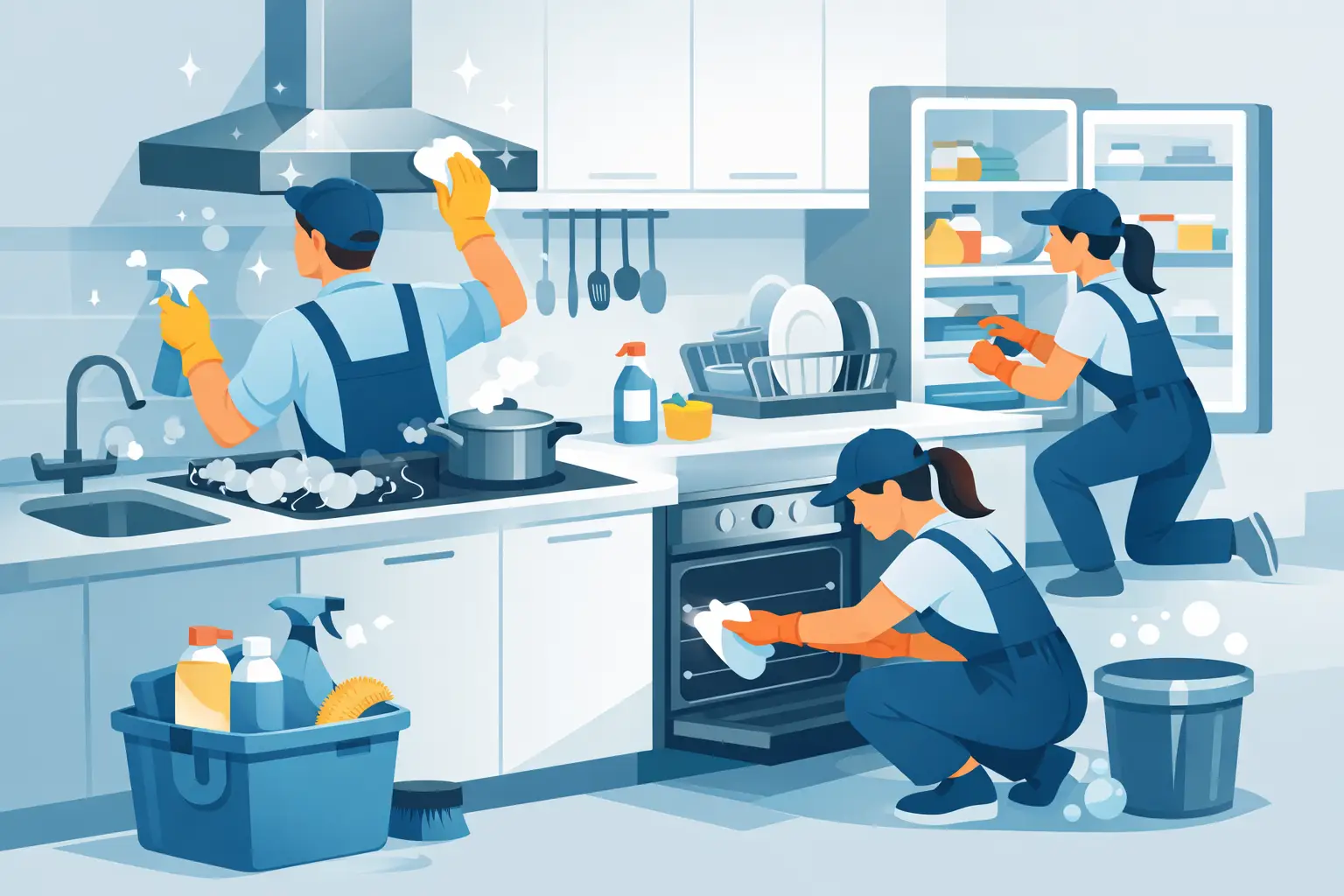
The grease on a range hood, crumbs trapped beneath an oven, and sticky cabinet handles do not disappear with a quick wipe. They build up quietly until the kitchen feels harder to use and harder to keep clean. A deep kitchen cleaning service handles the detailed work that regular cleaning often leaves behind, restoring the room where meals, family time, and daily routines all meet.
For busy households, renters preparing to move, landlords between tenants, and workplaces with shared break rooms, the value is simple: a cleaner kitchen without giving up a weekend to scrubbing. The right crew arrives prepared, works carefully around the space, and leaves visible results on the surfaces people touch and the areas they usually do not see.
When a Kitchen Needs More Than Regular Cleaning
Regular cleaning keeps a kitchen presentable. It usually means washing dishes, wiping counters, sweeping floors, and taking out the trash. That routine matters, but it does not fully remove cooked-on grease, food residue around appliance seals, dust above cabinets, or buildup behind and beneath heavy equipment.
A deep clean is a good fit after a busy season of cooking, before hosting guests, at the end of a lease, or when a kitchen has simply fallen behind. It is also useful after renovation work, a long vacancy, or a move into a property that needs a fresh start. In commercial settings, a more detailed kitchen or break-room clean can help create a cleaner, more comfortable place for staff and visitors.
The goal is not to make a kitchen look temporarily tidy. It is to address the dirt that affects hygiene, appearance, odors, and the effort required to maintain the space afterward.
What a Deep Kitchen Cleaning Service Includes
Every kitchen has different needs. A small apartment kitchen may need focused attention on the oven, sink, cabinets, and floor. A family kitchen may have grease around the cooktop, fingerprints on every handle, and spills hidden behind appliances. The scope should be adjusted to the condition of the room, not treated as a one-size-fits-all checklist.
Appliances and cooking areas
Cooking areas receive the heaviest buildup. A professional team can clean the cooktop, burners, control knobs, backsplash, range hood exterior, and the surrounding wall surfaces. Grease is removed with suitable cleaning products and tools rather than harsh scraping that can damage finishes.
Ovens, microwaves, refrigerators, and dishwashers may also be cleaned inside and out, depending on the service agreed upon. Oven interiors often need extra time because baked-on residue does not lift with a standard surface cleaner. Refrigerator shelves, drawers, door seals, and exterior handles can collect food particles and sticky marks that affect both cleanliness and odor.
For safety and access, it is always worth discussing what can be moved before the appointment. A cleaning crew can work around accessible appliances, but disconnecting gas lines, electrical connections, or built-in units is not part of a normal cleaning service.
Cabinets, counters, and touchpoints
Cabinet fronts, handles, drawers, counters, and backsplashes may look clean from a distance while carrying a layer of cooking residue. Deep cleaning reaches these high-touch areas, including edges, grooves, and spaces around handles where grime collects.
The correct method depends on the material. Natural stone, wood, stainless steel, laminate, and painted cabinetry should not all be treated the same way. Strong degreasers can be effective on suitable surfaces, but using the wrong product on stone or unsealed wood can cause dullness, staining, or damage. Trained cleaners choose methods based on the surface and the level of buildup.
Counters are cleaned and sanitized where appropriate, with attention to seams, corners, and the area behind small appliances. This is especially useful in kitchens where coffee makers, toasters, blenders, or knife blocks have not been moved for some time.
Sink, faucet, and waste areas
The sink is one of the busiest parts of the kitchen and one of the easiest places for odors to develop. A detailed service cleans the sink basin, faucet, drain area, splash zone, and nearby wall or counter surfaces. Mineral deposits around the faucet and grime at the base of fixtures need a different approach than food residue inside the basin.
Trash and recycling areas also deserve attention. Even when bins are emptied regularly, spills and residue can remain on lids, surrounding floors, and cabinet interiors. Cleaning these areas can make a noticeable difference to the overall freshness of the room.
Floors, edges, and overlooked spaces
Kitchen floors collect far more than visible crumbs. Grease droplets, tracked-in dirt, pet hair, and food spills often settle along baseboards, under tables, and beside appliances. A deep service includes thorough vacuuming or sweeping followed by cleaning suited to the floor type.
Tile and grout may need special attention, particularly near the stove and sink. Wood and laminate floors require controlled moisture to avoid damage. The best result is not the wettest floor – it is a clean floor that dries properly and is safe to walk on.
Dust can also build above cabinets, on light fixtures, vents, window ledges, and door frames. These details are easy to miss during routine maintenance, yet they change how clean the entire kitchen feels.
What to Do Before the Cleaning Crew Arrives
A little preparation helps the team spend more time cleaning and less time sorting belongings. Clear the counters where possible, put away personal items, and remove fragile objects from open shelves. If you want cabinet interiors, the refrigerator, or pantry shelves cleaned, emptying them beforehand is usually the most efficient option.
Let the crew know about delicate surfaces, existing damage, stubborn stains, or appliances that need special care. It also helps to identify your priorities. If the oven is the main concern, say so. If you are moving out and need the kitchen ready for an inspection, the cleaner can focus on the areas most likely to be checked.
Pets should be kept comfortable and safely away from active work areas. Good access to water, electricity, and the kitchen itself allows the service to move efficiently.
Deep Cleaning Versus Ongoing Kitchen Maintenance
A professional deep clean creates a clean baseline, but everyday habits keep that result going longer. Wiping the cooktop after it cools, cleaning spills promptly, emptying food waste, and regularly wiping cabinet handles all reduce future buildup. A quick weekly clean is easier when the heavy grease and hidden dirt have already been removed.
How often a kitchen needs deep cleaning depends on how it is used. A household that cooks most meals at home, has young children, or uses a lot of frying may benefit from more frequent detailed cleaning. A lightly used kitchen may only need it seasonally or before a move. Shared office kitchens often need regular attention because many people use the same counters, appliances, and sinks.
There is a trade-off between a basic one-time clean and a deeper service. A basic clean is ideal for upkeep and visible surfaces. A deep clean takes more time because it targets buildup, difficult areas, and detail work. Choosing the right level means paying for the results the space actually needs.
Choosing a Cleaning Team You Can Trust
Kitchen cleaning involves food-preparation surfaces, valuable appliances, and materials that can be damaged by poor methods. Look for a company that uses trained staff, professional equipment, clear service details, and products suited to the work. Reliable scheduling and supervision matter too, especially for move-out deadlines, property turnovers, and workplaces that need cleaning outside normal hours.
Ask what is included before booking. Confirm whether appliance interiors, cabinet interiors, wall washing, and hard-to-reach spaces are part of the job or available as add-ons. Transparent pricing makes it easier to plan the service without surprises.
Deepclean Services provides one-time and scheduled cleaning throughout Luxembourg, with trained crews ready to handle demanding kitchen cleaning alongside other home and workplace needs. The focus is practical: thorough work, flexible scheduling, and a kitchen that feels clean and fresh when the job is done.
A kitchen does not need to stay stuck in the cycle of quick wipes and growing grime. Set aside the heavy work for a professional clean, then enjoy the simple relief of cooking, gathering, and starting the day in a space that feels cared for.



Pingback: Cleaning Kitchen Cabinets Without Damaging Them – Deepclean Services