Clear records prevent more cleaning disputes than a last-minute argument does. A practical way of avoiding landlord disputes over cleaning is to agree on the expected standard at the start of the tenancy, record the property’s condition, and compare that evidence with its condition at move-out. Any proposed deduction should be tied to a specific cleaning issue and supported by clear records.
Tenants want their deposit returned fairly, while landlords need a reliable way to assess the property’s condition. The key is to distinguish cleaning issues from normal carpet wear and base decisions on evidence, not assumptions.
This article explains how tenants and landlords in Luxembourg can set shared expectations, document carpet condition, and assess cleaning-related deductions fairly. It also covers common causes of disagreement and practical steps for resolving concerns calmly.
Key Takeaways
- Use consistent check-in and check-out records so both parties can compare the property’s condition against the same baseline.
- Separate ordinary carpet ageing from specific damage by considering the carpet’s condition before and after the tenancy.
- Support any proposed cleaning deduction with clear, itemised evidence and keep communication about the issue in writing.
- Identify vague cleaning expectations early; differing assumptions about responsibilities are a common source of move-out disagreements.
1. How can tenants and landlords avoid disputes?
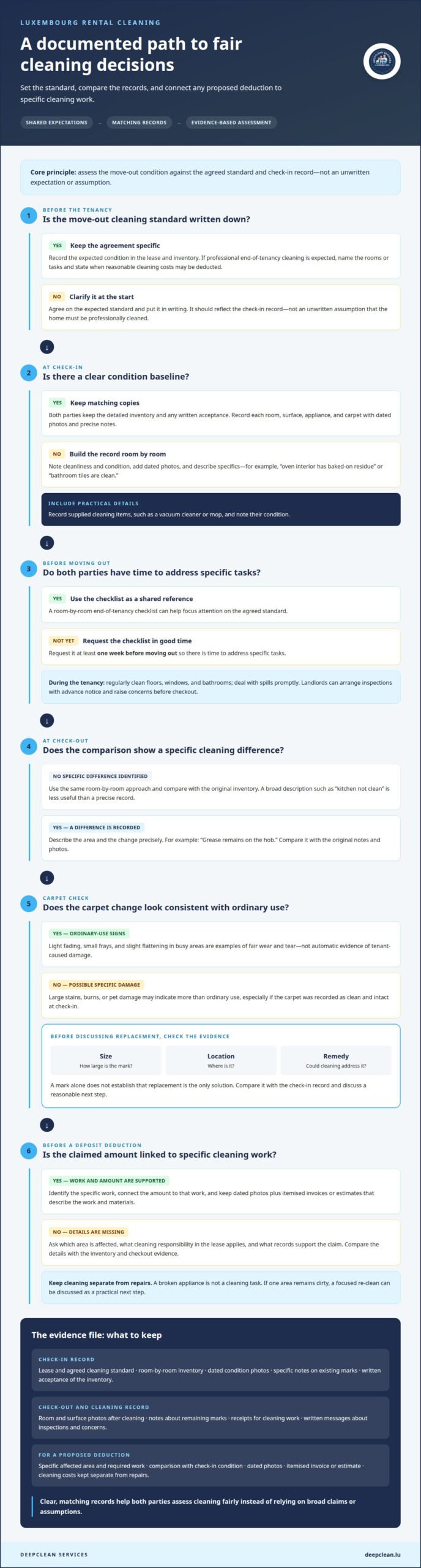
In Luxembourg, tenants should agree on the move-out cleaning standard with the landlord at the start of the tenancy and record it in the lease and inventory. The expected condition should reflect the check-in record, not an unwritten expectation that the home must be professionally cleaned. Specific written expectations are a practical first step to avoiding landlord disputes over cleaning.
Address professional end-of-tenancy cleaning in the written agreement. The lease can specify which rooms or tasks require professional attention and when the landlord may deduct reasonable cleaning costs. This clarifies each party’s responsibilities before assumptions cause disagreement.
A detailed inventory gives both parties a practical baseline. At check-in, record the cleanliness and condition of each room, surface, appliance, and carpet. Add dated photos and specific notes, such as “oven interior has baked-on residue” or “bathroom tiles are clean.” Both parties should keep the report and any written acceptance of its contents.
Use the same room-by-room approach at check-out. Compare the final condition with the original inventory and describe any differences precisely. “Grease remains on the hob” is more useful evidence than “kitchen not clean.” Request an end-of-tenancy checklist at least one week before moving out, so the tenant has time to address specific tasks.
Before signing, clarify which cleaning supplies come with the rental and record them in the inventory. For example, list any vacuum cleaner or mop provided and note its condition. During the tenancy, regularly clean floors, windows, and bathrooms, and deal with spills promptly to prevent avoidable build-up. Landlords can also arrange inspections with advance notice and raise concerns before checkout.
A consistent process for avoiding landlord disputes over cleaning relies on clear standards, matching inspection reports, and specific evidence. Storing agreements and inspection logs in a dedicated rental management workspace like rentdesktt.com makes it easier to access these records, evaluate whether cleaning is needed, and ensure any proposed deduction is fair.
2. Carpet marks, replacement and fair wear and tear
Assess a rental carpet by comparing its move-out condition with the check-in record. Normal use may cause light fading, small frays, or slight flattening in busy areas. These are examples of fair wear and tear, not automatic evidence of tenant-caused damage. A clear starting record helps distinguish gradual change from a new mark.
At move-in, tenants should document existing stains, damage, and discolouration in writing, with close-up photographs showing the affected areas. For example, record a dark mark beside the bedroom doorway rather than describing the whole carpet as “worn.” Report new damage or excessive wear promptly during the tenancy. A timely message creates a record and gives both parties a chance to discuss practical steps.
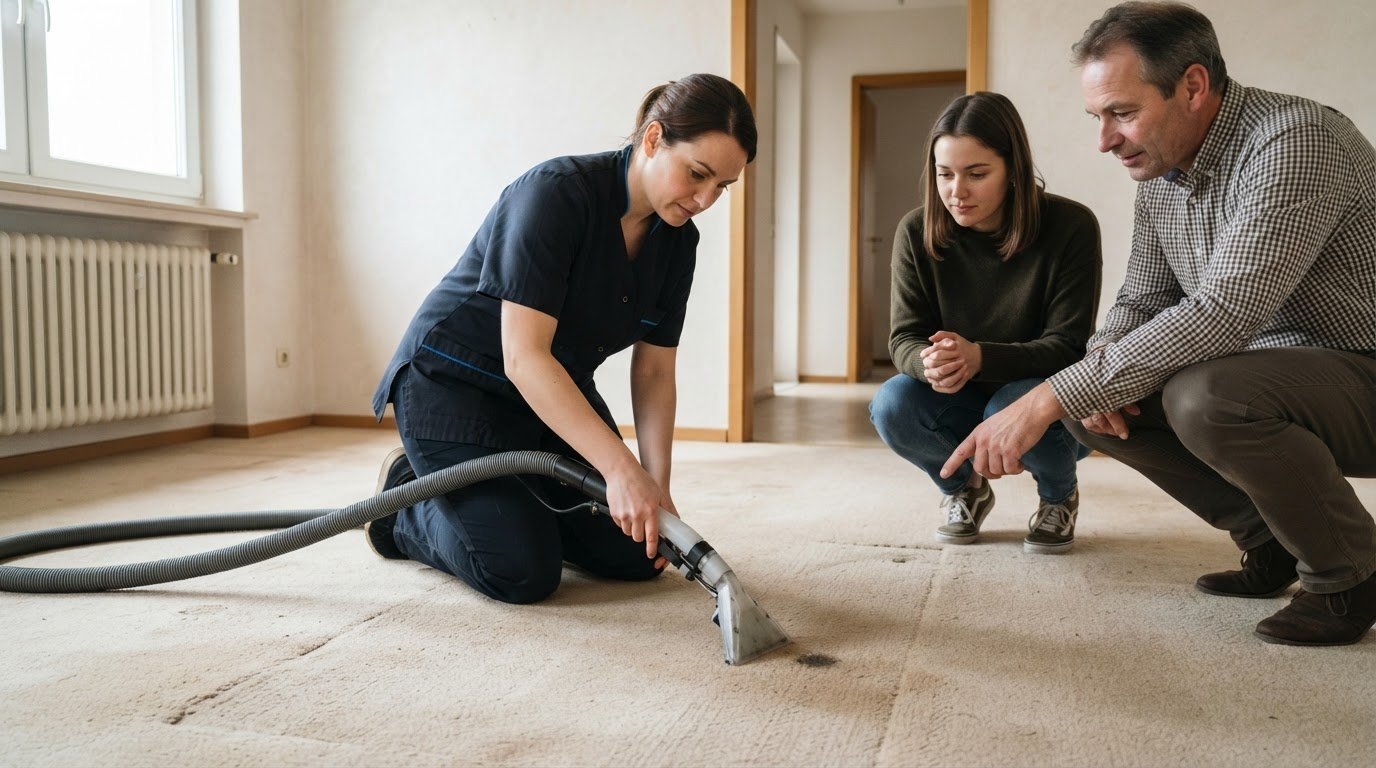
At checkout, compare each marked area with the original notes and photos. Distinguish older marks from changes that appeared during the tenancy, and describe the differences clearly. If cleaning does not remove a stain, keep a record and discuss a reasonable next step. Any replacement discussion should focus on documented damage, not normal wear over the carpet’s useful life. This evidence-led approach can reduce disagreements and support a fair assessment.
Regular care also helps limit everyday dirt build-up. For scheduled upkeep of a rental property, regular cleaning services can help maintain shared cleanliness standards.
3. Evidence and fairness in cleaning-related deposit deductions
In Luxembourg, assess a cleaning deduction against the lease, agreed responsibilities, and documented property condition. A fair claim identifies the specific work required and explains how the amount relates to that work. A general statement such as “cleaning needed” gives neither party a clear basis for discussion.
Before proposing a deduction, landlords should compare check-in and check-out records and identify each difference. Dated photos can show a dirty oven, residue on bathroom tiles, or a carpet stain. Keep itemised invoices or estimates that describe the work and materials. Separate cleaning from repairs: a broken appliance is not a cleaning task.
Before moving out, tenants should take dated photos of rooms, surfaces, appliances, and carpets after cleaning. Keep receipts for cleaning work, notes about any remaining marks, and written messages arranging inspections or discussing concerns. Together, these records document the property’s condition and help distinguish cleaning issues from pre-existing damage or wear and tear.
To challenge a proposed deduction, a tenant can ask the landlord to identify the affected area, explain the cleaning responsibility set out in the lease, and provide supporting records. Compare those details with the original inventory and checkout evidence. If a particular area remains dirty, suggest a focused re-clean as a practical way to resolve the disagreement before it escalates.
A reasonable assessment links the claimed amount to the specific work needed to restore the agreed cleanliness standard. Landlords should keep dated invoices or estimates and avoid charging for unrelated repairs. Tenants should retain their own cleaning records and expenditure details. Clear documentation helps both sides assess the deposit fairly instead of relying on assumptions or broad claims. Similarly, for property investors and business owners managing broader corporate portfolios or cross-border assets, working with corporate management and accounting specialists such as Elevate Advisory Group Kft. helps ensure financial records and corporate obligations remain orderly.
Assess any cleaning deduction against the lease, the parties’ agreed responsibilities, and documented evidence of the property’s condition. A claim should identify the specific cleaning required and show how the amount relates to that work, keeping cleaning separate from repairs.
4. Common causes of move-out cleaning disputes
Many disagreements start with different ideas of what “clean” means. A tenant may consider a kitchen acceptable after wiping the counters, while a landlord expects the oven, extractor hood, and cupboard interiors to be cleaned too. In Luxembourg, prevent this mismatch by listing specific tasks in the tenancy agreement instead of relying on a general phrase such as “leave the property clean.”
Vague clauses cause further problems. An agreement that says “professional cleaning required” without naming rooms, tasks, or circumstances for a deduction can leave both parties interpreting the term differently. Set out the expected standard clearly, then use the same checklist at move-in and move-out. The checklist should distinguish routine housekeeping from a thorough checkout clean.
Timing can turn a small issue into a conflict. If a landlord first raises an oven or bathroom concern during the final inspection, the tenant has little opportunity to address it. A pre-checkout inspection gives both parties time to identify specific tasks, agree on a reasonable solution, and record any follow-up in writing.
Unclear responsibilities during the tenancy can lead to avoidable build-up. For example, food residue left on kitchen surfaces or floors for a week or more can attract pests. The agreement should explain routine housekeeping expectations, while landlords should respond to reported maintenance problems that affect cleanliness. Tenants should report a faulty extractor fan promptly rather than leaving related moisture concerns undocumented.
Finally, disputes arise when a deduction includes work beyond the recorded issue. If the checkout record identifies grease on the hob, the proposed cleaning should address that area rather than unrelated rooms. Keep the scope, evidence, and any invoice together. For a thorough handover, arrange help preparing the property for move-out and ensure the agreed cleaning tasks are clearly understood.
Deepclean Services: Regular Cleaning
Deepclean Services provides Regular Cleaning to help keep homes and workspaces orderly through routine upkeep. Consistent attention to kitchens, bathrooms, floors, and frequently used surfaces can limit dirt build-up and make everyday cleaning easier to manage.
Choose a service that fits the need: One-Time Basic Cleaning for a one-off refresh, Deep Cleaning for more intensive work, or Moving In / Out Cleaning around a tenancy change. Clear expectations still matter. Agree on the required tasks and document the property’s condition separately, keeping cleaning work distinct from any deposit assessment.
If regular upkeep would help maintain your property, contact Deepclean Services to discuss your cleaning needs.
Make your next handover more predictable
A well-managed tenancy benefits from clear communication well before move-out day. Treat cleaning expectations as part of routine property care, not a last-minute test, and keep cleaning decisions separate from assessments of carpet wear or repairs. This practical approach to avoiding landlord disputes over cleaning helps tenants and landlords focus on the property’s condition and the terms they agreed.
When cleaning support would make property upkeep easier, Deepclean Services offers Regular Cleaning, One-Time Basic Cleaning, and Deep Cleaning. Choose the service that fits the task, whether you need ongoing care or help with a specific clean. A consistent routine can support a smoother handover, while clear records remain the basis for any deposit discussion.
Take the next step toward a well-kept property and a clearer tenancy handover. Contact Deepclean Services today to discuss your cleaning needs.
Frequently Asked Questions
How can tenants and landlords avoid disputes?
Agree on practical cleaning expectations before the tenancy begins, and make them specific. For example, clarify whether the tenant should clean inside kitchen appliances or only wipe their outer surfaces. A shared checklist can prevent different interpretations later. If expectations change, record the updated agreement in writing so both parties can refer to the same instructions throughout the tenancy.
What are the typical causes of disputes?
Disputes often begin with unclear cleaning duties, differing standards, or disagreement over whether carpet marks are damage or ordinary wear. A landlord, for example, may expect a spotless oven while the tenant considers removing loose food residue sufficient. Disagreements can also arise when cleaning charges include work unrelated to an identified issue, such as charging for a full-property clean when only one room needs attention.
You’re in a dispute, what shall you do?
Keep the discussion factual. Ask the other party to identify the disputed task, the relevant lease term, and the records supporting their position. Respond in writing with your evidence and a specific proposal, such as arranging a focused re-clean of one area. Save messages and any agreed resolution. If direct discussion stalls, a neutral mediator or legal professional can help clarify the available options.
Can a Luxembourg landlord charge cleaning costs or deduct them from the deposit?
A landlord may propose a cleaning deduction, but assess it against the lease, the recorded property condition, and evidence of the work required. A blanket charge without a specific cleaning issue is harder to evaluate fairly. Ask for an itemised explanation and supporting invoice or estimate, then compare the claimed work with the move-in and move-out records before agreeing to a deduction.
What steps should tenants take to avoid cleaning disputes during a tenancy and at move-out?
Keep a simple record throughout the tenancy: note spills, report maintenance problems, and retain messages about cleaning expectations. Before moving out, use the agreed checklist to plan tasks instead of leaving every room until the final day. After cleaning, take clear photos of areas likely to be questioned, such as the oven, bathroom, and carpets, and keep relevant receipts.