
What if a seasonal clean didn’t have to mean giving up an entire weekend? A seasonal cleaning checklist works best as a flexible plan, not a demanding list to finish all at once. Occasional tasks are easy to forget, and generic advice may not suit your home, household or local conditions in Luxembourg. Choose what matters now and spread the work across several weeks.
This guide gives you practical tasks for spring, summer, autumn and winter, from refreshing indoor spaces to preparing your home for colder weather. You’ll also find a simple way to pace the work, adapt each list to your needs and prioritise tasks that are easy to overlook. If a thorough reset is difficult to fit into everyday life, one-time or deep cleaning can provide extra support. Use the checklist as a starting point, then adapt it to your home and schedule.
Key Takeaways
- Use a seasonal cleaning checklist to plan occasional tasks separately from everyday tidying and regular cleaning.
- Group spring and summer tasks by room so you can refresh one area at a time.
- Use autumn and winter as prompts to focus on entryways, high-touch surfaces, soft furnishings and seasonal storage.
- Make your plan practical: inspect your home, prioritise tasks, schedule short sessions and review what still needs attention.
- If a seasonal reset feels too demanding, one-time or deep cleaning can help with a thorough household clean.
What belongs on a seasonal cleaning checklist, and why?
Seasonal cleaning is a flexible set of less-frequent household tasks planned across the year. It helps you remember jobs that aren’t part of everyday tidying or your usual cleaning routine, without turning every change of season into a full-home overhaul.
A seasonal cleaning checklist might include wiping accessible vents, cleaning blinds or clearing dust from less-used corners. Choose tasks based on your home: a room used every day may need more attention than a rarely opened guest room, while different surfaces and furnishings may need different care.
Spring cleaning is a familiar tradition, but it isn’t a universal deadline. The history and cultural variations of the practice of spring cleaning offer useful context. You can choose a different time that suits your household and local conditions in Luxembourg. Treat the list as a prompt, not a standard every home must follow.
How is seasonal cleaning different from regular cleaning?
Regular cleaning covers recurring tasks such as wiping kitchen counters, vacuuming busy floors and cleaning bathroom fixtures. Seasonal cleaning focuses on jobs you do less often, such as wiping accessible vents or cleaning blinds. The routines work together: regular care addresses everyday use, while occasional tasks bring attention to areas outside your usual routine.
For example, keep vacuuming a frequently used floor on your regular schedule, and add the room’s blinds to your seasonal list. If you’re deciding what to include in recurring household care, the regular cleaning service guide explains how a routine can be organised.
How many tasks should a seasonal checklist include?
Choose a short group of tasks you can realistically complete over the season instead of copying an exhaustive list. Start with household priorities: jobs you’ve postponed, areas that see frequent use or tasks that matter to your household. Add optional items only if they suit your home and available time.
- Priorities: Choose the occasional jobs you most want to address.
- Optional tasks: Include items that depend on your rooms, furnishings or household routines.
- Timing: Schedule tasks in separate sessions rather than aiming to finish everything in one day.
A list should give you direction, not become another source of pressure. Leave out tasks that don’t apply, move an item to a later week if your schedule changes, and review the list as you go. The next sections organise tasks by area and season, so you can select what fits your home instead of following a rigid plan.
Spring and summer cleaning checklist: refresh rooms and reset routines
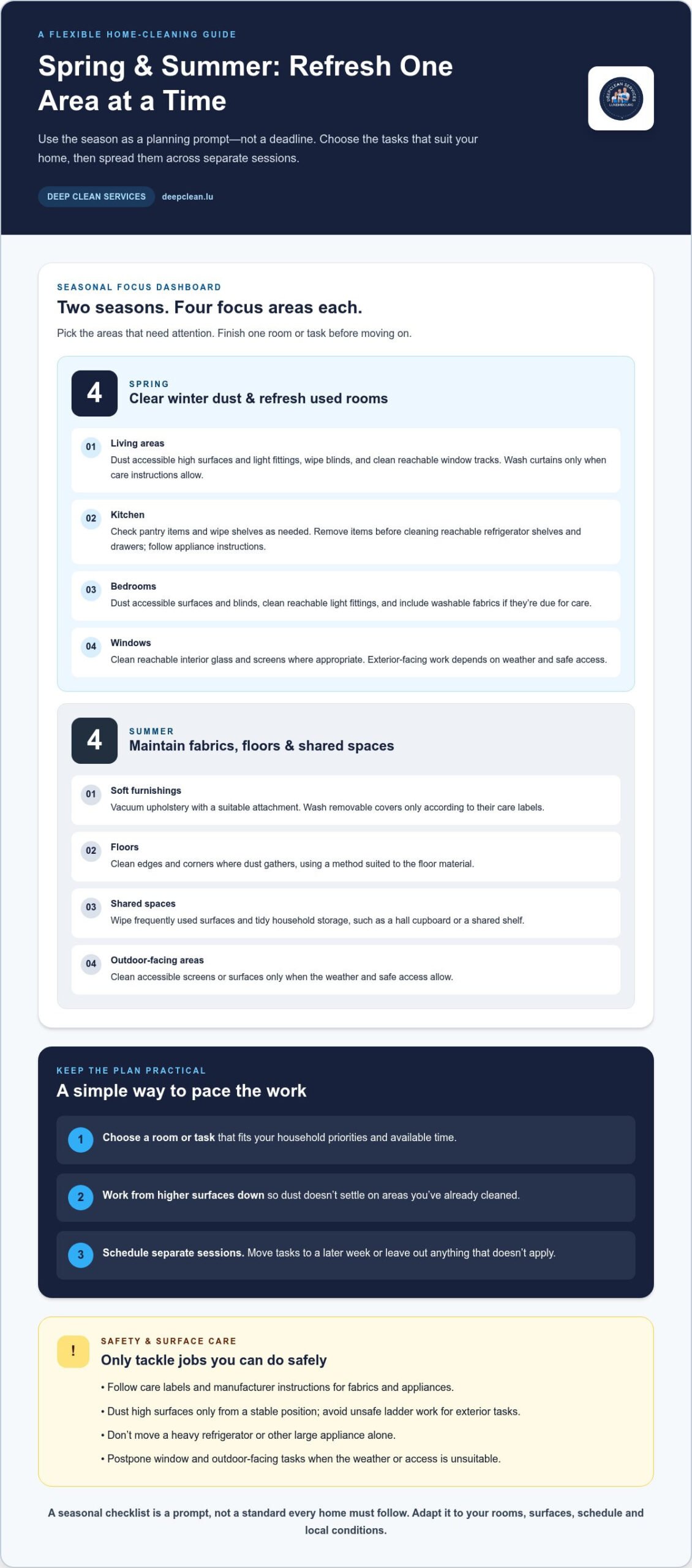
Spring and summer can be useful times to review household cleaning, but they aren’t deadlines. Choose a week that suits your schedule and conditions at home. Group jobs by room, finish one area before moving on, and keep outdoor-facing tasks separate. A practical seasonal cleaning checklist might cover the kitchen and living areas first, followed by bedrooms or storage spaces.
Before starting, consider what you can safely reach and what each surface needs. Dust high surfaces only from a stable position, and don’t use a ladder for exterior tasks if you can’t do so safely. Clean window tracks and screens when conditions and access allow. Postpone those jobs if the weather or setup makes them unsuitable.
Spring checklist: clear winter dust and refresh frequently used rooms
Start with rooms that see regular use. Work from higher surfaces down so dust from shelves or light fittings doesn’t settle on areas you’ve just cleaned. Follow care labels and manufacturer instructions for fabrics and appliances.
- Living areas: Dust accessible high surfaces and light fittings, wipe blinds, and clean reachable window tracks. Wash curtains only if their care instructions allow it.
- Kitchen: Check pantry items and wipe shelves as needed. Remove items before cleaning reachable refrigerator shelves and drawers, and follow the appliance instructions.
- Bedrooms: Dust accessible surfaces and blinds, and clean reachable light fittings. Add curtains or other washable fabrics if they’re due for care.
- Windows: Include reachable interior glass and screens where appropriate. Exterior-facing work depends on weather and safe access, so avoid unsafe ladder work.
Appliance interiors may need specific methods or products, so consult the manual before cleaning. Don’t move a heavy refrigerator or other large appliance alone to reach behind it. If a task requires lifting, awkward access or equipment you don’t have, leave it off the DIY list.
Summer checklist: maintain fabrics, floors and shared spaces
Summer is another convenient planning window, not a reason to tackle every room at once. Focus on fabrics and floors that receive regular use, then refresh shared spaces or storage areas that have become cluttered.
- Soft furnishings: Vacuum upholstery with a suitable attachment. Wash removable covers only according to their care labels.
- Floors: Clean edges and corners where dust gathers, using a method suited to the floor material.
- Shared spaces: Wipe frequently used surfaces and tidy storage areas, such as a hall cupboard or a shelf used by the household.
- Outdoor-facing areas: Clean accessible screens or surfaces only when weather and safe access allow.
Choose one room or task for each session, and adjust the plan to your home and available time. If a thorough indoor reset is difficult to fit in, one-time or deep cleaning support can help with the broader cleaning load.
Autumn and Winter Cleaning Checklist: Prepare Your Home
Autumn and winter can be reminders to reset indoor spaces and focus on areas used most during colder months. They aren’t fixed deadlines or predictions of the weather. Choose tasks that match your home, household routines and current needs, then spread them across manageable sessions.
This seasonal cleaning checklist separates preparation from a later refresh. Mark the tasks that apply, leave out those that don’t, and note anything that needs attention beyond routine cleaning.
Autumn checklist: organise entryways, storage and overlooked surfaces
Start where outdoor items and household traffic meet. Clear an entryway shelf, clean the floor and wipe door surfaces, then organise storage you expect to use more often. Dust can also settle on reachable shelves and ventilation grilles. Clean accessible grilles carefully without taking them apart or reaching into ductwork.
- Entryway: Wipe reachable shelves and door surfaces, and clean the floor, including edges and corners.
- Storage: Tidy the cupboard or shelf used for seasonal clothing and household items, then wipe accessible surfaces.
- Living areas: Dust overlooked, reachable surfaces and the outside of ventilation grilles.
- Room check: Note any persistent dampness or visible mould, including where and when you noticed it.
Routine cleaning can remove ordinary surface dust, but it shouldn’t be treated as mould remediation. If you notice visible mould or persistent dampness, record the location and seek appropriate follow-up rather than relying on a seasonal wipe-down.
Winter checklist: refresh the rooms used most often
As household routines shift, focus on the rooms and surfaces receiving the most use. A short reset can address settled dust and overlooked edges without repeating everyday chores. Choose a room, complete its occasional tasks, then move on if time allows.
- Living room: Dust accessible surfaces, clean floor edges and vacuum upholstery according to the fabric’s care instructions.
- Bedrooms: Refresh washable textiles according to their labels and wipe reachable surfaces around frequently used areas.
- Kitchen: Wipe cupboard fronts and handles, and clean reachable areas that aren’t part of the usual counter routine.
- Bathroom: Wipe reachable shelves and storage surfaces, and clean areas missed during regular upkeep.
For either season, make each task specific: “wipe the entryway shelf” is easier to plan than “clean the whole house.” If visible mould is a concern, the professional mould removal guide explains why it calls for a different response from routine seasonal cleaning.
There’s no need to complete every item in one session. Choose the priority room first, then schedule other tasks around the time and energy available. Your seasonal plan should respond to your home, not a rigid calendar.
How to make a seasonal cleaning checklist realistic for your home
A useful plan starts with your household’s needs, not a standard list of chores. Room use, available time and conditions at home can all affect which tasks belong. Use this four-step process to create a seasonal cleaning checklist you can follow without reserving a full day.
- Inspect: Walk through your home and note occasional cleaning tasks by room. Look for areas you tend to miss during routine cleaning, such as a dusty shelf, floor edges behind furniture or a storage space that gets frequent use. Record what you see rather than assuming every seasonal task applies.
- Prioritise: Mark tasks according to how often the area is used, whether there’s a visible need and how long it’s been since you last addressed it. Separate household priorities from optional jobs. This helps you start with the work that matters instead of treating every item as equally urgent.
- Schedule: Assign one area or a small group of related tasks to each session. Fit them around your household routines, and leave room to adjust if plans or conditions change.
- Review: At the end of the season, note what you completed, what still matters and what didn’t suit your home. Carry forward only the tasks that remain useful.
How do you prioritise seasonal cleaning tasks?
Start with rooms that receive the most use, then look for visible dirt or dust and tasks that have been postponed. A frequently used entry area, for example, may deserve attention before a rarely opened cupboard. Keep optional jobs separate so they don’t crowd out your priorities. Choose the most important tasks first, then add others if time allows.
How can you schedule tasks without a full-day clean?
Break each job into a clear, limited session. Instead of writing “clean the kitchen,” schedule one session for reachable cupboard fronts and another for an appliance interior. Group tasks that use the same equipment or cleaning products to avoid repeated setup, while keeping each session focused on one area.
Review the plan after each season. Remove items that don’t fit your layout or household habits, and shift tasks when the timing doesn’t suit actual conditions. A flexible schedule is easier to maintain than a rigid calendar, especially when routines change.
Work carefully: follow product labels, ventilate as directed and never mix cleaning products. If a seasonal reset is difficult to manage alone, Deepclean Services offers one-time and deep cleaning for homes in Luxembourg. Arrange a one-time or deep clean for support with a broader household reset.
When a seasonal cleaning checklist calls for professional support
A checklist helps you see the size of a seasonal reset, but it doesn’t mean every task has to be DIY. If cleaning has built up across several rooms or you have little time to tackle it, one-time or deep cleaning may be a practical option. The right choice depends on your home’s condition and which areas you want to prioritise.
Consider extra support if:
- A long time has passed since the home had a thorough clean.
- Several rooms need attention, and breaking the work into short sessions still feels difficult.
- Everyday responsibilities leave little time for a broader household reset.
- You’re preparing for a change in routine or want to make a fresh start with regular cleaning.
These are prompts, not rules. Use your list to identify which rooms need attention and whether the work feels manageable on your own. If only a few occasional tasks remain, you may prefer to continue at your own pace. If the overall scope feels substantial, professional cleaning can take some of the work off your hands.
When is a one-time or deep clean worth considering?
A one-time clean can suit a specific reset, while deep cleaning may be useful when a longer gap between thorough cleans has left multiple areas needing attention. The distinction depends on your home’s condition and priorities, not the season itself. The deep cleaning versus regular cleaning comparison can help you understand how these approaches differ.
Before deciding, use your checklist to define the scope: note which rooms are most pressing and what kind of reset you’re looking for. That gives you a clearer basis for choosing between handling the work in stages and arranging a one-time or deep clean. A service is an option, not an obligation to complete every item on your list.
How can Deepclean Services support a seasonal reset?
Deepclean Services provides residential one-time and deep cleaning in Luxembourg. Trained staff, flexible scheduling and online booking make it practical to arrange support around your household’s needs. The service can help with a demanding cleaning reset without requiring you to treat every checklist task as part of the same job.
If professional help would make your seasonal plan easier to manage, you can explore Deepclean Services and book online. There’s no need to make the checklist more ambitious than your home or schedule requires. Use it to choose the next useful step, whether that means setting aside time yourself or getting support for a broader clean.
Make your next seasonal reset easier to begin
A useful seasonal cleaning checklist doesn’t need to be perfect before you act on it. Treat it as a working plan: keep the tasks that fit your home, adjust it as household needs change, and choose one manageable next step. Starting small can make the rest of the plan feel more achievable.
If you’d rather leave a demanding household reset to cleaning staff, Deepclean Services offers residential one-time and deep cleaning. Flexible scheduling and online booking make it easier to plan support around your routine.
Explore Deepclean Services and book online when you’re ready to arrange a clean that suits your needs. Keep the plan practical, and give yourself room to make steady progress throughout the year.
Frequently Asked Questions
How often should you do seasonal cleaning?
There’s no required schedule for seasonal cleaning. Use your seasonal cleaning checklist to decide how often individual tasks make sense: a dusty blind in a frequently used room may need attention sooner than an undisturbed storage shelf. Some jobs may only suit an annual reminder. If a task isn’t needed this season, move it to a later review rather than cleaning it automatically. Let your home’s use and visible condition guide the timing.
Can you complete seasonal cleaning over several days?
Yes, you can complete seasonal cleaning over several days or weeks. Set aside one session for a bedroom and another for a kitchen task, for example, rather than reserving a full day. Begin with the areas you most want to address, then fit optional work around your schedule. If several rooms need a reset and you can’t find time to manage it, a one-time professional clean may be an alternative to doing everything yourself.
What cleaning products should you use for seasonal cleaning?
Choose products labelled for the surface you’re cleaning, and follow directions for use and ventilation. Don’t mix products, even if they’re common household cleaners, because combinations can cause harmful reactions. Use a care product only as directed on a delicate surface, and check an appliance’s instructions before cleaning its interior. You don’t need a different product for every checklist item. Match the method to the material and follow its care guidance.
Should you clean windows during every seasonal clean?
No. Include windows when they show visible dirt or when cleaning them fits your household’s priorities. You might clean reachable interior glass, frames or tracks while tending to a nearby room, then leave exterior panes for another time. Exterior work depends on safe access and suitable conditions, so don’t climb a ladder if the setup feels unsafe. Your checklist should reflect the windows you can reasonably reach and the attention they need.
How can renters adapt a seasonal cleaning checklist?
Renters can build a checklist around the rooms and surfaces they use, while keeping seasonal upkeep separate from move-out preparations. A routine refresh of the kitchen, for example, isn’t the same plan as cleaning a rental before leaving. If you’re preparing to move, use this move-out cleaning checklist for tenants to plan for that separate occasion. Keep your seasonal list focused on current household needs.
What should you do if you notice mould while cleaning?
Don’t treat routine surface cleaning as a mould-removal plan. Note where you see mould and whether the area also has persistent dampness, and avoid disturbing it unnecessarily. That information can help clarify what needs attention next. If the concern is visible mould rather than ordinary dirt, the mould removal guide explains professional treatment. Keep the issue separate from regular seasonal tasks so it isn’t mistaken for a simple wipe-down.
Is seasonal cleaning the same as deep cleaning?
No. Seasonal cleaning is a way to plan occasional household jobs; it doesn’t automatically mean every room needs an intensive clean. A deep clean is a more thorough cleaning service or session, with its scope shaped by the home’s condition and your priorities. A checklist might identify one overdue room that needs more attention, while the rest of the home only needs routine care. Use the list to judge the scope, not to assume every task requires deep cleaning.