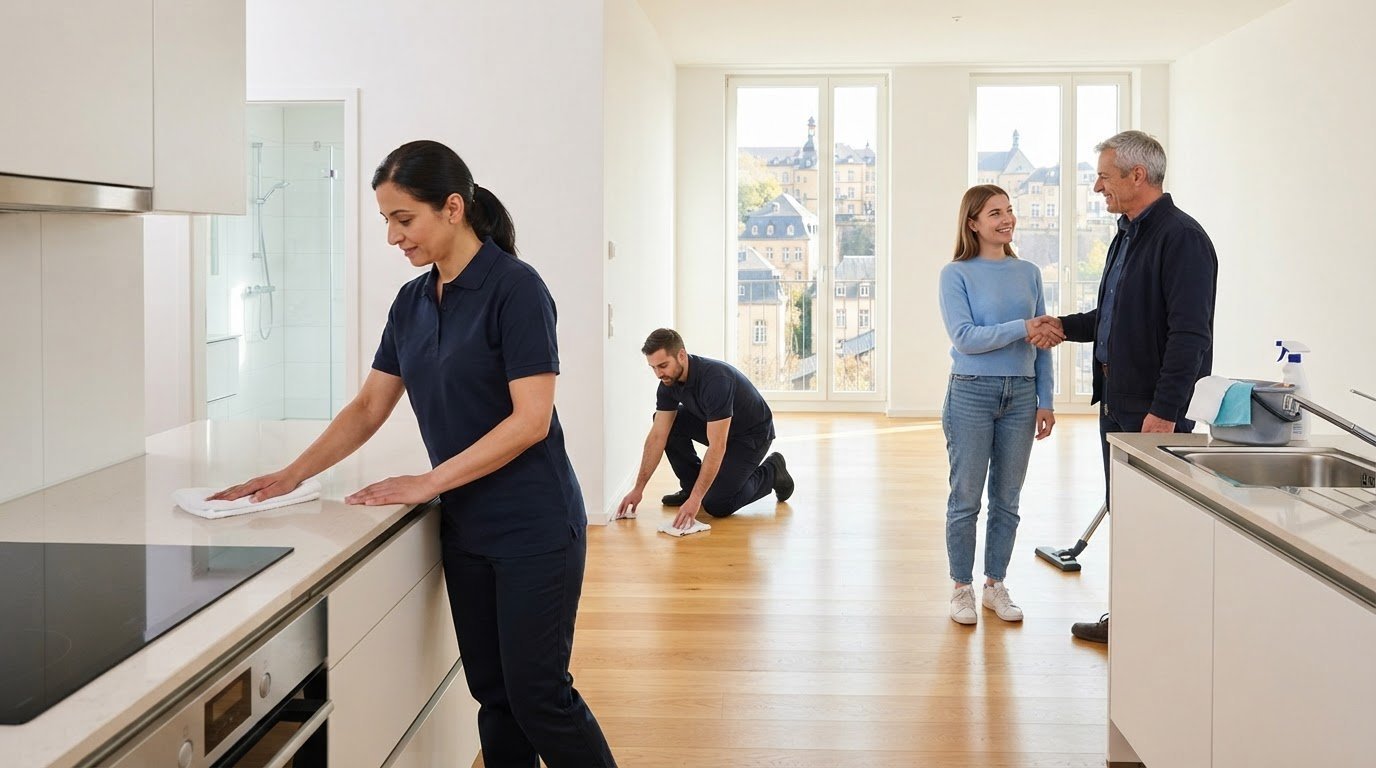
A rental property cleaning service can help prepare a home for a new tenant or clean it before a move-out inspection. In Luxembourg, the rental contract includes an inventory before move-in and another when the tenant leaves. Comparing them helps establish the responsibilities of the tenant and landlord. Cleaning before the exit inspection can help prepare the property for handover.
A change of tenancy involves plenty of details, so it helps to know which cleaning tasks matter and how to plan them around the move. Tenants are advised to return the property in its original condition, allowing for regular wear and depreciation. If it is returned in a deteriorated condition, part of the deposit may be withheld to cover cleaning costs.
This guide explains how move-in and move-out cleaning works, what can be covered in a personalised quote, and how a thorough clean can support inspection preparation. You’ll also find practical guidance on planning the work, deciding which rooms need attention, and understanding what influences a quote, so the cleaning plan fits the property and the handover.
Key Takeaways
- Plan end-of-tenancy cleaning before the exit inspection, and focus on the property’s condition while allowing for ordinary wear and depreciation.
- Build a personalised task list around the rooms and surfaces that need attention, including kitchen appliances, bathroom details, floors and touchpoints.
- Move-in and move-out cleaning can address the same rooms with different priorities: prepare a fresh space for arrival or leave it ready for handover.
- For a between-tenancy deep clean, an empty property makes it easier to reach cupboards, fixtures and floor areas that furniture can obscure.
- Choose the cleaning approach to suit the property’s condition and the handover schedule, so tenants and landlords can organise the work with fewer last-minute tasks.
Can end-of-tenancy cleaning help me prepare for the inspection?
Yes. Cleaning before an exit inspection helps prepare a rental property for handover. In Luxembourg, tenants are advised to return it in its original condition, allowing for regular wear and depreciation.
Between-Tenancy Property Preparation
Between tenancies, use a room-by-room checklist to prepare the property for its next occupants. Include kitchen worktops, appliance surfaces, bathroom fixtures, floors and cupboard interiors. For example, clean the fridge and wipe empty shelves after belongings are removed. A landlord can then review each room and note any remaining tasks before the next tenant arrives.
End-of-Tenancy Cleaning and Rental Deposits
In Luxembourg, comparing the move-in and move-out inventories helps establish tenant and landlord responsibilities. If the property is returned in a deteriorated condition, a landlord or agency may withhold part of the deposit to cover cleaning costs. Review the recorded condition and focus your cleaning checklist on those areas, while allowing for regular wear and depreciation.
For tenants moving out in Luxembourg, the practical guidance is to return the property in its original condition, allowing for regular wear and depreciation. Use the inventory as a room-by-room guide, then clean the documented areas. Before the exit inspection, check kitchen surfaces, bathroom fixtures and floors.
Who pays for end-of-tenancy cleaning in Luxembourg depends on the property’s condition and the inventory comparison. A landlord or agency may withhold part of the deposit for cleaning if the property is returned in a deteriorated condition. The comparison helps clarify responsibility; a deduction is not automatic simply because a tenancy has ended.
Move-out cleaning is easier to organise after furniture and personal belongings have been removed. Work through the rooms, then check details such as door handles, switches and skirting boards. For landlords, cleaning between tenancies provides a more orderly starting point for the next inventory and occupancy.
Before preparing a property for letting, list the required tasks by room. Note visible marks, surfaces needing attention and areas requiring extra work. Tenants can use the same checklist to organise cleaning against the inventory. A rental property cleaning service can be planned around these priorities rather than assuming every room needs the same work.
When reading reviews of a rental property cleaning service in Luxembourg, look for specific descriptions of the work, such as kitchen, bathroom or handover cleaning. Details about the tasks and property type are more useful than general praise. Compare those descriptions with your own checklist to identify what matters for the upcoming inspection.
Cleaning tasks agreed in a personalised quote
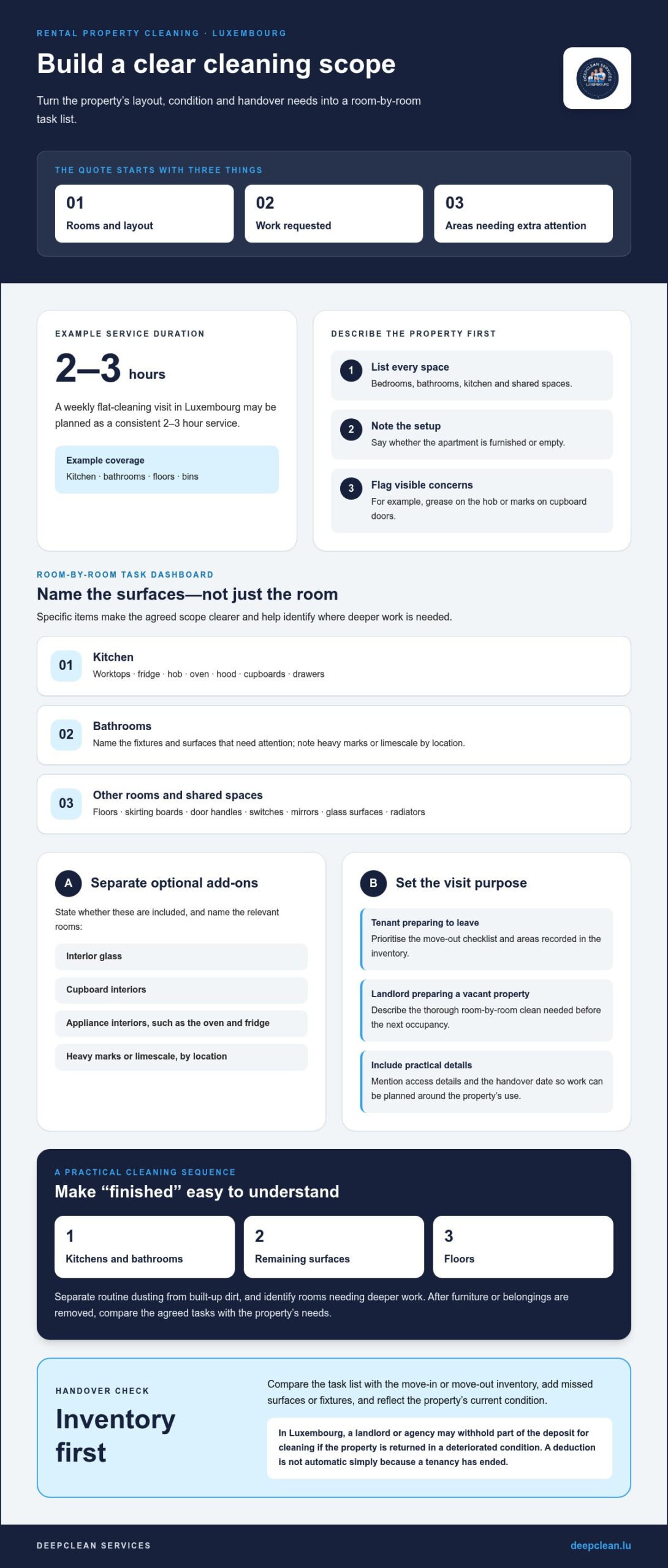
A useful quote turns the apartment’s condition and your priorities into a clear task list. Describe the rooms, the work requested and any areas needing extra attention.
Tasks to Specify in a Quote
Start with the property layout: list each bedroom, bathroom, kitchen and shared space. Note whether the apartment is furnished or empty, and identify visible concerns such as grease on the hob or marks on cupboard doors. For a weekly flat-cleaning visit in Luxembourg, the work may be planned as a consistent 2-3 hour service covering the kitchen, bathrooms, floors and bins.
Then explain the purpose of the visit. A tenant preparing to leave may prioritise the move-out checklist, while a landlord preparing a vacant property may need a thorough room-by-room clean. Mention access details and the handover date so the work can be planned around the property’s use.
Detailed Cleaning Tasks
Define each task rather than relying on broad labels such as “clean the kitchen.” For example, specify kitchen worktops, the fridge, hob, oven, hood, cupboards and drawers. In bathrooms, name the fixtures and surfaces needing attention. In other rooms, list floors, skirting boards, door handles, switches, mirrors, glass surfaces and radiators.
A detailed checklist also clarifies what “finished” means. Separate routine dusting from built-up dirt, and identify rooms needing deeper work. This makes it easier to compare the agreed scope with the property’s needs after furniture or belongings have been removed.
Optional Cleaning Add-Ons
Some tasks need separate attention in the task list. State whether interior glass, cupboard interiors or appliance cleaning should be included, and name the relevant rooms. For a move-out clean, listing the oven and fridge explicitly avoids assuming that a general kitchen clean includes their interiors.
Describe heavy marks or limescale by location, such as on a shower screen or kitchen surface. This distinguishes detailed cleaning from routine care and gives the task list a practical limit. Keep optional items separate so the tenant or landlord can see which work is essential for the handover.
Before agreeing to the scope, compare each room with the move-in or move-out inventory. Add any missed surface or fixture, then make sure the task list reflects the property’s current condition. A specific checklist helps both parties understand the planned work and where attention will be focused.
For a rental property cleaning service, a written task list also gives the clean a clear sequence: kitchens and bathrooms, remaining surfaces, then floors. If you’re organising a tenancy change, review the available cleaning options as you plan the property’s needs.
Do you offer move-in cleaning as well as move-out cleaning?
Yes, both move-in and move-out cleaning can be arranged, with priorities matched to each handover. A move-in clean prepares rooms for use, while a move-out clean addresses the condition left behind. In Luxembourg, the right task list depends on the apartment, its condition and the purpose of the visit.
In the kitchen, start with accessible worktops, cupboard fronts and the sink. Include appliances such as the fridge, hob and oven when their condition calls for attention. A tenant leaving after cooking regularly may need grease removed from the hob, while a landlord preparing an empty apartment may prioritise clean shelves for the next occupant.
Bathrooms need a separate plan because water, soap and daily use affect different surfaces. List the sink, taps, toilet, shower or bath, mirror and floor. For example, note visible limescale on a shower screen or marks around taps instead of making a general request to clean the bathroom.
Bedrooms and living rooms benefit from a clear top-to-bottom sequence. Dust reachable surfaces, wipe handles and switches, then clean the floors. In an empty bedroom, you can reach corners previously covered by a bed or wardrobe. In a furnished living room, specify which accessible surfaces and floor areas need work.
Move-in preparation aims to leave the apartment clean before belongings arrive. Tenants can prioritise kitchen shelves, bathroom fixtures and floors before unpacking boxes. Landlords can aim for a consistent standard across rooms, especially where previous furnishings concealed dust. A room-by-room plan makes it easier to see what is ready and what still needs attention.
Move-out cleaning works in the opposite direction: remove personal items first, then clean the exposed areas. A practical order is kitchen, bathroom, bedrooms, living room and floors. This helps avoid carrying dust from one room into another and leaves floors until after surfaces and fixtures have been cleaned.
Before arranging either type of clean, walk through the apartment and note its actual condition. Record specific examples, such as crumbs inside a drawer, marks on a bedroom floor or residue around bathroom taps. This helps distinguish a basic refresh from more detailed work and keeps the cleaning plan focused on the rooms that need attention.
For a handover, compare the planned work with the relevant inventory and the apartment’s current condition. Tenants can identify areas needing attention before the exit inspection; incoming occupants can decide which rooms should be ready before moving day. A thorough room-by-room approach makes move-in and move-out cleaning useful for both sides of the tenancy.
Move-in and lease-end deep cleaning
A rental contract can include inventories made before move-in and when the tenant leaves. Comparing them helps establish which changes relate to the tenant’s responsibilities and which reflect ordinary wear or depreciation.
Deep cleaning goes beyond routine tidying. It focuses on accumulated dirt and less accessible areas, such as cupboard interiors, appliance surfaces, tile joints, skirting boards and radiators. Standard cleaning suits regular upkeep, while a deeper clean addresses neglected or more heavily soiled surfaces before a handover.
For lease-end cleaning, begin with the move-out inventory and note each room’s recorded condition. Remove personal belongings, then check the kitchen, bathroom, bedrooms and living areas against those notes. This helps identify specific tasks, such as cleaning a marked oven or removing dust from exposed skirting boards.
A practical kitchen checklist can include worktops, the fridge, hob, oven, hood, cupboards and drawers. In the bathroom, inspect fixtures and surfaces, including tile joints and mirrors. Continue through the property, noting door handles, switches, light fittings, glass surfaces and radiators. Leave floors until higher surfaces have been cleaned.
Move-out cleaning is most straightforward once the tenant has removed furniture and possessions. Cleaning can then reach areas previously hidden beneath a bed or beside a cupboard. Scheduling the work a day before the move-out date leaves time to complete the clean before handing over the property.
For move-in cleaning, plan around the incoming tenant’s arrival. In an empty apartment, clean cupboards and drawers before belongings are unpacked, then address appliances, bathroom fixtures and floors. A landlord can use the move-in inventory to record the property’s condition after preparation, creating a clear reference for the next tenancy.
Tenants and landlords can make the process more precise by separating cleaning from repair concerns. A dirty surface needs cleaning; a damaged fitting is a separate condition to record against the inventory. For example, clean a stained worktop, but document a chipped edge rather than treating cleaning as a repair.
In Luxembourg, a landlord or agency may withhold part of a tenant’s deposit for cleaning if the property is returned in a deteriorated condition. Completing the clean before the exit inspection helps prepare the property for assessment. Use the two inventories to focus on documented changes and distinguish cleaning needs from regular wear and depreciation.
When requesting a quote, clarify which rooms and tasks are included, whether VAT is included, and whether interior windows or heavy limescale work require an extra charge. Matching the quote’s scope to the inventory helps avoid paying for work that is not needed or overlooking areas that need attention.
Benefits of hiring a professional cleaning service
A professional clean adds structure to a tenancy change. Instead of moving between rooms without a plan, the work can follow an agreed sequence, such as kitchen, bathroom, living areas and floors. This helps tenants and landlords understand which tasks are covered before the handover begins.
Clear task allocation is useful when several people share responsibility for preparing an apartment. A landlord can identify priorities, while a tenant can organise belongings and access. For example, cleaning empty cupboards before a new tenant unpacks keeps the task separate from wiping furniture that remains in place.
Equipment is another practical consideration. A planned clean can match tools and products to the task, such as cloths for worktops, suitable brushes for tile joints and floor equipment for the apartment’s surfaces. This avoids improvising with household supplies when an area needs more detailed attention.
A written scope also makes progress easier to track. Before work begins, group the property into rooms and record the work required in each one:
- Kitchen: worktops, appliance exteriors and cupboard fronts.
- Bathroom: fixtures, mirrors and visible residue around taps.
- Bedrooms: accessible surfaces, handles and exposed floor areas.
- Living room: reachable surfaces and areas around remaining furniture.
- Whole apartment: floors and overlooked touchpoints such as switches.
This room-by-room method helps prevent a common handover problem: cleaning visible areas while missing smaller details. For instance, a clean living-room floor does not address dust on a radiator or marks around a light switch. A checklist lets the tenant or landlord review these points without relying on memory.
Professional cleaning can also help separate cleaning tasks from maintenance concerns. A mark on a cupboard may need cleaning, while a loose handle needs to be recorded as a repair issue. Identifying each separately gives the inspection a clearer basis and avoids treating cleaning as a solution to damage.
For landlords, preparing the property gives the next viewing or arrival a more orderly starting point. Tenants benefit from a defined sequence rather than trying to balance cleaning with packing every room at once. The best approach depends on the apartment’s condition, furnishing and agreed scope, not simply the label “move-out clean.”
Set the priority rooms, list the surfaces needing attention and agree on the sequence before the cleaning begins. Arrange a cleaning plan for your rental property around its condition and handover needs.
In Luxembourg, customers hiring a cleaning provider are advised to obtain the provider’s civil-liability or professional-insurance details in writing before work starts. Ask for the relevant details while confirming the cleaning scope, and keep the written information available with the agreed room-by-room tasks. This makes the insurance information part of the preparations rather than something left until the handover, while the task list continues to define what the cleaning is expected to cover.
Deepclean Services: Regular Cleaning
Deepclean Services helps tenants and landlords maintain a clean property between handovers or prepare for a tenancy change. Choose Regular Cleaning for ongoing upkeep, One-Time Basic Cleaning for a single visit, Deep Cleaning for more detailed attention, or Moving In / Out Cleaning for a change of occupancy.
For example, a landlord may arrange a one-time clean between tenants, while a tenant may prefer a detailed clean before moving out. The right option depends on the property’s condition, the rooms needing attention and the agreed task list. Clear priorities help organise the work around the handover.
To discuss cleaning for your rental property, visit deepclean.lu or contact Deepclean Services.
Plan your next tenancy with confidence
A clear cleaning plan can make the transition between tenants easier to manage. Before booking, decide what matters most for the property’s next stage: routine upkeep, a one-off refresh or deeper attention before inspection or move-in. This gives your rental property cleaning service a practical purpose and keeps the work focused on your priorities.
Deepclean Services offers Regular Cleaning, One-Time Basic Cleaning, Deep Cleaning and Moving In / Out Cleaning. Choose the option that best fits the property’s condition and handover timing, then outline the rooms and tasks you want addressed. A clear starting point helps turn a busy changeover into an organised next step.
Ready to plan cleaning for your rental property? Contact Deepclean Services to discuss your cleaning. With a considered plan, you can prepare the property for its next chapter with greater clarity.
Frequently Asked Questions
How Does It Work?
Start by identifying whether the property needs routine upkeep, a one-time clean, deeper cleaning or tenancy-change cleaning. For example, a landlord preparing an empty apartment may need a different scope from a tenant maintaining an occupied home. Set out the rooms and priorities, then book an appointment online. A specific task list helps match the cleaning work to the property’s condition.
Why is the cleaning taking place before the inspection important?
Cleaning before the inspection lets the property’s condition be assessed without avoidable dirt obscuring surfaces. For example, dust on a shelf or residue on a hob can make it harder to distinguish cleaning needs from recorded wear. Complete the clean, then review each room against the inventory. This gives tenants and landlords a clearer basis for discussing the handover and any differences in condition.