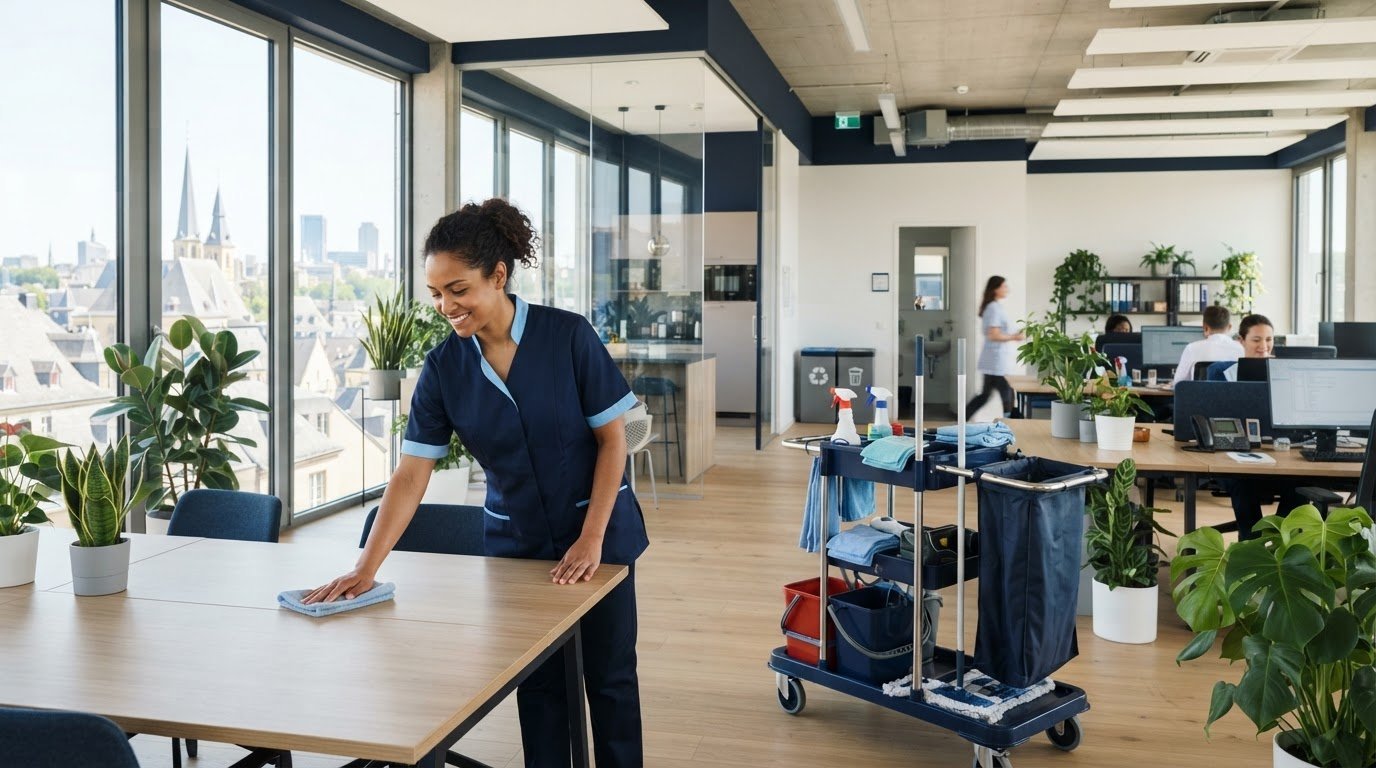
What makes routine office maintenance cleaning work is not a fixed calendar, but a plan that reflects how your workplace is used. The practical challenge is deciding what needs attention on each visit, what can be handled less often and how to keep dust, waste and clutter from building up between cleans.
A clear routine helps keep shared spaces orderly without disrupting staff, visitors or the working day. Set priorities for busy areas, give periodic tasks their own place in the schedule, and adjust the plan when occupancy or room use changes.
This guide explains how to build a realistic cleaning plan for 2026, from regular attention to kitchens, washrooms and commonly used surfaces to periodic care for floors and other areas. You’ll learn how to assess needs, assign tasks and coordinate cleaning with workplace activity. Deepclean Services provides regular cleaning for offices and commercial facilities across Luxembourg, with trained staff and flexible scheduling.
Key Takeaways
- Build routine office maintenance cleaning around how people use each space, not a one-size-fits-all calendar.
- Separate tasks for each visit from periodic upkeep and scheduled reviews.
- Prioritise areas by use, visibility and current condition.
- Map spaces, assign task ownership and agree on access arrangements.
- Regular cleaning by trained staff can support a consistent workplace routine, with flexible scheduling for offices and commercial facilities across Luxembourg.
Routine Office Maintenance Cleaning: What It Covers and Why It Matters
Routine office maintenance cleaning is planned, recurring care that keeps everyday workplace spaces orderly and presentable. It focuses on regular upkeep, such as managing waste, wiping shared surfaces and attending to visible dirt before it accumulates. The right tasks depend on the office layout, how often each area is used and its condition between visits.
The goal is consistency, not an intensive clean every time. A defined routine makes recurring tasks easier to organise and gives office managers a practical way to respond when occupancy, visitor numbers or work patterns change. It also helps clarify which areas are included and what should be handled on each visit.
Commercial cleaning covers a range of work, methods and equipment, as outlined in this overview of commercial cleaning practices and standards. For an office routine, begin with the spaces that need regular attention. Then decide which tasks belong on each scheduled visit and which can be handled periodically.
How routine cleaning differs from a one-time or deep clean
Routine cleaning addresses everyday, visible needs. A visit might include removing waste, wiping commonly used surfaces or tidying a shared kitchen. A one-time or deep clean provides more intensive attention to accumulated dirt or areas that receive less frequent care. Understanding deep cleaning versus regular cleaning helps you decide whether a task belongs in the ongoing schedule or needs separate attention.
This distinction keeps expectations realistic. A routine does not need to cover every surface or overlooked corner on every visit. It should consistently address the upkeep that matters for that workplace, with additional work planned when the condition of an area calls for it.
Which workplace areas need a routine
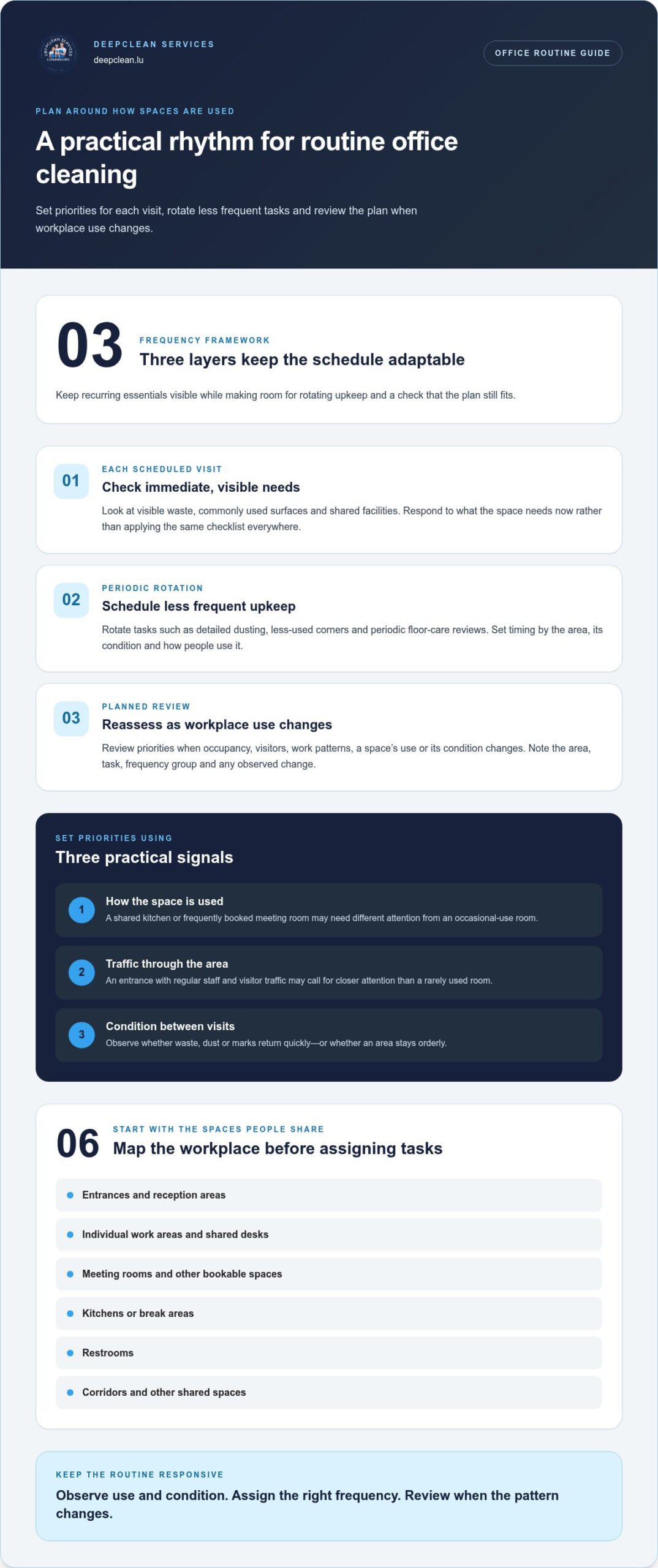
Start by listing the areas people enter, work in or share. Depending on your office, these may include:
- Entrances and reception areas
- Individual work areas and shared desks
- Meeting rooms and other bookable spaces
- Kitchens or break areas
- Restrooms
- Corridors and other shared spaces
Match tasks to the way each space is used. An entrance with regular staff and visitor traffic may need closer attention than a room used occasionally. A meeting room’s needs may vary with bookings, while a shared kitchen may need regular upkeep because many people use it.
The sections that follow show how to rank areas by use, visibility and condition, then assign tasks an appropriate frequency. This turns a general checklist into a workplace-specific routine that can change as patterns of use change.
How to Set Office Cleaning Frequencies Around Real Workplace Use
Build the schedule around what happens in the office, rather than starting with a standard list of daily, weekly and monthly tasks. A reception area with steady visitor traffic may need attention more often than a rarely used meeting room. A shared kitchen may need closer monitoring than an individual workspace. Use observed activity and condition to set priorities.
Set cleaning frequency according to how a space is used, how much traffic it receives and what its condition shows between visits. This gives routine office maintenance cleaning a practical basis without assuming that every workplace or room needs the same schedule.
Use a simple three-part frequency framework
Group tasks into those to consider on each scheduled visit, periodic tasks that can rotate, and planned reviews to check whether the schedule still fits. This keeps recurring essentials visible while leaving space for less frequent work. It also makes it easier to update the plan when occupancy, visitors or work patterns change.
- Each visit: Check visible waste, commonly used surfaces and shared facilities for current needs.
- Periodic: Rotate tasks that do not need attention on every visit.
- Planned review: Reassess priorities when a space’s use or condition changes.
What to prioritise on each scheduled visit
Start with observable needs in areas that see regular activity. Look for visible waste, marks on shared surfaces, dirt near entrances and changes in the condition of commonly used facilities. Treat these as adaptable priorities, not a universal checklist for every visit. A brief, consistent review helps keep recurring needs from being overlooked when less frequent tasks are also due.
Look for patterns over time. If a meeting room is heavily booked on particular days, check its condition after those bookings when setting its frequency. If a shared facility remains orderly between visits, it may need a different priority. Base adjustments on what you observe rather than assuming use stays constant.
Plan less frequent tasks and review the schedule
Detailed dusting, less-used corners and periodic floor-care reviews can be included in a rotating plan. Set their timing according to the space, its condition and how people use it. If dust or marks return quickly, review the interval. If a lower-traffic area stays in good condition, it may not need attention as often as a shared entrance.
Keep the schedule easy to review: note the area, task, frequency group and any change observed. ISSA’s Clean Standard framework is presented for kindergarten-through-grade-12 facilities, but its focus on assessing cleaning effectiveness offers an example of evaluating results rather than relying only on a checklist.
Deepclean provides regular professional cleaning for offices and commercial facilities across Luxembourg, with trained staff and flexible scheduling. Explore regular cleaning support for your workplace.
How to Prioritise Office Cleaning Tasks When Needs Differ
When access or time is limited, a long checklist can make every task seem equally urgent. Rank tasks by considering how often a space is used, how visible its condition is and what you observe during a review. These factors help turn competing needs into a clear order that can change as the workplace changes.
Shared, frequently used spaces generally need closer routine attention than areas with limited traffic. That does not mean every shared room needs the same treatment on every visit. The aim is to make priorities clear and respond to actual use and condition.
| Area type | What to observe | How to prioritise |
|---|---|---|
| High-use areas, such as an entrance or a busy meeting room | Visible dirt, waste, marks or signs of frequent use | Give observed needs prompt attention, especially when visitor or booking patterns are heavy. |
| Shared facilities, such as kitchens and restrooms | How many people use the space and whether its condition changes noticeably between visits | Keep these areas prominent in the routine and adjust attention to actual use. |
| Lower-traffic areas, including occasional-use rooms or corners | Accumulated dust, debris or other changes in condition | Schedule appropriate tasks periodically, increasing attention if the area’s use or condition changes. |
Use the table as a decision aid, not a fixed rating system. If a rarely used room has visible dirt, its condition may move it up the list. If a busy meeting room is clean after a quieter period, another area may need attention first. This keeps the plan responsive without relying on universal scores.
How to prioritise shared and high-traffic spaces
Entrances shape the first impression of a workplace, while meeting rooms, kitchens and restrooms are used by people across teams or visitor groups. Note when these spaces are busiest and check their condition afterward. A day with several client meetings may make the entrance and meeting room higher priorities. During quieter periods, other scheduled tasks may come first.
Compare the needs of each area instead of assuming every space requires the same treatment each day. A shared kitchen may show visible signs of use while a less frequently booked meeting room remains orderly. Recording these observations helps direct attention where it is needed on that visit.
How to handle workstations and sensitive areas
Set clear boundaries for workstations. Accessible surfaces in shared work areas may be treated differently from personal desks covered with papers, devices or other belongings. Agree on what should remain untouched, what needs to be cleared before cleaning and how those expectations will be communicated. The task scope should suit the office’s working practices and respect personal or sensitive materials.
Record these preferences in the cleaning plan so expectations stay consistent. If a space cannot be accessed because it is occupied or items remain in place, note that rather than marking it as cleaned. This helps managers understand what was completed and adjust access arrangements or priorities without disrupting the working day.
How to Build and Maintain a Practical Office Cleaning Schedule
A useful schedule turns priorities into clear, repeatable instructions. It should show what needs attention, where, how often and who is responsible, while remaining simple to update. Follow these steps to create a plan that can be used consistently and adjusted as the workplace changes.
- Map the spaces. List the areas included in the routine, such as entrances, work areas, meeting rooms and shared facilities. Note restricted-access rooms and spaces with particular use patterns.
- List recurring tasks. Record the upkeep needed in each area. Separate regular tasks from periodic ones so the plan does not suggest that every task happens on every visit.
- Set priorities. Use actual use, visibility and current condition to decide which tasks need more frequent attention. If access or time is limited, a priority order makes it easier to focus on the most noticeable needs first.
- Assign ownership. Identify the responsible role for each task. Distinguish staff housekeeping expectations, such as clearing personal items, from tasks assigned to scheduled professional cleaning.
- Review and adjust. Keep a simple record of completed, missed or inaccessible tasks. Review it regularly and revise the schedule when the office or its needs change.
Create a clear task plan and assign responsibility
A concise plan can use one row per area, with columns for the task, intended frequency, responsible role and access notes. Avoid vague entries such as “clean office.” Name the area or task so everyone can understand what completion means. Include practical arrangements, such as rooms that need to be unlocked, desk items that should remain untouched and working-hour constraints that affect access.
Make the division of responsibilities explicit. Staff may be expected to keep personal belongings organised, while scheduled cleaning covers agreed upkeep tasks. This avoids assumptions and gives the person reviewing the plan a clear basis for recording what was completed. A commercial cleaning guide can provide context for service scope, alongside your site-specific schedule.
Review the routine as the office changes
Maintain the schedule instead of filing it away. Revisit it after changes in occupancy, layout, visitor patterns or working arrangements. Repeated missed tasks may signal an access problem, unclear ownership or a frequency that no longer fits. Visible buildup is another reason to reassess priorities. Record what you observed and what you changed so the next review can show whether the adjustment helped.
Deepclean provides regular cleaning for offices and commercial facilities across Luxembourg, with trained staff and flexible scheduling. Explore Deepclean’s regular cleaning support for your workplace.
How Deepclean Supports Routine Office Maintenance Cleaning
A clear plan is easier to maintain when recurring cleaning has a defined place in the workplace routine. Deepclean provides regular cleaning for offices and commercial facilities across Luxembourg. Trained staff carry out the cleaning, and flexible scheduling helps businesses organise service around their workplace needs.
Professional support works best when priorities are clear. Identify the areas that matter most, the upkeep they need and how cleaning can fit around normal office activity. The scope depends on the premises and how they are used. An office with busy shared facilities may need different priorities from one with quieter, less-used spaces. A clear outline gives the routine a practical starting point without assuming that every workplace needs the same tasks.
What to consider when arranging recurring office cleaning
Prepare a concise overview of your workplace needs. It can help to note:
- Priority areas: Identify the spaces regularly used by staff or visitors.
- Routine needs: Describe the upkeep you want handled regularly and any tasks that need less frequent attention.
- Scheduling preferences: Consider working patterns, room access and times when cleaning can take place with minimal disruption.
These details help shape a routine around how the office operates. Meeting-room use may vary across the week, while a shared kitchen may need consistent attention because different teams use it. Reflect those differences in the plan rather than applying an identical pattern to every room. Clear access arrangements and workplace expectations also help staff understand which spaces are available and which surfaces or belongings should remain untouched.
Keep the routine manageable. A focused list of priorities is more useful than a long plan that is difficult to follow or update. As the workplace changes, its cleaning needs may change too. Treat the initial scope as a practical basis for maintaining consistency, not a permanent set of assumptions.
Arrange professional cleaning around your workplace routine
Deepclean offers flexible scheduling for offices and commercial facilities, with cleaning carried out by trained staff. Use online booking to arrange regular cleaning support for your workplace. Consider your priority areas and scheduling preferences as you prepare, so the routine can reflect your premises and how they are used.
For practical support with routine office maintenance cleaning, book regular office cleaning online with Deepclean.
Make Your Office Routine Easier to Sustain
A cleaning schedule does not need to be perfect before it becomes useful. Start with one practical improvement, such as clarifying priority areas or agreeing how changes in room use will be recorded. Use what you observe to refine the approach. Small, considered adjustments can make routine office maintenance cleaning easier to manage as your workplace evolves.
Consistency also depends on a plan people can follow. Keep expectations clear, update the schedule when needs shift and treat it as a working tool. With regular professional support, maintaining the routine can be more straightforward.
Deepclean provides regular cleaning for offices and commercial facilities, with trained staff, flexible schedules and online booking. Book your office cleaning online to organise a routine for your workplace.
Start with a clear plan, then build on it with confidence.
Frequently Asked Questions
How often should an office be professionally cleaned?
There is no single frequency that suits every office. Consider how many people use the premises, how often visitors arrive and the condition of shared areas between visits. For example, a team that regularly hosts clients may need to give its entrance more attention than an office with few visitors. Separate recurring needs from less frequent tasks, then review the plan after changes in occupancy or work patterns.
Can office cleaning take place while employees are working?
Yes. Cleaning can be arranged around normal office activity, depending on the tasks and spaces involved. A meeting room may be easier to access between bookings, while other work may fit into the working day. Agree on room access, shared areas and sensitive materials in advance. Deepclean offers flexible scheduling to help businesses plan cleaning around their workplace routine.
What should employees do before office cleaners arrive?
Employees can put away confidential papers, clear loose items from shared surfaces and follow workplace guidance for personal desks. Moving a folder or device from a shared table can make the surface accessible, while personal or sensitive materials should remain undisturbed unless the office has agreed otherwise. Clear instructions help staff prepare consistently and make accessible areas easier to clean as planned.
How can an office keep shared spaces tidy between scheduled cleans?
Set a few simple expectations for everyone who uses shared spaces. Staff can return shared items after use, put waste in the appropriate bins and leave kitchen or meeting areas ready for the next person. These habits help maintain order between visits, but they do not replace cleaning. If clutter or visible buildup keeps returning, review whether the shared-space guidance or cleaning plan needs to change.
Can routine office cleaning replace deep cleaning?
No. Routine office cleaning supports everyday upkeep, while deep cleaning gives more intensive attention to areas that need it. A workplace may benefit from both at different times, depending on the condition of its premises and how spaces are used. Regular visits can maintain a baseline, while a separate deep clean can address accumulated dirt. A dedicated guide to deep cleaning versus regular cleaning can help clarify the difference.
How much does routine office maintenance cleaning cost?
The fee depends on the cleaning service selected and the size of the premises. The work required and scheduling needs also shape the arrangement, so a generic industry price range may not reflect your office. Deepclean offers online booking for cleaning services. Consider the areas and routine needs you have identified as you arrange cleaning for your premises.