A hospital room can look clean and still create risk. Bed rails, call buttons, door handles, waiting-room chairs, restroom fixtures, and shared equipment are touched all day by patients, visitors, and staff. Hospital sanitation cleaning services are not simply about making floors shine. They are a practical part of protecting people, supporting clinical teams, and keeping every area clean, fresh, and ready for use.
For facility managers, the challenge is consistency. A cleaning plan has to work during busy visiting hours, overnight shifts, emergency admissions, renovations, and seasonal illness spikes. It also has to respect the pace of care. The right cleaning team works around hospital operations without becoming another problem for staff to manage.
What Hospital Sanitation Cleaning Services Should Cover
Hospital cleaning requires a clear plan for each space, not one general routine for the whole building. A public lobby, a patient bathroom, an operating-area corridor, and an administrative office each have different traffic levels and cleaning priorities.
The work usually begins with daily maintenance: restroom sanitation, floor care, waste removal, dust control, cleaning of high-touch surfaces, and replenishment of essential supplies where agreed. These tasks keep the building presentable, but their real value is reducing the buildup of dirt and contamination between more detailed cleans.
Patient-facing areas need close attention. Rooms, waiting areas, examination spaces, recovery areas, and visitor restrooms should be cleaned with methods suited to the surfaces and the facility’s infection-control procedures. High-touch points deserve special focus because they are repeatedly handled throughout the day. This includes light switches, handrails, elevator buttons, telephones, chair arms, faucets, dispensers, and door hardware.
Deep cleaning also matters. Grout, corners, baseboards, upholstery, carpets, vents, storage rooms, and behind equipment can collect dust and grime that routine cleaning may not fully remove. Scheduled intensive cleaning helps maintain a visibly higher standard and gives facility teams a chance to address areas that receive less attention during a normal shift.
Why Cleaning Frequency Cannot Be One-Size-Fits-All
A common mistake is assigning the same schedule to every hospital area. Frequency should follow risk, traffic, and the purpose of the room. A quiet office may need regular upkeep, while an emergency waiting area or public restroom may need repeated service throughout the day.
A practical cleaning plan separates spaces into priorities. High-traffic public areas require frequent touchpoint cleaning. Patient rooms need service coordinated with occupancy, discharge, and clinical needs. Back-of-house spaces, staff areas, offices, and storage rooms need dependable maintenance so dust, spills, and waste do not become larger issues.
This is where flexibility matters. Some hospitals need a cleaning crew before visiting hours, while others need support during evenings, weekends, or around the clock. The best schedule is the one that keeps hygiene standards steady without disrupting patients or care teams.
Daily cleaning and terminal cleaning serve different needs
Daily cleaning keeps rooms and common areas orderly during use. It focuses on immediate hygiene, waste, surfaces, restrooms, and floors. Terminal cleaning, often performed after a patient discharge or before a room is reassigned, is more detailed. It addresses the full room and the surfaces that may not be reached during regular maintenance.
The exact procedure should always follow the hospital’s own protocols and the requirements of its clinical and infection-control leadership. A professional cleaning provider should be ready to work within those standards, document completed work when required, and respond quickly if a room needs priority attention.
Trained Crews Make the Difference
Cleaning in a healthcare setting calls for more than good intentions. Staff need training in safe work practices, correct product use, cross-contamination prevention, waste handling procedures, and the separation of cleaning tools by area.
Color-coded cloths and equipment, for example, can help prevent a tool used in a restroom from being used later in a patient area. Proper dilution and contact time for approved disinfecting products are equally important. Spraying a surface and wiping it immediately may not deliver the intended result if the product label requires the surface to remain wet for a set period.
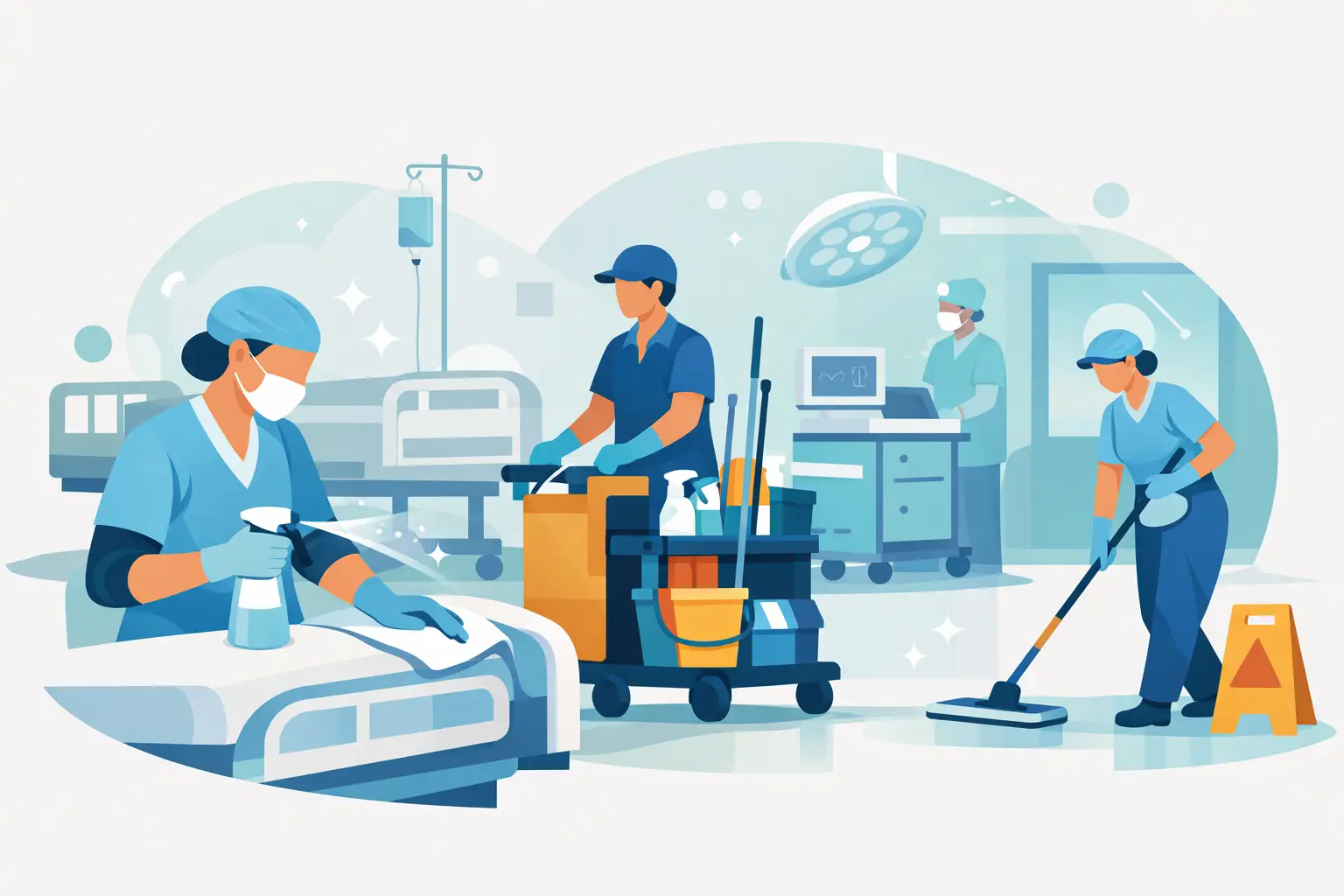
Professional crews should also know how to work respectfully around patients and staff. That means keeping carts organized, placing safety signs before wet floor work, reducing unnecessary noise, protecting privacy, and reporting spills or damaged surfaces promptly. Friendly, punctual cleaners help the day run better, especially when hospital staff are already under pressure.
Equipment and Products Need to Fit the Setting
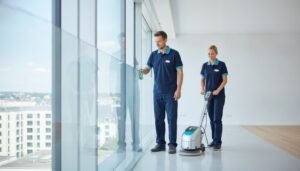
Hospitals benefit from commercial-grade equipment that cleans effectively without creating avoidable disruption. Low-noise vacuums, microfiber systems, floor machines suited to the surface, and properly maintained tools can improve results while helping crews work efficiently.
Product choice requires balance. A facility may want sustainable cleaning technology where appropriate, but sustainability should not mean compromising required sanitation performance. The right approach uses approved products for the task, follows manufacturer instructions, and considers the needs of patients, visitors, and staff who may be sensitive to strong fragrances or chemical residue.
Floors also deserve careful planning. Hard floors in corridors and waiting areas need regular cleaning to remove tracked-in dirt and spills. Carpeted areas can hold dust and stains, especially in administrative spaces and visitor zones. Upholstered waiting-room furniture needs periodic detailed cleaning to maintain a clean appearance and remove embedded dirt. Each surface needs the correct method, not a rushed general treatment.
How to Evaluate Hospital Sanitation Cleaning Services
Choosing a cleaning partner is about more than comparing a price per visit. A low quote can become expensive if crews arrive late, tasks are missed, supervision is weak, or the provider cannot respond when a problem needs immediate attention.
Ask how the company builds cleaning schedules, trains staff, supervises work, and communicates with facility contacts. Look for a provider that can clearly explain what is included in regular service, what requires a specialized deep clean, and how urgent requests are handled. Transparent scope prevents confusion later.
It is also useful to ask how quality is checked. Routine inspections, clear task lists, supervisor follow-up, and a simple reporting process create accountability. Cleaning standards should not depend on whether one particular crew member happens to be on shift.
A dependable provider should be prepared to adapt as needs change. A flu surge, construction dust, a water leak, a special event, or an increase in patient volume can change cleaning priorities quickly. Flexibility is valuable, but it should be supported by enough trained staff and a clear operating process.
Clear Communication Keeps Standards High
Hospital cleaning is strongest when the provider and facility work as one team. The cleaning crew needs accurate information about restricted spaces, active patient rooms, changed schedules, maintenance concerns, and priority areas. In return, the facility needs confidence that tasks have been completed safely and on time.
A simple point of contact can make a major difference. Facility managers should not have to chase updates or repeat the same instructions every day. Regular check-ins allow both sides to review recurring concerns, adjust schedules, and plan deeper cleaning before small issues become visible problems.
For multi-site facilities, consistency matters even more. The same quality expectations, products, procedures, and communication process should apply across clinics, offices, waiting areas, and larger hospital buildings. This makes it easier to manage standards and gives staff confidence in the environment where they work.
A Clean Hospital Supports More Than Appearance
Patients and visitors notice details. They notice a clean restroom, a fresh-smelling waiting room, clear floors, tidy entrances, and seating that looks cared for. Those details cannot replace clinical care, but they influence comfort and confidence at a time when people may already feel stressed.
For staff, a clean workplace removes one more distraction from an already demanding day. When cleaning is dependable, teams can focus on patients instead of reporting overflowing bins, sticky floors, empty dispensers, or neglected common areas.
The best hospital sanitation cleaning services make cleanliness feel dependable rather than dramatic. They show up on time, follow the agreed plan, handle demanding work with care, and leave each area ready for the people who rely on it. That is the kind of practical support every healthcare facility deserves.